Category Archives: Norovirus

RASFF Alert – Foodborne Outbreak caused by Norovirus – Mussels

kswfoodworld food safety poisoning

RASFF-foodborne outbreak caused by norovirus in frozen boiled mussels from Spain in Spain

RASFF Alerts – Norovirus – Live Oysters

kswfoodworld food safety poisoning

RASFF-norovirus (Gl/2g) in live oysters from France in Italy

RASFF-norovirus (GII/ 2g) in live oysters (Crassostrea gigas) from France in Italy

Research – Detection of foodborne viruses in ready‐to‐eat meat products and meat processing plants

Wiley Online

Abstract

Several studies have confirmed the presence of foodborne viruses in different food products throughout the world. There is accumulating data suggesting that the economic burden of foodborne viral infections is rising, making the understanding and monitoring of their prevalence a necessity, for the modern food industry. The objective of this study was to examine ready‐to‐eat meat products and environmental samples originated from meat processing plants in Cyprus, for four foodborne viruses: norovirus (NoV GGI, NoV GII), rotavirus, hepatitis A virus, and hepatitis E virus. A total of 48 swab samples and 42 different pork meat products from two plants were analyzed in parallel. The reverse transcription real‐time polymerase chain reaction revealed two swab samples from the same plant positive for norovirus GGI. The detection of norovirus on a slicer machine and on the hands of a worker, suggest that foodborne viruses can be present in meat processing environments.

Practical applications

There is an increasing need to better understand the prevalence of foodborne viruses in the environment and food, given the rise of viral foodborne outbreaks throughout the world, as reported by World Health Organization. Meat products form an important exposure vehicle to humans either directly, through the consumption of raw products, or as a result of cross‐contamination in food processing plants. This is the first report in Cyprus illustrating the presence of foodborne viruses in meat processing plants and the possible impact in public health, through the consumption of ready‐to‐eat meat products.


Spain – WARNING: Mussels in Spain containing norovirus distributed to Andalucia, dozens infected

The Olive Press 

SOME 39 people have become infected by norovirus after eating contaminated frozen mussels. 

The outbreak  occured in Valencia, but the infected batch had already been distributed to Andalucia, the Balearic Islands and nine other regions.

The Spanish Agency for Consumer Affairs, Food Safety and Nutrition has issued a warning to anyone who has bought frozen mussels from the batch to throw them away immediately.

Research Japan – Foodborne Outbreaks Caused by Human Norovirus GII.P17-GII.17–Contaminated Nori, Japan, 2017

CDC

Abstract

Seven foodborne norovirus outbreaks attributable to the GII.P17-GII.17 strain were reported across Japan in 2017, causing illness in a total of 2,094 persons. Nori (dried shredded seaweed) was implicated in all outbreaks and tested positive for norovirus. Our data highlight the stability of norovirus in dehydrated food products.

Research – Norovirus infects rare intestinal cell: Study

Outbreak News Today 


Norovirus — the highly contagious gastrointestinal illness best known for spreading rapidly on cruise chips, in nursing homes, schools and other densely populated spaces — kills an estimated 200,000 people annually, mostly in the developing world. There’s no treatment or vaccine to prevent the illness, and scientists have understood little about how the infection gets started.

Now, researchers at Washington University School of Medicine in St. Louis have shown, in mice, that the virus infects a rare type of intestinal cell called a tuft cell, so named because each cell sports a cluster of hairlike extensions on its surface. While tuft cells are few in number, the scientists’ findings indicate that once the virus strikes, such cells multiply the virus quickly and set off severe infections.

The research, published April 12 in Science, suggests that targeting tuft cells with a vaccine or a drug may be a viable strategy for preventing or treating norovirus infections.

Research – Foodborne Outbreaks Caused by Human Norovirus GII.P17-GII.17–Contaminated Nori, Japan, 2017

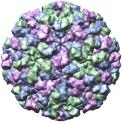
CDC Norwalk_Caspid

Abstract

Seven foodborne norovirus outbreaks attributable to the GII.P17-GII.17 strain were reported across Japan in 2017, causing illness in a total of 2,094 persons. Nori (dried shredded seaweed) was implicated in all outbreaks and tested positive for norovirus. Our data highlight the stability of norovirus in dehydrated food products.


RASFF Alerts- Norovirus – Live Oysters

kswfoodworld food safety poisoning

RASFF-norovirus (GII /2g) in live oysters (Crassostrea gigas) from France in Italy

RASFF-norovirus (GI; GII/ 2g) in live oysters (Crassostrea gigas) from France in Italy

RASFF-norovirus (GI; GII/ 2g) in live oysters (Crassostrea gigas) from France in Italy

RASFF-norovirus (Gl/2g) in live oysters (Crassostrea gigas) from France in Italy

RASFF-norovirus (Gl/2g) in live oysters (Crassostrea gigas) from France in Italy

RASFF-norovirus (Gl/2g) in live oysters (Crassostrea gigas) from France in Italy

Canada – At least 40 sick linked to 2 Canadian oyster farms – Norovirus

Barf Blog 


Two B.C. Vancouver Island oyster farms have been closed following an outbreak of norovirus associated with eating the raw shellfish.

The B.C. Centre for Disease Control says about 40 cases of acute gastrointestinal illness have been connected to the consumption of raw oysters since March. Testing has confirmed some of the cases were norovirus.

Federal officials with Fisheries and Oceans Canada (DFO) confirmed the affected farms are located on the east coast of Vancouver Island at Deep Bay and Denman Island.

While the two farms are no longer harvesting oysters for consumption, no recall of oysters has been issued by the Canadian Food Inspection Agency.

Information – Blame the consumer, cruise edition

Barf Blog

The simple fact is that if people washed their hands, there would be no norovirus,’ that’s what Royal Caribbean CEO Michael Bayley said in an  interview in Business Insider published this week.

Nope. It’s not that simple. Handwashing is a factor, but so is showing up ill, so is how surfaces are cleaned and sanitized (and with what compound). Norovirus isn’t just a handwashing or cruise patron problem. And if it was, and  was so simple we wouldn’t see 20 million + illness annually in the U.S.