Category Archives: Nisin

Research – Nisin Inhibition of Gram-Negative Bacteria

MDPI

Abstract

Aims: This study investigates the activity of the broad-spectrum bacteriocin nisin against a large panel of Gram-negative bacterial isolates, including relevant plant, animal, and human pathogens. The aim is to generate supportive evidence towards the use/inclusion of bacteriocin-based therapeutics and open avenues for their continued development.
Methods and Results: Nisin inhibitory activity was screened against a panel of 575 strains of Gram-negative bacteria, encompassing 17 genera. Nisin inhibition was observed in 309 out of 575 strains, challenging the prevailing belief that nisin lacks effectiveness against Gram-negative bacteria. The genera AcinetobacterHelicobacterErwinia, and Xanthomonas exhibited particularly high nisin sensitivity.
Conclusions: The findings of this study highlight the promising potential of nisin as a therapeutic agent for several key Gram-negative plant, animal, and human pathogens. These results challenge the prevailing notion that nisin is less effective or ineffective against Gram-negative pathogens when compared to Gram-positive pathogens and support future pursuits of nisin as a complementary therapy to existing antibiotics.
Significance and Impact of Study: This research supports further exploration of nisin as a promising therapeutic agent for numerous human, animal, and plant health applications, offering a complementary tool for infection control in the face of multidrug-resistant bacteria.
Research – Inhibition and eradication of Listeria monocytogenes biofilm using the combined treatment with nisin and sesamol

Science Direct

Abstract

Listeria monocytogenes can form biofilms, which enables it to persist in the food industry and poses a significant threat to food safety. The combination of nisin (NS) and sesamol (SE) has been found to inhibit the proliferation of L. monocytogenes. The objective of this study is to evaluate the effects of the combined use of NS and SE on the biofilm formation of L. monocytogenes and investigate the potential underlying mechanisms. The results showed that the combination of NS and SE completely inhibited the biofilm formation of both strains on the stainless steel sheet within 48 h. The existing L. monocytogenes biofilm on the stainless steel sheet was completely removed within 4 h after the combined treatment of NS and SE. Compared with individual treatment, the combined use of NS and SE resulted in a more significant downregulation in gene expression of fbpA, which is associated with L. monocytogenes biofilm formation. The findings suggest that the combined strategy of NS and SE in food processing has greater potential to control the formation of L. monocytogenes biofilms and eliminate existing ones, compared with using NS or SE alone.

Research – Reduction and Growth Inhibition of Listeria monocytogenes by Use of Anti-Listerial Nisin, P100 Phages and Buffered Dry Vinegar Fermentates in Standard and Sodium-Reduced Cold-Smoked Salmon

MDPI

Abstract

Cold-smoked salmon are ready-to-eat products that may support the growth of pathogenic Listeria monocytogenes during their long shelf-life. Consumption of such contaminated products can cause fatal listeriosis infections. Another challenge and potential risk associated with CS salmon is their high levels of sodium salt. Excess dietary intake is associated with serious health complications. In the present study, anti-listerial bacteriocin (nisin), P100 bacteriophages (Phageguard L, PGL) and fermentates (Verdad N6, P-NDV) were evaluated as commercial bio-preservation strategies for increased control of L. monocytogenes in standard (with NaCl) and sodium-reduced (NaCl partially replaced with KCl) CS salmon. Treatments of CS salmon with nisin (1 ppm) and PGL (5 × 10⁷ pfu/cm2) separately yielded significant initial reductions in L. monocytogenes (up to 0.7 log) compared to untreated samples. Enhanced additive reductions were achieved through the combined treatments of nisin and PGL. Fermentates in the CS salmon inhibited the growth of Listeria but did not lead to its eradication. The lowest levels of L. monocytogenes during storage were observed in nisin- and PGL-treated CS salmon containing preservative fermentates and stored at 4 °C, while enhanced growth was observed during storage at an abusive temperature of 8 °C. Evaluation of industry-processed standard and sodium-replaced CS salmon confirmed significant effects with up to 1.7 log reductions in L. monocytogenes levels after 34 days of storage of PGL- and nisin-treated CS salmon-containing fermentates. No differences in total aerobic plate counts were observed between treated (PGL and nisin) or non-treated standard and sodium-reduced CS salmon at the end of storage. The microbiota was dominated by Photobacterium, but with a shift showing dominance of Lactococcus spp. and Vagococcus spp. in fermentate-containing samples. Similar and robust reductions in L. monocytogenes can be achieved in both standard and sodium-replaced CS salmon using the bio-preservation strategies of nisin, PGL and fermentates under various and relevant processing and storage conditions.

Research – Microbial Inhibition by UV Radiation Combined with Nisin and Shelf-Life Extension of Tangerine Juice during Refrigerated Storage

MDPI

Abstract

This study evaluated the efficiency of UV radiation doses (4.68–149.76 J/cm2) and nisin (50–200 ppm) and their combination in comparison with thermal pasteurization on the microbial inhibition kinetics and physicochemical properties of tangerine juice. It was noted that UV-149.76 J/cm2 and nisin (NS) at 200 ppm in conjunction exhibited the highest log reduction in spoilage and pathogenic microbes including Escherichia coliLactiplantibacillus plantarum, and Saccharomyces cerevisiae, yeast and molds, and total plate count in tangerine juice. Additionally, the first-order kinetic model provides a better fit for spoilage and pathogenic strains compared with the zero-order model (higher coefficient of determination, R2), particularly for E. coli. UV and NS showed insignificant effects (p > 0.05) on pH, TSS, and TA values compared with pasteurization. However, there were notable differences observed in color analysis, total phenolic compound, total flavonoid content, vitamin C, carotenoid content, and antioxidant activity using DPPH and FRAP assays. The optimized UV + NS samples were subjected to refrigerated storage for 21 days. The results revealed that during the entire storage period, the pH values and the TSS values slightly decreased, and the TA values increased in the treated samples. The UV + NS treatment insignificantly impacted the color properties. The total phenolic, total flavonoid, and carotenoid contents, and vitamin C decreased over time for all sample treatments, whereas the antioxidant properties exhibited varying outcomes, compared with an untreated control and pasteurization. Therefore, UV radiation and nisin (UV-149.76 J/cm2 + NS-200 ppm) in combination could serve as a viable alternative to traditional heat pasteurization of fruit juice during cold storage.

Research – Enhancement of the Antibiofilm Activity of Nisin against Listeria monocytogenes Using Food Plant Extracts

MDPI

Abstract

Listeria monocytogenes is a foodborne pathogen exhibiting a high mortality rate. In addition to the robust tolerance to environmental stress, the ability of L. monocytogenes to develop biofilms increases the risk of contaminating food processing facilities and ultimately foods. This study aims to develop a synergistic approach to better control Listeria biofilms using nisin, the only bacteriocin approved as a food preservative, in combination with gallic-acid-rich food plant extracts. Biofilm assays in the presence of nisin and gallic acid or its derivatives revealed that gallic acid significantly decreased the level of biofilm formation in L. monocytogenes, whereas ethyl gallate, propyl gallate, and lauryl gallate enhanced biofilm production. As gallic acid is widely distributed in plants, we examined whether extracts from gallic-acid-rich food plants, such as clove, chestnut, oregano, and sage, may generate similar antibiofilm effects. Remarkably, sage extracts enhanced the antibiofilm activity of nisin against L. monocytogenes; however, the other tested extracts increased biofilm formation, particularly at high concentrations. Moreover, sage extracts and nisin combinations significantly reduced the biofilm formation of L. monocytogenes on stainless steel. Sage is a common food spice and has various beneficial health effects, including antioxidation and anti-cancer properties. The findings in this study demonstrate that sage extracts can be potentially combined with nisin to prevent biofilm production in L. monocytogenes.

Research – Effects of sodium alginate edible coating with cinnamon essential oil nanocapsules and Nisin on quality and shelf life of beef slices during refrigeration

Journal of Food Protection

The effects of the sodium alginate (SA) coating incorporated with cinnamon essential oil nanocapsules (CEO-NPs) and Nisin, as a new edible coating, were investigated on the preservation of beef slices in the refrigerated storage for 15 days. All beef samples were analyzed for physicochemical properties (pH value, weight loss, the total volatile base nitrogen (TVB-N)) and antimicrobial activity against total bacterial count (TBC). Besides, the changes in color parameters and sensory attributes of all beef samples were evaluated. The results revealed that the incorporation of the complex of CEO-NPs and Nisin retarded the growth of the microorganism and reduced lipid oxidation, as determined by pH, TVB-N, and TBC. This can extend the shelf life of beef slices to 15 days. Moreover, the treatment with the SA coating, incorporating CEO-NPs and Nisin, significantly improved the weight loss, color, odor, textural, and broth attributes of the beef samples. The results suggest that the coating treatment enriched with CEO-NPs and Nisin could significantly inhibit quality deterioration of beef slices, and the complex of CEO-NPs and Nisin can improve antioxidant, antibacterial and sensory properties of the SA coating. Thus, the new edible coating could be regarded as a potential material to preserve beef slices.

Research – Nisin-based antimircobial combination with cold plasma treatment inactivate Listeria monocytogenes on Granny Smith apples

Science Direct

Abstract

A nisin-based antimicrobial and cold plasma combination treatments in reducing Listeria monocytogenes inoculated on apple surfaces purchased from a New Jersey farm and a supermarket in Philadelphia area was investigated. All apples were spot inoculated or by submersion in 107 CFU/ml L. monocytogenes inoculum. Populations of L. monocytogenes recovered on farm and supermarket apples after spot inoculation averaged 5.8 ± 0.24 log CFU/g and 4.6 ± 0.12 log CFU/g, respectively and 4.1 ± 0.22 log CFU/g and 3.6 ± 0.12 log CFU/g, respectively on submerged apples. All apples were treated with antimicrobial solution for 30 s, 40 s, 3 min (180s) and 1 h (3600 s), cold plasma treatments for 30 and 40s, and a combination of antimicrobial and cold plasma treatments and the surface structure of apples were examined using scanning electron microscopy (SEM). Cold plasma treatment at 40s, followed immediately with antimicrobial treatments at 180s and 3600 s led to 2.5 and 4.6 log CFU/g inactivation of L. monocytogenes, respectively. SEM observation showed changes on apple surface structures but not on bacterial cell structure. This result suggests that this combination treatments is effective in killing L. monocytogenes on apple surfaces.

Research – Thermosonication Combined with Natural Antimicrobial Nisin: A Potential Technique Ensuring Microbiological Safety and Improving the Quality Parameters of Orange Juice

MDPI

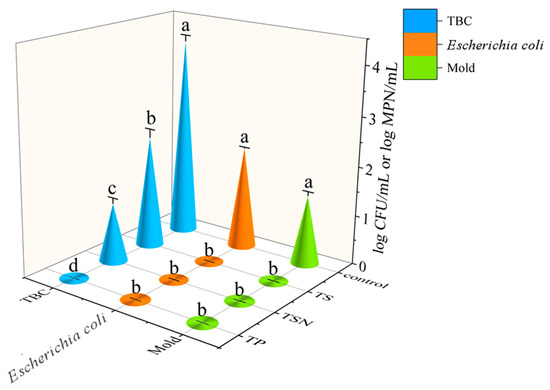
Currently, thermal pasteurisation (TP) remains the most widely applied technique for commercial orange juice preservation; however, a high temperature causes adverse effects on the quality attributes of orange juice. In order to explore a novel non-thermal sterilization method for orange juice, the impacts of thermosonication combined with nisin (TSN) and TP treatments on the quality attributes including microbial and enzyme inactivation and the physicochemical, nutritional, functional, and sensory qualities of orange juice were studied. Both TP and TSN treatments achieved desirable bactericidal and enzyme inactivation effects, and nisin had a significant synergistic lethal effect on aerobic bacteria in orange juice (p < 0.05). Additionally, TSN treatment significantly improved the color attributes of orange juice and well maintained its physicochemical properties and sensory quality. More importantly, TSN treatment significantly increased the total polyphenols content (TPC) and total carotenoids (TC) by 10.03% and 20.10%, increased the ORAC and DPPH by 51.10% and 10.58%, and the contents of total flavonoids and ascorbic acid were largely retained. Correlation analysis of antioxidant activity showed that the ORAC and scavenging ability of DPPH radicals of orange juice are mainly attributed to TC and TPC. These findings indicate that TSN shows great potential application value, which could guarantee the microbiological safety and improve the quality attributes of orange juice. View Full-Text

▼ Show Figures

Research – Synergistic antibacterial effect of nisin, ethylenediaminetetraacetic acid, and sulfite on native microflora of fresh white shrimp during ice storage

Wiley Online

This study aims to investigate the effectiveness of using nisin, ethylenediaminetetraacetic acid (EDTA), and sulfite alone or in combination in reducing Vibrio parahaemolyticus Salmonella enterica , and Pseudomonas fluorescens in broth and native microflora on raw Pacific white shrimp during ice storage. Nisin (50 ppm), EDTA (20 mM), alone or in combination were used to test on the growth of parahaemolyticus enterica , and fluorescens in broth. Nisin (50 ppm), EDTA (20 mM), sodium metabisulfite (1.25 and 0.625%), ice; alone or in combination were used on shrimps during 1°C storage for 10 days. Microbial and chemical changes were analyzed during shrimp storage. First, the combination of nisin and EDTA exhibited antibacterial effects against parahaemolyticus enterica , and fluorescens in broth. Second, in shrimp preservation, the combination of nisin, EDTA, and sulfite at a low dose of 0.625% exhibited higher antimicrobial activity than did a high dose of sulfite (1.25%). Based on aerobic bacteria counts, psychrotrophic bacteria, and TVB‐N, shrimp treatment with combination of nisin, EDTA, and low‐dose sulfite were still acceptable within 10 days of storage. Based on our findings, nisin and EDTA can be used to reduce uses of sulfite for shrimp preservation in the future.

Research-Nisin-Based Organic Acid Inactivation of Salmonella on Grape Tomatoes: Efficacy of Treatment with Bioluminescence ATP Assay

Journal of Food Protection

ABSTRACT

The antimicrobial activity of a new nisin-based organic acid sanitizer (NOAS), developed in our laboratory, was tested against viable aerobic mesophilic bacteria and Salmonella populations inoculated on produce surfaces. The activity of NOAS was compared with 200 ppm of chlorinated wash water and a bioluminescence ATP technique to determine the efficacy of treatments compared with plate count methods. The activity of the 10% final concentration of NOAS against viable populations of 109 CFU/mL Salmonella in phosphate-buffered saline (PBS), sterile deionized distilled water, and buffered peptone water was tested in vitro and on grape tomatoes inoculated with Salmonella at 2.5 log CFU/g. A similar batch of inoculated tomatoes were treated with 200 ppm of total available chlorinated water. All treatments for inactivation of viable Salmonella in vitro was tested up to 30 min and 5 min for the attached populations on tomatoes. Inactivation of viable Salmonella at 109 log CFU/mL by 10% the NOAS solution averaged >107 log CFU/mL in PBS, sterile deionized distilled water, and buffered peptone water. Similarly, Salmonella bacteria inactivated on tomato surfaces by the NOAS solution was significantly (P < 0.05) greater than numbers on chlorinated washed tomatoes, and surviving bacterial populations on NOAS and chlorine-treated tomatoes were <1 and 4 CFU/g, respectively. A significant linear correlation coefficient (r2 = 0.99) between the bioluminescence ATP assay and aerobic plate counts of inoculated and untreated grape tomatoes were recorded but not with NOAS and chlorine-treated tomatoes, as bacterial populations were less than the minimum baseline for determination. Also, the results indicated that the NOAS solution is a better alternative antimicrobial wash solution than 200 ppm of chlorinated water.

HIGHLIGHTS
  • The antimicrobial activity of NOAS was compared with chlorinated water.

  • Salmonella bacteria were more susceptible to NOAS than chlorinated water.

  • Assay correlated with aerobic plate count of inoculated and untreated tomatoes, not treated ones.

  • NOAS is an excellent alternative antimicrobial wash solution compared with chlorinated wash water.