RASFF – high count of Enterobacteriaceae (<10; <10; 20; 50; 200 CFU/g) in fish meal from Peru in Germany
RASFF – high count of Enterobacteriaceae (up to 600 CFU/g) in fish meal from Peru in Germany

A doctor who made £72,000 signing more than 400 bogus sick notes for his wife’s legal firm has been struck off the medical register.
Dr Zuber Bux, 47, filled in false illness reports from holidaymakers claiming compensation from travel firms through his solicitor wife Sehana’s law business.
Over four years Dr Bux, a GP from Blackburn, Lancashire, made about £72,000 writing more than 400 reports but did not inform holiday companies or the courts that his wife worked for AMS, the law firm that instructed him.
A Medical Practitioners Tribunal in Manchester informed Dr Bux that his name has been erased from the medical register due to his ‘dishonesty’ and for the ‘protection of the public’.
Microscopic droplets on the surface of leaves give refuge to bacteria that otherwise may not survive during the dry daytime, according to a new study published today in eLife.
Understanding this bacterial survival strategy for dry conditions may enable scientists to develop practices that support healthy plant microbiomes in agricultural and natural settings.
The surface of an average plant leaf is teeming with about 10 million microbes — a population comparable to that of large cities — that contribute to the health and day-to-day functioning of the plant. Scientists have long wondered how bacteria are able to survive as daytime temperatures and sunlight dry off leaf surfaces.
“While leaves may appear to be completely dry during the day, there is evidence that they are frequently covered by thin liquid films or micrometre-sized droplets that are invisible to the naked eye,” says co-lead author Maor Grinberg, a PhD student at Hebrew University’s Robert H. Smith Faculty of Agriculture, Food, and Environment in Rehovot, Israel. “It wasn’t clear until now whether this microscopic wetness was enough to protect bacteria from drying out.”
To answer this question, Grinberg, together with co-lead author and Research Scientist Tomer Orevi and their team, recreated leaf surface-like conditions in the laboratory using glass plates that were exposed to various levels of humidity. They then conducted experiments with more than a dozen different bacteria species in these conditions.
They observed that while these surfaces appeared dry to the naked eye, under a microscope bacteria cells and aggregates were safely shielded in miniscule droplets. Interestingly, larger droplets formed around aggregates of more than one cell, while only tiny droplets formed around solitary cells. This microscopic wetness is caused by a process called deliquescence — where hygroscopic substances, such as aerosols, that are prevalent on leaves absorb moisture from the atmosphere and dissolve within the moisture to form the droplets.
“We found that bacteria cells can survive inside these droplets for more than 24 hours and that survival rates were much higher in larger droplets,” Orevi explains. “Our results suggest that through methods of self-organisation, for example by aggregation, these cells can improve their survival chances in environments frequently exposed to drying.”
These findings could have important implications for agriculture as human practices may inadvertently interfere with this bacterial survival mechanism, endangering the health of crops and natural vegetation, according to senior author Nadav Kashtan, PhD, Assistant Professor at Hebrew University’s Robert H. Smith Faculty of Agriculture, Food, and Environment. “A greater understanding of how microscopic leaf wetness may protect the healthy plant microbiome and how it might be disrupted by agricultural practices and human aerosol emissions is of great importance,” he says.
Kashtan also notes that similar microscopic surface wetness likely occurs in soil, in the built environment, on human and animal skin, and potentially even in extra-terrestrial systems where conditions might allow, suggesting such bacterial survival strategies are not limited to leaf surfaces.
RASFF -dried beet pulp from Ukraine infested with moulds in Poland
RASFF -aflatoxins (B1 = 160 µg/kg – ppb) in groundnuts for birdfeed from the United States in the UK
North Carolina health officials have reported a third Legionnaires’ disease fatality linked to the NC Mountain State Fair, held September 6-15, 2019 at the Western North Carolina Agricultural Center in Fletcher, NC.
As of Oct. 14, 140 cases of Legionnaires’ disease or Pontiac Fever had been reported in residents of multiple states and North Carolina counties.
Buncombe, Henderson and Haywood counties have seen the most cases with 49, 34 and 12, respectively. Ten cases were reported in out of state residents.
The outbreak has been linked to a hot tubs display at the Davis Event Center at WNC Ag Center.
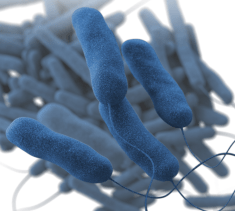
Legionella bacteria are found naturally in the environment. These bacteria can become a health concern when they grow and spread in human-made building water systems like hot water tanks, cooling towers of air conditioning systems, decorative fountains and hot tubs or spas that aren’t properly maintained.
Approximately 200 cases are reported annually in North Carolina.

A new study from Washington University School of Medicine in St. Louis sheds light on how human gut microbes break down processed foods — especially potentially harmful chemical changes often produced during modern food manufacturing processes.
Eating processed foods such as breads, cereals and sodas is associated with negative health effects, including insulin resistance and obesity.
Reporting Oct. 9 in the journal Cell Host & Microbe, scientists have identified a specific human gut bacterial strain that breaks down the chemical fructoselysine, and turns it into harmless byproducts. Fructoselysine is in a class of chemicals called Maillard Reaction Products, which are formed during food processing. Some of these chemicals have been linked to harmful health effects. These findings raise the prospect that it may be possible to use such knowledge of the gut microbiome to help develop healthier, more nutritious processed foods.
Isla Grainger, 4, needed to be put into an induced coma in intensive care after an E.coli bug an infection induced her kidneys to fail.
She received so sick after visiting Tapnell Farm, in Yarmouth on the Isle of Wight, together with her household that her mum Lauren Aspery, 21, described her situation as a ‘matter of life and death’.
Public Well being England mentioned its investigation into the supply of the an infection is ongoing.