Category Archives: Food Technology

Research – Utility of Whole Genome Sequencing To Describe the Persistence and Evolution of Listeria monocytogenes Strains within Crabmeat Processing Environments Linked to Two Outbreaks of Listeriosis

Journal of Food Protection

This article describes the identification and investigation of two extended outbreaks of listeriosis in which crabmeat was identified as the vehicle of infection. Comparing contemporary and retrospective typing data of Listeria monocytogenes isolates from clinical cases and from food and food processing environments allowed the detection of cases going back several years. This information, combined with the analysis of routinely collected enhanced surveillance data, helped to direct the investigation and identify the vehicle of infection. Retrospective whole genome sequencing (WGS) analysis of isolates provided robust microbiological evidence of links between cases, foods, and the environments in which they were produced and demonstrated that for some cases and foods, identified by fluorescent amplified fragment length polymorphism, the molecular typing method in routine use at the time, were not part of the outbreak. WGS analysis also showed that the strains causing illness had persisted in two food production environments for many years and in one producer had evolved into two strains over a period of around 8 years. This article demonstrates the value of reviewing L. monocytogenes typing data from clinical cases together with that from foods as a means of identifying potential vehicles and sources of infection in outbreaks of listeriosis. It illustrates the importance of reviewing retrospective L. monocytogenes typing alongside enhanced surveillance data to characterize extended outbreaks and inform control measures. Also, this article highlights the advantages of WGS analysis for strain discrimination and clarification of evolutionary relationships that refine outbreak investigations and improve our understanding of L. monocytogenes in the food chain.

Research – Assessment of Microbial Populations in the Manufacture of Vacuum-Packaged Ready-to-Eat Roast Beef and in a Related Production Plant

Journal of Food Protection

Some microbiological criteria were monitored for 6 months in vacuum-packaged roast beef (15 production batches), raw beef (10 batches), and other meat products (12 batches) produced in an Italian small to medium-size enterprise. Fifty-five environmental swab samples also were analyzed. The main bacterial groups were identified by cultural methods according to International Organization for Standardization standards. Listeria monocytogenes was enumerated with the most-probable-number protocol, and species identification was confirmed with a specific PCR assay. Immediately after vacuum packaging, all ready-to-eat (RTE) products had low mean aerobic colony counts (<102 to 2.4 × 10² CFU g−1), anaerobic colony counts (1.6 to 6.5 × 101 CFU g−1), Enterobacteriaceae counts (1.1 to 1.4 × 101 CFU g−1), and Escherichia coli counts (generally below the detection limit). Nevertheless, the prevalence of L. monocytogenes in these samples was 3.7%. In roast beef samples, the aerobic and anaerobic colony counts reached unacceptable levels (>106 CFU g−1) after 14 days of refrigerated storage. Because the prevalence of L. monocytogenes increased to 13.3% during storage, a substantial reduction in the shelf life of these products is recommended. Surfaces without direct contact with food (floors and drains) had the highest mean counts for aerobic colonies (8.0 × 10³ to 9.5 × 10⁵ CFU/cm2), anaerobic colonies (2.9 × 10³ to 3.2 × 10⁴ CFU/cm2), Enterobacteriaceae (1.5 × 101 to 8.4 × 101 CFU/cm2), and E. coli (6.0 to 7.7 CFU/cm2). The levels of L. monocytogenes on direct food contact surfaces were below the detection limit, but more than 25% of floor samples were contaminated. These results reveal the persistence of L. monocytogenes in food processing environments, although at very low levels, posing a high risk of postcooking recontamination for RTE products. To improve hygienic conditions and reduce cross-contamination, an increase in operator awareness and a reassessment of surface sanitization protocols are needed.

Research – Growth potential of Listeria monocytogenes in ready‐to‐eat Feta cheese‐based sauce stored at 4°C

Wiley Online Library

Abstract

Listeria monocytogenes is now a well‐known foodborne pathogen of particular importance in ready‐to‐eat (RTE) refrigerated foods given the psychrotrophic character and ubiquitous nature of the bacterium. The objective of the current research was to assess the growth potential of L. monocytogenes in RTE cheese‐based (Feta) sauce. For this to occur, samples of Feta cheese‐based sauce (ca. 1% NaCl, pH = 4.6, 900 ppm sorbic acid) were artificially contaminated with a mixture of two L. monocytogenes strains and were stored aerobically at 4°C for 30 days. Growth potential (δ) of L. monocytogenes in Feta cheese‐based sauce was calculated at −1.2 log CFU/g for the 30‐day shelf‐life (i.e., δ < 0.5 log CFU/g). Findings of this study indicate that Feta cheese‐based sauce containing 900 ppm of sorbic acid as preservative is unable to support the growth of L. monocytogenes, thus the food safety criterion for pathogen enumeration not exceeding the limit of 100 CFU/g should apply during the shelf‐life of the product, as stated by Commission Regulation (EC) No. 2073/2005.

Practical applications

Contamination of acidic cheese‐based spreadable products, with pH ≤ 4.6 and/or water activity (i.e., Aw) > 0.94, with different bacterial species during the manufacturing process, could limit considerably the shelf‐life of these RTE products. Moreover, among other possible contaminants, the ubiquitous psychrotrophic pathogen L. monocytogenes may pose a serious threat for the microbiological safety of such products, like a Feta cheese‐based sauce with the aforementioned characteristics. Challenge testing for assessing the risk from L. monocytogenes presence during shelf‐life of this product is, therefore, deemed necessary and can provide us with useful information regarding possible pathogen containment due to product’s composition and characteristics. Conclusively, even if the Feta cheese‐based sauce described in this study is contaminated with low numbers of L. monocytogenes at levels below the limit of detection (i.e., absence in 25 g), then the organism will not exceed 100 CFU/g by the end of product’s shelf‐life.

Research – Principles of intracellular bacterial pathogen spread from cell to cell

PLOS One

A subset of intracellular pathogens, including Listeria monocytogenes, Shigella flexneri, Rickettsia spp., and Burkholderia spp. disseminate within nonphagocytic cells, such as epithelial and endothelial cells, through a process referred to as cell-to-cell spread [1]. These pathogens utilize the host cell actin cytoskeleton to move in the cytosol of infected cells and project into adjacent cells through formation of membrane protrusions. The formed protrusions resolve into vacuoles from which the pathogen escapes, thereby gaining access to the cytosol of adjacent cells (Fig 1). Here, we present the general principles and summarize the underlying mechanisms supporting this bacterial dissemination process.

Research – Thermal Inactivation of Listeria monocytogenes in Crab Meat

Journal of Food Protection 

Listeria kswfoodworld food safety food poisoning

Image CDC


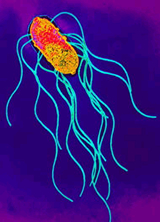
Listeria monocytogenes is an important bacterial pathogen in seafood products, but limited information is currently available on the thermal resistance of relevant isolates in seafood. Thermal inactivation studies were undertaken (i) to provide much needed thermal inactivation data for L. monocytogenes in crab meat and (ii) to investigate whether tryptone soya broth (TSB) is representative of crab meat in thermal inactivation studies involving L. monocytogenes. D-values were obtained for a cocktail of two crab isolates (serotypes 1/2a and 4b) at 50, 55, and 60°C. In crab meat, D-values were 174.4, 28.2, and 1.6 min, respectively. Similar D-values of 176.4, 28.8, and 1.4 min were obtained in TSB. The corresponding z-values were 4.9°C (crab meat) and 4.8°C (TSB), respectively. The conclusions were that (i) current pasteurization conditions (e.g., 70°C for 2 min) would achieve complete destruction of any L. monocytogenes present in crab meat and (ii) TSB could be used as a model matrix for assessing the thermal inactivation of L. monocytogenes in crab meat.

USA – Worker with Hepatitis A at Applebee’s in Winchester, KY

Food Poisoning Bulletin

A worker at the Applebee’s restaurant at 1525 West Lexington Avenue in Winchester, New York has been diagnosed with hepatitis A, according to a public health advisory posted by the Clark County Health Department. That person worked there from November 14 through November 25, 2018.

That means it is too late to get a hepatitis A or immune globulin vaccination, since the shot is only effective if given within two weeks of exposure. If you ate food or drank beverages there during that time period, all you can do is monitor yourself for the symptoms of hepatitis A.

Those symptoms include dark urine, lethargy, clay-colored stools, fever, loss of appetite, weight loss, stomach pain, nausea, and jaundice, which is yellowing of the eyes and skin. These symptoms can appear anywhere from two weeks to 50 days after exposure.

Research – Inhibition of Listeria monocytogenes growth on vacuum packaged rainbow trout (Oncorhynchus mykiss) with carvacrol and eugenol

Wiley Online Library

Abstract

The aim of this study was to evaluate the effects of carvacrol and eugenol, separately and in combination, on survival of Listeria monocytogenes, and sensory and microbiological characteristics in vacuum packaged Oncorhynchus mykiss during refrigerated storage (4 ± 1 °C) for 20 days. The control fish fillets were analyzed for microbial (total mesophilic and psychrotrophic bacteria and lactic acid bacteria) and sensory properties. Fish fillets treated with carvacrol, eugenol, and their combination displayed populations of L. monocytogenes significantly lower, by 1.35–2.84 log cfu/g, than the control fillets during the whole storage period. No significant differences between groups of fish fillets with different active compound(s) added were noted except at the end of the storage, when the number of L. monocytogenes was significantly lower in the fish fillets with eugenol added. Sensory analysis showed that fish fillets with eugenol added were the most acceptable to trained panelists.

Practical applications

Taking into account the increasing need for the production of safe fish and fish products and the fact that carvacrol and eugenol, which exhibited significant antilisterial effect, are generally recognized as safe they can find its practical application in fish industry. Furthermore, as these substances are major constituents of numerous essential oils they can be considered as natural preservatives and used in the organic production as a substitute with synthetic additives which can cause adverse effects.

Research – Validation of a Simulated Commercial Frying Process to Control Salmonella in Donuts

Mary Anne Leibert

Salmonella kswfoodworld

This study validated a typical commercial donut frying process as an effective kill-step against a 7-serovar Salmonella cocktail (Newport, Typhimurium, Senftenberg, Tennessee, and three dry food isolates) when contamination was introduced through inoculated flour. The bread and pastry flour mix (3:1) was inoculated with the Salmonella cocktail, and subsequently dried back to original preinoculation moisture content, achieving a Salmonella population of 7.6 log CFU/g. Inoculated flour was used to prepare a typical commercial donut batter, which was fried using 375°F (190.6°C) oil temperature. No viable Salmonella was detected using an enrichment plating protocol in the donuts after 2 min of frying, resulting in >7-log reduction in Salmonella population. The internal donut temperature increased from ∼30°C to ∼119°C at the end of 2 min of frying. The water activities of the donut crumb and crust after 2 min of frying, followed by 30 min of ambient air cooling, were 0.944 and 0.852, respectively. The donut pH after ambient-air cooling was 5.51. The D- and z-values of the Salmonella cocktail in donut dough were determined using thermal-death-time disks and temperature-controlled water baths. The D-values of the cocktail were 8.6, 2.9, and 2.1 min at 55°C, 58°C, and 61°C, respectively, whereas the z-value was 10°C. This study validated that >7-log reduction could be achieved if donuts are fried for at least 2 min in the oil at 190.6°C, and calculated D- and z-values present the heat resistance of Salmonella in donut dough at the start of the frying processes. However, results from this study should not be extrapolated when donut composition and frying parameters are changed significantly.

RASFF Alerts – Salmonella – Chilled Marinated Chicken Breasts – Chicken Preparation -Chilled Turkey Merguez Sausages – Nettle Leaves – Chicken Wings – Turkey Fillets – White Sesame Seeds – Sesame Seeds – Sesame Paste – Shrimps – Black Pepper -Mussels – Minced Turkey Meat

RASFF-Logo

RASFF -Salmonella (presence /25g) in frozen chicken preparation from Brazil in the Netherlands

RASFF -Salmonella enterica ser. Infantis (present /25g) in chilled marinated chicken breasts from Italy in Austria

RASFF-Salmonella enterica ser. Typhimurium (presence /25g) in chilled turkey merguez sausages from France in the Netherlands

RASFF -Salmonella (group F, presence /25g) in dried and cut nettle leaves from Albania in Germany

RASFF-Salmonella enterica ser. Enteritidis (presence /25g) in chilled chicken broiler wings from Lithuania in Lithuania

RASFF -Salmonella enterica ser. Typhimurium monophasic (1 ,4, [5], 12:i:-) (presence /25g) in chilled turkey fillets from France in France

RASFF-Salmonella (in 1 out of 5 samples /25g) in organic unhulled white sesame seeds from Poland, with raw material from Burkina Faso in Poland

RASFF-Salmonella (Presence /25g) in sesame paste (tahini) from Syria in Cyprus

RASFF-Salmonella enterica ser. Typhimurium monophasic (1 ,4, [5], 12:i:-) (presence /25g) in chilled chicken leg quarters from Poland in Croatia

RASFF -Salmonella (present /25g) in frozen shrimps (Penaeus monodon) from Vietnam in the Netherlands

RASFF -Salmonella (presence /25g) in sesame seeds from Sudan in Greece

RASFF-Salmonella enterica ser. London (presence /25g) in sesame seeds from India in Germany

RASFF-Salmonella (presence /25g) in black pepper from Brazil in Spain

RASFF-Salmonella (presence /25g) in live organic mussels (Mytilus galloprovincialis) from Italy, harvested in Spain in Italy

RASFF-Salmonella (presence /25g) in frozen poultry meat preparation from Brazil in the Netherlands

RASFF-Salmonella (presence /25g) in frozen chicken preparation from Brazil in the Netherlands

RASFF-Salmonella enterica ser. Infantis (present /25g) in chilled marinated chicken breasts from Italy in Austria

RASFF -Salmonella (in 3 out of 5 samples /25g) in frozen minced turkey meat from Germany in Italy

Research – Radio-Frequency Processing for Inactivation of Salmonella enterica and Enterococcus faecium NRRL B-2354 in Black Peppercorn

Journal of Food Protection

Several Salmonella outbreaks linked to black pepper call for effective inactivation processes, because current decontamination methods result in quality deterioration. Radio-frequency (RF) heating provides a rapid heating rate and volumetric heating, resulting in a shorter come-up time. This allows for choosing a high-temperature and short-time combination to achieve the desired inactivation with minimal quality deterioration. The objectives of this study were to evaluate RF heating for inactivation of Salmonella enterica and Enterococcus faecium in black peppercorn and evaluate quality changes of RF-treated black peppercorn. Black peppercorns were inoculated with a five-strain cocktail of Salmonella or E. faecium to attain initial population levels of 6.8 and 7.3 log CFU/g, respectively, and were then adjusted to a moisture content of 12.7% (wet basis) and a water activity of 0.60 at room temperature. A stability test was performed to quantify the microbial reduction during inoculation and equilibration before RF heating inactivation. During RF heating, the cold spot was determined to be at the center on the top surface of the treated sample. In addition to inoculating the entire sample, an inoculated packed sample was placed at the cold spot of the tray. An RF heating time of 2.5 min provided a 5.31- and 5.26-log CFU/g reduction in the entire sample contained in the tray for Salmonella and E. faecium, respectively. Color parameters (L*, a*, b*), piperine content, total phenolics, scavenging activity, and most of the volatile compounds of 2.5-min RF-treated samples were not significantly different from those of the control samples. These data suggest that RF heating is a promising thermal inactivation treatment for Salmonella without significant quality deterioration, and E. faecium seems to be a suitable surrogate for Salmonella to validate the efficacy of RF heating of black peppercorn.