Category Archives: Food Safety Alert

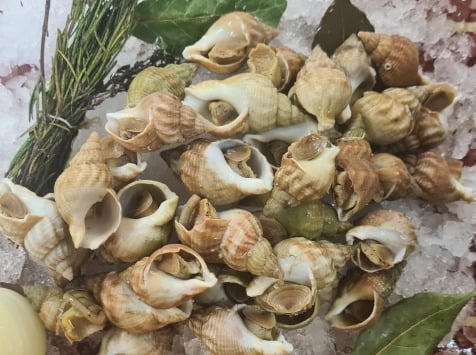
France – Cooked whelks, cooked periwinkles, cooked traps, cooked murex, and cooked thumbs – E.coli

Gov france

  • Product category Food
  • Product subcategory Fishing and aquaculture products
  • Product brand name THAERON
  • Model names or references Trays of cooked whelks, cooked periwinkles, cooked traps, cooked murex, and cooked thumbs
  • Product identification
    GTIN Batch Date
    3293580020897 26323BUC65 Use-by date between 09/21/2023 and 10/02/2023
    3293580020316 26323BIC1 Use-by date between 09/21/2023 and 10/02/2023
    3293580020897 26323BUCGF85 Use-by date between 09/21/2023 and 10/02/2023
    3661737005514 26323MUC43 Use-by date between 09/21/2023 and 10/02/2023
    3661737005545 26323NAC43 Use-by date between 09/21/2023 and 10/02/2023
  • Products List Display_of_reminder_sté_Thaeron_Frères_-_23.09.22.pdfAttachment
  • Start/end date of marketing From 09/20/2023 to 09/22/2023
  • Storage temperature Product to keep in the refrigerator
  • Health mark FR.56.121. 088.CE
  • Geographical sales area Whole France
  • Distributors AUCHAN MATCH CAP FRAICHEUR CASINO CBM ACADIAN LOBSTER GRAND FRAIS E.LECLERC MARGAIN MAREE CORA POMONA SCACHAP SCAPMAREE TOP ATLANTIC NANTES MAREE TOP LANGOUSTE
  • List of points of sale Customer_list_and_delivery_addresses.pdf

Canada – Ararat brand Tahina recalled due to Salmonella

Gov france

Summary

Product
Tahina
Issue
Food – Microbial Contamination – Salmonella
What to do

Do not consume, use, sell, serve or distribute recalled products

Distribution
Ontario
Quebec

The affected product is being recalled from the marketplace due to possible Salmonella contamination.

What you should do

  • If you think you became sick from consuming a recalled product, contact your healthcare provider
  • Check to see if you have recalled products
  • Do not consume, serve, use, sell, or distribute recalled products
  • Recalled products should be thrown out or returned to the location where they were purchased

Food contaminated with Salmonella may not look or smell spoiled but can still make you sick. Young children, pregnant women, the elderly and people with weakened immune systems may contract serious and sometimes deadly infections. Healthy people may experience short-term symptoms such as fever, headache, vomiting, nausea, abdominal cramps and diarrhea. Long-term complications may include severe arthritis.

USA – Life Raft Treats has Expanded their Recalls of Ice Cream Products, Not Fried Chicken And Life Is Peachy, Due to Possible Listeria Monocytogenes Contamination – Expanded Recall

FDA

NORTH CHARLESTON, SC – September 19, 2023 – Life Raft Treats is expanding their recall of their Not Fried Chicken 64 oz bucket, Not Fried Chicken 2.5 oz bar UPC 8 60006 18210 6 and Life Is Peachy 6 count box ice cream products, to include the BEST BY DATES up to and including AUG 08282024 due to a potential contamination of Listeria monocytogenes. Listeria monocytogenes, an organism which can cause serious and sometimes fatal infections in young children, frail or elderly people, and others with weakened immune systems. Although healthy individuals may suffer only short-term symptoms such as high fever, severe headache, stiffness, nausea, abdominal pain and diarrhea, a Listeria monocytogenes infection can cause miscarriages and stillbirths among pregnant women.

On September 18, 2023, the firm was notified by South Carolina Department of Health and Environmental Control (SCDHEC) that they needed to include an additional lot of their Not Fried Chicken ice cream treat which also test positive for Listeria monocytogenes. The firm also decided to recall their Life Is Peachy Ice Cream treats because both products were manufactured in the same room.

No illnesses have been reported to date.

Products affected are:

Product Product UPC Use By Dates
LIFE RAFT TREATS
LIFE IS PEACHY
6 COUNT NO UPC CODE Up to and
including
BEST BY
AUG 08282024
LIFE RAFT TREATS
NOT FRIED CHICKEN
ICE CREAM
64 OZ BUCKET NO UPC CODE Up to and
including
BEST BY
AUG 08282024
LIFE RAFT TREATS
NOT FRIED CHICKEN
ICE CREAM
2.5 OZ BAR 8 60006 18210 6 Up to and
including
BEST BY
AUG 08282024

See attached photos for product identification.

The recalling firm began shipping recalled products on 8/28/2023. These products were packaged in laminated buckets and plastic wrap and shipped via www.Goldbelly.comExternal Link Disclaimer online directly to consumers located in AL, AR, AZ, CA, CO, CT, DC, DE, FL, GA, IA, ID, IL, IN, KS, KY, LA, MA, MD, MI, MS, MT, NC, ND, NE, NH, NJ, NM, NV, NY, OH, PA, SC, TN, TX, UT, VA, VT, WA & WI.

Consumers who have purchased these products are urged not to consume them and to return the products to the place of purchase for a full refund or they may discard the product. Consumers with questions may contact the firm via email recall@liferafttreats.com or telephone us at (843) 695-9806 M-F 9:00 am – 5:00 pm EST.

This recall is being made with the knowledge of the Food and Drug Administration.

Original Press Release

Italy – Meat tartare – Salmonella

Salute

Brand : Fiorani & CSpa

Name : Meat tartare

Reason for reporting : Recall due to microbiological risk

Publication date : 22 September 2023

Documentation

Documentation

Germany – Weihenstephan Fresh milk 1.5% fat (1 liter and 0.5 liter) – Microbiological Deviations

LMW

Alert type: Groceries
Date of first publication:

September 21, 2023

Product name: Weihenstephan Fresh milk 1.5% fat (1 liter and 0.5 liter)
Product images:

Product image1.jpg
Product image2.jpg
Manufacturer (distributor):

Dairy Weihenstephan GmbH

Reason for warning: microbiological deviations
Packaging Unit: 1 liter and 0.5 liters
Durability:

1 liter: best before October 6th, 2023 + October 8th, 2023; 0.5 liters: best before date October 7th, 2023

Additional Information:

Reference is made to the company’s attached press release.

Click to access Pressemitteilung.pdf

FDA continues work on a plan to reduce infant illnesses from Cronobacter in formulas

Food Safety News

The Food and Drug Administration has released an update on its work to develop a strategy to help prevent Cronobacter sakazakii illnesses related to powdered infant formula.

The agency is working on the strategy as part of its response to an outbreak of illnesses and the subsequent temporary closure of the Abbott Nutrition production plant in Sturgis, MI. The closure led to a nationwide shortage of infant formula that lasted for months.

In response to the situation, the FDA initiated the development of a prevention strategy, with the draft released in November 2022.

“At the time, the FDA committed to using the strategy to guide its work to enhance the safety of powdered infants, including through engagements with the infant formula industry and other stakeholders,” according to an FDA statement. “These engagements further supported the strategy laid out, and at this time, the strategy will continue forward without further actions being added. As more information becomes available, the FDA may add additional actions over time.”

Infant formula firms are now required to develop, maintain, and implement, as appropriate, risk management plans to identify and evaluate risks to the supply of critical food, such as infant formula, and ways to mitigate such risks. This is a new requirement mandated by Congress in the Food and Drug Omnibus Reform Act of 2022.

USA – Georgia dairy recalls milk because of incomplete pasteurization records

Food Safety News

Rock House Creamery Newborn, GA, has issued a voluntary recall for its whole milk and buttermilk.

“During a routine inspection conducted by the Georgia Department of Agriculture on Sept. 13, 2023, pasteurization records were found incomplete for select lots in September. Since these pasteurization charts are the primary record of pasteurization, Rock House Creamery is performing a voluntary recall,” according to the State Department.

“Drinking raw milk that has not undergone pasteurization to kill disease-causing germs can lead to serious illness.”

The affected products were distributed to Madison, Mansfield, Athens, Atlanta, and Milledgeville retailers. Consumers are strongly urged to dispose of any product remaining in their refrigerators.

Hong Kong – Mooncakes and Food Safety

CFS

In the recent years, consumers have higher expectations: good taste, appetizing appearance and high nutrition value. Apart from the traditional mooncakes, there are snowy mooncakes and ice-cream mooncakes that have won the hearts of many young people and children. The ingredients also come with a large variety from the lotus seed paste, egg yolk, bean paste, to chocolate, coffee or even bird nest flavours.

Due to the absence of a high-temperature treatment during the manufacturing process, snowy and ice-cream mooncakes tend to pose a higher microbiological risk than traditional mooncakes. Hence, strict hygiene and stringent temperature control are necessary during processing, transportation and storage to prevent contamination and growth of bacteria.

Following are some safety tips for consumers who purchase and consume snowy or ice-cream mooncakes:

  • Beware of the storage temperature at the place of purchase. Snowy mooncakes should be kept in a chiller at 4℃ or below while ice-cream mooncakes should be kept in a freezer at -18℃ or below
  • When purchasing mooncakes, check if they are properly packaged and watch out for any unusual appearance
  • Check the expiry dates and consume them before the expiry dates
  • Take snowy or ice-cream mooncakes home immediately after purchase, keep them in a suitable temperature compartment of a refrigerator, and make sure that they are wrapped properly to avoid cross contamination
  • Do not leave snowy or ice-cream mooncakes under room temperature as bacteria can multiply rapidly in the temperature danger zone of 4℃ to 60℃
  • Discard snowy and ice-cream mooncakes that have been kept at room temperature for more than two hours
  • Do not consume the mooncake if it looks or tastes abnormal
  • Use an icebox to keep snowy or ice-cream mooncakes at appropriate temperature when carrying them outdoors. Take the mooncakes out of the icebox only upon eating
  • Cleanse the hands before consuming the mooncakes

Moreover, consumers are advised to eat mooncakes in moderation as most of these cakes are rich in sugar and fat. Patients with chronic illnesses should consult dieticians before eating mooncakes.

Hong Kong – Poon Choi and Food Safety

CFS

“Poon Choi”, which comprises a great variety of food, involves a number of processing steps, which demands meticulous attention during preparation.

People should order their “Poon Choi” from reputable and licensed food suppliers. If they want to make their own, they should maintain good personal and food hygiene to prevent cross contamination.

To enjoy a delicious and healthy meal, people should pay particular attention to food safety.

Here are some safety tips for enjoying “Poon Choi”:

When purchasing “Poon Choi”:

  • Order from reputable licensed suppliers
  • Hot “Poon Choi” should be kept at 60℃ or above and chilled “Poon Choi” should be kept at 4℃ or below to prevent growth of bacteria
  • Ask for the reheating instruction for the “Poon Choi”. For example, does the “Poon Choi” have to be reheated before consumption and if so, how and for how long? And is it possible to reheat it in its original container?
  • Notify the supplier of the time you collect the “Poon Choi”. It is best to collect it half an hour to one hour before consumption
  • Return home immediately after collecting the “Poon Choi”. Avoid keeping it for a prolonged period of time at room temperature
  • Keep chilled “Poon Choi” at 4℃ or below to minimise its exposure to the temperature danger zone of 4 to 60℃

When preparing “Poon Choi” at home:

  • Buy ingredients from reputable retailers
  • Plan the work schedule ahead of time, with consideration to ingredients involved. Don’t start cooking too early
  • Defrost frozen food inside the chilled compartment of a refrigerator or under cool running water
  • Cook high risk food such as poached chicken and seafood like fresh oysters thoroughly
  • Raw and cooked food should be covered and stored separately to prevent cross contamination
  • If the ingredients need to be stored after cooking, they should either be kept chilled at 4℃ or below, or kept warm at 60℃ or over
  • Cover food properly to prevent cross contamination
  • Since lots of ingredients and cooking utensils are involved in the course of preparing “Poon Choi”, a well-organised work schedule can help prevent cross contamination
  • Before preparing “Poon Choi”, thoroughly clean and sterilize cutting boards, knives, containers and other cooking utensils
  • Maintain good personal hygiene. Wash hands with liquid soap before handling food and after using the toilet

When consuming “Poon Choi”:

  • Consume the “Poon Choi” as soon as possible after it is collected or cooked. Don’t keep it under room temperature for more than two hours
  • As “Poon Choi” is generally served in a large pot, a longer period of time is required to reheat it thoroughly
  • When eating “Poon Choi” in a restaurant, pay attention to its serving temperature. When in doubt, stop eating and inform the caterer in charge
  • Use communal chopsticks and spoons when consuming “Poon Choi”
  • Consume “Poon Choi” in one go

Hong Kong – Microbiological Quality of Non-hot Served Dishes with Chicken Meat

CFS