Category Archives: Food Inspections

European Sprouted Seeds Legislation Due July 2013 are the USA to Follow?

Food Poisoning Bulletin Eurofins

The newly proposed produce safety rule of the Food Safety Modernization Act (FSMA) has a section devoted to sprouts because they “present a unique risk.” That’s because the ideal conditions for growing sprouts are also ideal for growing pathogens, as we have seen many times in recent years.

Since 1996, there have been 30  “sproutbreaks” where sprouts contaminated with Salmonella, Listeria, E. coli and other pathogens have caused outbreaks of illness. In 2012, sprouts were recalled for potential contamination at least seven times and caused one of the largest multi-state foodborne illness outbreaks of the year.  The 11-state outbreak which sickened 29 people was linked to sprouts served at a fast food sandwich chain. Also in 2012, Kroger, one of the nation’s largest grocery retailers decided to stop selling sprouts because of the risk they pose.

Some of the new requirements in the proposed rule are: requiring growers to take “measures reasonably necessary to prevent the introduction of hazards into or onto seeds or beans;” requiring that growing, harvesting, packing and holding of sprouts be done in a fully-enclosed building; “require that any food-contact surfaces that come in contact with sprouts, seeds, or beans must be cleaned and sanitized;”  required use  of a scientifically valid to reduce microorganisms before sprouting;  required testing for Listeria; and required record keeping of seed treatments  and environmental  monitoring.

European and RASSF Alerts – Salmonella – Listeria – Coliforms – Histamine

RASFF – Listeria monocytogenes in Smoked Salmon in the Netherlands sourced in Poland via Germany

RASFF – Histamine in Tuna in Italy sourced in Spain

RASFF – Salmonella in Animal Feed in Sweden sourced in Germany

RASFF – Salmonella spp. in dried organic Chlorella algae in Sweden from China

RASFF – Coliforms in Carbonated Water in Greece sourced in Romania


Research – Online Dairy Herd Salmonella Risk Assessment

Dairy Herd Network19243

Salmonellosis  is a pervasive disease that is hard to keep out of a dairy operation.  With help from a new online tool from Pfizer Animal Health, dairy  producers can assess their risk of a Salmonella outbreak. The short self-assessment — found at www.SalmonellaRisk.com/Assessment — helps producers find proactive measures to help lessen the risk of a disastrous outbreak.

“Salmonella is on the rise and is a risk to every dairy operation,” says Dr. Gary  Neubauer, senior manager, Dairy  Technical Services, Pfizer Animal Health. “Dairies are operating at a  faster pace than ever before with cattle, feed and people going on and  off the farm every day. It’s important for producers to consider how  much risk they are willing to take on.”

While taking the assessment, producers answer questions about on-farm hygiene, accessibility and animal health practices.  Once completed, the tool provides a personalized Salmonella reduction plan that can be printed or emailed to the herd veterinarian.  Together, producers and veterinarians can use this plan to review  current protocols and management practices, and establish  ways to help reduce risk and build immunity to Salm

USA – Cooked Poultry Meat Recall – Listeria monocytogenes

Food Poisoning BulletinFood Testing

LJG Holdings Inc., doing business as B and D foods of Idaho is recalling 33,500 pounds of fully cooked meat and poultry products because they may be contaminated with Listeria monocytogenes. No illnesses have been reported in connection with the consumption of these products. The problem was discovered by the company through microbiological testing. the products were sold to foodservice and/or institutional customers.

UK – FSA – Lemon Thyme Recall -Salmonella

FSAfood_standards_agency_logo

Sainsbury’s is recalling its own-brand Lemon Thyme because salmonella has been detected in one pack during routine testing. The Agency has issued a Product Recall Information Notice.

The product being recalled is:

Product: Sainsbury’s Lemon Thyme, 15g Date codes: All date codes up to and including 21 January 2013

If you have purchased this product, please do not eat it. You can return it to the nearest store for a full refund.

Sainsbury’s is recalling all date codes, up to and including 21 January 2013, of this product because salmonella has been detected in a pack, following routine testing. Customer notices will be displayed in stores to tell consumers why the product is being recalled.

No other Sainsbury’s products are known to be affected.


UK – Product Recall Aflatoxins in Egusi

RASFF – Aflatoxins in Egusi in the UK sourced in Ghana

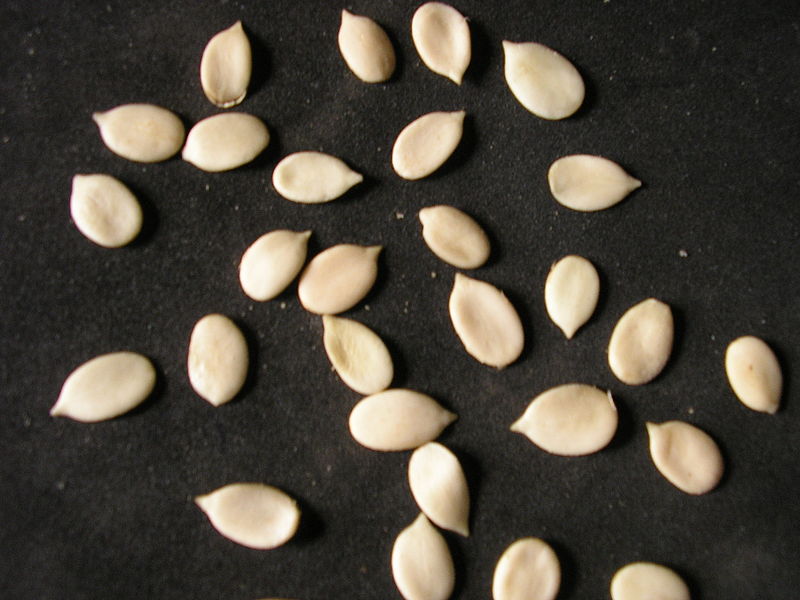
Egusi seeds are the fat- and protein-rich seeds of certain cucurbitaceous (squash, melon, gourd) plants. Authorities disagree whether the word is used more properly for the seeds of the colocynth, those of a particular large-seeded variety of the watermelon, or generically for those of any cucurbitaceous plant. The characteristics and uses of all these seeds are broadly similar.

EGUSI


USA – Recall – Smoked Salmon Recall – Listeria

Business Wire

The Stop & Shop Supermarket Company LLC, following a recall by Ocean       Beauty Seafoods LLC, announced it removed from sale Lascco Cold Smoked       Atlantic Salmon due to possible contamination by listeria monocytogenes.

The following product is included in this recall:

  •         Lascco Cold Smoked Atlantic Salmon, UPC 7284001708, 8 oz., all sell by         dates

We have received no reports of illness to date. Customers who have       purchased the product should discard any unused portions and bring their       purchase receipt to Stop & Shop for a full refund.

Australia – Cheese Recall – Listeria

FSANZ Recall ListFSANZ

Food Standards Australia New Zealand today released details of recalled Jindi cheeses.

The recall, which involves a variety of brands sold in different packaging, follows an announcement by Victoria’s acting Chief Health Officer, Dr Michael Ackland that more cases of illness had been linked to soft and semi-soft cheese products.

Dr Ackland said there were now 18 cases of listeria infection nationally, and a link to batches of Jindi manufactured cheeses sold at delicatessens and supermarkets had been identified.

The Jindi Cheese company is now recalling all its cheeses manufactured up to and including 6 January which have a range of best before dates under a range of brand names.

Victorian Department officials visited the Jindi factory in Jindivick on Wednesday, and were satisfied that appropriate food processing, hygiene and monitoring practices were being followed for the manufacture of products from January 7.

Consumers should not eat the recalled products and should return them to the place of purchase for a full refund. Others who have purchased a cut portion of camembert or brie from a supermarket or deli and are unsure of the brand should also dispose of it.

Dr Ackland said “The infection will cause minor or no symptoms in the vast majority of healthy people who may contract it, but is particularly dangerous for some vulnerable groups. Listeria can cause miscarriages in pregnant women and death in elderly people and those with compromised immune systems. Early symptoms of listeria include fever, headache, tiredness, aches and pains.”

If you think you or your family might have become ill from eating affected cheese, you should consult your doctor.

Research – Norovirus and Hand Sanitisers

Food Poisoning Bulletinnorovirus-2(1)

In 2011, the Centers for Disease Control and Prevention conducted a study that looked at a substantial increase in novovirus illnesses in northern New England. Researchers looked at long-term care facilities in that area, trying to identify institutional risk factors for norovirus outbreaks. State health departments in Maine, New Hampshire, and Vermont used surveys, collecting information about facility attribvutes, routine staff use of alcohol-based hand sanitizer versus soap and water, facility cleaning practices, and occurrence of acute gastroenteritis outbreaks from December 2006 to Amarcy 2007.

Norovirus outbreaks peak in the winter months, when people are forced to spend more time together. Cruise ships, hospitals, and nursing homes usually suffer outbreaks because of the proximity of patients. The virus is extremely contagious and people can become infected through food and drink, person-to-person, and by touching contaminated surfaces.

The surveys found that of the 91 facilities that responded, 61 reported 73 outbreaks in that time frame. Of those outbreaks, 29 were confirmed norovirus. And facilities where staff were “equally or more likely to use alcohol-based hand sanitizer (ABHS) than soap and water for routine hand hygiene had higher odds of an outbreak than facilities with staff less like to use ABHS.”

USA – Raw Beef Recalled – E.coli O157

Food Safety News

Glenn’s Market and Catering, a Watertown, WI establishment, is recalling approximately 2,532 pounds of raw ground beef products that may be contaminated with E. coli O157:H7, the U.S. Department of Agriculture’s Food Safety and Inspection Service (FSIS) announced today.

The following products are subject to recall:  Various size packages of Glenn’s Market ground round, ground chuck and ground beef sold between Dec. 22, 2012 and Jan. 4, 2013.

The products subject to recall were sold only at Glenn’s Market and Catering in Watertown, WI from the retail meat case.