Category Archives: Food Illness

US – Norovirus Outbreak – 85 Cases

The Washington Post

George Washington University officials alerted the campus Wednesday that about 85 students were infected by norovirus this week.

After testing by the university’s Student Health Service and D.C. Department of Health, officials confirmed that norovirus was the cause of dozens of cases of gastrointestinal illness since Monday, university officials said in a prepared release. They said they could find no common link for the infections, as students were affected who live at the Foggy Bottom campus, the Mount Vernon campus and off campus.

US – Raw Milk Debate – Campylobacter

Food Safety News

An additional five confirmed infections have brought the total number of Campylobacter illnesses to 76 in an outbreak linked to raw milk from Your Family Cow dairy in Chambersburg, Pennsylvania, the Pennsylvania Department of Health said Wednesday. At least 9 people have been hospitalized.

Food Safety News

The order of a federal judge has finally shut down Rainbow Acres Farm, the raw milk dairy located near Washington D.C. in Pennsylvania’s Amish County.

It ends a nasty confrontation between Dan and Rachel Allgyer, Amish dairy farmers with operations based in Pennsylvania where commercial sales of raw milk are legal, and the U.S. Food and Drug Administration (FDA), which caught Rainbow making deliveries inside Maryland and the District of Columbia.
 
The heartland states of Iowa and Indiana are entertaining changes to their raw milk laws, but with far differing approaches.
 
In Iowa, which is bordered by Minnesota, Illinois, Missouri, Nebraska and South Dakota, lawmakers are considering allowing on-farm sales to make the state’s approach more consistent with its neighbors.

Water Associated Disease Outbreak Research

Food Poisoning Bulletin 

Seventy-one percent of the world’s water-associated disease outbreaks reported between 1990 and 2008 were water-borne diseases caused by micro-organisms like E. coli that enter water through fecal contamination and cause infection when humans consume contaminated water.

Water-borne (including typhoid and cholera) — 70.9 percent.
Water-based, caused by parasites that spend part of their life in water — 2.9 percent.
Water-related (such as malaria), which need water for breeding of disease-carrying insects — 12.2 percent.
Water-washed, caused by poor hygiene because no clean water is available — 6.8 percent.
Water-dispersed, (such as Legionella), caused by infectious agents that thrive in water and enter the body through the respiratory tract — 7.3 percent.

US – Sprouting Seeds Again – E.coli O26

Food Poisoning Bulletin

The Center for Disease Control (CDC) has reported a multi-state outbreak of shiga-toxin producing E. coli 026 (STEC) infections linked to raw clover sprouts at Jimmy John’s restaurants.

So far, 12 people have been infected with the outbreak strain of STEC 026. The case distribution is:

  • Iowa (5)
  • Missouri (3)Kansas (2)
  • Arkansas (1)
  • Wisconsin (1)

Two people have been hospitalized, but no deaths have occurred as of February 15, 2012.

FDA-Regulated Food Recalls Surged in Last Quarter 2011

Food Safety News

Foods regulated by the U.S. Food and Drug Administration (FDA) were recalled 50 percent more in the fourth quarter last year and affected over 80 percent more units when compared with the previous period, according to the ExpertRECALL ™ Index.
 

Hepatitis A – 2011 Two Outbreaks in Europe

Eurosurveillence

In October 2011, two primary cases of hepatitis A virus (HAV) infection with identical HAV genotype IB strains to those seen in other outbreaks associated with semi-dried tomatoes were reported in England. Both cases had consumed semi-dried tomatoes. Epidemiological investigations revealed two additional cases of genotype IB strains with different sequences who also reported having consumed semi-dried tomatoes. In November, five cases of HAV infection with closely related strains were identified in the Netherlands. A foodborne multiple-strain outbreak is suspected.

Euroserveillance

In November 2011, a cluster of initially five cases of hepatitis A infection with closely related strains was identified in the Netherlands. England reported possibly related cases. Strains with identical sequences had been involved in previous outbreaks linked to semi-dried tomatoes. Investigation of the Dutch cluster suggested a link with ready-to-eat salads including those containing semi-dried tomatoes. Despite trace-back, a source was not identified. Vigilance is needed, and rapid sharing of data may help source-tracing.

Hot Water Bath for Washing Cantaloupes – Eliminates Pathogens

Food Safety News

The 2011 outbreak of Listeria monocytogenesis in cantaloupe sparked a heightened level of interest in efforts to make cantaloupe safer, with fruit and produce trade associations developing safety guidelines and California cantaloupe growers pushing to set safety goals.
 
Bassam Annous, Ph.D., a microbiologist at the U.S. Department of Agriculture, might just have the solution the cantaloupe industry seeks. Since 2005, Annous has been developing a cost-effective treatment to kill pathogens on cantaloupe rinds by submerging the melons in hot water. 

Controlling Toxoplasma in Pork

Meating Place.com

This the second article in a five-part series analyzing the most prevalent pathogen-food combinations in the United States. Using CDC and USDA data, researchers at the University of Florida’s Emerging Pathogens Institute identified – for the first time – which pathogens and which foods cause the most illness in the United States. The series is exploring the following five pathogen-food combinations: campylobacter in poultry; toxoplasma in pork; toxoplasma in beef; listeria in deli meats; and salmonella in poultry. Each article offers strategic insights into the food safety issue of each of those five combinations, identifying what makes them such a threat – and offering solutions to combat them.

It doesn’t carry the regulatory weight of E. coli, and it hasn’t grabbed headlines the way Salmonella has, but Toxoplasma in pork – and the illness Toxoplasmosis – is a growing threat, the third leading cause of death from foodborne illness worldwide. A parasite with properties similar to Trichinella spiralis (trichinae), it can cause havoc in certain processed meats that have little thermal processing, but it is particular a threat to fresh meats.

More US Norovirus – Cheeleaders and Subway

Cheerleaders

Health officials confirmed Friday that a fast-acting gut bug known as norovirus is responsible for an outbreak of illness that sickened more than 200 people gathered for a cheerleading championship in Washington state last weekend.

Results of state laboratory tests showed that that the nasty group of viruses caused the short-but-severe vomiting and diarrhea that affected some people who participated in and attended the state championship and Salute to Spirit cheerleading, dance and drill team event held in Everett, Wash. Norovirus is typically spread through person-to-person contact.

Subway

Most of the 100-plus people infected with norovirus last month had eaten at a local Subway franchise.

But an investigation by the Blackford County Health Department was unable to determine whether a customer or an employee spread the virus, also known as a stomach bug and food poisoning.

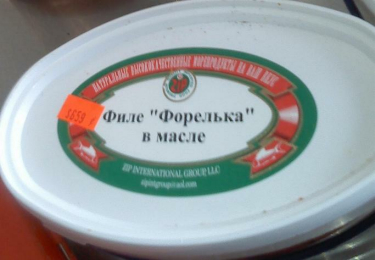
Ukranian Herring Fillet Recall – Listeria monocytogenes

Listeria Blog

ZIP INTERNATIONAL GROUP LLC, 160 Raritan Center Parkway #6, Edison, NJ 08837 is expanding its recall of sliced herring fillet (forelka) 330 gram and 600 gram in plastic packaging due to Listeria contamination.