Category Archives: Food Illness

USA – Cyclospora Updates – Salad Mix the Source

Food Poisoning BulletinEurofins Food Testing UK

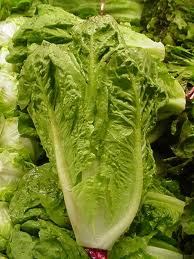
Taylor Farms de Mexico food service salad served at Olive Garden and Red Lobster restaurants is the source of the Cyclospora outbreak that sickened at least 232 people in Iowa and Nebraska. Health officials from those states announced July 30 that a salad mix containing iceberg and romaine lettuces, carrots and red cabbage was the source of the illnesses, but did not release the name of the company that produced it as the tainted salad was no longer in circulation in those states.

CDC

Food Poisoning Bulletin

Cyclospora illnesses that have sickened more than 400 people across the country in an outbreak have been linked to packaged salad greens. These products have been linked to many outbreaks over the years.

In fact, a study conducted by the Centers for Disease Control and Prevention (CDC), released in January of this year, said that leafy greens were responsible for the majority of foodborne illness outbreaks from 1998 to 2008. Last year, the seventh largest food poisoning outbreak in the U.S. was linked to a spinach and spring mix.

FDA Investigation

On July 30, 2013, the states of Iowa1 disclaimer icon 2 and Nebraska3 announced that their analysis indicated that the outbreak in those states was linked to a salad mix. In follow-up to that announcement, the U.S. Food and Drug Administration is providing an update on its investigation.

The FDA traceback investigation has confirmed that the salad mix identified by Iowa and Nebraska as being linked to the outbreak of cyclosporiasis in those states was supplied to restaurants in those states by Taylor Farms de Mexico, S. de R.L. de C.V., a processor of foodservice salads.    The FDA traceback investigation found  that illness clusters at restaurants were traced to a common supplier,  Taylor Farms de Mexico, S. de R.L. de C.V. The restaurants in Iowa and Nebraska include Olive Garden and Red Lobster, both of which are owned by Darden Restaurants.

FDA’s investigation has not implicated consumer packages sold in grocery stores.


USA – Cyclospora Outbreak Still Going Up

Food Poisoning Journal

  • As of July 29, 2013 (5pm EDT), CDC has been notified of 372 cases of Cyclospora infection from the following 16 health departments: Iowa, Texas, Nebraska, Florida, Wisconsin, Illinois, New York City, Georgia, Missouri, Arkansas, Connecticut, Kansas, Minnesota, New Jersey, New York, and Ohio.
  • Most of the illness onset dates have ranged from mid-June through early July.
  • At least 21 persons reportedly have been hospitalized in three states

Food Posioning Journal

Lincoln – Prepackaged salad mix is the source of the state’s cyclospora outbreak which has sickened 78 Nebraskans since mid-June according to the Nebraska Department of Health and Human Services. Cyclospora is a rare parasite that causes a lengthy gastrointestinal illness.

“Our goal is to protect Nebraskans, pinpoint the source of the illness and make sure the risk is eliminated,” said Dr. Joseph Acierno, Chief Medical Officer and Director of Public Health for DHHS. “Our investigation implicated prepackaged, prewashed, salad mix as the cause of this outbreak.”

DHHS’ investigation also shows the salad mix which includes iceberg and romaine lettuce along with red cabbage and carrots came through national distribution channels. Locally grown produce is not part of this outbreak.

DHHS and local health departments are currently working with the U.S. Food and Drug Administration to identify exactly where the contamination came from along the food production chain and where the product was distributed. Nebraska public health officials believe the bulk of the contaminated salad mix already worked its way through the system due to limited shelf life.

Fresh vegetables and fruit are usually associated with cyclospora outbreaks. People become sick when they consume food contaminated with the parasite. Washing fruits and vegetables is always recommended but it can be difficult to wash cyclospora off all types of produce.


USA – Salmonella Outbreak in Iowa – Poultry or Eggs

Food Poisoning Bulletin

Mason City, Iowa, is the center of a Salmonella outbreak investigation that preceded a wider outbreak notice announced Friday by the Iowa Department of Public Health. Mason City is the seat of government for Cerro Gordo County, which leads all 19 Iowa counties in the number of illnesses associated with an outbreak of salmonellosis that may be linked to poultry or egg

Italy – Recall Pesto – Botulism Poisoning

Italia and Mondo

Twenty people have been hospitalized in the emergency room of three hospitals int the Genoese area are under observation for suspected botulism poisoning.

They ate pesto of the company that has withdrawn a batch of jars and showed symptoms consistent with a possible poisoning. Two patients have already been discharged.


USA -Cyclospora – Unwashed produce ?? – Drying May Help

Food Posioning Bulletin

Is the source of a multi-state Cyclopora outbreak restaurant lettuce salad? Health officials in at least six states are working in collaboration with the Centers for Disease Control and Prevention to divine the food source that has infected hundreds of people with a rare parasite.

The bug is so rare that it is not included in the standard parasite screening which looks for Giardia and Cryptosporidium, said David Warshauer, deputy director of communicable disease at the Wisconsin State Laboratory of Hygiene (WSLH). And once it’s confirmed with a special lab test, sub-typing is generally not performed.

With common bacterial food poisoning outbreaks, including those caused by E.coli, Salmonella, Listeria or Campylobacter, subtyping, often done with Pulsed Field Gel Electrophoresis (PFGE), is performed to find the bacteria’s “genetic fingerprint.” This allows health officials to see how many people have been sickened by the same source.

Food Poisoning Bulletin

If you’re like most people, you wash your produce before eating it. But do you dry it?  You should, according to the U.S. Food and Drug Administration (FDA).

Hundreds of people in six states; Illinois, Iowa, Kansas, Nebraska, Texas and Wisconsin have been sickened by a single-cell parasite called Cyclospora. To reduce your risk of food poisoning form fresh produce the FDA recommends the following produce-washing tips. Before you begin, wash your hands with hot, soapy water for 20 seconds, or long enough to sing Happy Birthday twice. Wash produce under cool, running water. Do not use soap or commercial washes. Scrub firm produce such as melons, cucumbers and potatoes with a brush. Dry the produce with a clean cloth or paper towel. Following these recommendations will reduce but not completely eliminate the risk of food poisoning from bacteria or parasites.

People become infected with Cyclospora when they eat or drink food or water that is contaminated with microscopic amounts of fecal matter containing the parasite. Cyclospora is most commonly found in tropical climates but imported foods including mesclun lettuce, basil, snow peas, and raspberries have been the source of a number of U.S. outbreaks in recent years.

USA – More Cyclospora and Hepatitis A Cases

Food Poisoning Bulletin

The Cyclospora outbreak that has been reported by health departments in several midwestern states may have sickened as many as 183 people. The Iowa Department of Public Health released new information today saying their case count is up to 87. In Nebraska, 54 people are sick, and Texas has 37 cases of the parasitic disease so far this year; of those, 29 in north Texas were reported just this week.

Food Poisoning Bulletin

As of July 17, 2013, 149 people are now sick in the hepatitis A outbreak linked to Townsend Farms Organic Antioxidant Blend frozen berry and pomegranate mix. Sixty-five people have been hospitalized in this outbreak with acute hepatitis A. No deaths have been reported.

USA – Cyclospora Outbreak Update

BarfBlog 220px-Cyclospora_cayetanensis_stained

Authorities suspect that fresh vegetables are the source of a rare parasite sickening dozens of Iowans.

The Iowa Department of Public Health reported this morning that 45 cyclospora infections have been confirmed in the state in the past few weeks.

That’s up from 22 cases earlier this week.

Only 10 such cases had been reported in the state in the past 20 years. The parasite is usually transmitted by tainted produce or water. It can cause weeks of severe diarrhea.

Federal experts are helping to trace the cause. Officials are urging everyone to wash their produce carefully … though they note that Cyclospora can be difficult to wash off.

Investigators who interviewed the patients believe the outbreak started in tainted vegetables, not fruit.

Food Poisoning Journal – Cyclospora What You Need to Know

The Iowa Department of Public Health, CDC and local public health agencies are investigating an outbreak of an intestinal illness caused by Cyclospora (a rare parasite). As of July 12, 45 cases of Cyclospora infections have been reported in Iowa with dozens more in Nebraska and other Midwestern states. It appears linked to eating fresh vegetables.

Research – Norovirus Transmission

Cambridge Journals OnlineNorwalk_Caspid

Causal mechanisms of norovirus outbreaks are often not revealed. Understanding the transmission route (e.g. foodborne, waterborne, or environmental) and vehicle (e.g. shellfish or recreational water) of a norovirus outbreak, however, is of great public health importance; this information can facilitate interventions for an ongoing outbreak and regulatory action to limit future outbreaks. Towards this goal, we conducted a systematic review to examine whether published outbreak information was associated with the implicated transmission route or vehicle. Genogroup distribution was associated with transmission route and food vehicle, but attack rate and the presence of GII.4 strain were not associated with transmission route, food vehicle, or water vehicle. Attack rate, genogroup distribution, and GII.4 strain distribution also varied by other outbreak characteristics (e.g. setting, season, hemisphere). These relationships suggest that different genogroups exploit different environmental conditions and thereby can be used to predict the likelihood of various transmission routes or vehicles

Cambridge Journals Online

UK – FSA – Latest research published by the FSA

FSA

The Agency has produced a summary of its research published in April to June 2013. Several areas of research were covered, including consumer attitudes towards the decontamination of meat and the use of freezing to reduce campylobacter in chicken livers. A full report for each area of research can be found via the links at the bottom of the page.

Evaluation: Freezing to reduce campylobacters in chicken liver
The FSA commissioned a research project to assess whether freezing chicken livers, before they are prepared and cooked in a catering or domestic kitchen, can significantly reduce the incidence of campylobacter contamination. Freezing is a proven effective intervention to control campylobacter contamination of poultry meat. However, there has been a lack of evidence on how effective this treatment is with chicken livers, particularly under conditions similar to those in catering or domestic kitchens where freezer temperatures and freezing rates may vary.

Ireland – Hepatitis A in Frozen Berries

ECDCecdclogo

The ongoing outbreak of Hepatitis A virus (HAV) infection that has affected travellers to Italy from Germany, the Netherlands and Poland, as well as local residents in Italy, may now be affecting Ireland.

Three cases of HAV have been reported in Ireland, although none of the three has any travel history to Italy. Nor have they had any contact with other HAV cases. Isolates of the virus from the three Irish cases reveal an identical sequence to that found in the Italian outbreak.

Onset of illness in the Irish cases was April 2013. Additional case finding activity is currently underway. Exposure of cases in both Italy and Ireland suggests that the same contaminated vehicle of infection has been available in at least these two countries. In Italy, mixed frozen berries have been indicated as the most likely vehicle of infection by epidemiological, microbiological and environmental investigations. In late May, an Italian distributor withdrew mixed frozen berries from the market following identification of a package contaminated with virus identical to the outbreak strain.

The most recent cases in the ongoing HAV infection outbreak have been reported by Italy. The onset of symptoms in these cases was recorded in June 2013. Due to the long shelf life of frozen berries and to the average length of approximately one month for incubation of HAV, more cases are expected to be reported.

While there is evidence pointing towards mixed frozen berries as the vehicle of infection, the specific berry type has not yet been identified. The point of contamination remains unknown at this time and as a result it is not yet possible to exclude the occurrence of associated cases in other EU Member States.