Category Archives: Food Hygiene

USA – DOH investigating after hundreds of Watson Clinic employees become sick after holiday luncheon

WFLA

LAKELAND, Fla. (WFLA) – The Department of Health is investigating after hundreds of employees got sick after a holiday luncheon.

According to a company spokesperson, 800 Watson Clinic employees were treated to a catered lunch at the main clinic location on Lakeland Hills Boulevard last week.

After the event, the company confirms that more than 250 employees suddenly got sick with stomach symptoms such as nausea and vomiting.

The Department of Health is working to trace the source of the illness.

UK – UK father paralysed after food poisoning issues safety warning to others – Campylobacter

Barf Blog

campy2

ITV news reports a father who became paralysed after contracting a rare illness from food poisoning has issued a warning to others about food safety.

Dai Braham, 40, was left paralysed from the nose down after becoming unwell while watching his six-year-old son play rugby in April.

Within a matter of days, he was in an induced coma. Father-of-two Dai was a keen bodybuilder and fitness fanatic

It was only later that medical staff discovered the fitness fanatic from Bridgend had been suffering from food poisoning campylobacter – which led to the rare autoimmune disorder Guillian-Barré Syndrome.

Israel – Achdut Recalls Multiple Brands of “Tahini” Because It May Be Contaminated with Salmonella Clarification for Baron’s Expiration Date

FDA Salm2

Achdut LTD. of Ariel, Israel, is recalling its Tahini products of all packages and sizes produced on the following dates: April 7th to May 21st 2018, because it may be contaminated with Salmonella, an organism which can cause serious and sometimes fatal infections in young children, frail or elderly people, and others with weakened immune systems. Healthy persons infected with Salmonella often experience fever, diarrhea (which may be bloody), nausea, vomiting and abdominal pain. In rare circumstances, infection with Salmonella can result in the organism getting into the bloodstream and producing more severe illnesses such as arterial infections (i.e., infected aneurysms), endocarditis and arthritis.

The recalled “Tahini” was distributed internationally in retail stores and through mail orders.

The tahini products are Tahini, Whole Tahini, Organic Tahini and Seasoned Tahini. Container sizes: 15oz, 16oz, 17.6oz, 635 oz (428g, 454g, 500g, 18Kg), with lot numbers 18-097 to 18-141 or with expiration dates April 7th to May 21st 2020, while the Baron’s brand carries an expiration date of 5/5/2021. The brand names of the products are: Achdut, Baron’s, S&F, Pepperwood, Soom and Achva.

Achdut is collaborating with health officials in connection with a positive finding of Salmonella in a US import sample of Achdut Tahini linked to a Salmonella outbreak that is currently being investigated by FDA and public health officials.

The probable root cause for this recall is cross contamination. The company has eliminated the source of contamination and preventive steps were taken.

Consumers who have purchased the Tahini above are urged to return them to the place of purchase for a full refund. Consumers with questions may contact the company at 972-3-9068020, Sun-Thu 08:00-17:00 GMT+2.

Research – Impact of egg sweating on Salmonella penetration

Poultry World Salmonella Eggs Food Poisoning Food Safety

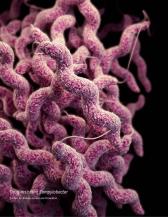
Salmonella can be introduced into an egg through some 10,000 pores in the shell and entry could be facilitated by “egg sweating” or the formation of condensation on shell eggs, when they are moved from a cold to a warm environment with a minimum relative humidity.

Egg sweating occurs at many points during processing and transportation in the egg industry and Salmonella penetration into egg contents can increase when refrigerated eggs are moved to a warmer temperature. This occurs when eggs are tempered before wash, to minimise thermal cracks and before or after cold truck transportation if the ambient temperature and relative humidity permit.

Research – Effect of surrounding vegetation on microbial survival or die‐off on watermelon surface in an agriculture setting

Wiley Online Library

Abstract

Preharvest contamination of produce with food borne pathogens has been a major food safety issue. In this study, we investigated the effect of surrounding vegetation on the survival of natural and inoculated generic Escherichia coli on watermelon rinds in an agricultural field setting. There was no significant difference (p > .05) on the populations of natural generic E. coli (1–1.46 log Most Probable Number (MPN)/sample) and coliforms (<3.99 log CFU/cm2) on watermelons harvested from low, medium, and high levels of vegetation. However, the survival rate of generic E. coli inoculated on watermelon rind discs was variable with the level of vegetation. A significant reduction in generic E. coli count was observed within 12 hr at all vegetation levels. After 108 hr, discs placed at low vegetation level had a highest die‐off reduction (3 log Colony Forming Units (CFU)/cm2) compared to medium and high vegetation levels.

Practical applications

To ensure preharvest produce safety, the Food Safety Modernization Act (FSMA) produce safety rule has suggested a time interval between last irrigation and harvest for potentially contaminating microorganisms to die‐off. However, a knowledge gap exists regarding the influence of surrounding vegetation on microbial die‐off rates on produce in the agricultural field. The findings of this study emphasize the importance of considering the surrounding vegetation while making decisions for developing preharvest risk management strategies based on microbial die‐off rate calculations.

Research – Inhibition of Listeria monocytogenes growth on vacuum packaged rainbow trout (Oncorhynchus mykiss) with carvacrol and eugenol

Wiley Online Library

Abstract

The aim of this study was to evaluate the effects of carvacrol and eugenol, separately and in combination, on survival of Listeria monocytogenes, and sensory and microbiological characteristics in vacuum packaged Oncorhynchus mykiss during refrigerated storage (4 ± 1 °C) for 20 days. The control fish fillets were analyzed for microbial (total mesophilic and psychrotrophic bacteria and lactic acid bacteria) and sensory properties. Fish fillets treated with carvacrol, eugenol, and their combination displayed populations of L. monocytogenes significantly lower, by 1.35–2.84 log cfu/g, than the control fillets during the whole storage period. No significant differences between groups of fish fillets with different active compound(s) added were noted except at the end of the storage, when the number of L. monocytogenes was significantly lower in the fish fillets with eugenol added. Sensory analysis showed that fish fillets with eugenol added were the most acceptable to trained panelists.

Practical applications

Taking into account the increasing need for the production of safe fish and fish products and the fact that carvacrol and eugenol, which exhibited significant antilisterial effect, are generally recognized as safe they can find its practical application in fish industry. Furthermore, as these substances are major constituents of numerous essential oils they can be considered as natural preservatives and used in the organic production as a substitute with synthetic additives which can cause adverse effects.

Research -Enterotoxigenic structures of Bacillus cereus strains isolated from ice creams

Wiley Online Library

Abstract

This study was conducted to investigate the presence of Bacillus cereus in ice cream samples and to identify associated toxin genes by mPCR. 125 ice cream samples were used as material. A total of 38 samples were found to be positive for B. cereus. It was found that 31.9% of the isolates had three enterotoxic HBL complex encoding genes, 10.6% had two hbl genes and 6.3% contained one hbl gene. On the other hand, 15.9% of the isolates contained three NHE complex encoding genes, 31.9% had two nhe genes and 20.2% contained one nhe gene. Also 7.4% of isolates were found to contain both NHE and HBL complexes while ctyK1 was not detected from any isolate. The presence of B. cereus and their enterotoxigenic genes in ice creams may be a potential risk for public health.

Practical applications

The presence of the B.cereus in high numbers and the toxins in foods pose a potential risk in terms of health and food spoilage. In food poisoning cases, hbl, nhe, cytK, and the effect of emetic toxin are especially notable. The resistance of spores against pasteurization and psychrotolerant feature enable the explanation of the existence of B. cereus in ice‐cream.

Sri Lanka – 15 hospitalised due to food poisoning

News First

COLOMBO (News 1st) – 15 employees of a garment factory in Minuwangoda have been hospitalized due to food poisoning.

A spokesperson at the Minuwangoda hospital confirmed that the employees were admitted to hospital at around 5.30 this morning (December 09).

The admitted patients have been reported to have symptoms of vomiting, dizziness and diarrhoea

USA – CDC Warns Against Eating Raw Dough

Food Poisoning Bulletin

Warnings against eating raw dough have been issued by the Centers for Disease Control and Prevention. The holiday season is when most people bake sweets, and eating raw dough and batter is a fun thing to do. But it can make you very sick. People also often make doughs for crafts, such as making Christmas ornaments. Never use raw flour for those projects.

There’s a special warning, too, about the Salmonella outbreak that is linked to Duncan Hines cake mixes. Check your pantry to see if you have any of these recalled cake mixes. If you do, throw them away.

The problem ingredients in cookie doughs and cake batters are eggs and flour. Eggs are often contaminated with Salmonella bacteria. And flour has been linked to E. coli outbreaks in the past.

Flour is a raw agricultural product, which means that it isn’t treated to kill pathogens. Bacteria can contaminate grains in the field, during harvest, during transport, and during processing. People don’t usually think of flour as being a risk for food poisoning, but it is.

So, do not taste or eat any raw dough or batter. This applies whether you are making biscuits, pie crust, cookies, cakes, or craft doughs. Never let children play with or eat raw doughs.

Always follow the baking directions when you are making cookies and cakes. And refrigerate any doughs or batters that contain raw flour or eggs.

Canada – Updated Food Recall Warning – Canada Herb brand culantro (Ngò Gai) recalled due to Salmonella

CFIA kswfoodworld Salmonella

Recall details

Ottawa, December 10, 2018 – The food recall warning issued on November 9, 2018 has been updated to include additional product information. This additional information was identified during the Canadian Food Inspection Agency’s (CFIA) food safety investigation.

Canada Herb is recalling Canada Herb brand culantro (Ngò Gai) from the marketplace due to possible Salmonella contamination. Consumers should not consume the recalled product described below.

Recalled products

Brand Name Common Name Size Code(s) on Product UPC
Canada Herb Culantro (Ngò Gai) Variable weight None – all packages sold up to and including December 10, 2018 None