Category Archives: E.coli

Research – Foodborne Illnesses from Leafy Greens in the United States: Attribution, Burden, and Cost

Science Direct

Abstract

Leafy green vegetables are a major source of foodborne illnesses. Nevertheless, few studies have attempted to estimate attribution and burden of illness estimates for leafy greens. This study combines results from three outbreak-based attribution models with illness incidence and economic cost models to develop comprehensive pathogen-specific burden estimates for leafy greens and their subcategories in the United States. We find that up to 9.18% (90% CI: 5.81%-15.18%) of foodborne illnesses linked to identified pathogens are attributed to leafy greens. Including ‘Unknown’ illnesses not linked to specific pathogens, leafy greens account for as many as 2,307,558 (90% CI: 1,077,815–4,075,642) illnesses annually in the United States. The economic cost of these illnesses is estimated to be up to $5.278 billion (90% CI: $3.230-$8.221 billion) annually. Excluding the pathogens with small outbreak sizes, Norovirus, Shiga toxin-producing Escherichia coli (both non-O157 and O157:H7), Campylobacter spp., and nontyphoidal Salmonella, are associated with the highest number of illnesses and greatest costs from leafy greens. While lettuce (romaine, iceberg, “other lettuce”) takes 60.8% of leafy green outbreaks, it accounts for up to 75.7% of leafy green foodborne illnesses and 70% of costs. Finally, we highlighted that 19.8% of Shiga toxin-producing Escherichia coli O157:H7 illnesses are associated with romaine among all food commodities, resulting in 12,496 estimated illnesses and $324.64 million annually in the United States.
Research – Fully automated E. coli and Enterococci monitoring

Envirotech

Rather than enduring the tedious procedure associated with the microbiological procedure in which bacteria colonies are left to grow and are then counted, the ColiMinder technology, which is sold and marketed in the UK by QCL (QuadraChem Laboratories Ltd), operates by taking a direct measurement of the sampled target organisms’ specific metabolic activity. ColiMinder provides fully automated, real-time microbiological measurements thereby offering users a continuous overview of water quality, therefore enabling quick and decisive reactions to contamination events. The live measurement data is highlighted on a dedicated website and users receive automatic notifications via SMS and email.

Research – Comparison of Three Air Sampling Methods for the Quantification of Salmonella, Shiga-toxigenic Escherichia coli (STEC), Coliforms, and Generic E. coli from Bioaerosols of Cattle and Poultry Farms

Science Direct

Abstract

Recent fresh produce outbreaks potentially associated with bioaerosol contamination from animal operations in adjacent land highlighted the need for further study to better understand the associated risk. The purpose of this research was to evaluate three sampling methods for quantifying target bacterial bioaerosols from animal operations. A dairy cattle and poultry farm located in Georgia, U.S. were visited six times each. Air was collected for 10 min using: 2-stage Andersen impactor with and without mineral oil overlay and impingement samplers. Sampling devices were run concurrently at 0.1, 1, and 2 m heights (n = 36). Andersen samplers were loaded with CHROMagar™ Salmonella, CHROMagar™ STEC, or Brilliance™ coliforms/E. coli. The impingement sampler contained buffered peptone water (20 mL) which was vacuum filtered through a 0.45 µm filter and placed onto the respective media. Plates were incubated at 37 ℃ for 48 h. PCR confirmation followed targeting ttr for Salmonella and stx1stx2, and eae genes for STEC. No significant differences were found among methods to quantify coliforms and E. coliSalmonella and STEC bioaerosols were not detected by any of the methods (Limit of detection: 0.55 log CFU/m3). E. coli bioaerosols were significantly greater in the poultry (2.76–5.00 log CFU/m3) than in the cattle farm (0.55–2.82 log CFU/m3) (p < 0.05), and similarly distributed at both stages in the Andersen sampler (stage 1:>7 μm; stage 2: 0.65–7 μm particle size). Sampling day did not have a significant effect on the recovery of coliforms/E. coli bioaerosols in the poultry farm when samples were taken at the broiler house exhaust fan (p > 0.05). A greater and constant emission of coliforms and E. coli bioaerosols from the poultry farm warrants further investigation. These data will help inform bioaerosol sampling techniques which can be used for the quantification of bacterial foodborne pathogens and indicator organisms for future research.

Research – Destruction of Escherichia coli and Salmonella typhimurium in Microwave-cooked Soups

Science Direct

Abstract

Single serving (i.e. 200 ml) portions of tomato soup, vegetable soup, and broth inoculated with Escherichia coli or Salmonella typhimurium at about 107 organisms/ml were exposed to 915 MHz microwaves. After various timed exposures the temperature of the top, middle, and bottom regions as indicated by changes in previously positioned assemblies of temperature sensitive paper strips were noted and aliquots were removed from the same regions for standard plate count determination of survivors. For any given exposure time, the temperature of the middle region was warmest; that of the bottom, intermediate; and the temperature of the top, coolest. Despite the relative temperatures of the regions, however, the consistent finding was that, for any exposure time, the closer the sampled organisms were to the top, the lower their level of survival. In terms of temperature, it was noted that organisms in the top had declined to a given level of survival at a temperature lower than the temperature corresponding to the same survival level in the middle or bottom soup regions. These data suggest that the heat generated during the microwave exposure alone is inadequate to fully account for the nature of the lethal effects of microwaves for microorganisms.

Research – Inactivation of Salmonella Typhimurium, Escherichia coli, and Staphylococcus aureus in Tilapia Fillets (Oreochromis niloticus) with Lactic and Peracetic Acid through Fogging and Immersion

MDPI

Abstract

This study investigated the antimicrobial effects of lactic acid (LA) (3%) and peracetic acid (PA) (300 ppm) on tilapia fillets (Oreochromis niloticus) by fogging (15 min) or by immersion (2 s) in a pool of Escherichia coli (NEWP 0022, ATCC 25922, and a field-isolated strain), Staphylococcus aureus (ATCC 25923 and a field-isolated strain), and Salmonella Typhimurium (ATCC 13311 and ATCC 14028), as well as the effects on the physicochemical characteristics of the fillets. Fogging was effective and the best application method to control S. Typhimurium regardless of the acid used, promoting reductions of 1.66 and 1.23 log CFU/g with PA and LA, respectively. Regarding E. coli, there were significant reductions higher than 1 log CFU/g, regardless of the treatment or acid used. For S. aureus, only immersion in PA showed no significant difference (p < 0.05). For other treatments, significant reductions of 0.98, 1.51, and 1.17 log CFU/g were observed for nebulized PA, immersion, and LA fogging, respectively. Concerning the pH of the samples, neither of the acids used differed from the control. However, treatments with LA, and fogging with PA, reduced the pH compared to immersion in PA. As for color parameters, L* and a* values showed changes regardless of the acid or method used, resulting in an improved perception of fillet quality. These results indicate that fogging and immersion are alternatives for reducing S. Typhimurium, E. coli, and S. aureus in tilapia fillets.

Canada – Two cases of E. coli led to inspection of Calgary restaurant ordered shut by AHS

Calgary Herald

The closure order and food handling permit suspension dished to a downtown Calgary restaurant was triggered by two customers testing positive for E. coli after eating there, health authorities said.

Outlined in the May 7 closure order are 38 public health violations at Yemeni Village — at 402 8th St. S.W. — that put public health at risk, according to Alberta Health Services.

USA – CDC – Active Investigations of Multistate Foodborne Outbreaks

CDC

WHAT TO KNOW

  • CDC typically coordinates between 17 and 36 investigations of foodborne illnesses involving multiple states each week. The table below shows the number of active CDC investigations for Campylobacter, Shiga toxin-producing E. coli, Listeria monocytogenes, and Salmonella. It also includes links to any current CDC outbreak notices.
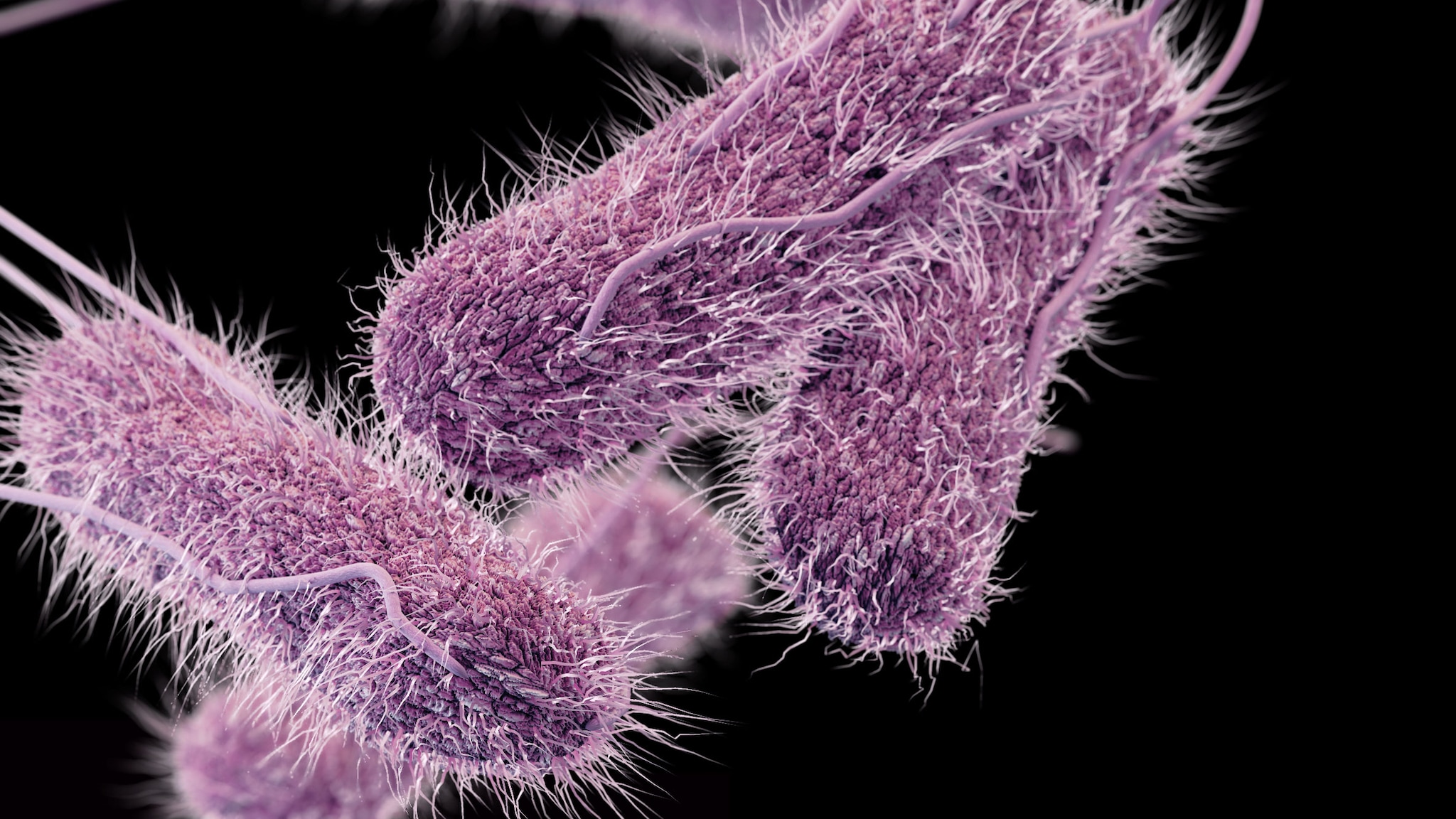
An illustration of what Salmonella looks like under a microscope.

Active multistate outbreaks

Germ Number of Active Multistate Investigations Current CDC Investigation Notices or Food Safety Alerts
Campylobacter 0
  • No active notices or alerts
E. coli 1
Listeria 5
  • No active notices or alerts
Salmonella 13

USA – FDA – Investigations of Foodborne Illness Outbreaks

FDA

Date
Posted
Ref Pathogen
or
Cause of
Illness
Product(s)
Linked to
Illnesses

(if any)
Total
Case
Count

Status
Outbreak/
Event
Status
4/17/

2024

1221 E. coli
O157:H7
Organic
Walnuts
See
Advisory
Active Ongoing
See
Advisory
4/10/

2024

1218 Salmonella
Typhimurium
Organic Fresh
Basil
See
Advisory
Active Ongoing
See
Advisory

Research – Foodborne Disease Outbreaks Linked to Foods Eligible for Irradiation, United States, 2009–2020

CDC

Food irradiation can reduce foodborne illnesses but is rarely used in the United States. We determined whether outbreaks related to CampylobacterSalmonellaEscherichia coli, and Listeria monocytogenes were linked to irradiation-eligible foods. Of 482 outbreaks, 155 (32.2%) were linked to an irradiation-eligible food, none of which were known to be irradiated.

Vietnam – Hundreds sick in Vietnam after eating at a bakery – Salmonella?

Food Safety News

Almost 550 people have fallen sick in a large food poisoning outbreak in Vietnam.

People were taken ill after eating at a bakery in Long Khánh, a city in Đồng Nai Province.

In the past week, 547 people were sickened, according to the Dong Nai Department of Health.

An inspection by authorities found the bakery did not have a business license or an eligible food safety certificate. Four employees did not have a certificate of food safety training or a health certificate.

A meeting with local food producers and traders earlier this week revealed that only around 20 percent of 132 bakery outlets in Long Khánh have business licenses. In 2023, a training session was organized for food businesses in the area. The owner of Co Bang bakery attended but was not given a certificate on food safety.

Hospitals conducted test results on 29 patient samples, and the Ho Chi Minh City Institute of Public Health recorded 16 positives for two Salmonella and E. coli strains, and nine samples were positive for E. coli.

Results from food samples taken at the implicated bakery by the Ho Chi Minh City Institute of Public Health recorded Salmonella positives in four of eight samples.

Officials said these findings mean it can be concluded that Salmonella caused the food poisoning.