Category Archives: E.coli

Research – Biofiltration using C. fluminea for E.coli removal from water: Comparison with ozonation and photocatalytic oxidation

Science Direct

Corbicula fluminea, an Asian clam, is one of the worst invasive species in Europe that can survive in very adverse environmental conditions. Despite its negative impacts, the species also has the capacity to bioaccumulate heavy metals, contaminants and can be exploited for wastewater treatment purposes. The capacity of the Asian clam to remove Escherichia coli, used as fecal contamination indicator, was analyzed. Conventional wastewater treatment plants are not suitable to remove bacteria, thus resulting in treated municipal wastewater with high bacterial loads. E. coli clearance rate was analyzed as function of the number of clams. The bivalves can remove bacteria until concentrations below the detection limit in about 6 h. The adsorption on the clam shells’ and bioaccumulation on the soft tissues were also analyzed. The depuration of clams along 48 h were analyzed revealing that no bacteria was detected in the water. Thus, these results suggest that Asian clam can bioprocess E. coli. On the other hand, results obtained by this methodology were compared with ozonation and photocatalytic oxidation using TiO2, Ag, Au, Pd-TiO2. In all treatments it was possible to achieve concentrations of E. coli below the detection limit. However, photocatalytic oxidation demands about 4700 folds more energy than ozonation, besides the costs associated with catalysts. Comparing complexity of ozonation with biofiltration, this study suggests that application of biofiltration using C. fluminea can be a suitable solution to minimize the presence of bacteria in wastewater, reducing environmental and economic impacts.


RASFF Alerts – STEC E.coli – Beef Burgers – Boneless Beef – Lamb Ribs – Beef – Lamb

Two week catch up due to Holidays 🙂

kswfoodworld food safety poisoning

RASFF-shigatoxin-producing Escherichia coli (O157 stx+ eae+, O157 stx- eae+, O26 stx+ eae+, O26 stx- eae+) in frozen beef burgers from France, with raw material from Poland in France

RASFF-shigatoxin-producing Escherichia coli (stx1+; stx2+; eae-) in frozen boneless beef from Brazil in Italy

RASFF-shigatoxin-producing Escherichia coli in frozen lamb ribs from the United Kingdom in Italy

RASFF-shigatoxin-producing Escherichia coli (stx1/stx2+, eae+ /25g) in chilled beef (Bos taurus) from Argentina in Spain

RASFF-shigatoxin-producing Escherichia coli (stx1+,stx2+,eae- /25g) in frozen boneless lamb from Uruguay in Germany


RASFF Alert – E.coli – Live Mussels

Two week catch up due to Holidays 🙂

kswfoodworld food safety poisoning

RASFF-too high count of Escherichia coli (1600 MPN/100g) in live mussels (Mytilus galloprovincialis) from Italy in Italy

USA – ‘Close to 10’ children hospitalized for E. coli; ‘raw’ milk, farm animals may be sources

Knox News 

East Tennessee Children’s Hospital said Tuesday it’s treated “close to 10” children, all younger than 4, for a “serious outbreak” of E. coli-caused illness over the past 10 days.

The Knox County Health Department has confirmed two likely sources of the outbreak are unpasteurized milk and farm animals.

Most of the ill children are known to have consumed raw milk from a local cow-share dairy, French Broad Farm in Knox County, the health department said in an alert issued Tuesday evening. The health department recommends consumers dispose of all raw milk or other unpasteurized products they may have from this farm.

“People need to be aware that if they choose to drink raw milk, they’re taking a risk,” said Dr. Martha Buchanan, health department director.

Research – The most bacteria-ridden places in your kitchen? Check your appliances

Digital Trends

We’ve all heard that the sponge is the germiest article in the kitchen. According to Charles Gerba, Professor of Microbiology at the University of Arizona, after that comes the sink, and then the cutting board. But you’d be surprised at the other places where germs gather.

Gerba was part of a study, where he and his colleagues measured fecal coliform bacteria on kitchen and bathroom surfaces (yeah, you read that right, we said “fecal”). The items he listed contained the highest densities of coliform, fecal coliform, and HPC bacteria, according to the results of the study.

Here at Digital Trends, we wanted to find out what tech in the kitchen is covered with nasty bacteria, and were surprised at the answer. Hint: check your appliances.

Information – In the wake of E. coli outbreak linked to French Broad Farm, some ask what ‘raw milk’ is

Knox News

“Raw” milk is milk that hasn’t been pasteurized. Health officials from almost every agency and organization warn it often contains dangerous bacteria that can sicken or even kill people: E.coli, salmonella, listeria and campylobacter, to name a few.

More: ‘Close to 10’ children hospitalized for E. coli; ‘raw’ milk, farm animals may be sources

But proponents of drinking it say heating the milk during the pasteurization process kills helpful pathogens, including probiotics and enzymes.

Information – FSA – E.coli Fact Sheet

FSA 

CDC E.coli

Image CDC


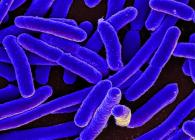
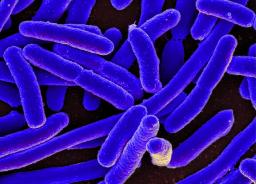
Escherichia Coli (known as E. coli) is a type of bacteria that can be found in the intestines of animals and humans. Many strains of E. coli are harmless to humans, but some can cause serious illness. Most cases of foodborne illness are caused by a strain known as E. coli O157.

USA – Two years later, $2.5 million awaits kids sickened by Reno’s worst-ever E. coli outbreak

RGJ ecoli

More than two years after they got sick from eating E. coli-tainted chocolate mousse cake at two Reno restaurants, six children are now awaiting a Washoe judge to approve their financial settlements, according to court records.

The six Reno-area children were all plaintiffs in a lawsuit that followed Washoe County’s worst-ever E. coli outbreak that also sickened two other children and 17 adults.

The outbreak started in October 2015 when the tainted dessert was prepared in a mixing bowl that had been used to process raw meat at Reno Provisions. The cake was later served at Heritage, located inside the Whitney Peak Hotel, and South Reno’s Twisted Fork.

Owner Mark Estee later closed Reno Provisions. Estee was a managing partner at Heritage, located inside the Whitney Peak Hotel. The hotel management later closed the restaurant and leased it to its current occupant, Roundabout Grill.


Hong Kong – *(Updated on 4 June 2018) Not to consume a kind of French raw milk cheese suspected to be contaminated with E.coli (O26)

CFS

Reason For Issuing Alert
  • The Centre for Food Safety (CFS) received a notification from the RASFF that the above-mentioned product might have been contaminated with E. coli (O26) and is being recalled.
  •  According to information provided by the RASFF, a local importer, Silco International Limited, had imported some of the affected product into Hong Kong. The CFS immediately contacted the importer concerned for follow-up. The importer confirmed that it had imported 2.4 kilograms of the affected product and all had been distributed. It has initiated a recall according to the CFS’ advice.

*Updated on 21 May 2018

  • CFS’ further investigation and the RASFF of the European Commission’s latest notification revealed that two more local importers, City Super Limited and Culina (HK) Ltd, had previously imported and sold the affected cheese.

*Updated on 4 June 2018

  • CFS’ further investigation and the latest information provided by the French authorities revealed that the product recall was extended to cover four other kinds of raw milk cheese which might be contaminated with E. coli (O26) and were manufactured by three processing plants.
Action Taken by the Centre for Food Safety
  • For the sake of prudence, the CFS has immediately suspended the import and sale in Hong Kong of the concerned product.
  •  The CFS has informed the French authorities concerned of the import suspension and will alert the trade to the incident. It will continue to closely monitor the incident and take appropriate follow-up action. Investigation is underway.

*Updated on 21 May 2018

  • The importers concerned had removed from shelves and stopped sale of the affected product. They have initiated a recall according to the CFS’ instructions.
  • The CFS will alert the trade to the incident. It will continue to closely monitor the incident and take appropriate follow-up action. Investigation is on-going.

*Updated on 4 June 2018

  • For the sake of prudence, the CFS has immediately suspended the import and sale in Hong Kong of all raw milk cheese products manufactured by the three plants.
  • The CFS immediately contacted major local importers and retailers for follow-up. Preliminary investigation found that the above products have not been imported into Hong Kong. The CFS has also enhanced surveillance on raw milk cheese products imported from France. All results are satisfactory.
  • The CFS has alerted the trade to the incident. It will continue to closely monitor the incident and take appropriate follow-up action. Investigation is on-going.
Advice to the Trade
  • Stop using or selling the product concerned immediately if they possess it.
Advice to Consumers
  • Not to consume the affected product if they have bought any.
Further Information
  • The CFS press release
  • Enquiries about the recall can be made to the importer’s hotline at 2764 3632 during office hours.

*Updated on 21 May 2018

  • The CFS press release (19 May 2018)
  • Enquiries about the recall can be made to the City Super Limited’s hotline at 2736 3866 and Culina (HK) Ltd’s hotline at 2342 3221 during office hours.

Updated on 4 June 2018

The CFS press release (4 June 2018)

Research – Blood type affects severity of diarrhea caused by E. coli

Science Daily 


A new study shows that a kind of E. coli most associated with “travelers’ diarrhea” and children in underdeveloped areas of the world causes more severe disease in people with blood type A.

The bacteria release a protein that latches onto intestinal cells in people with blood type A, but not blood type O or B, according to a study led by researchers at Washington University School of Medicine in St. Louis. A vaccine targeting that protein could potentially protect people with type A blood against the deadliest effects of enterotoxigenic E. coli (Escherichia coli) infection.

“We think this protein is responsible for this blood-group difference in disease severity,” said senior author James Fleckenstein, MD, an associate professor of medicine at Washington University. “A vaccine targeting this protein would potentially protect the individuals at highest risk for severe disease.”

The study is published May 17 in The Journal of Clinical Investigation. The work was conducted in collaboration with investigators at Johns Hopkins University, the National Institutes of Health (NIH), and the Naval Medical Research Center.