Category Archives: Decontamination Microbial

Germany – Saxony Milk Our Freshness 1.5% 1l – Microbial Abnormalities

LMW

Alert type:

Groceries

Date of first publication:

September 21, 2023

Product name:

Saxony Milk Our Freshness 1.5% 1l

Manufacturer (distributor):

Sachsenmilch Leppersdorf GmbH

Reason for warning:

As part of a self-examination, microbiological abnormalities were discovered that could trigger infections. This can potentially be serious, particularly in vulnerable groups of people (infants, small children, pregnant women, seniors and people with a weakened immune system). Therefore, customers should not consume the affected product.

Packaging Unit:

1 liter

Durability:

October 8, 2023

Lot identification:

10/8/23

Additional Information:

The product was sold through EDEKA branches in Saxony and Saxony-Anhalt.

Click to access 2023_09_21_Pressemitteilung_Rueckruf_Sachsenmilch_ESL-Milch_final.pdf

Manufacturer’s homepage:
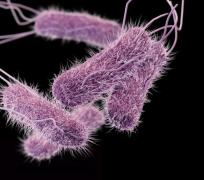
Research- Salmonella Outbreak Investigation Reinforces Importance of Drain Sanitation

Food Safety Tech

Drains can harbor pathogens and biofilms in facilities and have been cited as the cause of a Salmonella Motevideo outbreak in Quebec, Canada. For “Investigation of a Salmonella Montevideo Outbreak Related to the Environmental Contamination of a Restaurant Kitchen Drainage System, Québec, Canada, 2020–2021,” (Journal of Food Protection, October 2023), researchers André Paradis, Marie-France Beaudet, Marianne Boisvert Moreau and Caroline Huot, documented the investigation into the outbreak that affected at least 67 people between January 1, 2020 and August 13, 2021. An epidemiological investigation that included whole genome sequencing found that 66% of cases were directly linked to a restaurant in the area.

Research – Gotcha! New technology speeds up bacterial testing in food

Science Daily

Researchers have developed a measurement technique that rapidly measures the number of viable bacteria in food products. They have succeeded in drastically reducing the inspection time from 2 days to about 1 hour. With this technology, it will be possible to confirm food safety before shipment from factories and prevent food poisoning.

It is said that haste makes waste, but researchers from Osaka Metropolitan University have proven that doing things rapidly does not necessarily mean working ineffectively. A research group led by Professor Hiroshi Shiigi at the Graduate School of Engineering, Osaka Metropolitan University has developed a technology that can rapidly and accurately determine the number of viable bacteria in food products electrochemically, using tetrazolium salt (MTT), a water-soluble molecule.

One of the most important assessment indicators for ensuring that food is free from contamination is the number of viable bacteria. However, conventional measurement methods take up to 2 days to yield results, and these results are only available after the food has been shipped from the factory — leading to potentially fatal consequences. Therefore, it is imperative to have a testing method that speeds up the process of identifying bacterial contamination before shipment.

Research -Control of the Growth of Listeria monocytogenes in Cooked Ham through Combinations of Natural Ingredients

MDPI

Abstract

In the ready-to-eat food industry, Listeria control is mandatory to ensure the food safety of the products since its presence could cause a disease called listeriosis. The objective of the present study was to carry out a challenge test to verify the efficiency of different combinations of natural antimicrobial ingredients against Listeria monocytogenes to be used in ready-to-eat foods. Six different formulations of cooked ham were prepared: a control formulation and five different formulations. An initial inoculation of 2 log cycles was used in the different products, and the growth of Listeria was monitored at different temperatures and times (4 °C for 17 w and 7 °C for 12 w). Control samples showed a progressive growth, reaching 5–6 log after 3 or 4 weeks. The rest of the samples showed constant counts of Listeria during the entire study. Only samples containing 100 ppm nitrite + 250 PPM ascorbic acid + 0.7% PRS-DV-5 did not control the growth of Listeria at 7 °C after 7 w of storage. The results obtained allowed us to classify the cooked ham prepared using natural ingredient combinations as a “Ready-to-eat food unable to support the growth of L. monocytogenes other than those intended for infants and for special medical purposes”.

Research – A Bacteriophage Cocktail Reduces Five Relevant Salmonella Serotypes at Low Multiplicities of Infection and Low Temperatures

MDPI

Abstract

Salmonella are important pathogenic bacteria and, following Campylobacter, they are the second most common cause of bacterial foodborne infections worldwide. To reduce the presence of bacteria along the food chain, the application of bacteriophages (phages) may be a promising tool. In this study, the lytic properties of six phages against five relevant Salmonella serotypes (S. Enteritidis, S. Typhimurium, S. Infantis, S. Paratyphi B and S. Indiana) were analyzed. Three phages were able to lyse all five serotypes. We determined the lytic potential of each phage on indicator strains in vitro at room temperature (RT) and at 37 °C using low multiplicities of infection (MOIs). Most phages reduced their host more efficiently at RT than at 37 °C, even at the lowest MOI of 0.001. Following this, the lytic activity of a cocktail comprising five phages (MOI = 0.1) was examined with each of the five serotypes and a mix of them at RT, 15, 12, 10, 8 and 6 °C. All cultures of single serotypes as well as the mixture of strains were significantly reduced at temperatures as low as 8 °C. For single serotypes, reductions of up to 5 log10 units and up to 2.3 log10 units were determined after 6 h (RT) and 40 h (8 °C), respectively. The mixture of strains was reduced by 1.7 log10 units at 8 °C. The data clearly suggest that these phages are suitable candidates for biocontrol of various Salmonella serotypes under food manufacturing conditions

Research – Killing of a Multispecies Biofilm Using Gram-Negative and Gram-Positive Targeted Antibiotic Released from High Purity Calcium Sulfate Beads

MDPI

Abstract

Background: Multispecies biofilm orthopedic infections are more challenging to treat than mono-species infections. In this in-vitro study, we aimed to determine if a multispecies biofilm, consisting of Gram positive and negative species with different antibiotic susceptibilities could be treated more effectively using high purity antibiotic-loaded calcium sulfate beads (HP-ALCSB) containing vancomycin (VAN) and tobramycin (TOB) in combination than alone. Methods: Three sets of species pairs from bioluminescent strains of Pseudomonas aeruginosa (PA) and Staphylococcus aureus (SA) and clinical isolates, Enterococcus faecalis (EF) and Enterobacter cloacae were screened for compatibility. PA + EF developed intermixed biofilms with similar cell concentrations and so were grown on 316L stainless steel coupons for 72 h or as 24 h agar lawn biofilms and then treated with HP-ALCSBs with single or combination antibiotics and assessed by viable count or bioluminescence and light imaging to distinguish each species. Replica plating was used to assess viability. Results: The VAN + TOB bead significantly reduced the PA + EF biofilm CFU and reduced the concentration of surviving antibiotic tolerant variants by 50% compared to single antibiotics. Conclusions: The combination of Gram-negative and positive targeted antibiotics released from HP-ALCSBs may be more effective in treating multispecies biofilms than monotherapy alone.

Research – Review of visual analytics methods for food safety risks

Nature.com

With the availability of big data for food safety, more and more advanced data analysis methods are being applied to risk analysis and prewarning (RAPW). Visual analytics, which has emerged in recent years, integrates human and machine intelligence into the data analysis process in a visually interactive manner, helping researchers gain insights into large-scale data and providing new solutions for RAPW. This review presents the developments in visual analytics for food safety RAPW in the past decade. Firstly, the data sources, data characteristics, and analysis tasks in the food safety field are summarized. Then, data analysis methods for four types of analysis tasks: association analysis, risk assessment, risk prediction, and fraud identification, are reviewed. After that, the visualization and interaction techniques are reviewed for four types of characteristic data: multidimensional, hierarchical, associative, and spatial-temporal data. Finally, opportunities and challenges in this area are proposed, such as the visual analysis of multimodal food safety data, the application of artificial intelligence techniques in the visual analysis pipeline, etc.

USA – Mishandled rice sickens at least 28 people at Suffolk County restaurant

ABC7NY

STONY BROOK, New York (WABC) — More than two dozen people got sick from a likely food poisoning incident at a restaurant in Suffolk County.

It happened at “Kumo Sushi & Steakhouse” in Stony Brook on Saturday.

Of the 28 people sickened, 12 had to be taken to the hospital.

The County Health Department says the people were likely sickened by mishandled and improperly stored rice.

The department issued 15 violations to the restaurant including eight for foodborne illness risk factors.

Microbiology Professor Brett Finlay on the process of lab testing with food safety investigations

CBC

Parents affected by the Calgary area daycare E. coli outbreak continue to be frustrated with the lack of information from health officials and how long it’s taking for results to be published from AHS’s investigation into the central kitchen. University of British Columbia Microbiology Professor Brett Finlay talks about the process.

Research – Microbiological Quality of Polish Artisanal Varietal Honeys

MDPI

Abstract

On the basis of routine microbiological tests and selected physicochemical parameters, the quality and food safety of Polish varietal honeys were evaluated. The study included 21 honey samples from 5 varieties (multifloral, honeydew, rapeseed, buckwheat and linden), in which the moisture and extract content, water activity, pH and free acids were determined, and the colony count, the presumptive Bacillus spp., the total fungal count and the presence of anaerobic spore-forming bacilli were examined. More than half (52%, 11/21) of the analyzed honeys contained fewer microorganisms than 10 cfu/g, and in the remaining samples, their numbers ranged from 5 × 101 cfu/g to 4.5 × 10² cfu/g. In all the honeys, the number of presumptive Bacillus spp. in 1 g was less than 10 cfu. In 81% (17/21) of the samples, the total count of fungi in 1 g of honey was less than 10 cfu, and the most contaminated was buckwheat honey (3 samples). The anaerobic spore-forming bacteria was detected in 0.1 g only in one sample of buckwheat honey. The values of the physicochemical parameters did not exceed the accepted limits, which indicated that the honey environment was unfavourable for the development of the tested microbial profile.