Category Archives: Contaminated water

New Zealand – Vomiting affects school after E. coli found in town’s water

1 News

People have been vomiting due to water pollution in Murupara in the Bay of Plenty.


The council is urging people to boil all water after elevated levels of E. coli were found in the town’s drinking water supply.

However, the advice was too late for some, with Murupara Area School reporting that students and teachers have been affected.

Students are asked to bring boiled water with them.

“Please be aware we already have some students and teachers vomiting due to the water pollution,” the school wrote on Facebook.

“We are worried that this could spread throughout the school.”

Research – ESBL- and Carbapenemase-Producing Escherichia coli and Klebsiella pneumoniae among Bivalves from Portuguese Shellfish Production Areas

MDPI

Abstract

Bivalves are filter-feeding organisms and biomarkers of bacterial pollution. Our study aimed to analyze the occurrence and characteristics of extended-spectrum β-lactamase (ESBL)- and carbapenemase-producing Escherichia coli among bivalves. A total of 522 bivalve samples were collected along Portuguese shellfish production areas. Homogenized samples were screened for E. coli contamination on corresponding selective plates, allowing for concomitant growth of Klebsiella pneumoniaeE. coli growth was observed in 39% of the samples. Subsequent selective screening identified nine samples (4.4%) contaminated with ESBL producers, corresponding to E. coli (n = 7) and K. pneumoniae (n = 2), while a single carbapenemase-producing K. pneumoniae (0.5%) was identified. ESBLs were all CTX-M-types commonly identified in human isolates, i.e., CTX-M-32 (n = 4), CTX-M-15 (n = 4), and CTX-M-14 (n = 1). The carbapenemase producer harbored the blaGES-5 gene located on a ColE plasmid. Clonality was evaluated by multilocus sequence typing, identifying E. coli backgrounds as ST10, ST23, ST540, ST617, ST746, SLV206, and SLV2325, commonly identified among environmental and human strains. The K. pneumoniae isolates belonged to ST834, ST15, and DLV644. The occurrence of ESBL- and carbapenemase-producing Enterobacteriaceae in bivalves reveals how the marine environment constitutes a reservoir of critical bacterial pathogens, thus potentially representing a risk to human health.

Research – The Occurrence of Cryptosporidium spp. in Wild-Living Carnivores in Poland—A Question Concerning Its Host Specificity

MDPI

Abstract

Cryptosporidium is an apicomplexan protozoan parasite that primarily infects the gastrointestinal epithelium in humans and domestic and wild animals. The majority of studies have been focused on human, livestock, and pet infections. Hence, Cryptosporidium spp. in wildlife, including wild carnivores, remained neglected. There are several studies reporting the occurrence of Cryptosporidium spp. in wild foxes, but these are only a few molecular surveys; no data is available concerning the occurrence of this parasite in raccoon dogs and martens in Europe, and to the best of our knowledge to date, only one study has reported Cryptosporidium from badgers in Spain. Therefore, we used molecular analyses to identify and genotype Cryptosporidium spp. in wild-living mesocarnivores in Poland. A total of 322 individual fecal samples from six carnivore species, i.e., raccoon, raccoon dog, red fox, European badger, pine, and beech martens were collected and then analyzed for the presence of Cryptosporidium spp. using the nested PCR method. The appearance of PCR products in the reaction with Cryptosporidium-specific primers against the 18S rRNA and actin genes demonstrated that Cryptosporidium spp. occurred in 23.0% of all examined species of animals. Performed sequence analyses showed the presence of the Cryptosporidium skunk genotype, Cryptosporidium vole genotype II, Cryptosporidium canis dog and fox genotypes, as well as Cryptosporidium erinaceiCryptosporidium ditrichiCryptosporidium suis, and Cryptosporidium alticolis, in these hosts. Molecular data presented here indicate that examined mesocarnivores may be a significant reservoir of specific and non-specific Cryptosporidium species, including those with zoonotic potential. Most studies of carnivores have described the presence of non-specific Cryptosporidium spp. in carnivore hosts, and this is probably the result of the transfer of these parasites from prey species through the digestive tract or the transfer of the parasite from a contaminated environment.

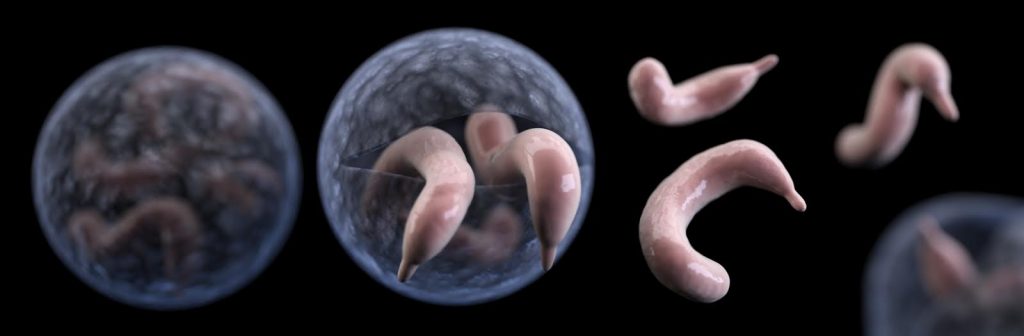
Research – Impact of Pipe Material and Temperature on Drinking Water Microbiome and Prevalence of Legionella, Mycobacterium, and Pseudomonas Species

MDPI

Abstract

In drinking water distribution systems (DWDSs), pipe material and water temperature are some of the critical factors affecting the microbial flora of water. Six model DWDSs consisting of three pipe materials (galvanized steel, copper, and PEX) were constructed. The temperature in three systems was maintained at 22 °C and the other 3 at 32 °C to study microbial and elemental contaminants in a 6-week survey using 16S rRNA next-generation sequencing (NGS) and inductively coupled plasma-optical emission spectrometry (ICP-OES). Pipe material and temperature were preferentially linked with the composition of trace elements and the microbiome of the DWDSs, respectively. Proteobacteria was the most dominant phylum across all water samples ranging from 60.9% to 91.1%. Species richness (alpha diversity) ranking was PEX < steel ≤ copper system and elevated temperature resulted in decreased alpha diversity. Legionellaceae were omni-prevalent, while Mycobacteriaceae were more prevalent at 32 °C (100% vs. 58.6%) and Pseudomonadaceae at 22 °C (53.3% vs. 62.9%). Heterogeneity between communities was disproportionately driven by the pipe material and water temperature. The elevated temperature resulted in well-defined microbial clusters (high pseudo-F index) in all systems, with the highest impact in PEX (10.928) followed by copper (9.696) and steel (5.448). Legionellaceae and Mycobacteriaceae are preferentially prevalent in warmer waters. The results suggest that the water temperature has a higher magnitude of impact on the microbiome than the pipe material.

India – Norovirus Outbreak: 62 Students Infected in Kerala

Zee News

norovirus-1080x655

The Kerala Health Department on Monday (January 24) confirmed two cases of the gastrointestinal infection norovirus in class 1 students in Ernakulam district. The two samples were tested after 62 persons — students and their parents — developed symptoms such as diarrhoea, abdominal pain, vomiting, nausea, a high temperature, headache, and body aches.

The school authorities said that they have the results of drinking water testing for the last four months. The virus infected the children of the E division of the first class. Immediately upon noticing the incident, the health department informed the authorities and once again sent the water for testing. Officials said that the school is completely closed and online classes are being offered.

Research Breakthrough in fighting Legionnaires’ disease

Eurekalert

A new study of domestic and hospital drinking water systems found Legionella in 41% of samples – with Flinders University researchers making a key connection between the pathogen’s co-existence with a ‘host’ microorganism in all samples tested.

The study found Legionella bacteria “infect the amoeba host and then once inside these hosts are protected from disinfection strategies,” says Flinders University Associate Professor of Environmental Health Harriet Whiley, a co-author of the new journal article in Water Research.

Researchers tested for Legionella and its likely amoebae hosts in 140 samples of water or biofilm (the slime found on showerheads and end of faucets) to understand how the potentially dangerous bacterium colonises and proliferates in both domestic and hospital plumbing and poses a threat to human health.

Ireland – EPA finds issues with Fermoy water supply – Cryptosporidium

Irish Examiner

crypto

Cryptosporidium had been detected in the public water supply in Fermoy in November last year

The public water supply to the north Cork town of Fermoy could be at risk and placed on a list of water treatment plants needing corrective action, according to the State environmental watchdog.

The Environmental Protection Agency has warned Irish Water that Fermoy’s water treatment plant could be placed on its Remedial Action List which would require the utility to complete an action programme to address problems with the supply.

It follows an audit by EPA inspectors carried out on the facility last November to check if it was providing clean and wholesome water to households and businesses.

Research – Raw Aquatic Food Products – A Source of Pathogens and Parasites

CFS

The harmful microorganisms of concern include both bacteria (e.g. Vibrio parahaemolyticus (VP) and Vibrio cholerae (VC)) and viruses (e.g. norovirus). VP occurs naturally in seawater (estuaries and coastal areas). Hence, some seafood is inevitably contaminated with VP. On the other hand, VC can live in both saltwater and freshwater such as rivers. In Hong Kong, norovirus is a prevalent foodborne virus that is commonly found in polluted seawater and shellfish living in polluted areas is easily contaminated.

Research – Vibrio vulnificus and Vibrio parahaemolyticus in Oysters under Low Tidal Range Conditions: Is Seawater Analysis Useful for Risk Assessment?

MDPI

Food Illness

Abstract

Human-pathogenic Vibrio bacteria are acquired by oysters through filtering seawater, however, the relationships between levels of these bacteria in measured in oysters and overlying waters are inconsistent across regions. The reasons for these discrepancies are unclear hindering our ability to assess if -or when- seawater samples can be used as a proxy for oysters to assess risk. We investigated whether concentrations of total and human pathogenic Vibrio vulnificus (vvhA and pilF genes) and Vibrio parahaemolyticus (tlhtdh and trh genes) measured in seawater reflect concentrations of these bacteria in oysters (Crassostrea virginica) cultured within the US lower Chesapeake Bay region. We measured Vibrio spp. concentrations using an MPN-qPCR approach and analyzed the data using structural equation modeling (SEM). We found seawater concentrations of these bacteria to predictably respond to temperature and salinity over chlorophyll a, pheophytin or turbidity. We also inferred from the SEM results that Vibrio concentrations in seawater strongly predict their respective concentrations in oysters. We hypothesize that such seawater-oyster coupling can be observed in regions of low tidal range. Due to the ease of sampling and processing of seawater samples compared to oyster samples, we suggest that under low tidal range conditions, seawater samples can foster increased spatial and temporal coverage and complement data associated with oyster samples.

Research – Safety and quality of water used with fresh fruits and vegetables

WHO

During fresh fruit and vegetables (FFV) production, water is used for a variety of purposes. Even the water was conventionally treated and disinfected, it may still potentially contain human pathogens, albeit at low concentrations. A risk assessment, appropriate to the national or local production context, should be conducted to assess the potential risks associated with a specific water source or supply in order to devise the appropriate risk mitigation strategies.

Since the 48th session of Codex Committee on Food Hygiene (CCFH) noted the importance of water safety and quality in food production and processing, FAO and WHO has undertaken the work on this subject. This report describes the output of the third in a series of meetings, which examined appropriate and fit-for-purpose microbiological criteria for water used with fresh fruit and vegetables. The advice herein will support decision making when applying the concept of fit-for-purpose water for use in the pre- and post-harvest production of fresh fruit and vegetables.