Category Archives: Coliforms

Research – Microbial risks in food franchise: A step forward in establishing ideal cleaning and disinfection practices in SSOPs

Wiley Online

Abstract

Microbial contamination in coffee specialty franchises using uniform processing procedures in Korea was examined. Cleaning or disinfection practices for sanitation standard operating procedures (SSOPs) are proposed. For each processing step, food materials and associated processing environments were tested for heterotrophic bacteria (HB), Escherichia coli, coliform, and Staphylococcus aureus. Existing SSOP cleaning or disinfection practices were also evaluated. Ice‐making procedures revealed coliform and HB contamination in all coffee houses, with high HB contamination on several supplementary food materials and associated food utensils. Microbial loads in food materials or final products were high on structures and materials that are difficult to clean and disinfect. Staphylococcus species contaminated food machinery and utensils directly contacted by food handlers. Based on our analysis of cleaning and disinfection practices in each franchise’s SSOPs, current practices should be complemented to ensure food safety. Our results provide a foundation for developing sanitation standards optimized for coffee specialty franchises.

Practical applications

Franchise brands operating collectively require well‐established sanitation practices such as sanitation standard operating procedures (SSOPs) to ensure food safety and quality. Microbiological studies were performed to evaluate coffee processing procedures and environments at specialty franchise brands. Hygiene practices in SSOPs were simultaneously evaluated to examine cleaning and disinfection procedures. In several processing procedures and associated processing environments, coliform and Staphylococcus aureus were detected on food handlers’ hands, gloves, and hand‐accessible areas of food utensils or machinery simultaneously. Coliforms were also detected in edible ice cubes and on related utensils or machinery for ice production or storage (ice‐making machine, ice‐bin). Heterotrophic bacteria (HB) were detected at high densities in sugar syrup (under‐using) and edible ice (during production and storage). Particularly, HB concentrations increased during processing. Thus, microbial contamination is increased by various factors during processing, particularly inappropriate cleaning or disinfection of utensils or machinery. Evaluation of cleaning and disinfection practices for each franchise’s SSOPs revealed that the cleaning and disinfection practices for machinery or utensils accessible to worker’s hands must be supplemented. Establishments serving a wide variety of coffee beverages may require complex and different processing procedures. Because utensils and machinery affecting the microbial load of the final product can vary, the areas and targets of cleaning and disinfection should be expanded. Second, the structure or material characteristics of food utensils or machinery that are difficult to clean and disinfect can lead to microbial growth. Cleaning or disinfection of food utensils or machinery should be considered in SSOPs. Purchasing management (as a major category of SSOPs for food safety) should be expanded to utensils or machinery in addition to food materials. Furthermore, cleaning and disinfection targets aimed at under‐used utensils or facilities must be established in SSOPs.

RASFF Alerts – TVC – Bacillus spp – TVC -Coliforms – Jerk Seasoning Paste – Pumpkin Seed Kernels

RASFF-Logo

RASFF – high aerobic plate count (predominantly Bacillus spp, 14000 CFU/g) for jerk seasoning paste from Barbados in the UK

RASFF – high bacterial count (230000 CFU/g) and high count of coliforms (16000 CFU/g) in pumpkin seed kernels from China in Italy

Research – Microbiological and chemical quality of ice used to preserve fish in Lisbon marketplaces

Wiley Online

Abstract

Ice is widely used to preserve fish on markets, playing a major role in the food industry. If manufactured, stored or distributed in inadequate sanitary conditions, it can represent a considerable health risk for both consumers and professionals. The present study characterizes ice used in marketplaces, on microbiological and chemical parameters. The aim was to assess potential risks on occupational exposure and consumer safety and therewith plan orientation guidelines. Sampling took place in 18 marketplaces in Lisbon, with ice samples collected at three different stages—production (n = 29), storage (n = 30), and product‐contact (n = 29). No significant contamination was found in production and storage stages, demonstrating that ice production and storage procedures are adequate regarding sanitary conditions. With exception for Salmonella, significantly higher concentrations of microbial parameters were identified in product‐contact stages, specifically Total Coliforms (548 MPN/100 mL), Escherichia coli (1 MPN/100 mL), Enterococci (29 MPN/100 mL), Staphylococcus aureus (271 CFU/100 mL), HPC at 5°, 22°, and 37° (>301 CFU/mL). Our study also shows that the majority of samples from ice production and storage comply with national regulations regarding drinking water quality. Yet, occupational health and consumer risks may still exist at the final product‐contact stage, as significant contamination was detected..

Practical applications

The present study can be used as a model for ice quality monitoring in fish preservation, serving as a tool for quality control and fast contamination detection during the several process stages.

This monitoring model is an important contribution for assuring the safety of the preserved products, as well as, occupational health improvement and consumer risk protection.

Research – Effect of surrounding vegetation on microbial survival or die‐off on watermelon surface in an agriculture setting

Wiley Online Library

Abstract

Preharvest contamination of produce with food borne pathogens has been a major food safety issue. In this study, we investigated the effect of surrounding vegetation on the survival of natural and inoculated generic Escherichia coli on watermelon rinds in an agricultural field setting. There was no significant difference (p > .05) on the populations of natural generic E. coli (1–1.46 log Most Probable Number (MPN)/sample) and coliforms (<3.99 log CFU/cm2) on watermelons harvested from low, medium, and high levels of vegetation. However, the survival rate of generic E. coli inoculated on watermelon rind discs was variable with the level of vegetation. A significant reduction in generic E. coli count was observed within 12 hr at all vegetation levels. After 108 hr, discs placed at low vegetation level had a highest die‐off reduction (3 log Colony Forming Units (CFU)/cm2) compared to medium and high vegetation levels.

Practical applications

To ensure preharvest produce safety, the Food Safety Modernization Act (FSMA) produce safety rule has suggested a time interval between last irrigation and harvest for potentially contaminating microorganisms to die‐off. However, a knowledge gap exists regarding the influence of surrounding vegetation on microbial die‐off rates on produce in the agricultural field. The findings of this study emphasize the importance of considering the surrounding vegetation while making decisions for developing preharvest risk management strategies based on microbial die‐off rate calculations.

Research – Factors Affecting Microbiological Quality of Vegetable- and Meat-Based Meals Served at Cafeterias in the Republic of Korea

Journal of Food Protection ecoli

A total of 364 samples of vegetable- and meat-based meals were collected at three processing steps: step I, preparation of raw ingredients; step II, processing and cooking; and step III, finished meals. Microbiological quality was evaluated by using data for the prevalence and concentration of the aerobic plate counts, total coliforms (TC), fecal coliforms (FC), and Escherichia coli. The data were analyzed for differences between cafeterias, seasons, raw materials, and processing steps. Fourteen (15.2%) of the 92 finished meal samples were microbiologically unsatisfactory. Neither cafeteria nor season was significantly associated with microbiological quality (P > 0.05). However, the type of raw ingredients and processing steps were significantly associated with differences in microbiological quality. Vegetable-based meals had higher TC concentrations than meat-based meals because salad and seasoned and fermented vegetables are not cooked, unlike heat-processed meat products. Microbial counts tended to decrease through the processing steps, and E. coli, which could only be enumerated on uncooked chicken breast (1.6 log CFU/g) and sliced pork (2.6 log CFU/g), was totally eliminated by boiling and roasting. However, the presence of FC was not completely eliminated, even by cooking, and so this group of organisms should be considered as an important indicator of hygienic meal preparation in cafeterias. Although pathogenic E. coli was not isolated in this study, continuous microbiological monitoring of composite foods served in cafeterias should be performed as the presence of TC and FC in finished meals indicates the potential for contamination by pathogenic E. coli.

Research – Using light emitting diodes at 450 nm for in vitro treatment of water intended for human consumption

Academic Journals 

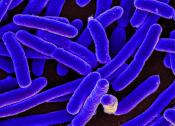
CDC E.coli

Image CDC Enter a caption

This study aimed to evaluate the in vitro antimicrobial effect of exposing raw water intended for human consumption to light (λ= 450 nm) and to investigate the correlation between the results obtained and physical and chemical parameters. Fifteen (15) samples of raw water were collected from households in a rural area of ​​Santo Antônio de Jesus – Bahia (Brazil), from November to December 2016. A 100 mL aliquot of each sample was exposed to a lighting system consisting of two high intensity light emitting diodes, with a wavelength of 450 nm and luminous flux of 200 lumens per 10 h. Quantifications of heterotrophic bacteria, total coliforms and temperature started at time zero and were done every two hours until the end of exposure to light. Bacteriological analysis was repeated after 72 h of being exposed to light. pH, dissolved oxygen and salinity analyses were performed before each experiment. After a 10h illumination at 450 nm light emitting diodes (LEDs), the dosage of light received by the water samples was 581.8 J/cm2. There was a significant reduction in the two bacteriological parameters analyzed after treatment (p = 0.000). There was an average decrease in heterotrophic bacteria counts from 3.44 to 1.86 log CFU/mL and total coliforms from 2.45 to 1.02 log CFU/mL. Mean reductions of heterotrophic bacteria were 97.01% and total coliforms were 95.61%. After 72 h, both counts increased; there was significant growth between heterotrophic bacteria (p = 0.000), but there was no significant growth for total coliforms (p = 0.058). pH (p = -0.981, p = 0.000), dissolved oxygen (ρ = -0.529, p = 0.043) and temperature (ρ = 0.521, p = 0.047) were related to the percentage reduction of heterotrophic bacteria. The method is shown to be effective in disinfecting raw water in vitro under different physical and chemical conditions.

Research – Kitchen Towel As Risk Factor for Home Based Food Poisoning

Abstracts Online

Background: Cross contamination in the kitchen could contribute to home-based food poisoning. This study aimed at investigating the potential role of kitchen towels in cross contamination in the kitchen. Methods: A total of 100 kitchen towels were collected after one month of use. The bacteria were cultured and identified by standard biochemical tests. A questionnaire was also designed to investigate the potential risk factors which could affect the result. Results:  Bacterial growth was found in 49% of the kitchen towels and significantly increased by size of family, extended family and presence on children. Multipurpose towels had higher CFU than single use towels (1.31 x 10⁷ vs 6.60 x 10⁴; p<0.05) and humid towels had higher CFU than dry ones (4.8 x 10⁵ vs 0.5x 10⁵; p<0.05). The mean CFU from the towels was found to be 2.76 x 10⁵ and was significantly higher from the cotton towels (4.98 x 10⁵) compared to the nylon (1.64 x 10⁵) and mixture of both towels (1.89 x 10⁵). Out of the 49 samples which were positive for bacterial growth, 36.7% grew coliforms, 36.7% Enterococcus spp., 30.6% Pseudomonas spp., 28.6% grew Bacillus spp., 14.3% S. aureus, 4.1% Proteus spp., 2.0% coagulase negative Staphylococcus. Furthermore, S. aureus was isolated at higher rate from families of lower socio-economic status (p<0.05) and those with children (p<0.05). The risk of having coliforms was twice on humid towels than the dried ones. It was also noted that as the CFU increased, the detection rate of coliform, Enterococcus spp., Proteus spp. and Bacillus spp. also increased significantly. Furthermore, Enterococcus spp. and S. aureus were isolated at higher prevalence in bigger families (p<0.05). Diet was also found to be an important factor. Coliform and S. aureus were detected at significantly higher prevalence from families on non-vegetarian diets while a higher prevalence of Enterococcus species from the kitchen towels of vegetarian families. Conclusions: This study conclude that kitchen towels could be very important source bacterial contamination which could contribute to food poisoning. The multipurpose usage of kitchen towels should be discouraged.

Research – Tea towels ‘can cause food poisoning’, new research suggests

The Independant

Repeated use of tea towels in the kitchen could be putting families at risk of food poisoning, according to new research.

Bacterial build-up was measured on 100 towels over the course of a month during an experiment by scientists at the University of Mauritius.

Researchers found bacteria growth on 49 towels, with more than a third testing positive for coliforms, the group of species of which E.coli is a member.

The study found E.coli was more likely to develop on towels that had been left to sit damp, while coliforms and Staphylococcus aureus (MRSA) bacteria were detected at significantly higher rates in households with non-vegetarian diets.

Research – The most bacteria-ridden places in your kitchen? Check your appliances

Digital Trends

We’ve all heard that the sponge is the germiest article in the kitchen. According to Charles Gerba, Professor of Microbiology at the University of Arizona, after that comes the sink, and then the cutting board. But you’d be surprised at the other places where germs gather.

Gerba was part of a study, where he and his colleagues measured fecal coliform bacteria on kitchen and bathroom surfaces (yeah, you read that right, we said “fecal”). The items he listed contained the highest densities of coliform, fecal coliform, and HPC bacteria, according to the results of the study.

Here at Digital Trends, we wanted to find out what tech in the kitchen is covered with nasty bacteria, and were surprised at the answer. Hint: check your appliances.

Research – Irrigation Water – Coliforms – E.coli

Ingenta ConnectWaterfall

Irrigation water is considered a potential source of preharvest pathogen contamination of vegetables. Hence, several organizations have recommended microbiological standards for water used to irrigate edible plants. The purpose of this study was to determine the strength of association between microbial quality indicators (coliforms and Escherichia coli) in irrigation water and on irrigated vegetables. Data analyzed included original results from a cross-sectional study conducted in the Midwestern United States during summer 2009 and information presented in two previously published studies performed in France and Portugal to investigate microbial quality of irrigation water and watered produce. In the cross-sectional study, repetitive PCR (rep-PCR) was used to characterize genetic relatedness of E. coli isolates from water and vegetables. No significant correlations were found between fecal indicators on leafy greens (lettuce and parsley, n = 91) or fruit (tomatoes and green peppers, n = 22) and those found in irrigation water used in the cross-sectional study (P > 0.40) or in the previously published data sets (data set 1: lettuce and waste irrigation water, n = 15, P > 0.40; data set 2: lettuce and irrigation water, n = 32, P = 0.06). Rep-PCR banding patterns of E. coli strains were all distinguishable among the pairs of E. coli isolates recovered from produce and irrigation water on the same farm. From the available data, the concentration of indicator organisms based on a single measure of irrigation water quality was not associated with the presence of these indicators on produce. In the absence of additional information, the use of a single microbial water quality parameter as an indicator of produce safety is of limited value for predicting the safety of the produce.