Category Archives: Clostridium botulinum

Canada- Lobster and Crab Recalled For Possible Botulism in Canada – Clostridium botulinum

Food Poisoning Bulletin

Denis Losier is recalling Lobster and Crab, both packed in brine, that were sold in jars with no labels, because they may be contaminated with Clostridium botulinum bacteria that can produce the deadly botulinum toxin. These products were sold in New Brunswick and Quebec in Canada.

The Lobster in brine and Crab in brine were sold in jars with no labels with no brand name. The recalled products are Lobster in brine sold in 250 ml or 500 ml Mason jars with no UPC number. All units sold up to and including November 13, 2019 are recalled. They were sold at Marché G & D, at 1006 Saint-Laurent Blvd., in Montréal, Quebec and distributed in New Brunswick by Denis Losier, Tracadie in New Brunswick.

Canada -Food Recall Warning – Lobster in brine and Crab in brine, sold in jars with no labels, recalled due to potential presence of dangerous bacteria – Clostridium botulinum

CFIA

Recall details

Ottawa, November 13, 2019 – Denis Losier is recalling Lobster in brine and Crab in brine, sold in jars with no labels, from the marketplace because they may permit the growth of Clostridium botulinum. Consumers should not consume the recalled products described below.

Recalled products

Brand Product Size UPC Codes Additional Information/ Distribution
None Lobster in brine 250 mL or 500 mL (sold in Mason jars) None All units sold up to and including November 13, 2019 Sold at Marché G & D, 1006 Saint-Laurent Blvd., Montréal, Quebec

Distributed in New Brunswick by Denis Losier, Tracadie, New Brunswick

None Crab in brine 250 mL or 500 mL (sold in Mason jars) None All units sold up to and including November 13, 2019 Sold at Marché G & D, 1006 Saint-Laurent Blvd., Montréal, Quebec

Distributed in New Brunswick by Denis Losier, Tracadie, New Brunswick

Background

This recall was triggered by test results. The Canadian Food Inspection Agency (CFIA) is conducting a food safety investigation, which may lead to the recall of other products. If other high-risk products are recalled, the CFIA will notify the public through updated Food Recall Warnings.

The CFIA is verifying that industry is removing the recalled products from the marketplace.

Illnesses

There have been no reported illnesses associated with the consumption of these products.

USA – Notes from the Field: Botulism Type E After Consumption of Salt-Cured Fish — New Jersey, 2018

CDC

cdc clost spore

Image CDC

On October 25, 2018, at 2:15 a.m., a woman aged 30 years and her mother, aged 55 years, both of Egyptian descent, arrived at an emergency department in New Jersey in hypotensive shock after 16 hours of abdominal pain, vomiting, and diarrhea. The daughter also reported blurry vision and double vision (diplopia), shortness of breath, chest pain, and difficulty speaking. She appeared lethargic and had ophthalmoplegia and bilateral ptosis. Both women were admitted to the hospital. The mother improved after fluid resuscitation, but the daughter required vasopressor support in the intensive care unit. Although the mother did not have evidence of cranial nerve involvement on admission, during the next 24 hours, she developed dysphagia and autonomic dysfunction with syncope and orthostasis and was transferred to the intensive care unit as her symptoms progressively worsened similar to those of her daughter.

Two days before admission, both women had eaten fesikh, a traditional Egyptian fish dish of uneviscerated gray mullet that is fermented and salt-cured. Fesikh has been linked to foodborne botulism, including a large type E outbreak in Egypt in 1993 (1). The Egyptian Ministry of Health has since issued public health warnings regarding fesikh before Sham el-Nessim, the Egyptian holiday commemorating the beginning of spring, during which fesikh is commonly prepared and eaten.* Foodborne botulism outbreaks associated with fesikh and similar uneviscerated salt-cured fish have also occurred in North America (2); two outbreaks occurred among persons of Egyptian descent in New Jersey in 1992 (3) and 2005 (4).

USA -Mill Stream Corp. (Sullivan Harbor Farm) Issues a Voluntary Recall of Cold Smoked Salmon Because of Possible Health Risk

FDA

Mill Stream Corp. (Sullivan Harbor Farm) of Hancock, Maine is voluntarily recalling ten lots of Cold Smoked Salmon because it has the potential to be contaminated with Clostridium botulinum, a bacterium which can cause life-threatening illness or death. Consumers are warned not to use the product even if it does not look or smell spoiled.

Botulism, a potentially fatal form of food poisoning, can cause the following symptoms: general weakness, dizziness, double-vision and trouble with speaking or swallowing. Difficulty in breathing, weakness of other muscles, abdominal distension and constipation may also be common symptoms. People experiencing these problems should seek immediate medical attention.

No illnesses have been reported to date.

The recall was initiated because the product’s water phase salt (WPS) tested below 3.5%. This was discovered upon re-review of laboratory certificates, which were found to have incorrectly reported WPS levels. Labeling instructions state to keep refrigerated at or below 38ºF and that the product may be frozen. Because the WPS is under 3.5% the product must remain frozen until ready to consume. Product stored in the refrigerator after thawing has the potential to be contaminated with Clostridium botulinum.

The recalled product was sold between March 6, 2019 and September 17, 2019 in vacuum sealed packages in the following sizes: whole salmon side, 2 lb., 1 lb., 8 oz., and 4 oz.  The affected product is marked with the following lot numbers marked on the back of the packages: 7049, 7050, 7051, 7052, 7054, 7056, 7058, 7060, 7062, 7066.

The smoked salmon products were sold and distributed in ME, MA, VT, RI, NY, CT, PA, NJ, OH, UT, IA, TN, MN,CO,FL, AZ,WI, WA, GA, IL, VA, MI, TX. The products sold were through retail, wholesale and online orders.

The affected product was sold frozen by Mill Stream Corp, but may have been thawed by retailers before sale. Consumers who purchased the product frozen are advised to keep it frozen until ready to use and thaw under refrigeration immediately before use. If a consumer has refrigerated product subject to the recall, they should dispose of it immediately even if it does not look or smell spoiled.

Consumers with questions may contact the company at 207-266-0621, Monday-Friday, 8am-5pm EST.

This recall is being made with the knowledge of the U.S. Food and Drug Administration.

Canada -Food Recall Warning – MF Inc. brand fishballs recalled due to potential presence of dangerous bacteria – Clostridium botulinum

CFIA

Recall details

Ottawa, October 19, 2019 – Mannarich Foods Inc. is recalling fishballs from the marketplace because they may permit the growth of Clostridium botulinum. Consumers should not consume the recalled products described below.

Recalled products

Brand Product Size UPC Codes
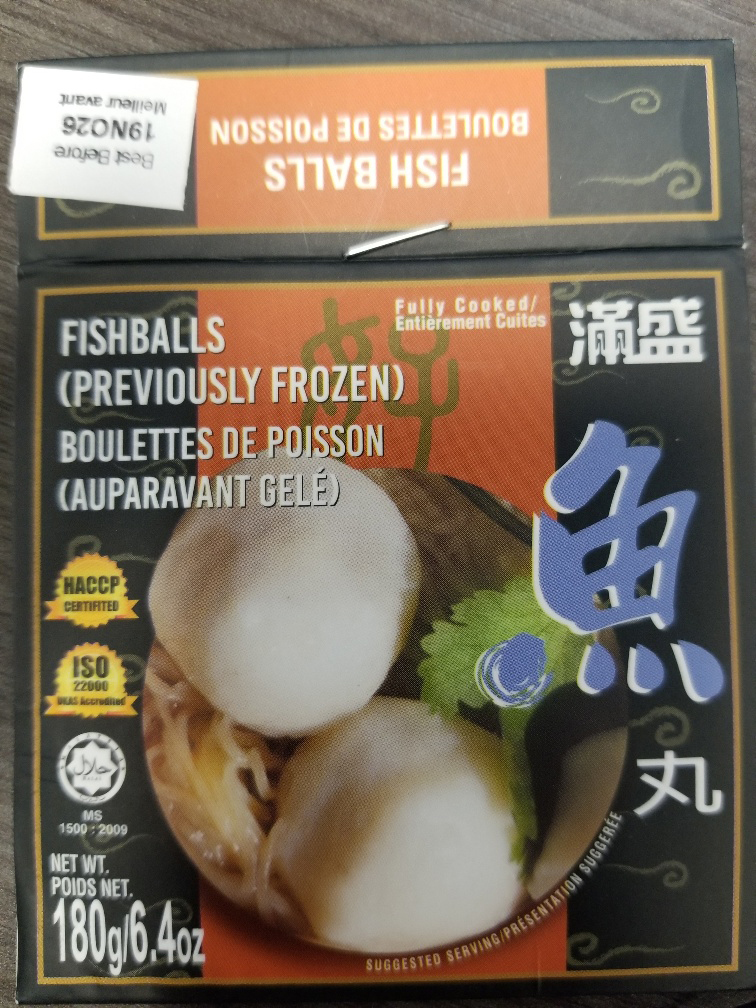
MF Inc. Fishballs (previously frozen) 180 g 0 68636 03040 2 All units sold up to and including October 21, 2019
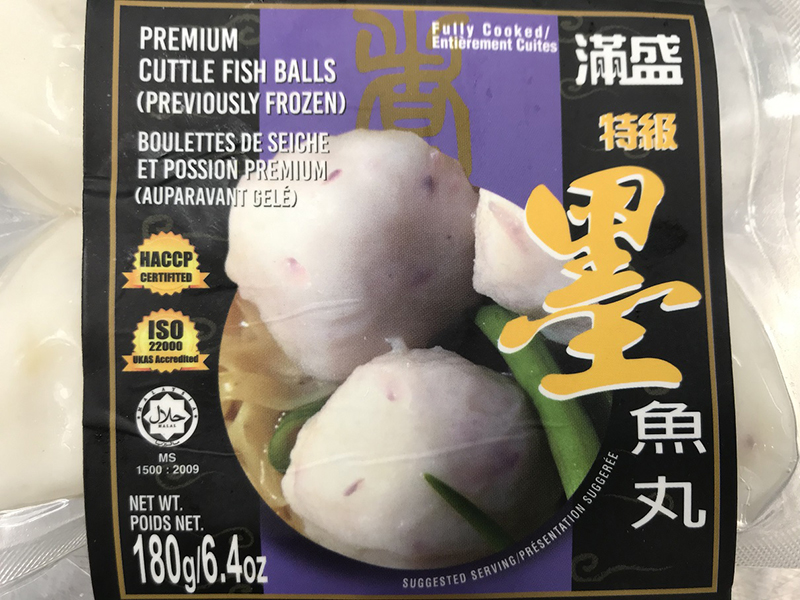
MF Inc. Premium cuttle fish balls (previously frozen) 180 g 0 68636 02030 4 All units sold up to and including October 21, 2019
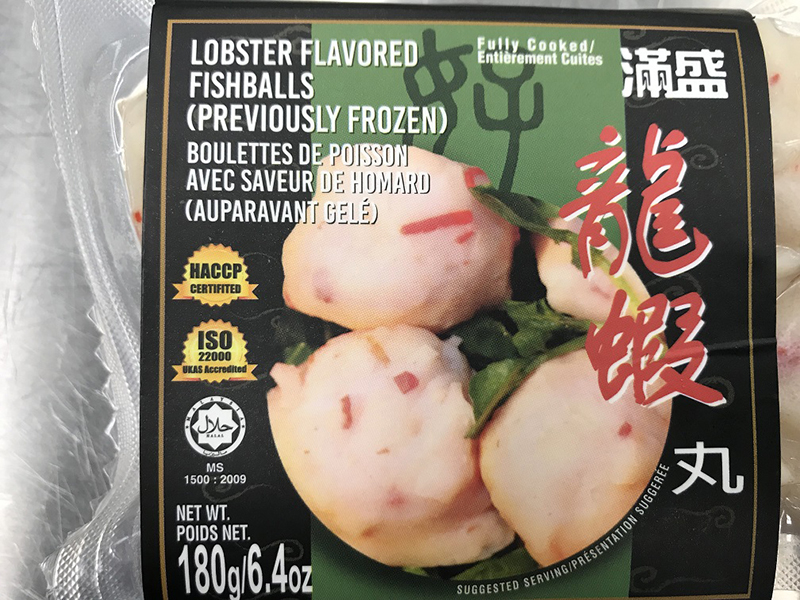
MF Inc. Lobster flavored fishballs (previously frozen) 180 g 0 68636 03430 1 All units sold up to and including October 21, 2019
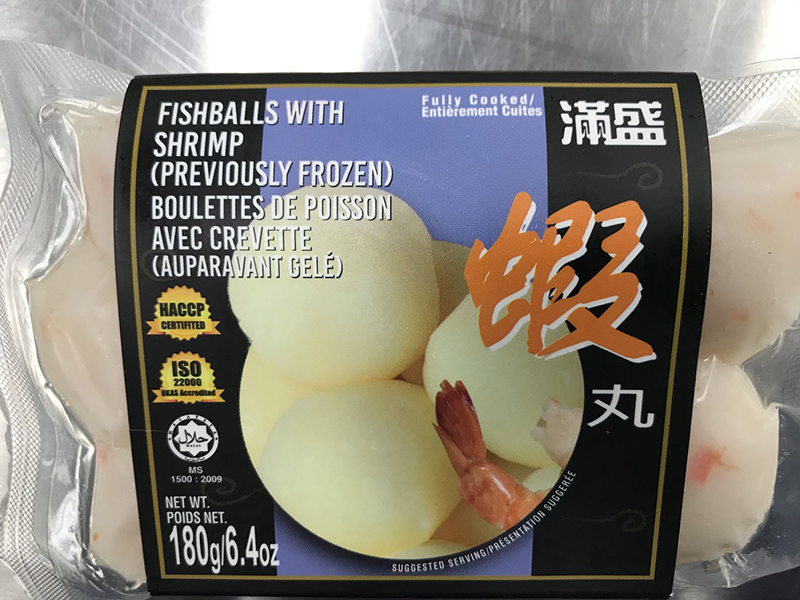
MF Inc. Fishballs with shrimp (previously frozen) 180 g 0 68636 02011 3 All units sold up to and including October 21, 2019

What you should do

If you think you became sick from consuming a recalled product, call your doctor.

Check to see if you have the recalled products in your home. Recalled products should be thrown out or returned to the store where they were purchased.

Food contaminated with Clostridium botulinum toxin may not look or smell spoiled but can still make you sick.

Symptoms in adults can include facial paralysis or loss of facial expression, unreactive or fixed pupils, difficulty swallowing, drooping eyelids, blurred or double vision, difficulty speaking or including slurred speech, and a change in sound of voice, including hoarseness.

Symptoms of foodborne botulism in children can include difficulty swallowing, slurred speech, generalized weakness and paralysis. In all cases, botulism does not cause a fever.  In severe cases of illness, people may die.

Background

This recall was triggered by Canadian Food Inspection Agency (CFIA) test results. The CFIA is conducting a food safety investigation, which may lead to the recall of other products. If other high-risk products are recalled, the CFIA will notify the public through updated Food Recall Warnings.

The CFIA is verifying that industry is removing the recalled products from the marketplace.

Illnesses

There have been no reported illnesses associated with the consumption of these products.

Product photos

Printer ready version of photos

  • Fishballs (previously frozen)
  • Premium cuttle fish balls (previously frozen)
  • Lobster flavored fishballs (previously frozen)
  • Fishballs with shrimp (previously frozen)

RASFF Alert – Botulinum Toxin – Bovines Producing Milk

RASFF-Logo

RASFF – botulinum toxin in bovines producing milk from Belgium in Belgium

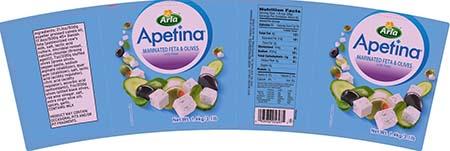
USA – UNFI Voluntarily Recalls Arla Apetina Marinated Feta & Olives in Oil, Pitted Because of Possible Health Risk

FDA “Label, Arla Apetina Marinated Feta & Olives in Oil, Pitted”

UNFI is voluntarily recalling cases of Arla Apetina Marinated Feta & Olives in Oil, Pitted distributed by UNFI. The product requires refrigeration to ensure food safety and we have learned that some product distributed to retail customers from 2 UNFI distribution centers may have been exposed to temperatures above refrigeration during storage and/or distribution by UNFI’S customers. Extended exposure to above-refrigerated temperatures may allow growth of bacteria such as Clostridium Botulinum to reach unsafe levels, which if consumed can cause life-threatening illness or death. Consumers are warned not to use the product even if it does not look or smell spoiled. No illnesses, including allergic reactions, involving this product have been reported to date in connection with this problem.

Botulism, a potentially fatal form of food poisoning, can cause the following symptoms: general weakness, dizziness, double-vision and trouble with speaking or swallowing. Difficulty in breathing, weakness of other muscles, abdominal distension and constipation may also be common symptoms. People experiencing these symptoms should seek immediate medical attention.

A total of 75 cases of this product were distributed to 69 retail customers serviced by UNFI distribution centers in Greenwood, IN. and Sarasota, Fla. between Jan. 1, 2019 and Aug. 30, 2019 to the following states IN, KY, IL, MI, FL, OH, MO. No other distribution centers or products in states that are not listed are impacted by this notice. Additionally, Arla Apetina Marinated Feta & Olives in Oil, not sold by UNFI Greenwood or Sarasota are not impacted by UNFI’s voluntary recall.

The product comes in a 3.1-pound plastic package marked with UPC code 9393605697.

Retailers who have purchased the Arla Apetina Marinated Feta & Olives in Oil, Pitted product from these two distribution centers should remove any remaining product from the supply chain and discard the product in a manner that would prevent its consumption or distribution and contact their UNFI account managers for a full refund. Consumers with questions may contact the company at 800-451-2525.


USA -Roland Foods, LLC Initiates a Voluntary Recall of Roland Red Lumpfish Caviar and Roland Black Lumpfish Caviar Due to Possible Health Risk – Clostridium botulinum

FDA

Company Announcement

Roland Foods, LLC of New York, New York is initiating a voluntary recall of its red and black lumpfish caviar products, which were manufactured at Ora ehf in Iceland, because they have the potential to be contaminated with Clostridium botulinum, a bacterium which can cause life-threatening illness or death. Consumers are warned not to use the product even if it does not look or smell spoiled.

Botulism, a potentially fatal form of food poisoning, can cause the following symptoms: general weakness, dizziness, double-vision and trouble with speaking or swallowing. Difficulty in breathing, weakness of other muscles, abdominal distension and constipation may also be common symptoms. People experiencing these problems should seek immediate medical attention.

The Red Lumpfish Caviar and Black Lumpfish Caviar, sold in glass jars, were distributed nationwide to retailers and foodservice distributors across the United States. The UPC code is located on the back of the label, under the bar code.

The following products are subject to the voluntary recall:

Affected Product
Product Name Roland® Black Caviar Whole Grain Lumpfish Roland® Black Caviar Whole Grain Lumpfish Roland® Black Caviar Whole Grain Lumpfish Roland® Black Caviar Whole Grain Lumpfish
Item # 20002 20004 20020 20040
Batch # 206 J018803, J019622, J020834 226 223
Pack Size 2×48/2 oz 48/2 oz 2×24/3.5 oz 12X12 oz
UPC #s
Item UPC 41224200029 41224200029 41224200203 41224200401
Outside Case UPC 10041224200026 10041224200040 10041224200200 10041224200408
Carton Markings
Product Name Roland Caviar Roland Caviar Roland Caviar Roland Caviar
Item # 20002 20004 20020 20040
Batch # 206 J018803, J019622, J020834 226 223
UPC # 10041224200026 10041224200040 10041224200200 10041224200408
Other Relevant Info This product is sold as 2 cases tie wrapped together This is a repack therefore product UPC is different than item # This product is sold as 2 cases tie wrapped together
Affected Product
Product Name Roland® Red Caviar Whole Grain Lumpfish Roland® Red Caviar Whole Grain Lumpfish Roland® Red Caviar Whole Grain Lumpfish Roland® Red Caviar Whole Grain Lumpfish
Item # 20202 20204 20220 20240
Batch # 154, 155 J018821, J020767 168 175
Pack Size 2×48/2 oz 48/2 oz 2×24/3.5 oz 12×12 oz
UPC #s
Item UPC 41224202023 41224202023 41224202207 41224202405
Outside Case UPC 10041224202020 10041224202044 10041224202204 10041224202402
Carton Markings
Product Name Roland Caviar Roland Caviar Roland Caviar Roland Caviar
Item # 20202 20202 20220 20240
Batch # 154, 155 J018821, J020767 168 175
UPC # 10041224202020 10041224202044 10041224202204 10041224202402
Other Relevant Info This is sold as 2 cases tie wrapped together This is a repack therefore product UPC is different than item # This is sold as 2 cases tie wrapped together

No other sizes or lots of red and black caviar or Roland® products are affected by this voluntary recall.

No illnesses have been reported to date.

The potential for contamination was noted after routine testing found that the product experienced a processing issue.

Production and distribution of the product has been suspended as FDA and the company continue their investigation as to the source of the problem.

Consumers can visit our website at www.rolandfoods.comExternal Link Disclaimer, or contact our 24-Hour Consumer Hotline at 800.221.4030 ext. 222 for further information about this voluntary recall and for further instructions.

Spain – Four ill in Spain with botulism linked to tuna – Clostridium botulinum

Food Safety News

Four people are part of a foodborne botulism outbreak in Spain after eating DIA brand tuna.

A batch of canned tuna in sunflower oil of the brand DIA has been removed from sale. The Spanish Agency for Food Safety and Nutrition (AESAN) said those who became ill ate a homemade salad that included the tuna. Spanish media reported one of the patients was still in hospital.

The foodborne outbreak was suspected to be caused by the tuna or grated carrots from Spain with distribution including Andorra, according to a Rapid Alert System for Food and Feed (RASFF) notice.

AESAN became aware on Aug. 9, through the Spanish rapid information exchange system (SCIRI), of a notification from health authorities in Castilla y León of a food poisoning outbreak caused by botulinum toxin linked to consumption of canned tuna in a homemade “Russian” salad.

Canada – Updated Food Recall Warning – Grained Salmon Caviar recalled due to potential presence of dangerous bacteria

CFIA

Recall details

Ottawa, August 20, 2019 – The food recall warning issued on August 14, 2019 has been updated to include additional product information. This additional information was identified during the Canadian Food Inspection Agency’s (CFIA) food safety investigation.

Kananaskistrade is recalling Grained Salmon Caviar from the marketplace because it may permit the growth of Clostridium botulinum. Consumers should not consume the recalled product described below.

Recalled products

Brand Name Common Name Size UPC Code(s) on Product
N/A (Cyrillic characters only) Grained Salmon Caviar 95 g 8 85202 00044 3 All units sold up to and including August 20, 2019