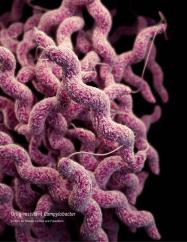
Category Archives: Campylobacter

Research – Norway – Norway looks at Campylobacter risk factors in broilers

Food Safety News


A study on Campylobacter in Norwegian broiler flocks older than 50 days at slaughter has indicated age and outdoor access are important risk factors.

The research work in 2018 shows that 43.3 percent of flocks tested positive for Campylobacter jejuni when sampled at slaughter. Broilers more than 50 days of age at slaughter were last included in a surveillance program in 2006.

Campylobacter jejuni was the only species detected. Birds from a slaughterhouse with the oldest flocks had the highest prevalence of Campylobacter at 87.5 percent, or 21 of 24 flocks positive. They also had outdoor access.

Those from a slaughterhouse with the youngest flocks did not have outdoor access and had the lowest prevalence at 22.2 percent, or four of 18 flocks positive for Campylobacter.

Research – Eugenol as an antimicrobial wash treatment reduces Campylobacter jejuni in postharvest poultry

Wiley Online

campy2

Image CDC

Abstract

The efficacy of the natural plant‐derived compound, eugenol (EG), as an antimicrobial wash treatment to reduce Campylobacter jejuni in postharvest poultry was investigated. The antimicrobial efficacy of EG was studied as a suspension, emulsion, or nanoemulsion treatment (two trials each). In each trial, chicken skin samples were inoculated with C. jejuni (∼7.2 Log CFU/sample), washed with treatments (0, 0.125, 0.25, 0.5, 1, or 2% EG corresponds to 0, 7.61, 15.22, 30.45, 60.90, or 121.8 mM, respectively) for 1 min, drip dried for 2 min, and then processed at 0, 8, and 24 hr of refrigerated storage (n = 5 samples/treatment/time point). All doses of the EG suspension consistently reduced C. jejuni counts with the greatest reduction (>2.0 Log CFU/sample) for the 2% dose when compared with controls (p < .05). EG emulsions or nanoemulsions did not provide any additional reduction in C. jejuni when compared to EG suspension. Our results suggest that EG could be an effective postharvest intervention strategy for reducing C. jejuni contamination on poultry products.

Practical Applications

Campylobacter jejuni, a leading cause of foodborne illness in humans, is strongly associated with the consumption of contaminated poultry products. Interventions reducing C. jejuni contamination in poultry would reduce the risk of subsequent human infections. In this study, the antimicrobial efficacy of eugenol was studied in three different delivery systems; suspension, emulsion, or nanoemulsion. Our results demonstrated that eugenol was effective in reducing C. jejuni counts on chicken skin and can be used as a potential strategy to reduce Campylobacter on poultry products.

UK – Major retailers publish Campylobacter results for April-June 2019

FSA

The top nine retailers across the UK have today published their latest testing results on campylobacter contamination in UK-produced fresh whole chickens (covering samples tested from April to June 2019).

The latest figures show that on average, across the major retailers, 3.6% of chickens tested positive for the highest level of contamination. These are the chickens carrying more than 1,000 colony forming units per gram (cfu/g) of campylobacter.

Results

Contamination levels July-September 2018 October-December 2018 January-March 2019 April-June 2019
cfu/g less than 10 58.8% 63.1% 55.4% 59%
cfu/g 10-99 26.7% 22.3% 25.3% 25.3%
cfu/g 100-1000 11% 11.4% 15.8% 12.1%
cfu/g over 1000 3.5% 3.1% 3.5% 3.6%

Results by retailer for April – June 2019

The sampling and analyses are carried out in accordance with protocols laid down by the FSA and agreed by Industry.

Background information

We have been testing chickens for campylobacter since February 2014 and publishing the results as part of a campaign to bring together the whole food chain to tackle the problem. Campylobacter is the most common cause of food poisoning in the UK.

In September 2017 we announced changes to the survey, with major retailers carrying out their own sampling and publishing their results under robust protocols laid down by the FSA. We are continuing to sample fresh whole chickens sold at retail, however, the focus is now on the smaller retailers and the independent market.

Consumer advice

Chicken is safe if consumers follow good kitchen practice:

  • Cover and chill raw chicken – cover raw chicken and store at the bottom of the fridge so juices cannot drip onto other foods and contaminate them with food poisoning bacteria such as campylobacter
  • Don’t wash raw chicken – thorough cooking will kill any bacteria present, including campylobacter, while washing chicken can spread germs by splashing
  • Wash used utensils – thoroughly wash and clean all utensils, chopping boards and surfaces used to prepare raw chicken
  • Wash hands thoroughly with soap and warm water, after handling raw chicken – this helps stop the spread of campylobacter by avoiding cross-contamination
  • Cook chicken thoroughly – make sure chicken is steaming hot all the way through before serving. Cut into the thickest part of the meat and check that it is steaming hot with no pink meat and that the juices run clear.

USA -Campylobacter Illness Associated with Bad Farms PA Raw Milk

Food Poison Bulletin


One person is sick with a Campylobacter infection after allegedly drinking raw whole milk from BAD FARMS in Kempton, Pennsylvania, according to news reports. That farm is located in Berks County, Pennsylvania. The milk has been recalled and removed from store shelves.

Cruise ship outbreaks down in 2019

Outbreak News Today

As we near the end of August, it is quite noticeable that the number of cruise ship outbreaks investigated by the Centers for Disease Control and Prevention’s (CDC) Vessel Sanitation Program (VSP) is less than recent previous years.

Thus far in 2019, CDC-VSP officials investigated five outbreaks- all before early April, nothing since. The most recent outbreak being Oceania Cruises, Oceania Marina 3/18 to 4/5 voyage.

While the year is not over, it is a slower season.

This compares to 11 outbreaks investigated in all of 2018, 11 in 2017 and 13 in 2016.

Of the 40 outbreaks reported by VSP, 27 were due to norovirus, 2 were Enterotoxigenic E. coli(ETEC), one each of Clostridium perfringens, rotavirus, norovirus and Campylobacter and norovirus and ETEC.

Research – Preparing Chicken Safely – Moy Park

Denmark -WGS project helps Denmark uncover Campylobacter outbreak

Food Safety News

Fifty people are ill in Denmark from Campylobacter after eating chicken meat but authorities believe the actual number of patients may be much higher.

Statens Serum Institut (SSI), Danish Veterinary and Food Administration (Fødevarestyrelsen) and DTU Food – National Food Institute are investigating the Campylobacter jejuni outbreak.

Campylobacter is the main cause of bacterial intestinal infections in Denmark and more than 4,500 cases were registered in 2018.

The same type of Campylobacter, sequence type 122, identified in patients by whole genome sequencing has also been found in chicken meat from one slaughterhouse, named as HKScan in Vinderup, a town in Northwestern Jutland.

Research – Reducing pathogenic bacteria during slaughtering and processing

Poultry World

Reducing rates of foodborne outbreaks in humans caused by salmonella and campylobacter continues to be a major task across the globe.

Figures from 2016 showed there were more than 356,000 cases of human zoonoses reported across the European Union with Campylobacteriosis (246,307) and Salmonellosis (94,530) by far the most predominant.

Earlier this month, Ireland reported its highest annual level of campylobacteriosiswith 3,030 cases – an increase of 8.7% compared with 2,786 patients in 2017. The highest rates of notification was in the 0-4 year age group.

Similary, in Holland the incidence of campylobacteriosis increased from 33 cases per 1,000 inhabitants in 2017 to 35 last year, with the country reporting 71,000 cases in 2018.

But now Norwegian firm DECON SFS believes it has manufactured a decontamination unit that can remove more than 99% of pathogenic bacteria during poultry meat slaughtering and processing.

And the results have been so successful that the company has garnered backing from the European Commission’s Horizon 2020 fund through grant support totalling €50,000.

Ireland- Campylobacter Incidence Data

HPSC

Campylobacter 2018

Research – Consequences of Using Two Types of Skin Samples from Chilled Chicken Broiler Carcasses To Measure the Degree of Contamination by Campylobacter spp.

Journal of Food Protection

ABSTRACT

Because of concerns regarding the prevalence of Campylobacter in chicken meat, member countries in the European Union (EU) undertook a surveillance program to determine Campylobacter levels on chicken carcasses. A sample mass of 25 g principally composed of neck skin was used, although breast skin could also be used if there were insufficient neck skin to meet the required sample mass. The aim was to establish a baseline for Campylobacter contamination of carcasses against which future interventions could be assessed. However, in the United Kingdom researchers wanted to explore whether different ratios of neck to breast skin in samples could affect the results obtained. A comparison of the Campylobacter levels on neck and breast skin samples obtained from the same chilled chicken carcasses was undertaken at four chicken slaughterhouses. The neck skins were significantly more heavily contaminated (P < 0.05) with Campylobacter than was breast skin. Statistical analyses revealed no relationship that would allow a conversion between levels obtained on the two skin types. Ongoing surveillance of Campylobacter for 6 years was funded by United Kingdom poultry processors using samples consisting solely of neck skin, and the results of this surveillance (2011 to 2016) are reported here. Given the higher Campylobacter levels on a sample exclusively consisting of neck skin, this protocol could yield results with which the poultry industry would find it more difficult to achieve the contamination reduction target. The contamination reduction target for the United Kingdom (≤10% of chicken carcasses exceeding neck skin Campylobacter levels of 1,000 CFU/g) was not met by the end of 2015, the date stipulated by the United Kingdom government.

HIGHLIGHTS
  • Campylobacter levels on chicken neck and breast skin were compared.

  • Neck skin was significantly more contaminated (P < 0.05) than breast skin.

  • No relationship between the two skin types was found for Campylobacter levels.

  • A UK government reduction target for highly contaminated chicken was not achieved.