Category Archives: Campylobacter

Research – Scientists uncover Campylobacter’s swimming tactics

Food Safety News

campy2

Image CDC

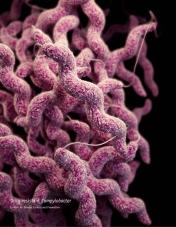
Researchers have found out how Campylobacter can swim faster in stickier liquids, such as in human guts.

Findings could help scientists halt the foodborne bacteria, because they show how the shape of its body and components that help it swim are all dependent on each other to work. This means any disruption to one part could stop the bacteria from getting through the body and into the gut.

UK – Cliftons Farm recalls raw milk and raw cream due to contamination with campylobacter

FSA

Cliftons Farm is recalling raw milk and raw cream because campylobacter has been found in the products.

Product details

Cliftons Farm raw milk

Pack size 2 pints
Use by any products purchased on or after 20th June 2020
Cliftons Farm raw cream

Pack size 230 ml
Use by any products purchased on or after 20th June 2020

Risk statement

The presence of campylobacter in the products listed above. The usual symptoms caused by campylobacter are fever, diarrhoea and abdominal cramps.

Action taken by the company

Cliftons Farm is recalling the above products. Point of sale notices are displayed in their shop, on their website and Facebook page. These notices explain to customers why the products are being recalled and tell them what to do if they have bought the product. Please see the attached notice.

Our advice to consumers

If you have bought the above products do not eat them. Instead, dispose of them and contact Cliftons Farm for a full refund at https://cliftonsfarm.com/contact/.

Research – Survey of the U.S. Broiler Industry Regarding Pre- and Postharvest Interventions Targeted To Mitigate Campylobacter Contamination on Broiler Chicken Products

JFP

ABSTRACT

Campylobacter is one of the most commonly reported foodborne pathogens in the United States. Because poultry is considered a major source of Campylobacter infections in humans, reduction of Campylobacter contamination in poultry products is likely the most important and effective public health strategy for reducing the burden of campylobacteriosis in humans. A comprehensive on-line survey was conducted of key stakeholders in the U.S. broiler industry, including broiler farm managers (n = 18), poultry veterinarians (n = 18), and processing plant managers (n = 20), to assess the current pre- and postharvest Campylobacter interventions and control measures practiced by the industry for reducing Campylobacter contamination of broiler products. The survey also included information regarding each respondent’s understanding of Campylobacter transmission and ecology in relation to broiler production. The results revealed that a majority of the establishments included in the survey are following the U.S. Department of Agriculture, Food Safety and Inspection Service guidelines for controlling Campylobacter contamination in broiler flocks and on carcasses. However, establishments appeared to be putting more effort into Salmonella control than into Campylobacter control both on the farm and in the processing plant. A majority of the respondents responded that current interventions are not effective for reducing Campylobacter contamination, especially on the farm. Many respondents did not understand the risk factors associated with Campylobacter colonization in broiler flocks and on carcasses. Continued educational and training programs for key stakeholders in the U.S. broiler industry are needed to increase awareness of the issues associated with Campylobacter infection in broiler chickens and of the fact that Campylobacter infection is a multifaceted problem that requires efforts from both the pre- and postharvest sectors.

HIGHLIGHTS
  • Survey participants reported a lack of effective on-farm Campylobacter interventions.
  • Survey participants mostly adhered to government guidelines for reducing Campylobacter.
  • Survey participants differed in an understanding of Campylobacter transmission and ecology.
  • Better Campylobacter education programs are needed for poultry industry stakeholders.

USA – CDFA Announces Recall of Raw Milk Produced at Valley Milk Simply Bottled of Stanislaus County

PASOROBLES PRESS

Raw milk produced and packaged by Valley Milk Simply Bottled of Stanislaus County is the subject of a statewide recall and quarantine order announced by California State Veterinarian Dr. Annette Jones. The quarantine order came following the confirmed detection of the bacteria Campylobacter jejuni in the farm’s packaged raw whole milk sampled and tested by the California Department of Food and Agriculture.

Netherlands – Zandvliet Chicken Grill sausage 225 grams, Albert Heijn – Campylobacter

NVWA

campy2

Image CDC

Zandvliet Vleeswaren has decided to take the Zandvliet Extra Seasoned Chicken Grill Sausage (225 grams) with expiry date (best before) 30-07-2020 and EAN code 87244465 immediately from the stores. It only concerns the product with this specific expiry date. The product has been delivered to Albert Heijn. The disease-causing Campylobacter bacteria has been found in this product with the above-mentioned best before date, which can lead to gastrointestinal complaints, flu, diarrhea and abdominal pain. Consult your doctor or general practitioner if you have any questions about health problems.

Netherlands – Grill sausage pork, 350 grams Zwagerman, Lidl – Campylobacter

NVWA

Lidl Netherlands carries out a recall for the product “Grilled sausage pig, 350 grams, from the brand Zwagerman” with expiration date 08-08-2020 and EAN 2036 4434. During a quality check at the producer, the disease-causing bacterium Campylobacter has been detected. The Campylobacter bacteria can cause gastrointestinal complaints, flu, diarrhea and abdominal pain. Customers are urged not to consume this product and to return it to a Lidl store.

Research – Fate of Salmonella enterica and Enterohemorrhagic Escherichia coli on Vegetable Seeds Contaminated by Direct Contact with Artificially Inoculated Soil during Germination

JFP

ABSTRACT

Contaminated vegetable seeds have been identified as a potential source of foodborne bacterial pathogens. This study was undertaken to observe the behavior of Salmonella and enterohemorrhagic Escherichia coli (EHEC) on vegetable seeds, contaminated by direct contact with artificially inoculated soil, during germination. Sterile sandy soil inoculated with lyophilized cells of four individual strains of Salmonella or EHEC (three O157:H7 strains and one O104:H4 strain) was mixed with sanitized seeds (2 g) of alfalfa, fenugreek, lettuce, and tomato at 20°C for 1 h. The contaminated seeds were germinated on 1% water agar at 25°C for 9 days in the dark. Populations of Salmonella and EHEC on various tissues (seed coat, root, cotyledon, and stem, etc.) of sprouts and seedlings were determined every other day over the germination period. Overall, 70.4 and 72.4% of collected tissue samples (n = 544) tested positive for Salmonella and EHEC, respectively. In general, the mean populations of Salmonella and EHEC on sprout and seedling tissues increased with the prolongation of germination time. Seed coats had the highest bacterial counts (4.00 to 4.06 log CFU/0.01 g), followed by the root (3.36 to 3.38 log CFU/0.01 g), cotyledon (3.13 to 3.38 log CFU/0.01 g), and stem tissues (2.67 to 2.84 log CFU/0.01 g). On average, tissue sections of fenugreek sprouts and lettuce seedlings had significantly higher (P < 0.05) numbers of Salmonella and EHEC cells than that of alfalfa sprouts and tomato seedlings. Data suggest that the growth and dissemination of Salmonella and EHEC cells on alfalfa, fenugreek, lettuce, and tomato sprout and seedling tissues are influenced by the type of vegetable seeds and sprout and seedling tissues involved. The study provides useful information on the fate of two important foodborne bacterial pathogens on selected vegetable seeds, contaminated by direct contact with inoculated soil, during the germination process.

HIGHLIGHTS
  • Vegetable seeds were contaminated via contact with pathogen-bearing sandy soil.
  • Pathogens on contaminated seeds were recovered from tissues of sprouts and seedlings.
  • Tomato and alfalfa tissues had lower pathogen counts than fenugreek and lettuce tissues.
  • Seed coats had higher pathogen counts than the root and cotyledon tissues.
  • Stem tissues had lower Salmonella/EHEC counts compared with all other tissues.

Netherlands -Recall from Albert Heijn Product: “Extra Gekruide Kip Grillworst” (Chicken grill sausage with spices) from the brand Zandvliet. – Campylobaccter

AFSCA

In agreement with the AFSCA, Albert Heijn removes ‘Extra Gekruide Kip Grillworst’ from the Zandvliet brand (with durability date 30 July – EAN code 87244465) from the sale and reminds it to consumers.

Campylobacter has been found in this product, which can cause stomach and intestinal upset, flu, diarrhea, and abdominal pain. Consult your doctor if you have questions about health problems.

Albert Heijn asks his customers not to consume this product and to bring it back to the point of sale in which it was purchased. The product will be refunded or changed. Please contact a doctor in case of health problems.

Product Description
– Product name: Zandvliet Extra Gekruide Kip Grillworst (Chicken grill sausage with spices)
– Brand: ZANDVLIET
– Date of minimum durability (DDM): 30/07 (included) – EAN code 87244465
– Type of packaging: packaging in plastic
– Sales period: from 19/06 to 25/06 (inclusive)
– Weight: 225 g

For any further information , please contact Albert Heijn via 0800 777 05


USA – Statewide recall on raw milk produced by Swan Bros. Dairy, Inc. – Campylobacter

KTUL


The Oklahoma State Department of Agriculture, Food, and Forestry says raw milk produced by Swan Bros. Dairy, Inc. in Claremore is the subject of a statewide recall due to the confirmed detection of Campylobacter jejuni.

Anyone who has purchased or received their raw milk products between April 9 and June 22 is strongly urged to dispose of any remaining product.

The raw milk products were sold in plastic half-gallons, gallons, and pints directly from the Swan Bros. Dairy in Claremore and include raw whole milk, raw 2% milk, raw skim milk, and raw heavy cream sold in pints.

Research – Scientists say Campylobacter behind August 2019 outbreak in Beijing

Food Safety News

campy2

Image CDC

Researchers in China have reported the first identified outbreak caused by a local Campylobacter jejuni infection in Beijing.

A total of 14 patients were sick who worked at the same factory. They had shared a common meal supplied from a meal delivery company. The outbreak was not related to the ongoing COVID-19 outbreak.

“Recently, the accelerated pace of life may dramatically increase use of meal delivery in major cities and may subsequently increase the risk of infection or food poisoning caused by foodborne pathogens,” said researchers in an article in China CDC Weekly.