Category Archives: Bacillus

Microbial safety and quality of various types of cooked chilled foods

Science Direct

Refrigerated Processed Foods of Extended Durability (REPFEDs) are a diverse group of food products. Their production process consists of a variable sequence of different processing steps leading to various types of REPFEDs being introduced to the market. To assure microbial safety, the food industry relies on a combination of mild heat treatment (i.e. pasteurization), appropriate product formulation (i.e. pH, water activity, modified atmosphere packaging, preservatives), cold storage and shelf life limitation. In this paper a classification of REPFED food types is presented and their microbiological safety is evaluated. REPFEDs were classified according (i) to the production process and (ii) to the expected consumer’s reheating practices. To evaluate the microbiological safety, historical data on the microbial contamination of REPFEDS were collected from five companies, 706 analyses on the day of production (T0) and 2912 analyses at the end of shelf life (TEoS). Results demonstrated that the microbial safety of the products is overall satisfactory. The number of samples exceeding the acceptable levels for Bacillus cereus/sulfite reducing Clostridia (T0: 103 CFU/g, TEoS: 105 CFU/g) was 4.07%/1.94% at T0 and 2.04%/0.69% at TEoS. None of the samples exceeded the acceptable levels for Listeria monocytogenes (T0: Absent in 25 g, TEoS: max 102 CFU/g). In addition the temperature of 38 products was monitored during reheating according to instructions of the manufacturer. The pasteurization values obtained during reheating are very heterogeneous, and only 7 products obtained a P70 of 2 min throughout the entire product. To assess the effect of reheating on L. monocytogenes a challenge test (including reheating) of paella with L. monocytogenes was performed. This demonstrated that L. monocytogenes can grow up to 0.63 log CFU/g in 6 days at 4 °C and that reheating the paella according to the instructions on the label does not guarantee absence of L. monocytogenes. These findings demonstrate the microbial food safety of the tested REPFEDs is satisfactory, and that producers should not rely on the reheating at consumer level to eliminate L. monocytogenes.

EFSA – Call fo Tender Ecoli/Entero as Process Hygiene Criteria

EFSA

Call for tender: Usefulness of Escherichia coli and Enterobacteriaceae as process hygiene criteria in poultry (CFT/EFSA/BIOHAZ/2012/03)

Invitation


ECDC and EFSA – Food-borne Outbreaks in EU Report 2010

ECDC

The European Centre for Disease Prevention and Control (ECDC) and the European Food Safety Authority (EFSA) launched their annual report on zoonoses and food-borne outbreaks.

The report,  providing data on 15 zoonotic diseases in the European Union for 2010, supports the European Commission and EU Member States in their consideration of possible measures to protect citizens from risks related to zoonoses.

The report highlights a positive progress in the reduction of reported human cases of salmonellosis by almost 9% in 2010, as well as decreases in other zoonoses such as infections caused by Yersinia enterocolitica, Trichinella and Listeria monocytogenes. “Decreases in human cases of salmonellosis and other zoonotic diseases show that EU level control measures, resulting from surveillance of disease in humans with information from food and animals, are effective”, states Johan Giesecke, Chief Scientist at ECDC.

On the other hand, the number of cases of  campylobacteriosis has been increasing over the last five years, and human cases of Shiga toxin/verotoxin -producing Escherichia coli (STEC/VTEC) are also increasing. These trends “highlight the need of further joint efforts”, continues Prof. Gieseke. “For this, ECDC will continue to strengthen its links with all important partners and foster collaboration in order to decrease the occurrence of these diseases in the EU”.

Bacillus Spore Germination

Physorg.com

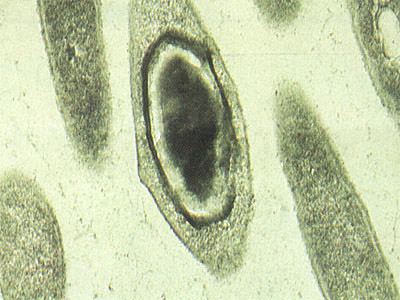
Some bacteria can form spores (survival capsules) that are particularly resistant to heat. Since sporogenous bacteria can also cause food poisoning and a reduction in food quality, they constitute a significant threat to the food industry.

If spores are to pose a risk, they have to “wake up” from a state of hibernation and return to their normal growth cycle through a process called germination.

Refrigerated foods with a shelf-life of several weeks are often heat-processed at temperatures between 65 – 95 C. This kills the majority of bacteria, but Bacillus spores can survive, germinate and develop into growing bacteria. Thermal treatment of this kind will in fact improve the growth potential of sporogenous bacteria because the heat kills competing bacteria flora and stimulates the surviving spores so that germination can commence more rapidly. The thermal treatment can increase the risk of spore germination in food and result in subsequent bacterial growth and a risk of quality deterioration and food poisoning.

Løvdal has investigated how the germination characteristics of the spores of four different Bacillus species are affected by heat treatment. She has used knowledge about the spores’ response to temperature to experiment with a method which can reduce the spore level without increasing the overall thermal treatment of the food product.

Persistance and Survival of Pathogens in Dry Foods

ILSI Europe Report – 52 Page Full Report

Low-moisture foods and food ingredients, i.e., those appearing to be dry or that have been subjected to a drying process represent important nutritional constituents of human diets. Some of these foods are naturally low in moisture, such as cereals, honey and nuts, whereas others are produced from high-moisture foods that were deliberately submitted to drying (e.g., egg and milk powders). The addition of large amounts of salt or sugar can also be regarded as a ‘drying’ process by reducing the amount of water available for microbial growth.

Drying (removal of water) has been used since ancient times to preserve food. Although many pathogens and spoilage microorganisms can survive the drying process, this preservation technology is very effective because microbial growth will cease if water is no longer available for biological reactions. The water activity (aw) necessary to prevent growth of microorganisms, i.e., to inhibit physiological activities necessary for cell division, is 0.60 or less. If more water is available, some species of xerophilic spoilage moulds and osmophilic yeasts can grow at aw0.60 – 0.70; however, the minimum aw  for mycotoxin production by moulds is 0.80 with the majority not producing mycotoxins below a w 0.85 (Cousin et al., 2005). The minimum aw for growth of most bacteria is 0.87, although halophilic bacteria can grow at aw as low as 0.75. Among the pathogenic microorganisms, Staphylococcus aureus is particularly well-adapted to reduced moisture environments. Under optimal conditions it can grow at aw as low as 0.83 but in most foods the minimum is aw 0.85 (ICMSF, 1996). With this exception aside, in the context of this monograph, all foods and food ingredients that have an aw that prevents the growth of bacterial foodborne pathogens, i.e., with an aw of 0.85 or lower, are considered. These foods and ingredients are referred to as having low moisture or low aw. A wide range of products falls in this category: animal feeds such as fishmeal and pet foods, cereals, chocolate, cocoa powder, dried fruits and vegetables, egg powder, fermented dry sausage, flour, meal and grits, herbs, spices and condiments, honey, hydrolysed vegetable protein powder, meat powders, dried meat, milk powder, pasta, peanut butter, peanuts and tree nuts, powdered infant formula, rice and other grains, and seeds (e.g., sesame, melon, pumpkin, linseed). Although low moisture foods have some clear advantages with respect to food safety, there are nevertheless some major concerns:

• Many microorganisms, including pathogens, are able to survive drying processes. Once in a dried state, metabolism is greatly reduced, i.e., there is no growth but vegetative cells and spores may remain viable for several months or even years. They can often persist longer in low moisture foods and in dry food processing environments than in high-moisture foods and wet environments.

• It is often difficult or even impossible to eliminate pathogens from foods with low moisture by processes such as application of mild heat treatment (e.g., pasteurisation) or high hydrostatic pressure that work very well for high-moisture foods.

• Food processing environments, in which dried foods are handled, must be maintained at low humidity and kept dry, and this can give rise to problems in cleaning and sanitising, which are usually ‘wet’ procedures.

• Finally, it is of concern that consumers sometimes wrongly believe that low-moisture foods are sterile, which may lead to dangerous practices such as keeping reconstituted infant formula at ambient temperature for prolonged periods, thereby creating growth opportunities for pathogens such as Bacillus cereus and Cronobacter species.

Bacillus Cereus Food Outbreak USA

Food Poison Journal

A total of 58 employees who worked at the Zappos plant in Bullit County, Kentucky were infected by a bacteria called Bacillus cereus in December 2011.  At least twenty-nine sought medical attention, but nobody was hospitalised. The specific food item was not identified.


Bacteria in Paper Towels – Canadian Study

A Canadian study may give you pause for thought next time you reach for a paper towel. The study finds bacteria thrive on the paper products, even on unused towels. The new study by researchers at Laval University in Quebec City, and published in the American Journal of Infection Control, says some of those germs could be transferred to people after they’ve washed their hands. Research into bacterial transmission from unused paper towels to hands and surfaces has not previously been well-documented. The study authors cautioned that their work doesn’t imply that paper towels are unsafe; just that they could possibly be an unwanted source of contamination in certain environments. For example, the study suggests paper towels could pose a danger in certain clinical or industrial settings or for those with immune disorders. A study of six towel brands, all commercially sold in Canada, showed all had germs. However, recycled towels were the most heavily contaminated.

“In our study, the concentration of bacteria in the recycled paper was between 100- to 1,000-fold higher than the virgin wood pulp brand,” the researchers wrote. No illness was found to be connected to paper towel use. Scientists wrote that the findings in their paper towel study are consistent with high bacterial counts found in other products made of recycled paper. Researchers also say the bacteria may thrive on recycled paper because it contains binding ingredients like starches and fillers, which serve as food. Paper manufacturers reject the notion that paper towels are worse than using hand dryers. One such company argues on its website that towels are a better bet, because dryers often contain bacteria on the actual device. While at least 17 bacterial species were found on the towels, researchers found the most common one was Bacillus, which is transferable to hands and linked to food poisoning. Contamination is a problem in the pulp and paper industry, where contaminated machinery can later affect the paper product. “Because of their high resistance to a wide range of chemical and physical agents, Bacillus spores may survive the various procedures encountered in the papermaking process,” the authors write.  

“It is worth mentioning that harmful toxin-producing Bacillus species were also detected in paper mills.”