Author Archives: KSW

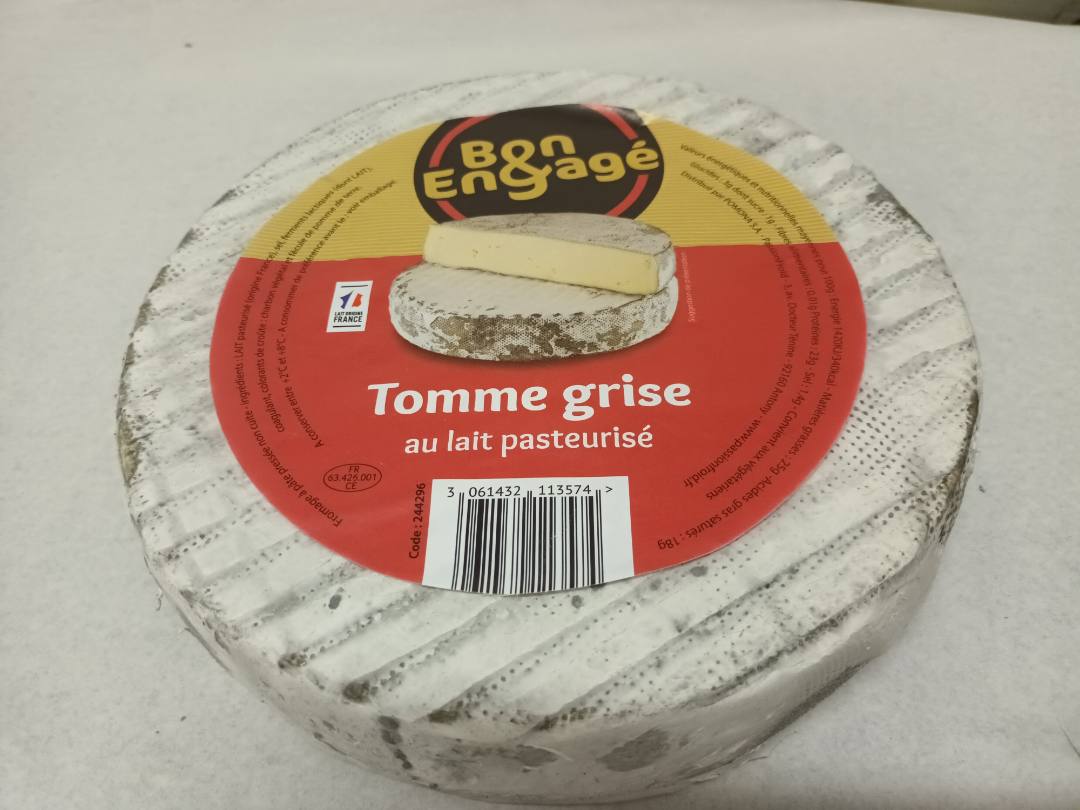
France – Grey Tome – Listeria monocytogenes

Gov France

Product Category
Food
Product subcategory
Milk and dairy products
Product brand name
Good & Committed
Model names or references
Package of 4
Product identification
GTIN Batch
3061432113574 0000540
Start/End of marketing date
From 10/22/2024 to 12/10/2024
Storage temperature
Product to be kept in the refrigerator
Geographic area of ​​sale
Whole France
Distributors
pomona

Sweden – ICA recalls ICA Ruccola 65g and ICA Ruccola 200g – may contain Salmonella

Livsmedelsverket

ICA is recalling ICA Ruccola 65g and ICA Ruccola 200g because it may contain Salmonella.

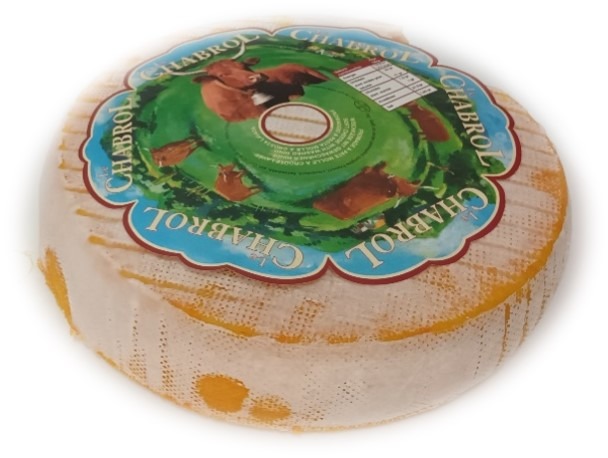
France – Chabrol – Listeria monocytogenes

Gov France

Product Category
Food
Product subcategory
Milk and dairy products
Product brand name
Chabrol
Model names or references
Package of 2 Cheese slices
Product identification
GTIN Batch
3376963684715 0001407
Start/End of marketing date
From 10/14/2024 to 01/12/2025
Storage temperature
Product to be kept in the refrigerator
Geographic area of ​​sale
Whole France
Distributors
Match + Cora + Cartry + SARL Pagedid + The farmers of Rocamadour + Livradois Cheese Company

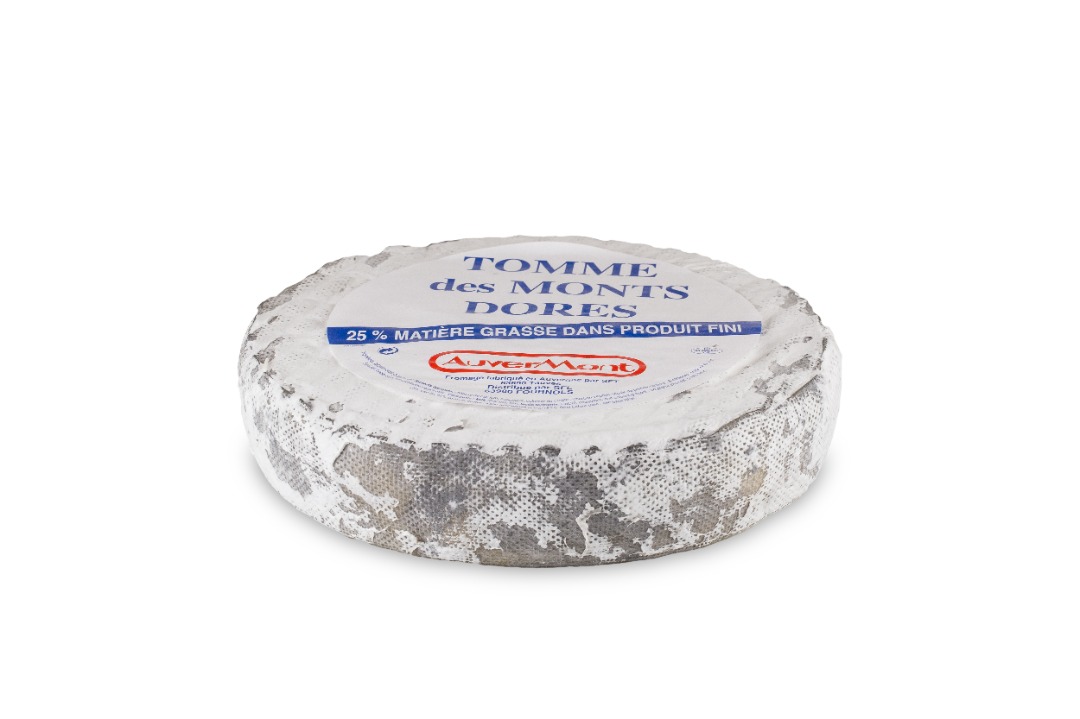
France – Tome of the Golden Mountains – Listeria monocytogenes

Gov France

Product Category
Food
Product subcategory
Milk and dairy products
Product brand name
Auvermont
Model names or references
Package of 4
Product identification
GTIN Batch
3376963684531 0001407
Start/End of marketing date
From 10/21/2024 to 12/12/2024
Storage temperature
Product to be kept in the refrigerator
Geographic area of ​​sale
Whole France
Distributors
SARL Pagedid

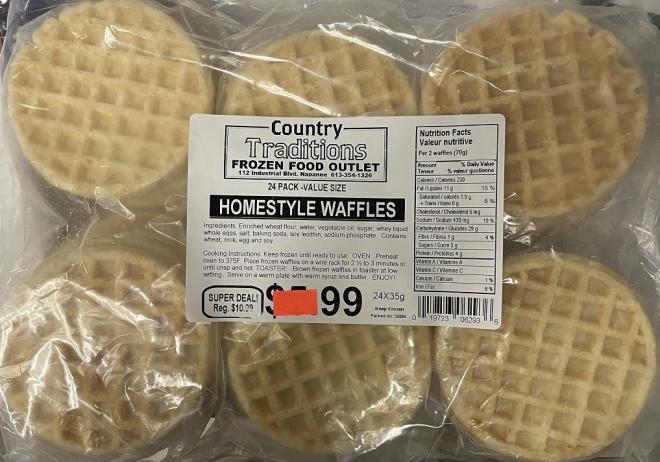
Canada – Country Traditions Frozen Food Outlet brand Homestyle Waffles recalled due to Listeria monocytogenes

Gov Canada

Product
Homestyle Waffles
Issue
Food – Microbial contamination – Listeria
What to do

Do not consume, use, sell, serve or distribute recalled products

Distribution
Ontario

Affected products

Issue

The affected product is being recalled from the marketplace due to possible Listeria monocytogenes contamination.

Researchers pioneer nanotechnology to combat E. coli in rice, strengthen food safety

Food Safety News

Researchers at the University of Texas at El Paso (UTEP) have made a major breakthrough in agricultural biotechnology, focusing on the use of nanotechnology to combat E. coli contamination in rice crops. This discovery, led by Hamidreza Sharifan and his team, offers promising solutions for improving food safety and addressing bioterrorism threats.

The research centers on the development of advanced methods to detect and mitigate the effects of pathogens, particularly E. coli, which poses a significant threat to global food systems. The team, which includes Daisy Wilson, a Ph.D. student in environmental science and engineering, and Valeria Gonzalez, a senior undergraduate in forensic science, conducted groundbreaking work in biofortification and nanoparticle application to reduce microbial contamination.

“We got an internship with the Department of Homeland Security as a team,” Wilson told The Prospector, UTEP’s student newspaper. “It was led by Dr. Sharifan, and he mentored myself and Valeria for the summer.”

Research – Listeria in Pregnancy—The Forgotten Culprit

MDPI

Listeria monocytogenes is a Gram-positive bacterium that causes listeriosis, a severe foodborne illness that is particularly dangerous during pregnancy. It thrives in diverse environments, including refrigerated conditions and food production facilities, due to its adaptability to varying temperatures, pH levels, and salt concentrations. Its virulence stems from the ability to invade host cells, particularly macrophages and epithelial cells, and avoid, or at least postpone, immune detection by utilizing virulence factors such as internalins, listeriolysin O, and actin assembly-inducing protein. This intracellular motility and biofilm formation make LM a persistent pathogen in food safety and public health. Pregnant women are at a much higher risk of listeriosis, which can result in serious fetal complications such as miscarriage, stillbirth, and preterm labor due to LM’s affinity for placental tissues. The vertical transmission of LM from mother to fetus can lead to neonatal listeriosis, which can result in sepsis and meningitis, with high mortality rates if not promptly treated. Early diagnosis and treatment with antibiotics, such as ampicillin or gentamicin, are crucial for maternal and neonatal outcomes.

Research – Is it possible to reduce foodborne Campylobacter infections in humans through vaccination of animals?

Science Direct

Vaccination has been used successfully over the years to eradicate many serious diseases, but what about human foodborne pathogens, such as Campylobacter? Most human cases of Campylobacter infection are associated with consumption of poultry products. Vaccination of poultry to prevent early colonization or to reduce the Campylobacter colonization level may be a viable intervention strategy in the future; however, no commercial Campylobacter vaccine is currently available.

Research – Impact of Various Washing Protocols on the Mitigation of Escherichia coli Contamination in Raw Salad Vegetables

MDPI

Vegetables are an essential component of a balanced diet. The consumption of ready-to-eat foods may lead to the risk of infections and illnesses due to microbial contamination. To mitigate the potential of microbial contamination risks, it is critical to promote safe handling practices among consumers. In this study, our research evaluated the efficacy of different vegetable washing methods, specifically with lettuce, tomato, and cucumber, to establish optimal practices for reducing microbial contamination. This study consisted of two phases. Initially, a survey was distributed to 150 volunteers using snowball sampling to assess everyday vegetable handling and washing methods. The survey’s results identified four predominant methods: washing with a 5% vinegar solution for 3 min followed by tap water rinse (37.3% of participants), rinsing with tap water for 1 min (29.3%), washing with a 5% salt solution (vegetable soap) for 3 min followed by a tap water rinse (16.6%), and a 3 min tap water rinse (14%). A minor segment (3.33%) reported not washing their vegetables at all. The survey’s findings guided the second phase, which tested the aforementioned washing protocols’ effectiveness in reducing Escherichia coli (E. coli) levels on spiked contaminated salad vegetables. The tested vegetables were sterilized using UV light, inoculated with 0.5 McFarland E. coli, and then washed using the four identified methods. After that, E. coli enumeration after washing was performed using 3M™ Petrifilm and the comparison was analyzed via one-way ANOVA. During this study, it was revealed that the cucumbers had the highest E. coli contamination levels in comparison to the lettuce and tomato after washing. Interestingly, by comparing the three washing methods, it was found that washing the vegetables with vinegar proved to be the most effective solution for reducing microbial presence on both lettuce and cucumbers. Notably, the natural smoothness of tomato skin led to no significant differences in contamination levels across washing methods. In summary, vinegar washing effectively reduces microbial contamination from salad vegetables, highlighting the need for informed consumer practices to prevent foodborne outbreaks. This study emphasizes the importance of monitoring contamination sources and using safe washing techniques.

Research – E. coli in Food

MAST

In light of the news of the last few days, the Swedish Food Agency considers it appropriate to emphasize several points regarding the handling of food, especially with E. coli in mind.

What is E. coli ?

There are many types of coliform bacteria. They are found in the intestines of humans and animals. Some species can produce toxins and thus cause serious diseases in people, especially children, the elderly and other vulnerable individuals. These toxin-producing E. coli bacteria are called STEC (Shiga Toxin-producing Escherichia Coli ) and can cause serious illness in some cases.

Foodborne infections due to E. coli

The bacteria can get into meat during slaughter, if the contents of the animal’s intestines come into contact with the meat. Preventive measures that reduce the chance of meat becoming contaminated are therefore important, such as clean tools and hygiene during slaughter. The bacteria can also get into vegetables, fruits and other things that are grown in close contact with soil, organic waste or water that is contaminated with feces.

People can become infected with E. coli , through contaminated food (tdhakki and vegetables) or water, through direct contact with animals or environments contaminated with their feces. The bacterium thus gets through the mouth and down into the digestive tract.

It is common practice that beef, lamb and horse steaks are served without being deep-fried. On raw pieces of meat, bacteria are on the outer layer of the meat and not inside the muscle. They are therefore killed when the meat is fried or grilled at high temperatures. Everything else applies to hamburgers and other dishes made from minced meat. When meat is minced, microorganisms spread throughout the meat. Light frying therefore does not kill bacteria present in the meat. In order to kill E. coli and other disease-causing microorganisms, the hamburgers and other mincemeat dishes must be fried through or so that the core temperature is at least 75°C.

What can consumers do to avoid infection?

  • Fully fry round hamburgers and other minced meat
  • Maintain kitchen hygiene when handling raw and minced meat
  • Avoid cross contamination by keeping meat separate from other foods, especially from those that should not be cooked such as salad
  • Rinse all vegetables in clean water
  • Wash cutting boards, utensils, knives and the surrounding area after handling raw meat to prevent the transfer of bacteria to foods that are not to be heated
  • Do not wipe up blood with a cloth used on other surfaces, use paper towels instead
  • Good hand washing with soap and water after using the toilet, before handling food and after handling raw meat is an important rule to prevent infection
  • Prevent blood from leaking from meat in the fridge
  • Avoid consumption of unpasteurized dairy products