Monthly Archives: August 2024

Research – Staphylococcal Enterotoxins: Description and Importance in Food

MDPI

Abstract
Staphylococcus aureus stands out as one of the most virulent pathogens in the genus Staphylococcus. This characteristic is due to its ability to produce a wide variety of staphylococcal enterotoxins (SEs) and exotoxins, which in turn can cause staphylococcal food poisoning (SFP), clinical syndromes such as skin infections, inflammation, pneumonia, and sepsis, in addition to being associated with the development of inflammation in the mammary glands of dairy cattle, which results in chronic mastitis and cell necrosis. SEs are small globular proteins that combine superantigenic and emetic activities; they are resistant to heat, low temperatures, and proteolytic enzymes and are tolerant to a wide pH range. More than 24 SE genes have been well described (SEA-SEE, SEG, SEH, SEI, SEJ, SElK, SElL, SElM, SElN, SElO, SElP, SElQ, SElR, SElS, SElT, SElU, SElV, SElW, SElX, SElY, and SElZ), being a part of different SFP outbreaks, clinical cases, and isolated animal strains. In recent years, new genes (sel26sel27sel28sel31sel32, and sel33) from SEs have been described, as well as two variants (seh-2p and ses-3p) resulting in a total of thirty-three genes from Ses, including the nine variants that are still in the process of genetic and molecular structure evaluation. SEs are encoded by genes that are located in mobile genetic elements, such as plasmids, prophages, pathogenicity islands, and the enterotoxin gene cluster (egc), and housed in the genomic island of S. aureus. Both classical SEs and SE-like toxins (SEls) share phylogenetic relationships, structure, function, and sequence homology, which are characteristics for the production of new SEs through recombination processes. Due to the epidemiological importance of SEs, their rapid assessment and detection have been crucial for food security and public health; for this reason, different methods of identification of SEs have been developed, such as liquid chromatography coupled with high-resolution mass spectrometry (LC-HRMS), molecular methods, and whole-genome sequencing; providing the diagnosis of SEs and a better understanding of the occurrence, spread, and eradication of SEs. This review provides scientific information on the enterotoxins produced by S. aureus, such as structural characteristics, genetic organization, regulatory mechanisms, superantigen activity, mechanisms of action used by SEs at the time of interaction with the immune system, methods of detection of SEs, and recent biocontrol techniques used in food.
Research – Global prevalence of staphylococcal enterotoxins in food contaminated by Staphylococcus spp.—Systematic review and meta-analysis

Wiley Online

Abstract

This systematic review (SR) and meta-analysis integrates the results of studies on the occurrence of staphylococcal enterotoxin (SE), the knowledge related to the profile of the foods most often involved, and the types of SE found. The study followed the guidelines of the Preferred Reporting Items for SR and Meta-Analyses, and its protocol was registered on the PROSPERO platform (CRD42021258223). Primary cross-sectional studies that report the analysis of SEs in food contaminated by Staphylococcus spp. were selected. All stages of study selection and data extraction were performed by two researchers independently, and in cases of conflicts, a third researcher was consulted. To assess the risk of bias, we used the critical appraisal checklist of the Joanna Briggs Institute. A total of 3012 reports were listed initially and 217 after the search update. After removing the duplicates, 2535 studies were found combining all databases and manual searches. Thus, 38 studies were included in this SR. In the meta-analysis, group 1 (dairy products) showed a prevalence of positive samples for SE of 15.38%, group 2 (meat products) 1.78% and group 3 (other foods) 27.11%. The results showed a considerable prevalence of SE in food contaminated by Staphylococcus spp., especially in group 3, which included mixed and ready-to-eat foods. This SR contributes to the study of the epidemiological profile and highlights the importance of adopting more effective prevention measures and policies aimed at improving public health.

Compressed Air Monitoring Webinar

IFSQN

Erin Zimmerman, the Technical Service Manager at Trace Analytics, will outline the most common sources of contaminants like particles, water, total oil, and microorganisms in compressed air systems. Learn more about the types of materials in systems that promote clean, dry air, and how to test for dangerous contamination that may impact end products.

Download the Presentation Slides and Certificate of Attendance in the files library:
Slides

Research – Efficacy of organic acids, lactic and formic acid, and peracetic acid in decontaminating process water and carcasses in chicken slaughter

Wiley Online

Abstract

Foodborne pathogens pose a persistent threat in broiler chicken production, particularly during the slaughter process, where contamination with zoonotic pathogens remains a concern. This study focuses on the potential of organic acids, such as formic and lactic acid, and the oxidizing agent peracetic acid, to decontaminate scalding water and enhance the hygiene of chicken carcasses. We conducted suspension tests introducing various organic loads to mirror the conditions of practical scalding water. Additionally, the surface tests were performed on chicken skin. Both methods were further tested in an experimental slaughtering facility. In suspension tests, the organic acids achieved impressive decontamination, with a 5-log10 reduction of the test organisms Enterococcus hiraeSalmonella Typhimurium and Campylobacter jejuni at minimal concentrations (between 0.04% and 2% for formic acid; between 0.1% and 4.5% for lactic acid). Peracetic acid also effectively sanitized model water and chicken skin, even when used in low concentrations (between 0.001% and 0.1%), both in the laboratory-based testing and in the experimental slaughtering facility. These results suggest that the tested disinfectants can effectively sanitize process water, even under conditions mimicking practical scalding water with organic matter. Peracetic acid, in particular, proved highly effective in improving chicken skin hygiene even at low concentrations.

Research – Innovative Hurdle Strategies for Listeria Control on Food-Contact Surfaces: A Peroxyacetic Acid–Steam Approach

MDPI

Abstract

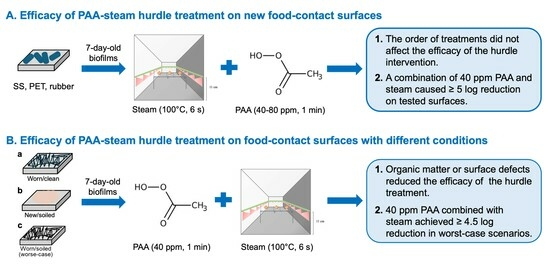
The persistence of Listeria monocytogenes biofilms on equipment surfaces poses a significant risk of cross-contamination, necessitating effective surface decontamination strategies. This study assessed the effectiveness of hurdle treatments combining peroxyacetic acid (PAA) and saturated steam against 7-day-old L. innocua (a non-pathogenic surrogate for L. monocytogenes) biofilms on stainless steel (SS), polyester (PET), and rubber surfaces. Results demonstrated >6 log10 CFU/coupon L. innocua reductions on SS and PET surfaces after PAA (40 ppm, 1 min) followed by steam treatment (100 °C, 6 s). On rubber surfaces, PAA (80 ppm, 1 min) followed by steam treatment (100 °C, 6 s) resulted in ~5 log10 CFU/coupon L. innocua reduction. The presence of apple juice soil reduced the efficacy of hurdle treatments, with PAA (40 ppm, 1 min) and steam exposure (6 s) resulting in 5.6, 5.8, and 4.2 log10 CFU/coupon reductions of L. innocua on SS, PET, and rubber, respectively. The efficacy of this antimicrobial combination was further reduced by surface defects, especially in the presence of organic matter. Nevertheless, the treatment still achieved >5 log10 CFU/coupon reductions of L. innocua on worn SS and PET soiled with apple juice and ~4.5 log10 CFU/coupon reduction on worn, soiled rubber surfaces. These findings highlight that PAA treatments followed by a brief steam exposure are effective strategies for controlling Listeria on food-contact surfaces.

Research – Persistence of Salmonella and Campylobacter on Whole Chicken Carcasses under the Different Chlorine Concentrations Used in the Chill Tank of Processing Plants in Sri Lanka

MDPI

Abstract

The persistence of non-typhoidal Salmonella and Campylobacter in chicken meat is a considerable public health risk and a future challenge. This study aimed to determine the prevalence of Salmonella and Campylobacter in poultry processing lines where different chlorine concentrations were used in the chill tank. The samples were collected from four types of processing plants in Sri Lanka, considering the chlorine concentration used in the chill tank, which ranged from 2 ppm to 50 ppm. Salmonella and Campylobacter were isolated from whole carcass washings, neck skin, and cecal samples. Subsequently, an antimicrobial susceptibility test was performed for the isolates. The results revealed the overall prevalence of Salmonella and Campylobacter was 78.25% and 63.5%, respectively. Positive percentages of Salmonella and Campylobacter were high in the carcasses compared to the neck skin and ceca. The Campylobacter counts on the whole carcasses were significantly low (p < 0.001), at higher chlorine concentrations ranging from 20 to 30 ppm and 40 to 50 ppm. The pathogen prevalence in the whole carcasses was 84.7% Campylobacter coli, 39.1% Campylobacter jejuni, 71.1% Salmonella Typhimurium, and 28.8% Salmonella Infantis. The highest resistance was observed for tetracycline (63.8%) in Salmonella, while it was for gentamicin (87.8%) in Campylobacter. The prevalence percentage of multidrug-resistant Campylobacter was 51.2%, while it was 2.12% for Salmonella. The persistence of multidrug-resistant Salmonella and Campylobacter on the post-chill carcasses was highlighted in the present study as a significant public health threat that has to be addressed urgently.

Research – Cryptosporidium spp.

ACSA

crypto

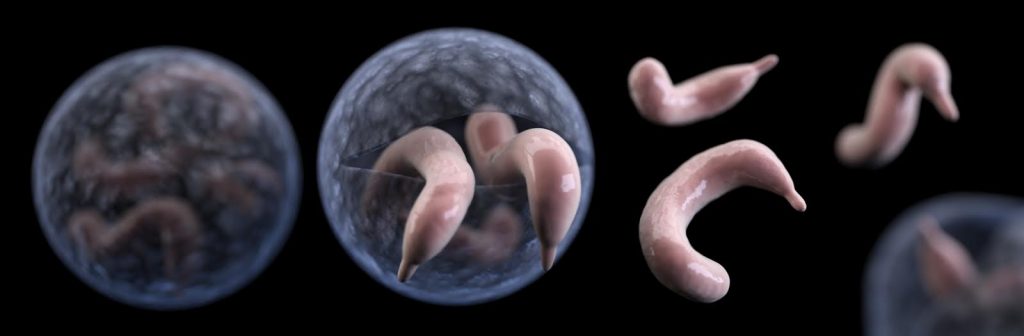
When the European Food Safety Authority published a review of the public health risk of foodborne parasites in 2018, it focused on three, which it considers to be the most pressing today and in the future immediate, either for current production systems, the effectiveness of control measures, eating habits or because of their severity. The selection included Cryptosporidium spp., Toxoplasma gondii and Echinococcus ssp. These parasites are resistant in the environment, they do not have specific controls, and the food industry’s awareness of them is variable, in contrast to what happens with Trichinella spiralis and Anisakidae .

Cryptosporidiosis is generally associated with acute gastrointestinal conditions, has no specific treatment, and outbreaks have occurred related to the consumption of contaminated fresh produce.

EFSA

Research – Clostridium perfringens in the Intestine: Innocent Bystander or Serious Threat?

MDPI

Abstract

The Clostridium perfringens epidemic threatens biosecurity and causes significant economic losses. C. perfringens infections are linked to more than one hundred million cases of food poisoning annually, and 8–60% of susceptible animals are vulnerable to infection, resulting in an economic loss of more than 6 hundred million USD. The enzymes and toxins (>20 species) produced by C. perfringens play a role in intestinal colonization, immunological evasion, intestinal micro-ecosystem imbalance, and intestinal mucosal disruption, all influencing host health. In recent decades, there has been an increase in drug resistance in C. perfringens due to antibiotic misuse and bacterial evolution. At the same time, traditional control interventions have proven ineffective, highlighting the urgent need to develop and implement new strategies and approaches to improve intervention targeting. Therefore, an in-depth understanding of the spatial and temporal evolutionary characteristics, transmission routes, colonization dynamics, and pathogenic mechanisms of C. perfringens will aid in the development of optimal therapeutic strategies and vaccines for C. perfringens management. Here, we review the global epidemiology of C. perfringens, as well as the molecular features and roles of various virulence factors in C. perfringens pathogenicity. In addition, we emphasize measures to prevent and control this zoonotic disease to reduce the transmission and infection of C. perfringens.

Research – Microbial Diversity Across Tea Varieties and Ecological Niches: Correlating Tea Polyphenol Contents with Stress Resistance Microbial Community Differences among Different Tea Varieties and Ecological Niches

Frontiers In.org

Microorganisms exhibit intricate interconnections with tea trees plants; however, despite the well-established role of microorganisms in crop growth and development, research on microbes within the tea plant remains insufficient, particularly regarding endophytic microorganisms. In this study, we collected samples of leaves and rhizosphere soils were collected from ‘Zhuyeqi’, ‘Baojing Huangjincha#1Baojing Huangjinchayihao’, ‘Anjibaicha’Baiye#1’, and ‘Jinxuan’ varieties planted. Our analyses revealed significant variations in tea polyphenol contents among tea varieties, particularly with the ‘Zhuyeqi’ variety exhibiting higher levels of tea polyphenols (>20% contents). Microbiome studies have revealed that endophytic microbial community in tea plants exhibited higher host specificity compared to rhizospheric microbial community rhizosphere microbial community. Analyses of across-ecological niches of the microbial community associated with tea plants of the microbiota associated with tea plants revealed that soil bacteria serve as a significant reservoir for endophytic bacteria in tea plants, Balneola Bacillus may play a crucial role in shaping the bacterial community across-ecological niche within the tea plants with higher tea polyphenol levels. In the aforementioned analyses, the microbial community of ‘Zhuyeqi’ exhibited a higher degree of host specificity for leaf endophytic microorganisms, the topological structure of the co-occurrence network is also more intricate, harbouring a greater number of potential core microorganisms within its nodes. A closer examination was conducted on the microbial community. A more intricate examination was conducted on the microbial community of ‘Zhuyeqi’, further analyses of its endophytic bacteria indicated that its endophytic microbial community harbored a greater abundance of biomarkers, particularly among bacteria, and the enriched Methylobacterium and Sphingomonas in ‘Zhuyeqi’ may play distinct roles in disease resistance and drought resilience in tea plants. In summary, this study has shed light on the intricate relationships of tea plant varieties with their associated microbial communities, unveiling the importance of microorganisms and tea varieties with higher tea polyphenols, and offering valuable insights to the study of microorganisms and tea plants. this study shaded light on the intricate relationship between tea plant varieties and their associated microbial community and unveiled the importance of the tea varieties with higher tea polyphenols in microbial studies, offered valuable insights for the studies of microorganism-tea plants.

Research – Evaluation of the safety of microorganisms (“probiotics”) used in food supplements

ACSA

The Food Safety Authority of Ireland (FSAI) Scientific Committee has published a scientific report on the safety assessment of micro-organisms (“probiotics”) used in food supplements which aims to help companies assess the safety of “probiotics” , in the absence of specific legal criteria.

“Probiotics” are defined by FAO/WHO* as “live micro-organisms which when administered in adequate amounts confer a health benefit on the host”. The term “probiotic”, however, is currently an unauthorized health claim under EU law. Applications for health claims on “probiotics” have been submitted for evaluation to the European Food Safety Authority (EFSA) and so far, no application has received a positive opinion and subsequent authorization. Although the term is not permitted on food product or dietary supplement labels, the term is used in this scientific report because it is widely used by industry and the scientific community.

The Committee found that reported adverse events associated with “probiotics” are few and tend to be ad hoc reports of infections, including bacteremia, sepsis, or endocarditis in people with belonging to different risk groups. 

The report makes recommendations on the criteria for safety assessment and the evidence that a producer of food supplements should use to demonstrate the micro-organism safety of their products.

FSAI