Monthly Archives: February 2022

Czech Republic – Marinated chicken breast ITALY – Salmonella

Potravinynapranyri

Place of inspection:
Horovice ( Masarykova 1458/29, 26801 Horovice )
Company ID: 07387156
Food group: Meat and meat products Unpacked: meat, minced meat, meat preparations

Marinated chicken breast ITALY
Category: Dangerous food
Unsatisfactory parameter:

Salmonella enterica serum. Enteritidis

The pathogenic bacterium Salmonella enterica serum was detected in the meat preparation. Enteritidis . This bacterium can cause a condition called salmonellosis.

Lots: 9/21/2021
Packaging: unpacked
Producer: ZEMAN meat – sausages
Country of origin:  Czechia
Sampling date: Sep 21, 2021
Reference number: 22-000012-SVS-CZ
The sample was found by an official inspection of the State Veterinary Administration.

Czech Republic – Marinated chicken breast – Salmonella

Potravinynapranyri

Place of inspection:
Hradek nad Nisou ( Sokolska 756, 46334 Hradek nad Nisou )
Company ID: 25013165
Unsatisfactory parameter:

Salmonella montevideo

The pathogenic bacterium Salmonella montevideo was found in a marinated chicken breast . This bacterium can cause a condition called salmonellosis.

Expiration date: 10/7/2021
Packaging: unpacked
Producer: PMU CZ, as
Country of origin:  Czechia
Sampling date: 5. 10. 2021
Reference number: 22-000014-SVS-CZ
The sample was found by an official inspection of the State Veterinary Administration.

Czech Republic – Marinated chicken breast -Salmonella

Potravinynapranyri

Place of inspection:
Chrastava ( Nádražní 33, Dolní Chrastava, 46331 Chrastava )
Company ID: 25013165
Food group: Meat and meat products Meat semi -finished product

Marinated chicken breast
Category: Dangerous food
Unsatisfactory parameter:

Salmonella Infantis

The pathogenic bacterium Salmonella Infantis was detected in the meat preparation . This bacterium can cause a condition called salmonellosis.

Expiration date: 10/14/2021
Packaging: unpacked
Producer: PMU CZ, as
Country of origin:  Czechia
Sampling date: 12. 10. 2021
Reference number: 22-000015-SVS-CZ
The sample was found by an official inspection of the State Veterinary Administration.

Czech Republic – Chicken gyros – Salmonella –

Potravinynapranyri

Place of inspection:
Chrastava ( Nádražní 33, Dolní Chrastava, 46331 Chrastava )
Company ID: 25013165
Unsatisfactory parameter:

Salmonella Infantis

The pathogenic bacterium Salmonella Infantis was detected in the meat preparation . This bacterium can cause a condition called salmonellosis.

Expiration date: 10/14/2021
Packaging: unpacked
Producer: PMU CZ, as
Country of origin:  Czechia
Sampling date: 12. 10. 2021
Reference number: 22-000016-SVS-CZ
The sample was found by an official inspection of the State Veterinary Administration.

Czech Republic – Marinated neck – Salmonella

Potravinynapranyri

Place of inspection:
Milovice ( Armádní 863, Mladá, 28923 Milovice )
Company ID: 25013165
Food group: Meat and meat products Meat semi -finished product

Marinated neck
Category: Dangerous food
Unsatisfactory parameter:

Salmonella Infantis

The pathogenic bacterium Salmonella Infantis was detected in the meat preparation . This bacterium can cause a condition called salmonellosis.

Expiration date: 10/20/2021
Producer: PMU CZ, as
Country of origin:  Czechia
Sampling date: 20. 10. 2021
Reference number: 22-000017-SVS-CZ
The sample was found by an official inspection of the State Veterinary Administration.

Italy – SCOTTONA ADULT BOVINE TARTARE – Listeria monocytogenes

Salute

Brand : LA FILIERA IN TAVOLA – PENNY MARKET

Name : SCOTTONA ADULT BOVINE TARTARE

Reason for reporting : Recall due to microbiological risk

Publication date : 12 February 2022

Click to access C_17_PubblicazioneRichiami_1652_azione_itemAzione0_files_itemFiles0_fileAzione.pdf

Australia – L’Artisan Organic Marcel 180g Cheese -E.coli

FSANZ

Product information

Mortlake Organic Dairy is conducting a recall of L’Artisan Organic Marcel 180g. The product has been available for sale at independent food retailers including IGA in VIC & QLD, independent food retailers in SA, and select Coles Local stores in VIC.

Date markings

Best Before 08MAR2022

L'Artisan Organic Marcel 180g

Problem

The recall is due to microbial (E.coli) contamination.

Food safety hazard

Food products contaminated with E.coli may cause illness if consumed.

Country of origin

Australia

What to do​

Any consumers concerned about their health should seek medical advice and should return the product to the place of purchase for a full refund.

For further information please contact:

Mortlake Organic Dairy

0432 607 010

Related links:

Nigeria – Recall Of Bake Crafters -Maple Waffle Wg Chicken Sausage Sandwich Due To Potential Listeria Monocytogenes Contamination

NAFDAC

The National Agency for Food and Drug Administration and Control (NAFDAC)  has received information from US FDA on the voluntary recall of Bake Crafters Maple Waffle WG Chicken Sausage manufactured by Bake Crafters, USA due to potential Listeria monocytogenes contamination.

Consumption of the contaminated product may produce symptoms of listeriosis, which can take up to 70 days to appear. Symptoms usually consists of a severe headache, high fever, muscle pain, neck pain and stiffness, and nausea and diarrhea. Pregnant women can suffer miscarriage and stillbirth even if they only have a mild illness from listeriosis. If you do feel sick, see your doctor.

Recalled Product details:

Name of product Manufacturer Lot Number Product number Best By:
Maple Waffle WG Chicken Sausage Bake Crafters 21343 6657 12/09/22

Recommendation:

Consumers who have consumed this product and are experiencing listeria monocytogenes symptoms listed above should report to their physician for examination.

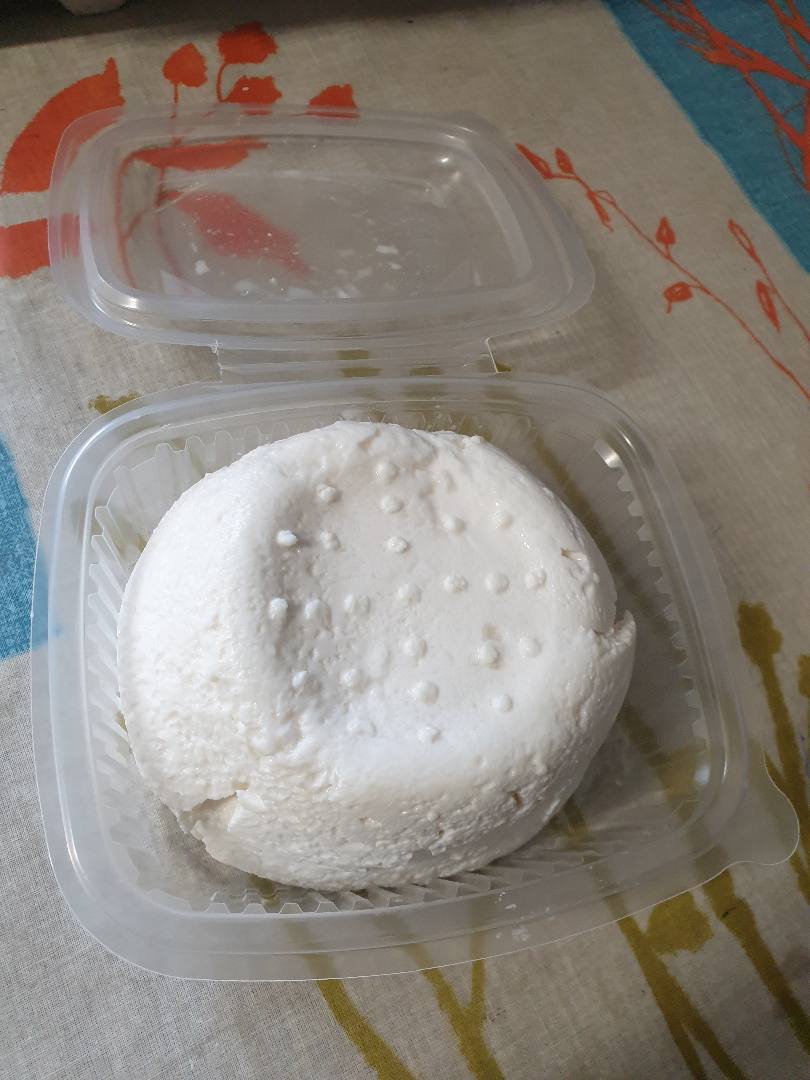
France – Faisselle Cheese- Listeria monocytogenes

Gov france

Identification information of the recalled product

  • Product category Food
  • Product subcategory Milk and dairy products
  • Product brand name faisselle
  • Model names or references faisselle
  • Identification of products
    Lot
    batch from January 1, 2022 to February 11, 2022
  • Products Listplacard_listeria-3.pdfAttachment
  • Marketing start/end date From 01/01/2022 to 11/02/2022
  • Storage temperature Product to be stored in the refrigerator
  • Geographic area of ​​sale Regions: Centre-Val de Loire
  • Distributors“alimen’terre” a la chapelle vendomoise “candepicerie” a cande sur beuvron “la sologn’hotte” “vival” a contres “ouchamps des lyces” a ouchamps “superette cocci market” a cour cheverny ” earl dufraisse ” a cheverny

Practical information regarding the recall

  • Reason for recall presence listeria
  • Risks incurred by the consumer Listeria monocytogenes (causative agent of listeriosis)

Research – Spain – Report of the Scientific Committee of the Spanish Agency for Food Safety and Nutrition (AESAN) on the safety of foods air-dried outdoors that are produced by traditional methods and which require an adjustment of the hygiene requirements that must be fulfilled

AESAN

Abstract
The European Union recognises that traditional methods of food production are a valuable and irreplaceable heritage that must be preserved over time. Therefore, Regulation (EC) No. 852/2004 permits a degree of flexibility in its application provided food hygiene goals are not compromised. For decades, both plant and animal-based foods have been produced in Spain which are air-dried outdoors until reaching a low water activity (aw) that enables their preservation at room temperature. These foods include, raisins, dried apricots, dried figs, ñora peppers, dried fish or octopus that are at least partially air-dried, among others.
The Scientific Committee of the Spanish Agency for Food Safety and Nutrition (AESAN) is of the opinion that the processing of naturally dried foods leads to their correct preservation, provided they reach an aw that inhibits the proliferation of pathogenic microorganisms and the production of toxins in them. Some of the stages in the process may cause microbial inactivation.
Above all, it is necessary to ensure the absence of the formation of toxins, with aflatoxins being the ones that have been most frequently identified. Thus, it is considered that the drying should be conducted in the least time possible, ensuring a decrease of aw within the first 2-3 days of below 0.90 to inhibit the development of aflatoxins, and this drying should be continued until aw levels lower than 0.70 are reached, preventing the growth of pathogenic microorganisms that cause spoilage. It is necessary to guarantee suitable hygienic conditions during processing in order to prevent contamination by pathogens and/or toxins.
Although they cannot proliferate in the stated preservation conditions, they can remain viable in the final product, therefore they may pose a risk to consumer health. Microorganisms with a low infective dose and those that have been identified in dried products (such as S. aureus and Salmonella) and microbial toxins are especially relevant. Autonomous Communities must monitor compliance with the requirements to ensure that they do not pose a risk in these products.
Although these types of products have a low aw, within the range of 0.6 to 0.8 according to avail-able literature, given that this information is not available for each assessed product, the level of safety reached cannot be established on an individual basis. Additionally, the diverse factors used in some of them (additives and preservatives, pasteurisation processes, etc.) require individual assessment once all the necessary information is available. Therefore, the drying must reach aw levels below 0.70 in the least time possible for these types of products to be considered stable, as given these conditions, there is no scientific evidence that shows that the safety and stability of the dried products are compromised, provided good hygiene practices are maintained during their preservation and storage.
For final levels of aw that are higher, correct preservation may be achieved through a combination of factors which proves that it is effective throughout the shelf life of the product, maintaining the aforementioned appropriate hygiene practices.