Tag Archives: science

USA – Alaska – More Ill from Raw Milk – Campylobacter

Campylobacter BlogCampylobacter

News reports that Alaska State health officials report a total of 24 people have fallen ill, two of whom were hospitalized, after drinking tainted raw milk from a Kenai Peninsula dairy. Among the ill is an infant who did not directly imbibe the raw milk, but got sick through a secondary transmission from an adult who had.  State epidemiologists said the illnesses are the result of milk tainted with campylobacter, a bacterium commonly found in cow manure.  After receiving multiple reports of sick people, state health officials traced the source of the outbreak to a cow share program at the Peninsula Dairy. State veterinarians visited the farm to take samples and said the farm owner is being cooperative with their investigation.

New Zealand – Cryptosporidium Outbreak?

The New Zealand Herald763px-Cryptosporidium_parvum_01

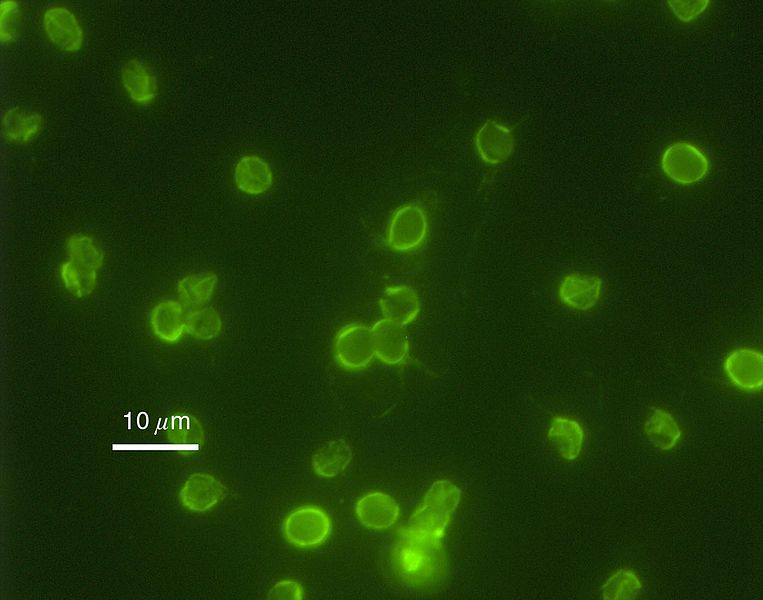
Hawke’s Bay’s water operators are checking the region’s supplies for contamination of Cryptosporidium.

Health authorities have issued a warning following the diagnosis of 45 people over the past two months.

Medical Officer of Health Dr Nicholas Jones said the health protection team is analysing information to establish the cause of the outbreak – and expect there is more than one source.

“We’ve been in touch with the water operators and they don’t think they’ve got problems at the moment, but obviously it’s something we’re going to be looking into in more detail,” said Dr Jones.

Canada – Recall Chocolate – Salmonella

CFIA

Health Hazard Alert – Certain Proti Diet High Protein Chocolate Dream Bar may contain Salmonella bacteria

Recall date:March 4, 2013

Reason for recall:Microbiological – Salmonella

Hazard classification:Class 2

Recalling Firm:Pro-Amino International Inc.

Distribution:Ontario, Quebec

Extent of the distribution:Retail

Canada – Recall – Gorgonzola Cheese – Listeria monocytogenes

CFIA

Updated Health Hazard Alert – Certain Mauri brand Gorgonzola may contain Listeria monocytogenes

Recall date: March 1, 2013

Reason for recall:Microbiological – Listeria

Hazard classification:Class 1

Recalling Firm:Arla Foods Incorporated

Distribution:Alberta, New Brunswick, Nova Scotia, Ontario, Quebec

Extent of the distribution:Retail

USA – Consumers Warned About Shellfish PSP

Food Poisoning Bulletin

The California Department of Public Health (CDPH) is warning consumers not to eat recreationally harvested mussels, clams, or whole scallops from Marin County. Dangerous levels of paralytic shellfish poisoning (PSP) toxins have been found in mussels in this region. These naturally occurring toxins can cause illness or death. Cooking does not destroy this toxin.

This warning is in addition to the annual mussel quarantine that was extended on October 31, 2012 for Del Norte and Humboldt counties. That quarantine is still in effect.

PSP Factsheet

Dubai – Introducing a Food Safety Program

HACCP EUROPADubai-to-Introduce-Food-Safety-Standard

Dubai is introducing a comprehensive food code with new rules on handling non-halal food, sources of products and handling of customer complaints.

It will unify the patchwork of food-safety guidelines under one umbrella.

“In the past maybe there were guidelines here and there, but now we’ll have one system,” said Asia Abdulwahab, the municipality’s head of food studies and planning.

“The inspectors will have a legal tool to be able to quote the clause and let people know what they are in violation of.”

Ms Abdulwahab was speaking yesterday at a food-inspection conference at Gulfood, the region’s largest food industry event, at the Dubai World Trade Centre.

Every section of the code will be accompanied by an explanation to help people understand what their breaches entail, and the consequences.

“In many food codes, they only give you the law and not the rationale,” Ms Abdulwahab said.

“But now there will be an explanation and that way the industry will be educated. When you know the reason behind something, you will stick to it.”

The project started in 2009, when the municipality began collecting local and international references, guidelines and best practices in food safety.

Two years later it matched Dubai’s regulations with overseas guidelines, and last year reviewed and updated the food code’s content. It is expected to be issued this month.

Workshops will be held until June to introduce the code. It will cover licensing, bacteria control, cleaning, maintenance, personal hygiene and training.

There will also be details about the import and export of food, and procedures for handling non-halal food, tracing and recalling products and how to handle customer complaints. Source: The National


WHO – New Food Safety Platform – FOSCOLLAB

WHO foscollab_wordle

An innovative tool for food safety

FOSCOLLAB is a new WHO platform for food safety professionals.

FOSCOLLAB enables users to:

  • Access food safety data and information quickly
  • Maximize the utility of already existing sources and minimize duplication of efforts
  • Integrate data and information coming from animal/agriculture, food and human health areas to improve global public health
  • Promote better generation of data
  • Strengthen the underlying sources by promoting awareness and increased utilization

By integrating multiple sources of reliable data, FOSCOLLAB helps overcome the challenges of accessing these key sources in a timely manner. It allows for better risk assessment and decision-making by food safety professionals and authorities.

Research Articles – Listeria ID Rapid PCR – Antimicrobial Activity of Natural Antimicrobial Substances Against Spoilage Bacteria Isolated from Fresh Produce

Science Direct

Abstract

Listeriosis is a foodborne disease caused by the pathogenic Listeria monocytogenes and is considered as a serious health problem due to the severity of symptoms and its high mortality rate. Listeria genus is divided into six species and especially L. monocytogenes is an important foodborne pathogen in humans and livestock. Recently, other Listeria species are reported as pathogenic strains in decayed foods and environments as well. High mortality rate of listeriosis demands for rapid methods to detect the potential presence of the food pathogens in the food industry. We have developed a multiplex PCR for rapid and simultaneous detection of six Listeria species including Listeria grayi, Listeria innocua, Listeria ivanovii, L. monocytogenes, Listeria seeligeri and Listeria welshimeri to identify specific Listeria species in processed foods. The optimized multiplex PCR in this study utilized one Listeria genus specific and each Listeria species-specific primer pairs. Each primer pair yields the products of 370-bp for Listeria genus-specific, 201-bp for L. grayi-specific, 749-bp for L. innocua-specific, 463-bp for L. ivanovii-specific, 509-bp for L. monocytogenes-specific, 673-bp for L. seeligeri-specific and 281-bp for L. welshimeri-specific. We have successfully applied multiplex PCR strategy to 93 Listeria isolates from processed meat products to determine specific Listeria species and out of which 81 strains of L. monocytogenes, 10 strains of L. innocua and 2 strains of L. welshimeri were identified. This established multiplex PCR provides rapid and reliable results and will be useful for the detection of Listeria species in contaminated food products and clinical samples.

Science Direct

Abstract

The aim of this study was to investigate the efficacy of natural antimicrobial substances for inhibiting vegetable spoilage bacteria. Natural antimicrobial compounds (carvacrol, thymol, eugenol, cinnamic acid, nisin, and chitosan), organic acids (acetic acid and lactic acid), and chemical sanitizers (sodium hypochlorite and chlorine dioxide) were evaluated for their antibacterial activities, as single and combination treatments, against 15 spoilage bacteria isolated from vegetables, using the agar disc diffusion and broth dilution methods. Carvacrol, thymol, and eugenol showed strong inhibitory effects compared to those of the other antimicrobial substances, and their average minimum inhibitory concentration (MIC) values against 15 spoilage bacteria were 167, 648, and 168 μg/ml, respectively. When they were combined, four kinds (carvacrol + thymol, carvacrol + eugenol, thymol + eugenol, and carvarol + thymol + eugenol) of the combination formulas showed higher antibacterial effect than others against spoilage bacteria, with average MIC values of 47, 43, 59, and 42 μg/ml, respectively. However, two combinations (carvacrol + thymol, and carvacrol + thymol + eugenol) showed the strongest inhibitory effects against bacteria in fresh vegetables among all treatments. These results could be used for the development of new sanitation or preservation methods to improve freshness and to extend the shelf-life of fresh produce.

Ireland – Creche with E.coli Cases

Irish Examiner

Further possible cases of E.coli infection are being investigated in children attending a Cork crèche where one case has already been confirmed.

The HSE told parents of children attending First Steps in Midleton  the infection is now being treated as “an outbreak investigation” following reports of diarrhoeal illnesses in more babies.

The HSE received official confirmation of the first case on Wednesday. It is understood a baby tested positive. On foot of this, all 85 children and 15 staff who attend the Mill Rd crèche must now be tested.

Yesterday the HSE distributed kits to parents for collection of two stool samples. The samples will have to be microbiologically tested at the National VTEC (Verotoxigenic E.coli) reference laboratory in Dublin. In the meantime, the parents have been warned by the HSE that their child should not attend any childcare facility until both samples test clear of infection.
Staff have also been asked to refrain from working with children.

Canada – Further Tea Products Recalled – Salmonella

CFIASalm

Health Hazard Alert – Certain tea products may contain Salmonella bacteria

Recall date: February 24, 2013

Reason for recall: Microbiological – Salmonella

Hazard classification: Class 2

Distribution: Alberta, British Columbia, Manitoba, Ontario, Saskatchewan

Extent of the distribution: Retail