Tag Archives: listeria species

Research – Phylogenetic Profiles of In-House Microflora in Drains at a Food Production Facility: Comparison and Biocontrol Implications of Listeria-Positive and -Negative Bacterial Populations

American Society for Microbiology Eurofins Food Testing UK
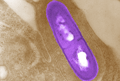
Listeria species experience complex interactions with other microorganisms, which may promote growth and colonization of the organism in local environments or negatively affect them. This study investigated the microbial community at a food production facility, examining interactions between Listeria and the associated microbiome. Listeria species can be transferred between zones in the production environment by individuals or equipment, and drains may act as a reservoir for the organism, reflecting the microbial flora potentially in the production environment. Drains that were colonized by Listeria species and those determined to be free of Listeria were examined. In each case, 16S rRNA gene analysis was performed using the PhyloChip platform. Some general similarities in bacterial population structure were observed when Listeria-negative and -positive drain communities were compared, with some distinct differences also noted. These included increased populations of the genera Prevotella and Janthinobacterium associated with the absence of Listeria species, whereas Enterococcus and Rhodococcus were in higher abundance in drains colonized by Listeria species. Based on these results, a selection of bacterial species were grown in coculture biofilm with a Listeria monocytogenes strain identified as having colonized a drain at the facility. Mixed-species biofilm experiments showed that Janthinobacterium inhibited attachment and subsequent biofilm formation of L. monocytogenes; however, Enterococcus gallinarum significantly increased it. The results of this study suggest the microbial community in food processing facilities can impact the colonization of Listeria species and that influencing the microbiome in favor of antilisterial species may reduce the colonization of Listeria species and limit the likelihood of product/process contamination.


Research Articles – Listeria ID Rapid PCR – Antimicrobial Activity of Natural Antimicrobial Substances Against Spoilage Bacteria Isolated from Fresh Produce

Science Direct

Abstract

Listeriosis is a foodborne disease caused by the pathogenic Listeria monocytogenes and is considered as a serious health problem due to the severity of symptoms and its high mortality rate. Listeria genus is divided into six species and especially L. monocytogenes is an important foodborne pathogen in humans and livestock. Recently, other Listeria species are reported as pathogenic strains in decayed foods and environments as well. High mortality rate of listeriosis demands for rapid methods to detect the potential presence of the food pathogens in the food industry. We have developed a multiplex PCR for rapid and simultaneous detection of six Listeria species including Listeria grayi, Listeria innocua, Listeria ivanovii, L. monocytogenes, Listeria seeligeri and Listeria welshimeri to identify specific Listeria species in processed foods. The optimized multiplex PCR in this study utilized one Listeria genus specific and each Listeria species-specific primer pairs. Each primer pair yields the products of 370-bp for Listeria genus-specific, 201-bp for L. grayi-specific, 749-bp for L. innocua-specific, 463-bp for L. ivanovii-specific, 509-bp for L. monocytogenes-specific, 673-bp for L. seeligeri-specific and 281-bp for L. welshimeri-specific. We have successfully applied multiplex PCR strategy to 93 Listeria isolates from processed meat products to determine specific Listeria species and out of which 81 strains of L. monocytogenes, 10 strains of L. innocua and 2 strains of L. welshimeri were identified. This established multiplex PCR provides rapid and reliable results and will be useful for the detection of Listeria species in contaminated food products and clinical samples.

Science Direct

Abstract

The aim of this study was to investigate the efficacy of natural antimicrobial substances for inhibiting vegetable spoilage bacteria. Natural antimicrobial compounds (carvacrol, thymol, eugenol, cinnamic acid, nisin, and chitosan), organic acids (acetic acid and lactic acid), and chemical sanitizers (sodium hypochlorite and chlorine dioxide) were evaluated for their antibacterial activities, as single and combination treatments, against 15 spoilage bacteria isolated from vegetables, using the agar disc diffusion and broth dilution methods. Carvacrol, thymol, and eugenol showed strong inhibitory effects compared to those of the other antimicrobial substances, and their average minimum inhibitory concentration (MIC) values against 15 spoilage bacteria were 167, 648, and 168 μg/ml, respectively. When they were combined, four kinds (carvacrol + thymol, carvacrol + eugenol, thymol + eugenol, and carvarol + thymol + eugenol) of the combination formulas showed higher antibacterial effect than others against spoilage bacteria, with average MIC values of 47, 43, 59, and 42 μg/ml, respectively. However, two combinations (carvacrol + thymol, and carvacrol + thymol + eugenol) showed the strongest inhibitory effects against bacteria in fresh vegetables among all treatments. These results could be used for the development of new sanitation or preservation methods to improve freshness and to extend the shelf-life of fresh produce.