Category Archives: Water Safety

Research – Infectivity of Norovirus GI and GII from Bottled Mineral Water during a Waterborne Outbreak, Spain

CDC

Abstract

During a waterborne outbreak of norovirus in Spain, we estimated 50% illness doses for a group of exposed (secretor) persons to be 556 (95% CI 319–957) genome copies/day for norovirus GI and 2,934 (95% CI 1,683–5,044) genome copies/day for norovirus GII. Use of a propidium monoazide viability assay reduced these values.

USA – Legionnaires’ Disease: Cases may be linked to Central DuPage Hospital

Outbreak News Today

CDC legionella

Illinois state and local health officials report investigating three cases of Legionnaires’ disease in individuals who were patients at Northwestern Medicine Central DuPage Hospital.

One individual was an inpatient, and the second and third individuals had outpatient visits. These patients could have acquired the infection at the hospital, but they also had other possible sources of exposure during the 10 days before they started showing symptoms.

The Illinois Department of Public Health (IDPH), the DuPage County Health Department (DCHD) and the hospital are working to information and further investigate these cases, which will include another on-site visit by IDPH to test the facility’s water. Central DuPage Hospital is working with IDPH to strengthen its water management plan and implement multiple control measures.

Sweden – Sweden ‘crypto’ outbreak update: Nearly 400 cases, Cases declining

Outbreak News Today

crypto

Image CDC


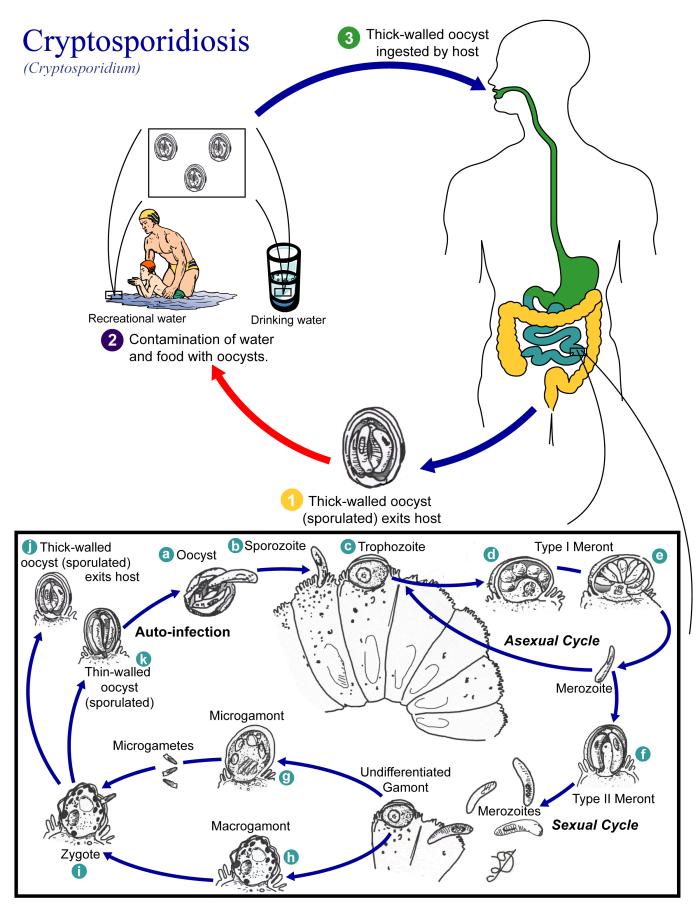
Since the last report on the Cryptosporidium outbreak in Sweden about two weeks ago, health officials say the number of reported cases has decreased in recent weeks.

Cryptosporidium life cycle/CDC

While cases are declining, the number of cases reported per week remains slightly higher compared to the same period in previous years. To date, some 400 Cryptosporidium cases have been recorded.

Most cases have been reported from Stockholm, Östergötland, Västra Götaland, Halland, Jönköping and Uppsala.

The Public Health Authority analyzes samples from the cases to determine what type of cryptosporidium they have become ill from. Of the 202 samples analyzed so far, 93 have been shown to belong to subtype (A) and 58 belong to subtype B of Cryptosporidium parvum. In addition to this subtype, a number of different subtypes have been detected.

RASFF Alert – Pseudomonas aeruginosa – Crushed Ice

RASFF-Logo

RASFF – Pseudomonas aeruginosa (1 CFU/ml) in crushed ice from Spain in Italy

France -Cryptosporidium outbreak reported in Alpes-Maritimes, France

Outbreak News Today 

The Agence régionale de santé Provence-Alpes-Côte d’Azur (ARS Paca) is reporting (computer translated) a Cryptosporodium outbreak in Grasse and several surrounding municipalities of the Alpes-Maritimes.

Since October 7, at least 92 cases of diarrhea caused by a parasite. There is a suspicion of contamination in the Grasse sector, supplied with water by the Foulon canal (west of the Alpes-Maritimes), which could have been contaminated following heavy rainfall.

Officials recommended as a precaution to drink only bottled water or to boil the tap water before consume it or use it to prepare food.


Sweden -Sweden reports increase in Cryptosporidium, most in Stockholm

Outbreak News Today crypto

Swedish health officials, aka Folkhalsomyndigheten have reported an increase in the parasitic infection, cryptosporidiosis in recent weeks, particularly in November.

About half of the country’s regions have reported cases in all ages, but primarily in adults. Most cases are seen in the Stockholm region.

The Public Health Agency and the National Food Agency have started an outbreak investigation to identify if there are one or more common sources of infection that are unknown so far. As part of the investigation, cases are interviewed about what they ate and drank before they became ill.

USA – Elmira Legionnaires Outbreak

Outbreak News Today

CDC legionella

Image CDC

13 Elmira residents are recovering from Legionnaires’ disease.  The Chemung County Department of Health and the New York State Department of Health are investigating the Elmira Legionnaires Outbreak.  Legionnaires disease is a serious and often deadly lung disease.  Overall, 10% of Americans who develop Legionnaires disease die.

A cooling tower at Elmira Heat Treating may be the source of this Legionnaires outbreak.  Cooling towers are a common source of Legionnaires disease outbreaks. Elmira Heat Treating has three cooling towers.  One cooling tower tested positive for Legionnaires disease.

Ireland -Recall of Certain Batches of Bottled Water Bottled by Celtic Pure due to Microbiological Contamination

FSAI

Pseudomonas aeruginosa, Enterococci or E. coli bacteria were detected in a range of batches of water bottled by Celtic Pure. Please see tables of implicated brands and batches that do not comply with the legal requirements. These implicated batches are unsafe or potentially unsafe and are subject to recall.

Update 1, 22.10.2019: Please note that the recall was extended to include additional batches of bottled waters bottled by Celtic Pure, see FSAI Food Alert 2019.42 Update 1 for further details.

Update 2, 23.10.2019: Please note that the recall was extended to include an additional batch of bottled water bottled by Celtic Pure, see FSAI Food Alert 2019.42 Update 2 for further details.

For more information, please see statement: https://www.fsai.ie/news_alert/bottled_water_21102019.html.


Nature Of Danger:

Pseudomonas aeruginosa poses a higher risk of complications if consumed by severely immunocompromised people such as those who have undergone transplants or chemotherapy. It rarely causes illness in healthy individuals.

Enterococci and E. coli – their presence in water is considered an indicator that the water has been contaminated with faecal material, however, this does not mean that it will make people sick.

Action Required:

Manufacturers, wholesalers, distributors, caterers & retailers:

Retailers are requested to remove the implicated batches from sale. Retailers are also advised to display a point-of-sale recall notice in stores where the implicated batches were sold.

Consumers:

Consumers are advised not to drink the implicated bottled waters.

Research – Hepatitis E virus genotype 3 strains and a plethora of other viruses detected in raw and still in tap water

Science Direct

In this study, next generation sequencing was used to explore the virome in 20L up to 10,000L water from different purification steps at two Swedish drinking water treatment plants (DWTPs), and in tap water. One DWTP used ultrafiltration (UF) with 20 nm pores, the other UV light treatment after conventional treatment of the water. Viruses belonging to 26 different families were detected in raw water, in which 6–9 times more sequence reads were found for phages than for known environmental, plant or vertebrate viruses. The total number of viral reads was reduced more than 4-log10 after UF and 3-log10 over UV treatment. However, for some viruses the reduction was 3.5-log10 after UF, as for hepatitis E virus (HEV), which was also detected in tap water, with sequences similar to those in raw water and after treatment. This indicates that HEV had passed through the treatment and entered into the supply network. However, the viability of the viruses is unknown. In tap water 10–130 International Units of HEV RNA/mL were identified, which is a comparable low amount of virus. The risk of getting infected through consumption of tap water is probably negligible, but needs to be investigated. The HEV strains in the waters belonged to subtypes HEV3a and HEV3c/i, which is associated with unknown source of infection in humans infected in Sweden. None of these subtypes are common among pigs or wild boar, the major reservoirs for HEV, indicating that water may play a role in transmitting this virus. The results indicate that monitoring small fecal/oral transmitted viruses in DWTPs may be considered, especially during community outbreaks, to prevent potential transmission by tap water.

USA – Legionnaire’s disease: More than 100 cases reported in North Carolina outbreak

Outbreak News Today 

The number of Legionnaires’ disease cases linked to the NC Mountain State Fair continues to grow at a quick pace.

According to North Carolina health officials, as of Tuesday, 116 total Legionella infections have been reported, including 109 cases of Legionnaires’ disease and seven cases of the less serious Pontiac fever.

One death has been reported.

Seventy-five of the cases were reported from two counties–Buncombe and Henderson.