Category Archives: water microbiology

USA – Cryptosporidiosis Outbreaks — United States, 2009–2017

CDC

What is already known about this topic?

Cryptosporidium is the leading cause of outbreaks of diarrhea linked to water and the third leading cause of diarrhea associated with animal contact in the United States.

What is added by this report?

During 2009–2017, 444 cryptosporidiosis outbreaks, resulting in 7,465 cases were reported by 40 states and Puerto Rico. The number of reported outbreaks has increased an average of approximately 13% per year. Leading causes include swallowing contaminated water in pools or water playgrounds, contact with infected cattle, and contact with infected persons in child care settings.

What are the implications for public health practice?

To prevent cryptosporidiosis outbreaks, CDC recommends not swimming or attending child care if ill with diarrhea and recommends hand washing after contact with animals.
Malaysia – Bottled water contaminated with Pseudomonas aeruginosa

Outbreak News Today 

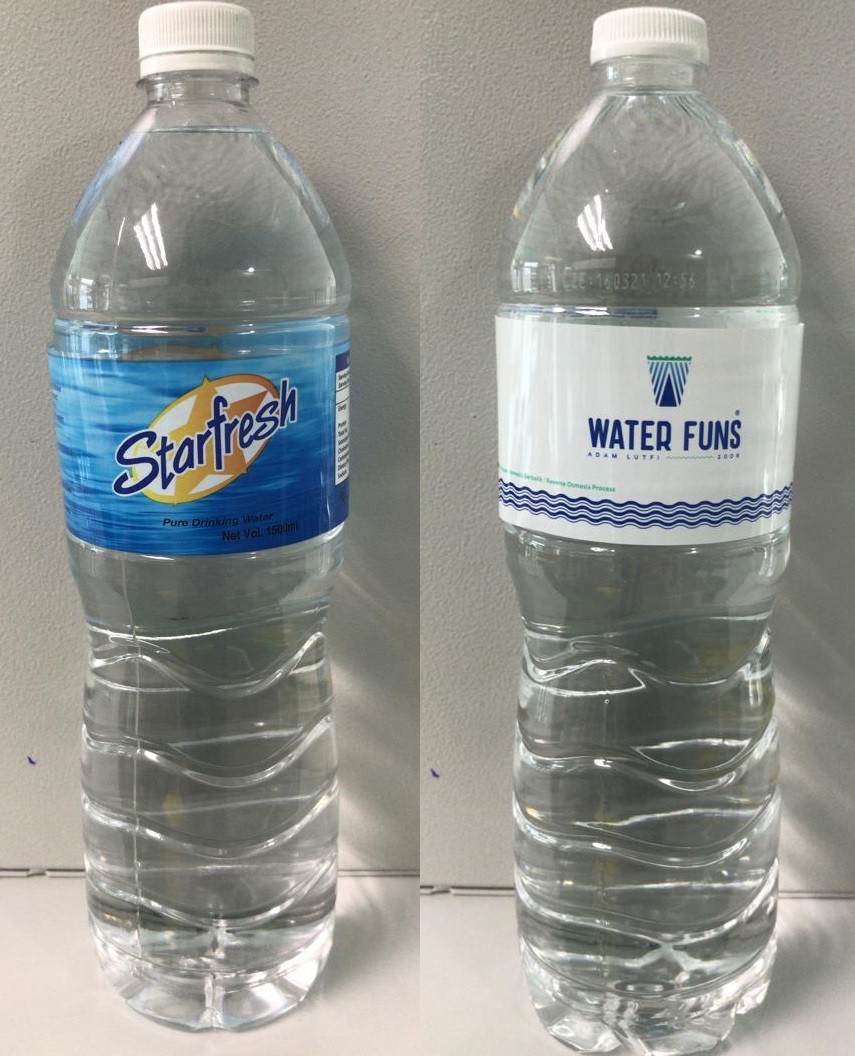
Malaysia health officials reported on the recall of Malaysian Starfresh packaged beverage (AMB) water products from the Singapore market because they are tainted with Pseudomonas aeruginosa bacteria.

AMB products involved in 500ml and 1500ml with the final date on May 11, 2021 and May 13, 2021, respectively.

The Ministry of Health of Malaysia (KKM) through the Food Safety and Quality Division (BKKM) has carried out verification on the refinery and a food safety guarantee program has been found that is not implemented effectively . In addition, the results of an analysis of Starfresh names exported to Singapore and the Waterfuns brand sold on the local market did not comply with the Food Deed 1983 and Food Regulations 1985 because they were found to be contaminated with Pseudomonas aeruginosa bacteria This product may be identified by the final date on the label. KKM has also directed the refineries to withdraw AMB products involved in the local market.

USA – Legionnaires’ Disease Outbreak at Advocate Christ Medical Center

Outbreak News Today Legionella_Plate_01

The Illinois Department of Public Health is investigating four cases of Legionnaires disease linked to Advocate Christ Medical Center in Oak Lawn, Illinois.  Three patients and an employee have been linked to the outbreak thus far.

New Zealand – The burden of Legionnaires’ disease in New Zealand (LegiNZ): a national surveillance study

The Lancet 

Summary

Background

Legionnaires’ disease is under-diagnosed because of inconsistent use of diagnostic tests and uncertainty about whom to test. We assessed the increase in case detection following large-scale introduction of routine PCR testing of respiratory specimens in New Zealand.

Methods

LegiNZ was a national surveillance study done over 1-year in which active case-finding was used to maximise the identification of cases of Legionnaires’ disease in hospitals. Respiratory specimens from patients of any age with pneumonia, who could provide an eligible lower respiratory specimen, admitted to one of 20 participating hospitals, covering a catchment area of 96% of New Zealand’s population, were routinely tested for legionella by PCR. Additional cases of Legionnaires’ disease in hospital were identified through mandatory notification.

Findings

Between May 21, 2015, and May 20, 2016, 5622 eligible specimens from 4862 patients were tested by PCR. From these, 197 cases of Legionnaires’ disease were detected. An additional 41 cases were identified from notification data, giving 238 cases requiring hospitalisation. The overall incidence of Legionnaires’ disease cases in hospital in the study area was 5·4 per 100 000 people per year, and Legionella longbeachae was the predominant cause, found in 150 (63%) of 238 cases.

Interpretation

The rate of notified disease during the study period was three-times the average over the preceding 3 years. Active case-finding through systematic PCR testing better clarified the regional epidemiology of Legionnaires’ disease and uncovered an otherwise hidden burden of disease. These data inform local Legionnaires’ disease testing strategies, allow targeted antibiotic therapy, and help identify outbreaks and effective prevention strategies. The same approach might have similar benefits if applied elsewhere in the world.

UK – Scotland – Cyclospora risk for travellers to Mexico

HPS 

Seasonal outbreaks of Cyclospora infection in UK travellers returning from Mexico have been reported, with the majority of cases in travellers who have stayed in the Riviera Maya and Cancun regions of Mexico. The source of infection was likely to be contaminated food items supplied to hotels throughout the area.

Cyclospora cayetanensis is a protozoan parasite that can infect humans, causing frequent, watery diarrhoea, abdominal cramping, bloating, nausea, flatulence, low-grade fever and loss of both appetite and weight. HIV-positive individuals and those with other immune deficiencies can be at risk of more severe infection.

On return from Mexico, travellers with any symptoms such as those described should seek medical attention and inform their GP of their travel history.

Healthcare practitioners should raise awareness of Cyclospora infection with all travellers to Mexico, and should strongly advise that travellers maintain a high standard of food, water and personal hygiene, even if staying in high-end resorts.

For further information on protozoan parasitic infection, including Cyclospora, consult TRAVAX (for health professionals) and fitfortravel (for the general public).

Sources: TRAVAX and fitfortravel (both 10 June 2019)

Norway – 2 dead, 2,000 sick from Campylobacter in water in Norway

Barfblog

A 1-year-old child from the island died last week of an infection in the digestive tract, but it was not clear whether the death was linked to the water contamination.

About 2,000 people have fallen sick. Since June 6, 64 have been hospitalized.

Hospital tests have shown that Campylobacter was found in at least three dozen cases.

Local newspaper Askoeyvaeringen reported that there had been been safety issues with the waterworks in the Askoey municipality, and faeces was recently found near a reservoir that supplied part of the area’s drinking water.

Europe – Giardiasis (lambliasis) – Annual Epidemiological Report for 2017

ECDC

CDC Giardia2

Image CDC

Key facts
• In 2017, 19 437 confirmed giardiasis cases were reported in the EU/EEA.
• The EU/EEA notification rate was 5.5 cases per 100 000 population. The highest notification rates were reported in Belgium, Estonia and Sweden.
• The highest notification rate per 100 000 was observed in the age group 0–4 years (17.6 for males and 14.9 for females).
• While the EU/EEA notification rate was stable during the period 2013–2017, the annual number of cases has increased steadily.

Report Download


Norway – Norway officials trying to ID water contamination source – Campylobacter

NF Chronicle

Campylobacter

Image CDC

COPENHAGEN, Denmark (AP) — Norwegian authorities said Tuesday they were trying to identify the source of water contamination that has sent dozens of people in southern Norway to the hospital.

Since Thursday, 55 people — including 13 children — from Askoey, an island north of Bergen, have been hospitalized following the contamination. All have been discharged. Norwegian news agency NTB reported that in all, some 2,000 people had fallen sick.

A 1-year-old child on the island died last week of an infection in the digestive tract, but it was not clear whether it was linked to the contamination.

He said tests showed that the bacteria Campylobacter has been found in 36 cases.

Research – How flow shapes bacterial biofilms

Science Daily

Although we tend to think of them as solitary sojourners of the world, bacteria are actually very social organisms. In fact, the vast majority of bacteria live on surfaces by forming “biofilms”: three-dimensional communities hosting thousands to millions of bacteria of such bustling activity that scientists describe them as “bacterial cities.”

Bacteria form biofilms by attaching to each other on a wide variety of surfaces: the bottom of oceans, lakes or rivers, medical equipment and even internal organs, like the intestine, lungs, and teeth — the latter is the familiar dental plaque, a large source of income for dentists.

In short, biofilms are the preferred lifestyle of bacteria. They grow wide and thick, forming a new, social dynamic among their member microorganisms, while also defending them: biofilms can be notoriously inaccessible to antibiotics, which is why they have drawn a lot of medical research.

But looking at biofilms can also give us clues about broader social dynamics that have shaped the evolution of species across the entire planet, like cooperation, competition etc. And it is such questions that drive the work of Alexandre Persat, director of EPFL’s Microbial Mechanics Lab.

USA – NYC officials advise providers to look out for Legionnaires’ disease

Outbreak News Today

Legionella A

Image CDC

New York City health officials are advising providers to test for Legionella in adults with pneumonia, particularly patients who are > 50 years or have lung disease, immune-suppression, or a history of smoking.

Legionnaires’ disease follows a seasonal pattern in New York City, with an increased number of cases
reported from June to October each year.  NYC sees between 200 and 500 cases of Legionnaires’ disease each year.

While it remains a relatively rare infection, the rate of Legionnaires’ disease is increasing significantly in NYC. From 2007-2017, there was an 8.1% average increase in the rate of Legionnaires’ disease cases citywide each year.

The rate of Legionnaires’ disease increased significantly in all boroughs and demographic groups over this period.