Category Archives: Uncategorized

Canada – At least 40 sick linked to 2 Canadian oyster farms – Norovirus

Barf Blog 


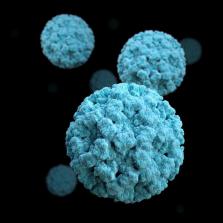
Two B.C. Vancouver Island oyster farms have been closed following an outbreak of norovirus associated with eating the raw shellfish.

The B.C. Centre for Disease Control says about 40 cases of acute gastrointestinal illness have been connected to the consumption of raw oysters since March. Testing has confirmed some of the cases were norovirus.

Federal officials with Fisheries and Oceans Canada (DFO) confirmed the affected farms are located on the east coast of Vancouver Island at Deep Bay and Denman Island.

While the two farms are no longer harvesting oysters for consumption, no recall of oysters has been issued by the Canadian Food Inspection Agency.
USA – Club 13 Recalls Kratom Maeng Da Red Powder and Capsules Because of Possible Health Risk – Salmonella

FDA 


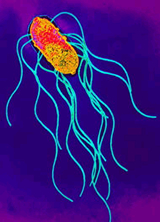
Club 13 of St. Augustine, FL is recalling 15-gram, 30-gram, 90-gram, 150-gram, and 454-gram pouches, and all bulk orders of “Maeng Da Red” kratom powder; and 5-count, 25-count, 50-count, 100-count, 120-count capsule, and all bulk capsule orders of “Maeng Da Red” kratom bottles; and 5-count, 20-count, 25-count, 40-count, 50-count capsule “Maeng Da Red XS” kratom bottles because they have the potential to be contaminated with Salmonella , an organism which can cause serious and sometimes fatal infections in young children, frail or elderly people, and others with weakened immune systems. Healthy persons infected with Salmonella often experience fever, diarrhea (which may be bloody), nausea, vomiting and abdominal pain. In rare circumstances, infection with Salmonella can result in the organism getting into the bloodstream and producing more severe illnesses such as arterial infections (i.e., infected aneurysms), endocarditis and arthritis.

The recalled pouches and bottles of Kratom Maeng Da Red were distributed nationwide in retail stores and through mail orders.

Canada – Updated Food Recall Warning – Deli Classic brand Seasoned Cooked Roast Beef Round recalled due to Listeria monocytogenes

CFIA

Recall details

Ottawa, April 9, 2018 – The food recall warning issued on March 28, 2018 has been updated to include additional product information. This additional information was identified during the Canadian Food Inspection Agency’s (CFIA) food safety investigation.

Erie Meat Products Ltd. is recalling Deli Classic brand Seasoned Cooked Roast Beef Round from the marketplace due to possible Listeria monocytogenes contamination. Consumers should not consume and distributors, retailers and food service establishments such as hotels, restaurants, cafeterias, hospitals and nursing homes should not sell or use the recalled product described below.

The following product has been sold in Alberta, Ontario, Quebec and Newfoundland and Labrador, and may have been distributed to other provinces or territories. This product may have been portioned and sold without a label, coding or under a different brand. Consumers who are unsure if they have purchased the affected product are advised to contact their retailer.

Recalled products

Brand Name Common Name Size Code(s) on Product UPC
Deli Classic Seasoned Cooked Roast Beef Round Variable Best Before
2018AL10
2018AL17
None

Research – How pathogenic bacteria prepare a sticky adhesion protein

Science Daily

Researchers at Harvard Medical School, the University of California, San Francisco, and the University of Georgia have described how the protein that allows strep and staph bacteria to stick to human cells is prepared and packaged. The research, which could facilitate the development of new antibiotics, will appear in the April 6 issue of the Journal of Biological Chemistry.

All bacteria have a standard secretion system that allows them to export different types of proteins outside of their cells. An important class of extracellular molecules produced by pathogenic bacteria are adhesins, proteins that enable bacteria to adhere to host cells. For unknown reasons, the SRR (serine-rich-repeat) adhesins of Staphylococcus and Streptococcus bacteria — pathogens that can be involved in serious infections such as bacterial meningitis, bacterial pneumonia and pericarditis — are transported through a secretion pathway that is similar to the standard system, but dedicated solely to adhesin.

South Africa – NICD – now 999 with Listeria and 191 Dead

Food Poisoning Journal

As of 03 April 2018, a total of 999 laboratory-confirmed listeriosis cases has been reported to NICD since 01 January 2017 (Figure 1). Where age was reported (n=973), ages range from birth to 93 years (median 18 years) and 42% (412/973) are neonates aged ≤28 days (Figure 2). Of neonatal cases, 96%(396/412) had early-onset disease (birth to ≤6 days). Females account for 56% (542/967) of cases where gender is reported. Most cases have been reported from Gauteng Province (59%, 586/999) followed by Western Cape (12%, 123/999) and KwaZulu-Natal (7%, 72/999) provinces (Figure 3). Cases have been diagnosed in both public (64%, 644/999) and private (36%, 355/999) healthcare sectors.Listeria monocytogenes was most commonly isolated/detected on blood culture (72%, 723/999), followed by CSF (21%, 211/999). Final outcome data is available for 69% (689/999) of cases, of which 28% (191/689) died.

USA – Timeline of Triple T and Fareway Salmonella Outbreak and Recall

Food Poison Journal

265 sick, 94 hospitalized and 1 death.

On February 21, 2018, Triple T Specialty Meats, Inc. recalled all chicken salad produced from January 2, 2018 to February 7, 2018. The recalled chicken salad was sold in containers of various weights from the deli at Fareway grocery stores in Illinois, Iowa, Minnesota, Nebraska, and South Dakota from January 4, 2018, to February 9, 2018.

The CDC recommends people do not eat any remaining recalled chicken salad sold at Fareway grocery stores, including any that has been frozen. Throw it away or return it to the place of purchase. Even if some of the chicken salad was eaten or served and no one got sick, throw the rest of it away, including any chicken salad in your freezer. Put it in a sealed bag in the trash so that children, pets or other animals can’t eat it. Wash and sanitize countertops as well as drawers or shelves in refrigerators or freezers where recalled chicken salad was stored. If you don’t remember the date when you purchased chicken salad from Fareway, don’t eat it. Throw it away or return it to the place of purchase.

USA – Salmonella Recall: Bob’s Red Mill Natural Foods Organic Amaranth Flour

Food Poisoning Journal

Bob’s Red Mill Natural Foods is voluntarily recalling 2,099 cases of Organic Amaranth Flour (22 oz.), after recent testing revealed the presence of Salmonella in a single LOT of Organic Amaranth Flour (22 oz.) with a Sell By date of Nov. 26, 2015.

Salmonella is an organism which can cause serious and sometimes fatal infections in young children, frail or elderly people, and others with weakened immune systems. Healthy persons infected with Salmonella often experience fever, diarrhea (which may be bloody), nausea, vomiting and abdominal pain. In rare circumstances, infection with Salmonella can result in the organism getting into the bloodstream and produce more severe illnesses.

Information – Blame the consumer, cruise edition

Barf Blog

The simple fact is that if people washed their hands, there would be no norovirus,’ that’s what Royal Caribbean CEO Michael Bayley said in an  interview in Business Insider published this week.

Nope. It’s not that simple. Handwashing is a factor, but so is showing up ill, so is how surfaces are cleaned and sanitized (and with what compound). Norovirus isn’t just a handwashing or cruise patron problem. And if it was, and  was so simple we wouldn’t see 20 million + illness annually in the U.S.


Hong Kong- Suspension of import and sale of raw oysters harvested in Cancale, France – Norovirus

CFS logo

Issue Date 6.4.2018
Source of Information Rapid Alert System for Food and Feed (RASFF) of the European Commission
Food Product Raw oysters
Product Name and Description Raw oysters harvested in Cancale, France
Reason For Issuing Alert
  • The Centre for Food Safety (CFS) received a notification from the Rapid Alert System for Food and Feed of the European Commission that a local importer, Saison Food Service Limited, had imported raw oysters which were suspected to be contaminated with norovirus. The CFS immediately contacted the importer concerned for follow-up and the importer confirmed that it had imported the affected oysters from the Cancale, France.
  • According to information provided by the importer, around 5 kilograms of the affected oysters were sold in Hong Kong and a recall has been initiated according to the CFS’ advice.
Action Taken by the Centre for Food Safety
  • For the sake of prudence, the CFS has immediately suspended the import into and sale within Hong Kong of all raw oysters harvested in Cancale, France.
  • The CFS will inform the French authorities of the import suspension and notify the local trade.
  • The CFS will continue to follow up on the incident and take appropriate action to safeguard food safety and public health.
Advice to the Trade
  • Stop selling the affected product.
Advice to Consumers
  • Regardless of the season or the region in which the oysters are harvested, consuming oysters, particularly raw or partially cooked ones, carries an inherent food safety risk..
  • Susceptible groups, such as pregnant women, young children, the elderly and people with weakened immune systems or liver diseases, should avoid eating raw oysters.
  • Members of the public may call the importer’s hotline at 2537 8080 during office hours to enquire about the recall.
Further Information The CFS press release

Canada – Herring eggs, water samples collected from French Creek to Qualicum Bay test positive for Cholera

Chek News

Island Health and the First Nations Health Authority have confirmed that the herring eggs and water samples collected from the French Creek and Qualicum Bay areas have tested positive for Vibrio cholerae bacteria.

In March, there was a small outbreak of cholera in the area with four cases of Vibrio cholere infection associated with eating herring eggs. The public was warned not to consume herring eggs that were harvested from French Creek to Qualicum Bay.

Since that time, there have been no further confirmed cases of Vibrio cholerae infection and no changes to the current fishery harvest area closures. Fisheries and Oceans Canada had closed Pacific Fishery Management Areas 14-1, 14-4, and 14-5 to fishing for herring eggs by handpicking at the end of March after the outbreak.