Category Archives: Uncategorized

Canada – Updated Food Recall Warning – Fresh 2 Go brand Roast Beef Paninis recalled due to Listeria monocytogenes

CFIA


Recall details

Ottawa, April 18, 2018 – The food recall warning issued on April 17, 2018 has been updated to include additional product information. This additional information was identified during the Canadian Food Inspection Agency’s (CFIA) food safety investigation.

Metro Ontario Inc. is recalling Fresh 2 Go brand Roast Beef Paninis from the marketplace due to possible Listeria monocytogenes contamination. Consumers should not consume the recalled products described below.

The following products were sold from Metro locations in Ontario.

Recalled products

Brand Name Common Name Size Code(s) on Product UPC
Fresh 2 Go (F2GO) Roast Beef Panini 2-pack All units sold up to and including April 18, 2018 Starts with 0219274
Fresh 2 Go (F2GO) Roast Beef Panini 4-pack All units sold up to and including April 18, 2018 Starts with 0219149

Research- Cleaning and disinfection against Campylobacter

Poultry World

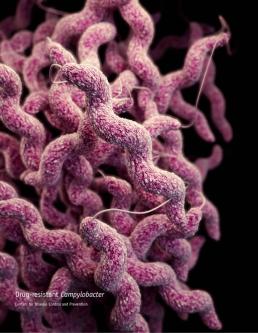
Campylobacter bacteria in poultry products are a main cause of human food-borne diseases. Production environments have a direct influence on contamination with pathogens, on increased mortality, and/or indirect influence on uniformity and decreased broiler performance.

Cleaning and disinfection can have positive influences on the increase in birds’ productive performance, as disease causing microorganisms are reduced or destroyed.

These biosecurity programmes are crucial for the maintenance of high productivity of poultry flocks and fundamental to ensure the quality of poultry products, making them appropriate for human consumption. Detailed cleaning and disinfection programmes aim to reduce infection pressure from microorganisms from one flock to the next. Studies simultaneously evaluating efficiency of cleaning and disinfection protocols, poultry performance, sanitary status of the facilities and sanitary quality of the meat are rarely found.

New Zealand – Up to 90 per cent of NZ chicken could be contaminated with Camplobacteria – new study

TVNZ 


A University of Otago, Wellington study, published last week in the international journal BMC Public Health, found only 15 per cent of consumers were aware that most of fresh chicken meat for sale in New Zealand is contaminated with Campylobacter.

The researchers also found deficiencies in the safety information provided to consumers.

“New Zealand has one of the highest rates of campylobacteriosis in the world and at least half of cases can be attributed to contaminated chicken,” says Philip Allan, one of the study’s authors and a medical student attached to the Department of Public Health.

Most survey participants were aware of the need to thoroughly cook chicken and to use separate utensils during preparation, but many were unaware that rinsing fresh chicken under the tap could spread the infection or that freezing chicken reduced Campylobacter contamination.

The study authors expect food safety regulators and chicken producers and retailers to be taking all reasonable steps to protect consumers.

How to cook the Campylobacter out of your chicken

UK – Northern Ireland – Dunnes Stores recalls Chicken, Bacon & Sweetcorn Deli Filler due to possible contamination with Listeria monocytogenes

FSA NI

Product details

Product: Dunnes Stores Chicken, Bacon & Sweetcorn Deli Filler
Pack size: 175g
‘Use By’ dates: all use by dates from 13 April 2018 to 20 April 2018 (inclusive)

No other Dunnes Stores products are known to be affected

Risk

The product listed above might be contaminated with Listeria monocytogenes.

Symptoms caused by this organism can be similar to flu and include high temperature, muscle ache or pain, chills, feeling or being sick and diarrhoea.

Some people are more vulnerable to listeria infections, including those over 65 years of age, pregnant women and their unborn babies, babies less than one month old and people with weakened immune systems.

Our advice to consumers

If you have bought the above product, do not eat it. Instead, return it to the store from where it was bought for a full refund.

Action taken by the company

Dunnes Stores is recalling the above product. Point of sale notices will be displayed in all retail stores that are selling this product. These notices explain to customers why the products are being recalled and tell them what to do if they have bought the product. Please see the attached notice.

Recall Notice

Canada – Certain Smith Snacks brand products recalled due to Listeria monocytogenes

CFIA

Recall details

Ottawa, April 18, 2018 – Smith Snacks Ltd. is recalling certain Smith Snacks products from the marketplace due to possible Listeria monocytogenes contamination. Consumers should not consume the recalled products described below.

Recalled products

Brand Name Common Name Size Code(s) on Product UPC
Smith Snacks Ultimate BBQ Rib Sub None All Best Before dates up to and including May 11, 2018 6 23858 00023 9
Smith Snacks Bacon Cheese Hot Dog None All Best Before dates up to and including May 11, 2018 6 23858 00002 4
Smith Snacks Chicken Club Twister Wrap None All Best Before dates up to and including May 11, 2018 6 23858 00045 1
Smith Snacks Deli Twister Wrap None All Best Before dates up to and including May 11, 2018 6 23858 00075 8
Smith Snacks Small Sub None All Best Before dates up to and including May 11, 2018 6 23858 00026 0
Smith Snacks Chuck Wagon Sub None All Best Before dates up to and including May 11, 2018 6 23858 00007 9
Smith Snacks Pizza Sub None All Best Before dates up to and including May 11, 2018 6 23858 00025 3
Smith Snacks Large Pizza Sub None All Best Before dates up to and including May 11, 2018 6 23858 00016 1
Smith Snacks Large Sub None All Best Before dates up to and including May 11, 2018 6 23858 00017 8
Smith Snacks Deli Deluxe Sub None All Best Before dates up to and including May 11, 2018 6 23858 00065 9
Smith Snacks Hungry Human Sub None All Best Before dates up to and including May 11, 2018 6 23858 00058 1
Smith Snacks Bacon, Egg & Cheese Sandwich None All Best Before dates up to and including May 11, 2018 6 23858 00005 5
Smith Snacks Chicken Club Kaiser None All Best Before dates up to and including May 11, 2018 6 23858 00059 8
Smith Snacks Triple Stack Kaiser None All Best Before dates up to and including May 11, 2018 6 23858 00160 1
Smith Snacks Bacon & Cheese Double Burger None All Best Before dates up to and including May 11, 2018 6 23858 00009 3
Smith Snacks Twin Pack Burgers None All Best Before dates up to and including May 11, 2018 6 23858 00030 7
Smith Snacks Turkey & Dressing Sandwich None All Best Before dates up to and including May 11, 2018 6 23858 00032 1
Smith Snacks Whole Wheat Turkey & Dressing Sandwich None All Best Before dates up to and including May 11, 2018 6 23858 00032 1
Smith Snacks Hot Club Sandwich None All Best Before dates up to and including May 11, 2018 6 23858 00034 5
Smith Snacks Turkey Sandwich None All Best Before dates up to and including May 11, 2018 6 23858 00033 8
Smith Snacks Whole Wheat Turkey Sandwich None All Best Before dates up to and including May 11, 2018 6 23858 00033 8
Smith Snacks Blackforest Ham & Cheddar Sandwich None All Best Before dates up to and including May 11, 2018 6 23858 00036 9
Smith Snacks Whole Wheat Blackforest Ham & Cheddar Sandwich None All Best Before dates up to and including May 11, 2018 6 23858 00036 9
Smith Snacks Roast Beef & Cheddar Sandwich None All Best Before dates up to and including May 11, 2018 6 23858 00035 2
Smith Snacks Whole Wheat Roast Beef & Cheddar Sandwich None All Best Before dates up to and including May 11, 2018 6 23858 00035 2
Smith Snacks Cinnamon Swirl None All Best Before dates up to and including May 11, 2018 6 23858 00158 8
Smith Snacks Apple Turnover None All Best Before dates up to and including May 2, 2018 6 23858 00091 8
Smith Snacks Blueberry Turnover None All Best Before dates up to and including May 2, 2018 6 23858 00105 2
Smith Snacks Banana Bread None All Best Before dates up to and including May 11, 2018 6 23858 00164 9
Smith Snacks Pound Cake None All Best Before dates up to and including May 19, 2018 6 23858 00166 3

Research – Effect of microbial control measures on farmstead cheesemaking and antimicrobial resistance of Staphylococcus aureus and Enterococcus spp. isolates

Wiley Online

Abstract

The effect of microbial control measures in farmstead cheese making was evaluated in a small dairy farm in Gyeong‐gi province, Korea. Teat washing and pasteurization significantly (p < .05) reduced the level of indicator bacteria (mesophilic aerobes, total coliforms, and Escherichia coli). However, farmstead cheeses were contaminated with increased levels of mesophilic aerobes, total coliforms, Staphylococcus aureus, and Enterococcus faecium during post‐pasteurization steps, including the cheesemaking process and ripening. S. aureus isolates from cheese samples exhibited antibiotic resistance to penicillin/ampicillin, whereas teat and milk samples showed resistance to erythromycin/ciprofloxacin. Enterococcus spp. isolates had the highest proportion of organisms resistant to erythromycin and tetracycline among multidrug‐resistant strains. To ensure the safety of farmstead cheese, customized management systems and intervention methods should be established by focusing on control measures for not only preprocessing and pasteurization but also post‐pasteurization steps.

Practical applications

Owing to renewed interest in specialty cheeses, small‐scale farmstead cheeses are actively produced worldwide. However, because of various manufacturing steps, including milking, pasteurization, ripening, and storage, farmstead cheese could pose a high risk for the presence of foodborne pathogens. In the current study, teat washing and milk pasteurization effectively reduced microbial contamination loads. However, farmstead cheeses were contaminated post‐pasteurization with increased levels of indicator and pathogenic microorganisms. Comprehensive management systems should be implemented and should focus not only on preprocessing and pasteurization but also on post‐pasteurization steps to ensure the safety of farmstead cheese.

New Zealand – Food safety labelling of chicken to prevent Campylobacteriosis: consumer expectations and current practices

BMC Public Health 


Campylobacteriosis from contaminated chicken meat is one of the most important food safety problems in western countries, and dissemination of antibiotic resistant
organisms is a growing concern. It is also a preventable disease. Food labels are a universally accessible means of conveying safe chicken preparation information to
consumers. Our research identified demand for comprehensive safe chicken preparation and handling information on labels and demonstrated several gaps in consumer
knowledge. Consumers currently underestimate the level of Campylobacter
contamination on fresh raw chicken, and have stated a desire to have such information presented on labels to inform their purchasing decisions. Furthermore, our chicken label analysis demonstrated a lack of consistent safety messages in an easily-useable
format, highlighting a key deficiency to be addressed. We recommend mandatory introduction of comprehensive, high-quality, chicken safety labelling, along with
evaluation to establish whether this intervention leads to changes in consumer behaviour and reductions in the incidence of Campylobacter infection.

Europe – Multistate foodborne hepatitis A outbreak among European tourists returning from Egypt– need for reinforced vaccination recommendations, November 2012 to April 2013

Eurosurveillance

A multistate outbreak of hepatitis A virus (HAV) among European travellers returning from Egypt occurred between November 2012 and April 2013. A total of 14 European Union (EU)-European Free Trade Association (EFTA) countries reported 107 cases. Twenty-one cases from six countries were affected by strains of sub-genotype IB harbouring identical RNA sequences, suggesting a common source outbreak. An international outbreak investigation team interviewed a number of cases with a trawling questionnaire to generate hypotheses on potential exposures. Some of these exposures were further tested in a case–control study based on a more specific questionnaire. Both trawling and case–control questionnaires aimed to collect cases’ vaccination details as well as epidemiological information. Most cases participating in either questionnaire (35/43) had been staying in all-inclusive hotels located along the Red Sea. The case–control study found cases associated with exposure to strawberries or mango (multivariable analysis p value: 0.04). None of the 43 cases interviewed in any of the two questionnaires had been vaccinated. The most common reasons for non-vaccination was unawareness that HAV vaccination was recommended (23/43, 53%) and perceiving low infection risk in all-inclusive luxury resorts (19/43, 44%). Vaccination had not been recommended to five of the six cases who sought travel medical advice before travelling. Public health authorities should strongly reinforce measures to remind travellers, travel agencies and healthcare providers of the importance of vaccination before visiting HAV-endemic areas, including Egypt.

Research – Chicken giblets and wastewater samples as possible sources of methicillin‐resistant Staphylococcus aureus: Prevalence, enterotoxin production, and antibiotic susceptibility

Wiley Online

Abstract

Staphylococcus aureus is an important foodborne pathogen that constitutes a major health hazard. This study was undertaken to investigate the potential health hazard of chicken products including giblets as a source of methicillin‐resistant S. aureus (MRSA). The prevalence of coagulase‐positive multidrug‐resistant S. aureus in chicken breast meat, wings, giblets (livers and gizzards), and wastewater samples was investigated. Furthermore, expression of mecA in the identified isolates was screened using PCR. In addition, the expression of staphylococcal enterotoxin (SE) coding genes (A, B, C, and D) was investigated. The antibiogram of isolated S. aureus was further tested using the disk diffusion method. Results obtained showed that a 14% prevalence of S. aureus among the examined samples. Interestingly, all isolates were confirmed to be MRSA. SEA had the highest frequency among SEs in MRSA isolates. 78.57% of MRSA isolates showed multidrug resistance profiles.

Practical applications

This study demonstrated that chicken giblets and wastewater samples are potential sources for transmission of methicillin‐resistant S. aureus (MRSA) and the heat‐resistant staphylococcal enterotoxins to people. Additionally, the isolated MRSA showed variable degrees of antibiotic resistance. Accordingly, strict hygiene protocols should be followed during preparation of chicken products including giblets for human consumption. Furthermore, thorough cooking of chicken meat and giblets must be considered before serving to people.

Research – Detection of foodborne viruses in ready‐to‐eat meat products and meat processing plants

Wiley Online

Abstract

Several studies have confirmed the presence of foodborne viruses in different food products throughout the world. There is accumulating data suggesting that the economic burden of foodborne viral infections is rising, making the understanding and monitoring of their prevalence a necessity, for the modern food industry. The objective of this study was to examine ready‐to‐eat meat products and environmental samples originated from meat processing plants in Cyprus, for four foodborne viruses: norovirus (NoV GGI, NoV GII), rotavirus, hepatitis A virus, and hepatitis E virus. A total of 48 swab samples and 42 different pork meat products from two plants were analyzed in parallel. The reverse transcription real‐time polymerase chain reaction revealed two swab samples from the same plant positive for norovirus GGI. The detection of norovirus on a slicer machine and on the hands of a worker, suggest that foodborne viruses can be present in meat processing environments.

Practical applications

There is an increasing need to better understand the prevalence of foodborne viruses in the environment and food, given the rise of viral foodborne outbreaks throughout the world, as reported by World Health Organization. Meat products form an important exposure vehicle to humans either directly, through the consumption of raw products, or as a result of cross‐contamination in food processing plants. This is the first report in Cyprus illustrating the presence of foodborne viruses in meat processing plants and the possible impact in public health, through the consumption of ready‐to‐eat meat products.