Category Archives: Salmonella

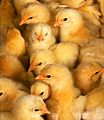
USA – Multistate Outbreaks of Salmonella Infections Linked to Contact with Live Poultry in Backyard Flocks, 2018 (Final Update)

CDC 104px-More_chicks

Final Outbreak Advisory

334
Cases

47
States

56
Hospitalizations

0
Deaths

  • CDC and multiple states investigated several multistate outbreaks of Salmonella infections linked to contact with live poultry in backyard flocks.
    • People can get sick with Salmonella infections(https://www.cdc.gov/salmonella/index.html) from touching live poultry or their environment. These birds can be carrying Salmonella bacteria but appear healthy and clean and show no signs of illness.
    • Several different types of Salmonella bacteria have made people sick in these outbreaks: Salmonella Seftenberg, Salmonella Montevideo, Salmonella Infantis, Salmonella Enteritidis, Salmonella Indiana, and Salmonella Litchfield.
  • A total of 334 people were infected with the outbreak strains of Salmonella reported from 47 states.
    • Illnesses started from February 15, 2018 to August 10, 2018.
    • 56 ill people were hospitalized, and no deaths were reported.
    • 21% of ill people were children younger than 5 years.
  • Epidemiologic, traceback, and laboratory findings linked these outbreaks to contact with live poultry, such as chicks and ducklings, which came from multiple hatcheries.
    • In interviews, 132 (63%) of 211 ill people with information available reported contact with chicks or ducklings in the week before their illness started.
    • People reported obtaining chicks and ducklings from several sources, including feed supply stores, websites, hatcheries, and from relatives.
  • Whole genome sequencing analysis was performed on 141 isolates from ill people in this outbreak. Twenty-eight isolates contained genes that predict resistance to at least one of the following antibiotics: ampicillin, streptomycin, sulfamethoxazole, tetracycline, gentamicin, ceftriaxone, amoxicillin-clavulanic acid, cefoxitin, ciprofloxacin, and fosfomycin. No resistance was identified in 113 isolates. Testing of 6 isolates using standard antibiotic susceptibility testing(https://www.cdc.gov/narms/resources/glossary.html) by CDC’s National Antimicrobial Resistance Monitoring System (NARMS)(https://www.cdc.gov/narms/index.html) laboratory confirmed these results. Some of these antibiotic-resistant infections may be difficult to treat with the commonly recommended antibiotics, and may require a different antibiotic choice.
  • These outbreak investigations are over.  CDC will continue to work with state public health partners to monitor for the occurrence of Salmonella infections associated with contact with live poultry in backyard flocks.

RASFF Alert – Animal Feed – Salmonella – Pea Fibres

RASFF-Logo

RASFF-Salmonella (present /25g) in pea fibres from Belgium in Belgium

RASFF Alerts – Salmonella – Whipped Cream – White Sesame Seeds – Chicken Livers -Chicken Fillet Strips

RASFF-Logo

RASFF-Salmonella (presence /25g) in whipped cream from Belgium in France

RASFF-Salmonella (presence /25g) in white sesame seeds from Nigeria in Poland

RASFF -Salmonella (presence /25g) in chilled chicken livers from the Netherlands in the Netherlands

RASFF-Salmonella (presence /25g) in frozen chicken fillet strips from the Netherlands in France

RASFF-Salmonella (presence /25g) in white sesame seeds from Nigeria in Poland

USA – Bravo Packing recalls Performance Dog raw pet food because of Salmonella

Food Safety News 


Bravo Packing Inc. has recalled all of its Performance Dog frozen raw pet food products because of potential Salmonella contamination.

Bravo initiated the recall after the U.S. Food and Drug Administration found Salmonella in a sample of Performance Dog. Officials collected the sample during an inspection of the company’s manufacturing facility. Pet foods that are contaminated with Salmonella pose a risk to pet owners and others in their households. People can cross contaminate their hands, kitchen counters, utensils, pet bowls and other surfaces.

The recalled frozen dog food is packaged in 2- and 5-pound plastic sleeves. The unlabeled sleeves are packed in cardboard boxes labeled with the manufacture date code of 071418. Tefco distributed the implicated dog food to retail stores and directly to consumers.

Dogs infected with Salmonella may develop lethargy, abdominal pain, reduced appetite, fever, vomiting and diarrhea, which may or may not be bloody. Infected animals can shed Salmonella into the environment even when not exhibiting symptoms of an active infection, putting handlers and household members at risk of infection.

No human or animal illnesses have been reported to date in relation to this recall.

Poland – Audit finds Polish food companies’ tests for Salmonella are ineffective

PoultryMed

A European audit was carried out in Poland from 6 to 15 February 2018 as part of the published Directorate-General for Health and Food Safety audit programme. The objective of the audit was to evaluate the actions taken by the Polish competent authority in order to control Salmonella, in particular the implementation of the Salmonella National Control Programmes in different poultry populations. Subsequent to the latest previous audit (2015) and the Salmonella outbreak of 2016, the Polish competent authorities have made several changes to the Salmonella National Control Programmes, to relevant national legal instruments, and to instructions and official checks related to the Salmonella National Control Programmes. Official controls in place respect (and sometimes exceed) the planned frequencies of on-site inspections, and detected and effectively imposed correction of food business operator non compliances with requirements. Verification of the performance of official controls is in place and has also detected and obtained correction of shortcomings with the official checks. The Salmonella National Control Programmes in Poland are generally in line with EU requirements and well implemented and correct restrictive measures were imposed and/or taken by farmers when needed and mostly well documented. However, for laying hens in particular, the epidemiological investigations have frequently not managed to identify the source of infection and ECDC-EFSA data indicates that this infection is likely to still be ongoing in Poland.

USA – FDA Investigating Multistate Outbreak of Salmonella Enteritidis Linked to Shell Eggs from Gravel Ridge Farms

FDA

The U.S. Food and Drug Administration, along with the Centers for Disease Control and Prevention (CDC) and state and local partners, are investigating a multi-state outbreak of Salmonella Enteritidis illnesses that is linked to shell eggs.

Update – September 10, 2018

As of September 10, 2018, there are 14 illnesses. Gravel Ridge Farms of Cullman, Alabama, has recalled cage-free, large eggs dating back to June 25, 2018.

Recommendations

The FDA is advising consumers not to eat recalled shell eggs produced by Gravel Ridge Farms. Consumers who have purchased these products can return them to the store for a refund. If any consumers have Gravel Ridge Farms eggs in their refrigerator, they should be discarded, regardless of the date stamped on the package. Recalled eggs were also sold to several grocery stores in Alabama, Georgia, and Tennessee. For a complete list of stores, visit the recall notice.

USA- Steve’s recalls pet food for second time this year; Listeria, Salmonella found

Food Safety News

Steve’s Real Food is recalling dog food and cat food because of possible contamination with Salmonella and/or Listeria monocytogenes. The company distributed the pet foods nationwide.

The recall follows a report from the Washington Department of Agriculture that one or both pathogens were found in samples of the three products from the Salt Lake City company. The bacteria can cause serious infections in people who handle the food or who pick up the bacteria from cross-contaminated things such as counters, pet bowls and utensils.

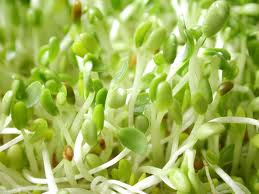
Australia – Spike in Salmonella Oranienburg cases linked to alfalfa sprouts

Outbreak News Today alfalfa

Officials with the Government of South Australia (SA Health) are warning the public not to eat a number of alfalfa sprout products produced by Adelaide business Sunshine Sprouts, after several people became ill with Salmonella Oranienburg.

SA Health’s Acting Executive Director Public Health Services, Dr Chris Lease, said there had been spike in cases of Salmonella Oranienburg, with eight confirmed cases in the past month, compared with eight for all of last year.

“As part of the investigation into these cases, 116 alfalfa sprout products were sampled as two cases had reported eating these types of products.  Results received this morning identified that Salmonella Oranienburg was present in three of these samples,” Dr Lease said.

“A number of Sunshine Sprouts alfalfa sprouts products have already been voluntarily recalled and we are advising anyone who has purchased the affected products not to eat them, and to return them to the place of purchase for a refund or throw them away.

USA – Salmonella Prompts Gravel Ridge Farm Eggs Recall

Food Poison Journal Salmonella Eggs Food Poisoning Food Safety

Gravel Ridge Farms is recalling Cage Free Large Eggs due to a potential contamination of Salmonella. The recall was initiated because reported illnesses were confirmed at locations using Gravel Ridge Farm Eggs, and we are voluntarily recalling out of an abundance of caution.

Australia – Recall: Glendenning Farms eggs – Salmonella

Food Authority NSW 


Recalls and advisories