Category Archives: Salmonella

Research – Microbiological profile, incidence and behavior of Salmonella on seeds traded in Mexican markets.

JFP

Seed consumption has increased in recent years because the high nutrient content of seeds. However, the number of outbreaks caused by Salmonella associated with the consumption of low water activity food items has also increased, although these food items do not support microbial growth. The main goal of this study was to quantify microbial indicators and to determine the prevalence and content of Salmonella spp. in chia, amaranth and sesame seeds obtained from Mexican retail outlets. In addition, the behavior of this pathogen on seeds was also evaluated. One hundred samples of each product (chia, amaranth and sesame seeds) were collected from Queretaro City markets. Aerobic plate count (APC), coliforms and Escherichia coli were quantified, and the presence and number of Salmonella were also determined. Chia, amaranth and sesame seeds (1 kg each) were inoculated with a cocktail containing five Salmonella strains (~6 log CFU mL -1 ) and were stored at ambient temperature and populations of Salmonella were quantified. The median APC contents in chia, amaranth, and sesame seeds were 2.1, 2.4, and 3.8 log CFU g -1 , respectively, and the content of coliforms on the seeds ranged from 0.48 to 0.56 log MPN g -1 . E. coli was present at low concentrations in the three types of seeds. Salmonella was detected in chia (31%), amaranth (15%), and sesame (12%) seeds, and the population ranged from 0.48 to 0.56 Log MPN g -1 . Salmonella spp. decreased through 240 days of storage, showing inactivation rates of 0.017, 0.011 and 0.016 log CFU h -1 in chia, amaranth, and sesame seeds, respectively. The high prevalence of Salmonella in the seeds highlights potential risks for consumers, particularly giving that seeds are generally consumed without treatments guaranteeing pathogen inactivation.
Netherlands – Important safety warning whole chicken Lidl – Salmonella

NVWA

Salmonella was found in the Lidl product ‘Whole free-range chicken natural, from the PiqueBroche brand’, with the best before dates 08-09-2020 and 11-09-2020.

Customers are urged not to consume the product. Eating a product with the salmonella bacteria, if not heated enough, can cause fever, stomach pain and diarrhea within 6-48 hours of consumption. In young children, the elderly, people with low immunity and pregnant women, a salmonella infection can lead to dehydration or hospitalization. Consult your doctor for more information if you have any health problems after eating the said product.

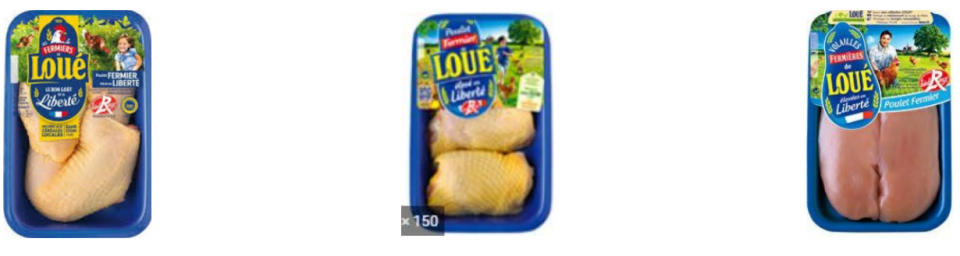
Luxembourg – TRAY OF 2 YELLOW CHICKEN THIGHS, TRAY OF 2 WHITE CHICKEN FILLETS, TRAY OF 3 HIGH CHICKEN THIGHS FROM THE LDC BRAND – PRESENCE OF SALMONELLA

SAP

Last name Tray of 2 yellow chicken thighs
Mark LDC
Bar code 0217823000000
Best before date (DLC) 09/09/2020
Lot 2020037392
Last name Tray of 2 white chicken fillets
Mark LDC
Bar code 3266980282882
Best before date (DLC) 09/08/2020 & 09/09/2020
Lot 2020037371
Last name Tray of 3 tall chicken thighs
Mark LDC
Bar code 3266980006969
Best before date (DLC) 09/11/2020
Lot 2020037371

Danger: Presence of salmonella


Salmonella can cause symptoms such as nausea, vomiting, abdominal cramps, diarrhea, fever and headache within 6 to 72 hours after consumption. These symptoms may be aggravated in young children, immunocompromised individuals and the elderly. People who have consumed these products and who present these symptoms are advised to consult a doctor, notifying him of this consumption.


Sale in Luxembourg by: Auchan

A sale by other operators cannot be excluded.

Source of information: Auchan recall notification.


Communicated by: Government Commission for Quality, Fraud and Food Safety .


USA -US rejects 26 farmed shrimp lines from India over Salmonella discoveries

Intrafish

Salmonella kswfoodworld

The US Food and Drug Administration (FDA) refused entry to 26 shrimp lines in August by the 25th of last month.

None of the refusals were for entry lines of shrimp for reasons related to banned antibiotics. Two of the 26 entry lines denied entry were for shrimp from India refused for the presence of salmonella and for being insanitary.

The low number of total seafood entry lines refused in August continues an unprecedented trend over the four previous straight months.


Research – Modeling the Effects of Product Temperature, Product Moisture, and Process Humidity on Thermal Inactivation of Salmonella in Pistachios during Hot-Air Heating

JFP

Prior efforts to model bacterial thermal inactivation in/on low-moisture foods generally have been based on isothermal and iso-moisture experiments and rarely included dynamic product and process variables. Therefore, the objective of this study was to test appropriate secondary models to quantify the effect of product temperature, product moisture, and process humidity on thermal inactivation of Salmonella Enteritidis PT30 on pistachios subjected to dynamic dry- or moist-air heating. In-shell pistachios were inoculated with S. Enteritidis PT30, equilibrated in controlled-humidity chambers (to target water activities, aw, of 0.45 or 0.65), and, in some cases, subjected to a presoak treatment prior to heating in a laboratory-scale, moist-air convection oven at multiple combinations (in duplicate) of dry bulb (104.4 or 118.3ºC) and dew point (~23.8, 54.4, or 69.4ºC) temperatures, with air speed of ~1.3 m/s. Salmonella survivors, pistachio moisture content, and aw were quantified at six time points for each condition, targeting cumulative lethality of ~3-5 log. The resulting data were used to estimate parameters for five candidate secondary models that included combinations of product temperature, product moisture, aw, and/or process dew point (coupled with a log-linear primary model). A model describing the D-value as a function of temperature and dew point fit the data well (RMSE 0.86 log CFU/g); however, adding a term to account for dynamic product moisture improved the fit (RMSE = 0.83 log CFU/g). In addition, product moisture content yielded better model outcomes, as compared to aw, particularly in the case of the presoaked pistachios. When validated at the pilot scale, the model was conservative, always under-predicting the experimental log reductions. Both dynamic product moisture and process humidity were critical factors in modeling thermal inactivation of Salmonella in a low-moisture product heated in an air-convection system.

Research – Evaluation of UVC Radiation and a UVC-Ozone Combination as Fresh Beef Interventions against Shiga Toxin–Producing Escherichia coli, Salmonella, and Listeria monocytogenes and Their Effects on Beef Quality

JFP

ABSTRACT

This research study was conducted to evaluate treatments with UVC light and a combination of UVC and ozone that have recently received attention from the beef processing industry as antimicrobial interventions that leave no chemical residues on products. The effectiveness of UVC and UVC plus gaseous ozone treatments was evaluated for inactivation of pathogenic bacteria on fresh beef and for any impact on fresh beef quality. Fresh beef tissues were inoculated with cocktails of Shiga toxin–producing Escherichia coli (STEC) strains (serotypes O26, O45, O103, O111, O121, O145, and O157:H7), Salmonella, and Listeria monocytogenes. Inoculated fresh beef tissues were subjected to UVC or UVC-ozone treatments at 106 to 590 mJ/cm2. UVC treatment alone or in combination with ozone reduced populations of STEC, Salmonella, L. monocytogenes, and aerobic bacteria from 0.86 to 1.49, 0.76 to 1.33, 0.5 to 1.14, and 0.64 to 1.23 log CFU, respectively. Gaseous ozone alone reduced populations of E. coli O157:H7, Salmonella, and L. monocytogenes by 0.65, 0.70, and 0.33 log CFU, respectively. Decimal reduction times (D-values) for STEC serotypes, Salmonella, and L. monocytogenes on surfaces of fresh beef indicated that the UVC-ozone treatment was more effective (P ≤ 0.05) than UVC light alone for reducing pathogens on the surface of fresh beef. Exposure to UVC or UVC plus gaseous ozone did not have a deleterious effect on fresh meat color and did not accelerate the formation of oxidative rancidity. These findings suggest that UVC and UVC in combination with gaseous ozone can be useful for enhancing the microbial safety of fresh beef without impairing fresh beef quality.

USA – Brazil Nuts Cause Salmonella Outbreak in UK; America Could be Next

Brazil Nuts Cause Salmonella Outbreak in UK; America Could be Next

France – Salmonella outbreak in France tied to sausage from Spain

Public health officials in France are investigating a foodborne illness outbreak suspected to be caused by fuet, a type of sausage from Spain. The product was also sent to Belgium.

In total, 18 patients with salmonellosis have been identified. They became ill between July 8 and Aug. 3, according to Santé publique France. All patients, including 12 children, had consumed the Spanish dry-cured sausage.

A link between illness and the Spanish company Embutidos Sola SA was confirmed at the start of September, according to the Directorate General for Food (DGAL), the Directorate General for Health and Santé publique France.

Several batches consumed by those sick were found to be contaminated with a Salmonella strain that is a variant of Salmonella Typhimurium.

Salmonella outbreak in France tied to sausage from Spain

France – Spanish Fuet (“sausage”) from EMBUTIDOS SOLA SA – Salmonella

ENCOUNTERED PROBLEM

Detection of salmonella

PROPOSED SOLUTION

Those in possession of this product are asked not to consume it and to return it to the point of sale where it was purchased for reimbursement.

https://www.oulah.fr/rappel-produit-fuet-saucisson-espagnol-de-la-societe-embutidos-sola-sa/

RASFF Alert – Foodborne Outbreak -Salmonella – Fuet Sausage

European Food Alerts

RASFF

foodborne outbreak suspected (Salmonellosis) to be caused by fuet sausage from Spain in France