Category Archives: Norovirus

Australia – 55 Sick Norovirus Outbreak

Consumer Food Safetynorovirus-2(1)

At least 55 children and their teachers became violently ill with nausea, vomiting, dehydration and diarrhea during a three-day stay at the Borambola Sport and Recreation Centre in New South Wales, Australia.

Eleven ambulances from across the region and medical staff from Wagga Base Hospital were called to the center.

Initially the number of those affected was only small, but it quickly became apparent it was highly contagious with about 55 falling ill over the course of just a few hours.

Research – Inactivation of Human Norovirus using Chemical Sanitizers

Norwalk_CaspidScience Direct

The porcine gastric mucin binding magnetic bead (PGM-MB) assay was used to evaluate the ability of chlorine, chlorine dioxide, peroxyacetic acid, hydrogen peroxide, and trisodium phosphate to inactivate human norovirus within 10% stool filtrate. One-min free chlorine treatments at concentrations of 33 and 189 ppm reduced virus binding in the PGM-MB assay by 1.48 and 4.14 log10, respectively, suggesting that chlorine is an efficient sanitizer for inactivation of human norovirus (HuNoV). Five min treatments with 5% trisodium phosphate (pH ~ 12) reduced HuNoV binding by 1.6 log10, suggesting that TSP, or some other high pH buffer, could be used to treat food and food contact surfaces to reduce HuNoV. One min treatments with 350 ppm chlorine dioxide dissolved in water did not reduce PGM-MB binding, suggesting that the sanitizer may not be suitable for HuNoV inactivation in liquid form. However a 60-min treatment with 350 ppm chlorine dioxide did reduce human norovirus by 2.8 log10, indicating that chlorine dioxide had some, albeit limited, activity against HuNoV. Results also suggest that peroxyacetic acid has limited effectiveness against human norovirus, since 1-min treatments with up to 195 ppm reduced human norovirus binding by < 1 log10. Hydrogen peroxide (4%) treatment of up to 60 min resulted in minimal binding reduction (~ 0.1 log10) suggesting that H2O2 is not a good liquid sanitizer for HuNoV. Overall this study suggests that HuNoV is remarkably resistant to several commonly used disinfectants and advocates for the use of chlorine (sodium hypochlorite) as a HuNoV disinfectant wherever possible.

Research – Norovirus Updates

Science DirectNorovirus

Human norovirus (NoV) contaminated hands are important routes for transmission. Quantitative data on transfer during contact with surfaces and food are scarce but necessary for a quantitative risk assessment. Therefore, transfer of MNV1 and human NoVs GI.4 and GII.4 was studied by artificially contaminating human finger pads, followed by pressing on stainless steel and Trespa® surfaces and also on whole tomatoes and cucumber slices. In addition, clean finger pads were pressed on artificially contaminated stainless steel and Trespa® surfaces. The transfers were performed at a pressure of 0.8–1.9 kg/cm2 for approximately 2 s up to 7 sequential transfers either to carriers or to food products. MNV1 infectivity transfer from finger pads to stainless steel ranged from 13 ± 16% on the first to 0.003 ± 0.009% on the sixth transfer on immediate transfer. After 10 min of drying, transfer was reduced to 0.1 ± 0.2% on the first transfer to 0.013 ± 0.023% on the fifth transfer. MNV1 infectivity transfer from stainless steel and Trespa® to finger pads after 40 min of drying was 2.0 ± 2.0% and 4.0 ± 5.0% respectively. MNV1 infectivity was transferred 7 ± 8% to cucumber slices and 0.3 ± 0.5% to tomatoes after 10 min of drying, where the higher transfer to cucumber was probably due to the higher moisture content of the cucumber slices. Similar results were found for NoVs GI.4 and GII.4 transfers measured in PCR units. The results indicate that transfer of the virus is possible even after the virus is dried on the surface of hands or carriers. Furthermore, the role of fingers in transmission of NoVs was quantified and these data can be useful in risk assessment models and to establish target levels for efficacy of transmission intervention methods.

CDC

The duration of immunity to norovirus (NoV) gastroenteritis has been believed to be from 6 months to 2 years. However, several observations are inconsistent with this short period. To gain better estimates of the duration of immunity to NoV, we developed a mathematical model of community NoV transmission. The model was parameterized from the literature and also fit to age-specific incidence data from England and Wales by using maximum likelihood. We developed several scenarios to determine the effect of unknowns regarding transmission and immunity on estimates of the duration of immunity. In the various models, duration of immunity to NoV gastroenteritis was estimated at 4.1 (95% CI 3.2–5.1) to 8.7 (95% CI 6.8–11.3) years. Moreover, we calculated that children (<5 years) are much more infectious than older children and adults. If a vaccine can achieve protection for duration of natural immunity indicated by our results, its potential health and economic benefits could be substantial.

CDC

We report an increase in the proportion of genotype GI.6 norovirus outbreaks in the United States from 1.4% in 2010 to 7.7% in 2012 (p<0.001). Compared with non-GI.6 outbreaks, GI.6 outbreaks were characterized by summer seasonality, foodborne transmission, and non–health care settings.

CDC

After the substantial decrease in acute gastroenteritis (AGE) in children caused by rotavirus after introduction of 2 rotavirus vaccines (1), norovirus has become the leading cause of medically attended AGE in US children <5 years of age (2). We describe the clinical characteristics of norovirus disease and assessed whether rotavirus vaccine protected against norovirus AGE.


Research- Tracing Viruses in the European Berry Food Chain

Science DirectClose up 3d render of an influenza-like virus isolated on white

In recent years, numerous foodborne outbreaks due to consumption of berry fruit contaminated by human enteric viruses have been reported. This European multinational study investigated possible contamination routes by monitoring the entire food chain for a panel of human and animal enteric viruses.

A total of 785 samples were collected throughout the food production chain of four European countries (Czech Republic, Finland, Poland and Serbia) during two growing seasons. Samples were taken during the production phase, the processing phase, and at point-of-sale. Samples included irrigation water, animal faeces, food handlers’ hand swabs, swabs from toilets on farms, from conveyor belts at processing plants, and of raspberries or strawberries at points-of-sale; all were subjected to virus analysis. The samples were analysed by real-time (reverse transcription, RT)-PCR, primarily for human adenoviruses (hAdV) to demonstrate that a route of contamination existed from infected persons to the food supply chain. The analyses also included testing for the presence of selected human (norovirus, NoV GI, NoV GII and hepatitis A virus, HAV), animal (porcine adenovirus, pAdV and bovine polyomavirus, bPyV) and zoonotic (hepatitis E virus, HEV) viruses.

At berry production, hAdV was found in 9.5%, 5.8% and 9.1% of samples of irrigation water, food handlers’ hands and toilets, respectively. At the processing plants, hAdV was detected in one (2.0%) swab from a food handler’s hand. At point-of-sale, the prevalence of hAdV in fresh raspberries, frozen raspberries and fresh strawberries, was 0.7%, 3.2% and 2.0%, respectively.

Of the human pathogenic viruses, NoV GII was detected in two (3.6%) water samples at berry production, but no HAV was detected in any of the samples. HEV-contaminated frozen raspberries were found once (2.6%). Animal faecal contamination was evidenced by positive pAdV and bPyV assay results. At berry production, one water sample contained both viruses, and at point-of-sale 5.7% and 1.3% of fresh and frozen berries tested positive for pAdV.

At berry production hAdV was found both in irrigation water and on food handler’s hands, which indicated that these may be important vehicles by which human pathogenic viruses enter the berry fruit chain. Moreover, both zoonotic and animal enteric viruses could be detected on the end products. This study gives insight into viral sources and transmission routes and emphasizes the necessity for thorough compliance with good agricultural and hygienic practice at the farms to help protect the public from viral infections.


 

Research – Norovirus Survival on Sprouted Seeds

American Society for Microbiologyalfalfa

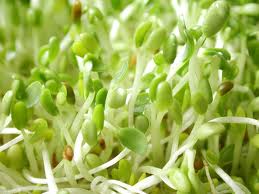
Human norovirus (huNoV) and hepatitis A virus (HAV) have been involved in several produce-associated outbreaks and identified as major food-borne viral etiologies. In this study, the survival of huNoV surrogates (murine norovirus [MNV] and Tulane virus [TV]) and HAV was investigated on alfalfa seeds during storage and postgermination. Alfalfa seeds were inoculated with MNV, TV, or HAV with titers of 6.46 ± 0.06 log PFU/g, 3.87 ± 0.38 log PFU/g, or 7.01 ± 0.07 log 50% tissue culture infectious doses  (TCID50)/g, respectively. Inoculated seeds were stored for up to 50 days at 22°C and sampled during that storage period on days 0, 2, 5, 10, and 15. Following storage, virus presence was monitored over a 1-week germination period. Viruses remained infectious after 50 days, with titers of 1.61 ± 0.19 log PFU/g, 0.85 ± 0.21 log PFU/g, and 3.43 ± 0.21 log TCID50/g for MNV, TV, and HAV, respectively. HAV demonstrated greater persistence than MNV and TV, without a statistically significant  reduction over 20 days (<1 log TCID50/g); however, relatively high levels of genomic copies of all viruses persisted over the testing time period. Low titers of  viruses were found on sprouts and were located in all tissues as well as in sprout-spent water sampled on days 1, 3, and 6  following seed planting. Results revealed the persistence of viruses in seeds for a prolonged period of time, and perhaps  of greater importance these data suggest the ease of which virus may transfer from seeds to sprouts and spent water during  germination. These findings highlight the importance of sanitation and prevention procedures before and during germination.

Chile – Norovirus Outbreak 3000 Sick

BarfBlogNorwalk_Caspid

The city of Ovalle in Chile’s Coquimbo region suffered a massive outbreak of norovirus in the first week of September, infecting 3,000-plus residents, due to insufficient chlorine levels in the potable water supplied by water utility Aguas del Valle, according to a release by the regional health authority Seremi.

USA – Norovirus Restaurant Outbreak ?

Food Safety News

Grant County Health Department officials are waiting on state lab test results to determine whether norovirus was behind the outbreak of more than two dozen people who were sickened in John Day, OR, this past week.

According to an Aug. 5 story in the Blue Mountain Eagle, health officials suspected that the illness could have been transmitted between July 27 and Aug. 3 at the Snaffle Bit Restaurant. The owner of the restaurant was reportedly cooperating with the county and taking steps to prevent any other illness outbreaks.

FSA Letter on EU Discussions on Norovirus Controls in Shellfish

Dear Interested Party                                                                      30 July 2013


Norovirus in shellfish – an update on status of EU negotiations


Following my letter dated 08 May 2013 I would like to provide you with an update on the EU discussion on norovirus controls in shellfish.

The EU Commission gathered views from Member States at a Working Group meeting on 27th June 2013.  Following detailed and constructive discussions, during which many different views were expressed, it was agreed that no limits should be set at this stage due to the limitations of the current methodology and the gaps in current knowledge about norovirus. However, it was agreed that there is a need to address food safety risks associated with norovirus in raw shellfish and the Commission, together with Member States, will continue to explore risk management options, identifying areas where harmonised practices could be introduced.  There was also support for a harmonised EU baseline study, as recommended by EFSA, to help fill gaps in the data that have been identified.

The FSA is continuing to explore the feasibility and effectiveness of alternative approaches which could be applied, such as buffer zones and alert systems to facilitate active management of harvesting.  I would welcome any evidence based information and/or suggestions in the coming months to inform these considerations.

Research – Norovirus Transmission

Cambridge Journals OnlineNorwalk_Caspid

Causal mechanisms of norovirus outbreaks are often not revealed. Understanding the transmission route (e.g. foodborne, waterborne, or environmental) and vehicle (e.g. shellfish or recreational water) of a norovirus outbreak, however, is of great public health importance; this information can facilitate interventions for an ongoing outbreak and regulatory action to limit future outbreaks. Towards this goal, we conducted a systematic review to examine whether published outbreak information was associated with the implicated transmission route or vehicle. Genogroup distribution was associated with transmission route and food vehicle, but attack rate and the presence of GII.4 strain were not associated with transmission route, food vehicle, or water vehicle. Attack rate, genogroup distribution, and GII.4 strain distribution also varied by other outbreak characteristics (e.g. setting, season, hemisphere). These relationships suggest that different genogroups exploit different environmental conditions and thereby can be used to predict the likelihood of various transmission routes or vehicles

Cambridge Journals Online

Information – Managing Norovirus in Childcare Facilities

ECDCecdclogo

Norovirus, which has epidemiological characteristics that promote a high rate of infectivity and transmission, remains one of the most common causes of childhood gastroenteritis. A new technical report from ECDC provides guidance on steps that can be taken to better prevent and control outbreaks.

The Prevention of Norovirus Infection in Schools and Childcare Facilities report offers guidance to EU Member States regarding the efficacy of different ways to manage the spread of the virus. It also reviews findings related to the prevention and control of outbreaks of gastroenteritis in schools and childcare facilities.

Much of the guidance has been synthesised from numerous other international guideline documents, which have been formed by expert consensus. There is limited primary research on the efficacy of interventions for the prevention and control of norovirus.

Primary prevention measures include effective hand hygiene, frequent cleaning of childcare environments, especially toilet facilities, and adherence to robust food hygiene standards. The effectiveness of each measure is discussed more fully in the report.

This technical report was open to public consultation between 12 July and 31 August 2012. The responses to the consultation were taken into account and the report revised accordingly.

REPORT LINK