Category Archives: Microbiology

Autoclaves for Catagory 3 Laboratories

Rapidmicrobiology

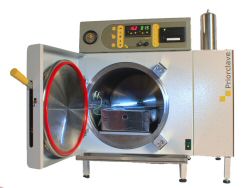
The Compact C40 vacuum autoclave is the first priorclave to become available with stand-off legs, providing easy access beneath the steam steriliser for cleaning and disinfection of laboratory work surfaces to prevent spread of virus and eliminate potential cross contamination.

This option plus the benefit of Biocote® antimicrobial surface protection makes the autoclave ideal for the demanding requirements of CAT3 laboratories.

US – Raw Milk Debate – Campylobacter

Food Safety News

An additional five confirmed infections have brought the total number of Campylobacter illnesses to 76 in an outbreak linked to raw milk from Your Family Cow dairy in Chambersburg, Pennsylvania, the Pennsylvania Department of Health said Wednesday. At least 9 people have been hospitalized.

Food Safety News

The order of a federal judge has finally shut down Rainbow Acres Farm, the raw milk dairy located near Washington D.C. in Pennsylvania’s Amish County.

It ends a nasty confrontation between Dan and Rachel Allgyer, Amish dairy farmers with operations based in Pennsylvania where commercial sales of raw milk are legal, and the U.S. Food and Drug Administration (FDA), which caught Rainbow making deliveries inside Maryland and the District of Columbia.
 
The heartland states of Iowa and Indiana are entertaining changes to their raw milk laws, but with far differing approaches.
 
In Iowa, which is bordered by Minnesota, Illinois, Missouri, Nebraska and South Dakota, lawmakers are considering allowing on-farm sales to make the state’s approach more consistent with its neighbors.

E. Coli in Chicken Linked to Urinary Tract Infections

USN – Health News

Scientists have long believed that urinary tract infections are typically caused by a person’s own E. coli bacteria, but a new Canadian study suggests the bacteria may more often than not come from chickens!

Read More at the link above.

Water Associated Disease Outbreak Research

Food Poisoning Bulletin 

Seventy-one percent of the world’s water-associated disease outbreaks reported between 1990 and 2008 were water-borne diseases caused by micro-organisms like E. coli that enter water through fecal contamination and cause infection when humans consume contaminated water.

Water-borne (including typhoid and cholera) — 70.9 percent.
Water-based, caused by parasites that spend part of their life in water — 2.9 percent.
Water-related (such as malaria), which need water for breeding of disease-carrying insects — 12.2 percent.
Water-washed, caused by poor hygiene because no clean water is available — 6.8 percent.
Water-dispersed, (such as Legionella), caused by infectious agents that thrive in water and enter the body through the respiratory tract — 7.3 percent.

Campylobacter Research

The Poultry Site 

Eliminating the most common cause of food poisoning from the food chain is the aim of new research funded by the Biotechnology and Biological Sciences Research Council (BBSRC) and the world-leading UK-based poultry breeding company Aviagen.

 Campylobacter is responsible for more than 300,000 cases of food poisoning a year in    England and Wales and is estimated to cost the UK economy up to £600M a year. It is usually passed to humans via poultry meat which has not been cooked or handled properly. While good hygiene and thorough cooking kills the bug, preventing it entering the food chain in the first instance woul dramatically reduce the risk of infection. To this end, BBSRC and Aviagen have awarded Scottish researchers £1.3M to map genes responsible for resistance to the bug with the view to being able to breed Campylobacter-resistant chickens in the future.

US – Sprouting Seeds Again – E.coli O26

Food Poisoning Bulletin

The Center for Disease Control (CDC) has reported a multi-state outbreak of shiga-toxin producing E. coli 026 (STEC) infections linked to raw clover sprouts at Jimmy John’s restaurants.

So far, 12 people have been infected with the outbreak strain of STEC 026. The case distribution is:

  • Iowa (5)
  • Missouri (3)Kansas (2)
  • Arkansas (1)
  • Wisconsin (1)

Two people have been hospitalized, but no deaths have occurred as of February 15, 2012.

FDA-Regulated Food Recalls Surged in Last Quarter 2011

Food Safety News

Foods regulated by the U.S. Food and Drug Administration (FDA) were recalled 50 percent more in the fourth quarter last year and affected over 80 percent more units when compared with the previous period, according to the ExpertRECALL ™ Index.
 

Listeria – UV and Hydrogen Peroxide

Food Production Daily

UV and hydrogen peroxide combo most effective listeria reducing treatment, claims study. A combination of ultraviolet-light (UV) and hydrogen peroxide (HP) is the best treatment to reduce listeria during brining, according to a study.

Study Link

Postprocessing contamination of the products in a processing plant has been identified as one of the major reasons for food contamination with Listeria; brining is one such postprocessing area. Our previous study has shown that the combinations of UV and antimicrobials reduces the number of this organism significantly in fresh brine, but brine is usually recycled from days to weeks depending on its use. Therefore, this study is focused on the reduction of L. monocytogenes in recycled chill brine (obtained from a frankfurter processor) using the combinations of UV and antimicrobial agents, such as citric acid (CA), hydrogen peroxide (HP) and dimethyl dicarbonate (DMDC). Results show that the combinations of UV and 2000 ppm and 4000 ppm HP were the most effective treatments in reducing the Listeria population with the total processing time of 120 min. Both of these treatments were found to be more effective than UV or HP alone. Additionally, all other treatments, such as the combinations of UV and CA (0.2 and 0.5%) and UV and DMDC (250 and 500 ppm) were comparatively less effective. This may be due to the presence of organic matter in spent brine, which may have reduced the penetration of UV and availability of antimicrobials for microbial interaction.

Hepatitis A – 2011 Two Outbreaks in Europe

Eurosurveillence

In October 2011, two primary cases of hepatitis A virus (HAV) infection with identical HAV genotype IB strains to those seen in other outbreaks associated with semi-dried tomatoes were reported in England. Both cases had consumed semi-dried tomatoes. Epidemiological investigations revealed two additional cases of genotype IB strains with different sequences who also reported having consumed semi-dried tomatoes. In November, five cases of HAV infection with closely related strains were identified in the Netherlands. A foodborne multiple-strain outbreak is suspected.

Euroserveillance

In November 2011, a cluster of initially five cases of hepatitis A infection with closely related strains was identified in the Netherlands. England reported possibly related cases. Strains with identical sequences had been involved in previous outbreaks linked to semi-dried tomatoes. Investigation of the Dutch cluster suggested a link with ready-to-eat salads including those containing semi-dried tomatoes. Despite trace-back, a source was not identified. Vigilance is needed, and rapid sharing of data may help source-tracing.

Vaccine For Salmonella?

Food Safety News

A vaccine against Salmonella may be one step closer, according to a research team led by a University of California, Davis immunologist.
 
In a study to be published this week in the early edition of the Proceedings of the National Academy of Sciences, the researchers say they have paved the way toward an effective vaccine by identifying eight antigens — molecules in the invading bacteria that trigger an immune response — common in mice and human infections.
 
In working toward a vaccine, the UC Davis-led research team said it created an array, or collection, of 2,700 proteins — about 60 percent of all proteins produced by Salmonella bacteria. The researchers found that 117 of those proteins behaved as antigens when mixed with blood serum from Salmonella-infected mice, triggering an immune response to defend against the bacteria.