Category Archives: Microbiology

USA – E.coli O121 Outbreaks Expands

Food Poisoning BulletinEcoli Istock

The E. coli O121 outbreak linked to Farm Rich brand frozen food products has grown again to include 35 people in 19 states. Nine people have been hospitalized in this outbreak, and no deaths have been reported. Two patients have developed hemolytic uremic syndrome (HUS). The outbreak has grown from 32 people since the last update in late April.

USA – Advice “Keep Listeria Out of Your Kitchen”

FDA

If you eat food contaminated with bacteria called Listeria, you could get so sick that you have to be hospitalized. And for certain vulnerable people, the illness could be fatal.

Contaminated food can bring Listeria into the home. Unlike most bacteria, Listeria germs can grow and spread in the refrigerator. So if you unknowingly refrigerate Listeria-contaminated food, the germs not only multiply at the cool temperature, they could contaminate your refrigerator and spread to other foods there, increasing the likelihood that you and your family will become sick.

Those most at risk for listeriosis—the illness caused by Listeria monocytogenes—include pregnant women, older adults and people with compromised immune systems and certain chronic medical conditions (such as HIV/AIDS, cancer, diabetes, kidney disease, and transplant patients). In pregnant women, listeriosis can cause miscarriage, stillbirth, and serious illness or death in newborn babies.

Canada – Almond Butter – Peanut Butter – Tahini – Salmonella

CFIACIFA

The Canadian Food Inspection Agency (CFIA) is warning the public not to consume certain almond butter, peanut butter and tahini sold in bulk or repackaged at the various locations described below because the products may be contaminated with Salmonella or other harmful bacteria.

The affected products were sold at some time during the period indicated in the link above.

Consumers who are unsure if they have affected product are advised to check with their retailer.

USA – Fruit Juice – Clostridium botulinum

Botulism BlogClost

The U.S. Food and Drug Administration is warning consumers not to consume any juice products or other beverages from Juices Incorporated (aka Juices International and Juices Enterprises) of Brooklyn, N.Y. The company’s carrot and beet juice products have the potential to be contaminated with Clostridium botulinum, a bacterium which can cause botulism, a serious and potentially fatal foodborne illness. Consumers are warned not to consume these products even if they do not look or smell spoiled.

USA – Update Salmonella – Cucumber Outbreak

Food Safety Newscucumber

An outbreak of Salmonella Saintpaul linked to imported cucumbers has sickened at least 81 people in 18 states, according to the U.S. Centers for Disease Control and Prevention.

That’s up from the 78 illnesses CDC reported April 25. The number of patients hospitalized as a result of their infections has risen from 14 to 16 since that time.

The updated number of victims, by state, is as follows: Arizona (11), California (28), Colorado (1), Idaho (2), Illinois (3), Louisiana (1), Massachusetts (1), Maryland (1), Minnesota (9), Nevada (1), New Mexico (2), North Carolina (3), Ohio (3), Oregon (2), South Dakota (2), Texas (6), Virginia (3) and Wisconsin (2).

The first outbreak victim fell ill on January 12 of this year, and the latest known illness onset was April 19. However, health officials note that illnesses with an onset date of April 7 or later may not have been reported yet.

USA – Texas E.coli O157:H7 Outbreak

Food Safety News

Health investigators in Texas’ Brazos County are looking into eight possible infections of E. coli O157:H7 they suspect may be linked to food.

The Brazos County Health Department has confirmed five of the illnesses, and investigators believe another three patients are infected with the same strain of bacteria.

Two related children under the age of five have been hospitalized at Texas Children’s Hospital in Houston for the past week, The Eagle reports. The other six cases are adults and were not hospitalized.

Investigators are still searching for a possible outbreak source, saying that the patients did not eat at the same restaurant.

Research – Salmonella and Listeria monocytogenes in Ready-to-Eat Lettuce and Collard Greens – Efficacy of Sanitisers in Reducing Salmonella on Pecan Nutmeats

Ingenta Connect

This study was aimed at determining the effects of different storage scenarios on the growth potential of Salmonella strains and Listeria monocytogenes in ready-to-eat (RTE) mixes of iceberg and crisp lettuces (Lactuca sativa) and collard greens (Brassica oleracea). Vegetables were submitted to minimal processing, experimentally contaminated to achieve 101 and 102 CFU/g, packed under modified atmosphere and in perforated film, and submitted to the following storage scenarios: I = 100 % of the shelf life (6 days) at 7°C; II = 70 % of shelf life at 7°C and 30 % at 15°C; III = 30 % at 7°C and 70 % at 15°C; IV = 100 % at 15°C. Higher populations of Salmonella were observed in lettuce mixes than in collard greens; the opposite occurred with L. monocytogenes. Keeping the RTE vegetables at 15°C during the whole shelf life (scenario IV) or part of it (scenarios II and III) markedly influenced the growth of both pathogens in most of the scenarios studied (P < 0.05). Growth potentials of strains of Salmonella and L. monocytogenes were significantly different depending on the scenarios in samples packed with perforated film in comparison to those stored under modified atmosphere (P < 0.05). The findings indicate that even contamination as low as 101 CFU/g can lead to high populations if there is temperature abuse during storage (15°C). This study of the behavior of Salmonella and L. monocytogenes in RTE vegetables provides insights that may be useful in the development of strategies to control pathogen growth in these products.

Ingenta Connect

Studies were done to evaluate the efficacy of chlorine (200 to 1,000 μg/ml), lactic acid (0.5 to 2%), levulinic acid (0.5 to 2%), sodium dodecyl sulfate (SDS, 0.05%), lactic acid plus SDS, levulinic acid plus SDS, and a mixed peroxyacid sanitizer (Tsunami 200, 40 and 80 μg/ml) in killing Salmonella on or in immersion- and on surface-inoculated pecan nutmeats (U.S. Department of Agriculture medium pieces and mammoth halves). The addition of SDS to treatment solutions containing lactic acid or levulinic acid resulted in generally higher reductions of Salmonella, but differences in these reductions were not always significant. Lactic and levulinic acids (2%) containing SDS (0.05%) were equivalent in killing Salmonella on immersion-inoculated nutmeats. Tsunami 200 (40 μg/ml) was less lethal or equivalent to 1 or 2% lactic and levulinic acids, with or without 0.05% SDS. Reductions did not exceed 1.1 log CFU/g of immersion-inoculated pieces and halves, regardless of sanitizer concentration or treatment time (up to 20 min). Reductions on surface-inoculated pieces and halves were 0.7 to 2.6 log CFU/g and 1.2 to 3.0 log CFU/g, respectively. Treatment with 2% lactic acid plus SDS (0.05%) and Tsunami (80 μg/ml) was most effective in killing Salmonella on surface-inoculated pieces; treatment of halves with chlorine (1,000 μg/ml) or lactic acid (1 or 2%), with or without SDS, was most efficacious. Exposure of immersion-inoculated pecan pieces to chlorine (200 μg/ml), lactic acid (2%) and levulinic acid (2%) with or without SDS, and Tsunami (80 μg/ml) during intermittent vacuum (18 ± 2 mbar) and ambient atmospheric pressure treatments for up to 20 min reduced Salmonella by only 0.1 to 1.0 log CFU/g. These studies emphasize the importance of preventing contamination of pecan nutmeats with Salmonella. Once nuts are contaminated, the lethality of sanitizers tested in this study is minimal.

UK – Cotswold Farm – Cryptosporidium

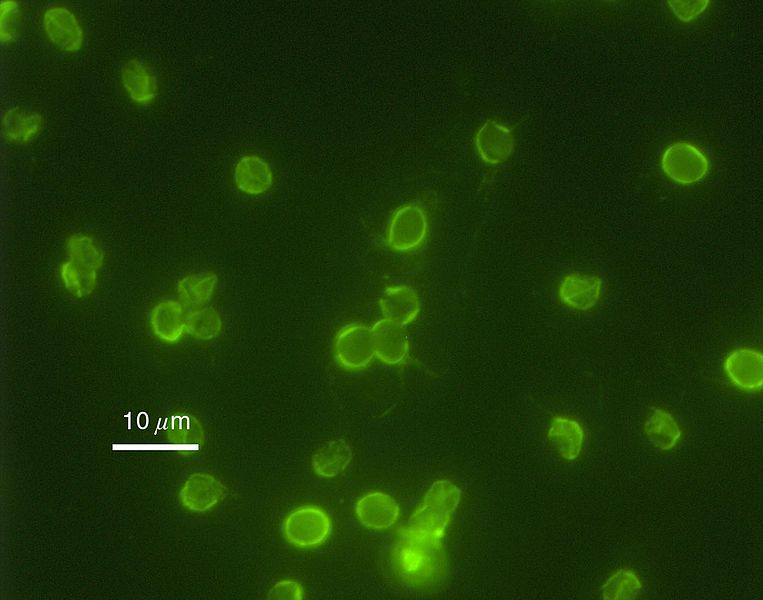
Wilts and Glous Standard763px-Cryptosporidium_parvum_01

FIVE visitors to Countryfile presenter Adam Henson’s farm in the Cotswolds and one member of staff are being treated for the intestinal infection cryptosporidium.

Public Health England (PHE) is working closely with the Health and Safety Executive, Cotswold District Council, Animal Health and Veterinary Laboratories Agency (AHVLA) and Cotswold Farm Park to investigate the outbreak at Cotswold Farm Park, Guiting Power, near Bourton-on-the-Water.

Everyone affected is recovering well at home and the farm park has put in extra measures to reduce the risk of infection to visitors over the coming bank holiday Monday.

Research – Antimicrobials – Listeria – Sampling Plans and Clustering

Science Direct

The present study investigated the efficacy of sub-inhibitory concentrations (SICs, concentrations not inhibiting bacterial growth) and bactericidal concentrations (MBCs) of four, generally recognized as safe (GRAS), plant-derived antimicrobials (PDAs) in inhibiting Listeria monocytogenes (LM) biofilm formation and inactivating mature LM biofilms, at 37, 25 and 4°C on polystyrene plates and stainless-steel coupons. In addition, the effect of SICs of PDAs on the expression of LM genes critical for biofilm synthesis was determined by real-time quantitative PCR. The PDAs and their SICs used for inhibition of biofilm were trans-cinnamaldehyde (TC 0.50, 0.75 mM), carvacrol (CR 0.50, 0.65 mM), thymol (TY 0.33, 0.50 mM), and eugenol (EG 1.8, 2.5 mM), whereas the PDA concentrations used for inactivating mature biofilms were 5.0 and 10.0 mM (TC, CR), 3.3 and 5.0 mM (TY), 18.5 and 25.0 mM (EG). All PDAs inhibited biofilm synthesis and inactivated fully formed LM biofilms on both matrices at three temperatures tested (P<0.05). Real-time quantitative PCR data revealed that all PDAs down-regulated critical LM biofilm-associated genes (P<0.05). Results suggest that TC, CR, TY, and EG could potentially be used to control LM biofilms in food processing environments, although further studies under commercial settings are necessary.

Science Direct

As in many cases, pathogenic microorganisms contaminate the food material as clusters or group of individual cells; the effectiveness of sampling plans based on mixture distributions representing bacterial agglomeration was assessed. In general, sampling plans that do not take into account such consideration lead to higher probabilities of accepting defective lots. Since quite often no scientific data are available in order to determine the degree of over-dispersion or clustering of the target microorganisms, in this theoretical study we compare the variance-to-mean ratio and the reciprocal of the exponent k of the negative binomial distribution (NB) as measures of dispersion. The mixture Poisson-logarithmic (Plog) model is proposed as a special case of the NB distribution, where the bacterial clusters are Poisson distributed while the individuals in each cluster follow a logarithmic distribution. In order to describe microbial data characterised by an excess of zero counts (1−π), we assess the zero-inflated Poisson (ZIP) and zero-inflated negative binomial (ZINB) distributions as alternative statistical models. The Operating Characteristic (OC) curves generated on the basis of the zero-inflated distributions were compared for fixed values of the variance-to-mean ratio and the parameter π at any mean level of contamination and sample weight adopted. The results show that assuming fixed 1/k and π for the NB and ZIP distributions, respectively, both models converge to a Poisson distribution at the producer’s quality level. In contrast, the consumer’s quality level is highly affected by assuming fixed values of 1/k and π since it increases. The OC curves generated for the NB and ZIP distributions assuming fixed values of the variance-to-mean ratio at any mean level of contamination and sample weight adopted, reveal that both the consumer’s and producer’s quality level are affected, as they both increase. Within the ZINB distribution, a separate investigation is conducted to determine which parameters are mostly responsible for describing microbial over-dispersion. As a general conclusion, for the design of sampling plans based on any statistical distribution, OC curves that reflect microbial agglomeration should be constructed considering that variance is not constant but dependant on the level of microbial concentration of the lot.

European Research – Listeria monocytogenes

DGCCRFlisteria-hp

Monitoring of food contamination by Listeria monocytogenes.

The national plan implemented by the DGCCRF is intended to monitor the contamination of food at the distribution stage. During these checks, investigators collected more than 3,600 samples

Of all the goods taken Listeria monocytogenes was found in 1.5% of cases. Only two cheeses have reached the prescribed limit (100 cfu / g) or 0.06% of the samples analysed. The analysis results indicate a low level of non-compliant products.

These results and the significant decrease in the number of establishments abnormality (38% in 2 years) shows the continuous improvement of the microbiological quality of food and hygiene conditions in the retail sector.