Category Archives: Microbiology

Research – Exploring Listeria monocytogenes perceptions in small and medium sized food manufacturers: technical leaders’ perceptions of risk, control and responsibility

Science Direct

Due to its ability to colonise, grow and form in niches in food manufacturing environments, the management of Listeria monocytogenes can be complex, particularly for food manufacturing small and medium sized enterprises (SMEs). In addition to an effective food safety management system, the perceptions of risk, control and responsibility within a food manufacturing business are important influential factors associated with the management of L. monocytogenes. Research exploring managerial perspectives of L. monocytogenes in food manufacturer SMEs is lacking. Consequently, this study conducted in-depth interviews (n=10) with technical leaders from food manufacturing SMEs to ascertain factors that may influence listeria management, such as factors associated with cultural dimensions. Perceived risks associated with L. monocytogenes were related to business reputation and consumer health impacts, but such events were perceived to be unlikely. Technical leaders reported having clearly defined and well executed processes to ensure food safety; but for some, L. monocytogenes, as a single pathogen was seldom considered. Despite acknowledging that “everyone” had responsibility for ensuring control of the pathogen, technical leaders indicated that the ‘people’ attributes associated with organisational culture were difficult factors to control and manage. Trust in staff ability to assure food safety was widely discussed, with technical leaders acknowledging that food handlers may not necessarily have specific knowledge regarding L. monocytogenes. Some technical leaders perceived themselves as having the greatest levels of responsibility for L. monocytogenes. Overall, technical leaders perceived a medium level of risk, with high levels of control and high levels of responsibility for L. monocytogenes. Optimistic bias, illusion of invulnerability, illusion of control, and perceived attribution of responsibility are discussed, which may hinder implementation of effective listeria management in SME food manufacturing businesses. Consideration of specific pathogen risks in food manufacture in relation to food safety cultural dimensions may assist development of highly targeted and effective interventions.

Italy – VASCHETTA ATM, SPICY SAUSAGE VASCHETTA ATM, SAUSAGE PASTA ATM -Salmonella

Salute

Brand : SALUMIFICIO COLETTI PIERINO & C. SNC – OSA COLETTI CORRADO

Name : VASCHETTA ATM, SPICY SAUSAGE VASCHETTA ATM, SAUSAGE PASTA ATM

Reason for reporting : Recall due to microbiological risk

Publication date : 22 March 2021

Documentation

Documentation

Italy – SAUSAGE MIGNON S / V, SPICY SAUSAGE S / V, SAUSAGE IN PASTA S / V -Salmonella

Salute

Brand : SALUMIFICIO COLETTI PIERINO & C. SNC – OSA COLETTI CORRADO

Name : SAUSAGE MIGNON S / V, SPICY SAUSAGE S / V, SAUSAGE IN PASTA S / V

Reason for reporting : Recall due to microbiological risk

Publication date : 22 March 2021

Documentation

Documentation

USA – Raw Milk Debate Returns To The Legislature

MTPR

HELENA — A bill gaining momentum at the Legislature would allow Montanans to sell food from their homes directly to consumers without any government oversight. It would also legalize the direct sale of raw milk.

Senate Bill 199, or the Montana Local Food Choice Act, includes a section that would make it possible for owners of small dairy herds to sell unpasteurized milk, a proposal that drew its own set of opponents with concerns about the risk of foodborne illness.

France – Product recall: Mini Mont d’Or and Mini Mont d’Or + Reflets de France brand ceramic – Listeria monocytogenes

Oulah

Product recall: Mini Mont d'Or and Mini Mont d'Or + Reflets de France brand ceramic

ENCOUNTERED PROBLEM

Possible contamination Listeria monocytogenes

PROPOSED SOLUTION

People who may have this product are asked not to consume it and to return it to the point of sale where it was purchased.

People who have consumed this product and who present with fever, isolated or accompanied by headaches, are invited to consult their attending physician, notifying him of this consumption.
Pregnant women should pay special attention to these symptoms, as well as immunocompromised people and the elderly. These symptoms may suggest listeriosis, a disease that can be serious and can take up to eight weeks to incubate.

FURTHER INFORMATION

▸ Mini Mont d’Or
• Lot: 3053
• DLC: 05/04/2021 and 06/04/2021
• Barcode: 3560070939114

▸ Mini Mont d’Or + ceramic
• Lot: 3053
• DLC: 04/01/2021 and 04/02/2021
• Barcode: 3560070939145

▸ Consumer service contact
For any additional information, you can contact the Carrefour consumer service by dialing N ° Cristal 09 69 39 7000 (non-surcharged call from a landline) from Monday to Saturday from 9 a.m. to 7 p.m.

▸ Source
https://www.carrefour.fr/

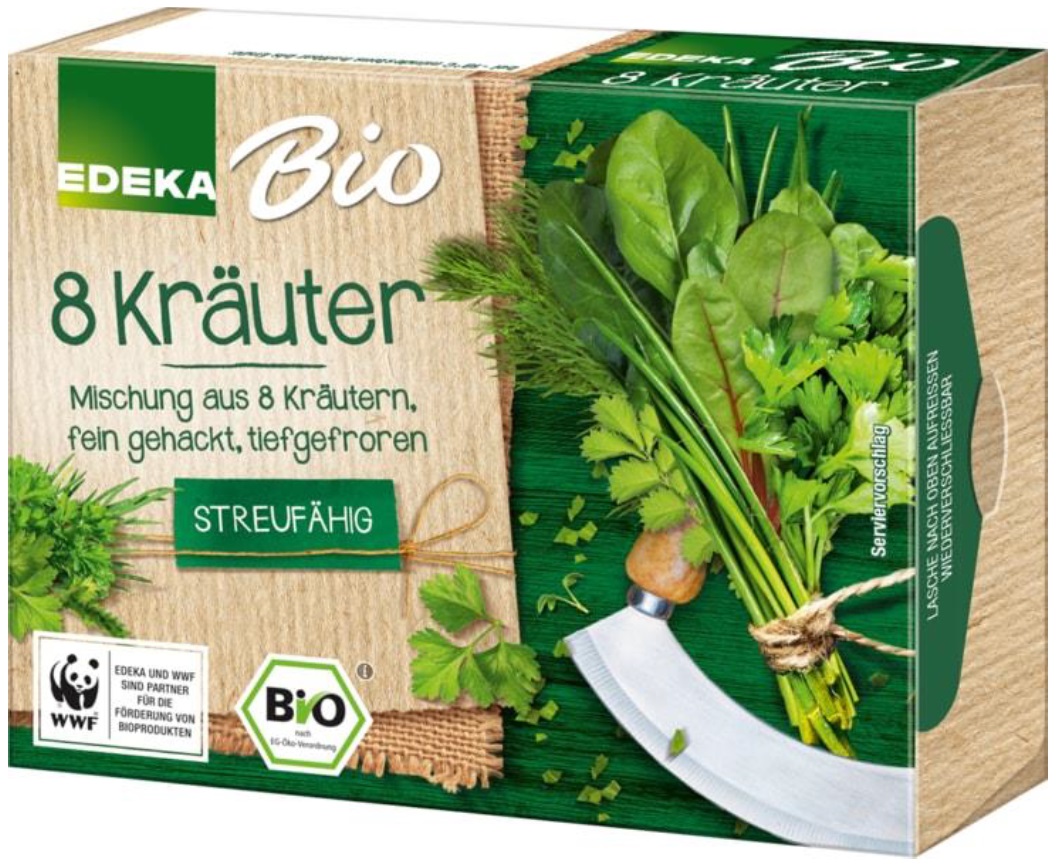
Germany – EDEKA Bio 8 herbs 50g, best before 01.2022 and 02.2022 BioBio 8 herb mixture 50g, best before 01.2022 and 02.2022, GutBio 8 herb mixture 50g, best before 21.01.2022 and best before 03.02.2022 – Salmonella

LMW

Warning type:Food
Date of first publication:March 19, 2021
Product name:

EDEKA Bio 8 herbs 50g, best before 01.2022 and 02.2022 BioBio 8 herb mixture 50g, best before 01.2022 and 02.2022, GutBio 8 herb mixture 50g, best before 21.01.2022 and best before 03.02.2022

Product pictures:

Bio-8-Kraeuter.png

net

Product picture Aldi.jpg

Aldi

Product picture EDEKA.jpg

EDEKA

Manufacturer (distributor):COPACK Tiefkühlkost Produktionsgesellschaft mbH Am Lunedeich 116 D – 27572 Bremerhaven
Reason for warning:

Salmonella was detected in the product as part of a planned sample.

Packaging Unit:see product name
Durability:see product name
Lot identification:

Aldi: C659694700, C659840300 // Netto C659530900, C659598300, C659694100, 659855100 // EDEKA C659598100, C659530800, C659687200, C659781800, C659973700, C660016300

Further information:

The products were sold nationwide through EDEKA, Marktkauf, Netto Marken-Discount, Aldi Süd and Aldi Nord. COPACK Tiefkühlkost Produktionsgesellschaft mbH and the trading companies concerned reacted immediately and, as a precaution, withdrew the relevant goods from sale.

Homepage of the manufacturer:

Contact to the responsible authorities:

Baden-Württemberg:poststelle@mlr.bwl.de

Bavaria:poststelle@lgl.bayern.de
Berlin:poststelle@senjustva.berlin.de
Brandenburg:Konsumenterschutz@Msgiv.Brandenburg.de
Bremen:Schnellwarnung@gesundheit.bremen.de
Hamburg:poststelle@justiz.hamburg.de
Hesse:Schnellwarnung@rpda.hessen.de
Mecklenburg-Western Pomerania:poststelle@lm.mv-regierung.de
Lower Saxony:poststelle@ml.niedersachsen.de
North Rhine-Westphalia:poststelle@mulnv.nrw.de
Rhineland-Palatinate:Poststelle.Referat22@lua.rlp.de
Saarland:poststelle-luv@lav.saarland.de
Saxony:poststelle@sms.sachsen.de
Saxony-Anhalt:poststelle@ms.sachsen-anhalt.de
Schleswig-Holstein:poststelle@jumi.landsh.de
Thuringia:LM-Ueberendung@tlv.thueringen.de
Press releases and information
title Attachment or web link
Consumer information Copack

Singapore – Recall of eggs from Linggi Agriculture Sdn Bhd (Malaysia)due to presence of Salmonella Enteritidis

Click to access sfa-media-release—recall-of-eggs-from-linggi-agriculture-sdn-bhd-(malaysia)-due-to-presence-of-salmonella-enteritidis0f7f6f5570c847f9b04ed2dd083b8641.pdf

Research – Quality changes and shelf life prediction of cooked cured ham stored at different temperatures

Journal of Food Protection

Cooked cured ham is a ready-to-eat food that is popular among consumers. Stored temperature has a key effect on the quality and shelf life of ham. In this work, the quality changes and shelf life prediction of cooked cured ham stored at different temperatures were investigated. Sensory evaluation, physical and chemical indicators, and aerobic plate count were determined. Results showed that high storage temperature of cooked ham accelerates quality deterioration. Partial least squares (PLS) regression analysis based on the variable importance for projection (VIP) identified nine important variables for predicting the shelf life of cooked cured ham. Compared with either PLS or back-propagation artificial neural network (BP-ANN), the hybrid PLS–BP-ANN model better predicts the shelf life of cooked cured ham using the nine important variables. This study provides a theoretical basis and data support for the quality control of cooked cured ham and a new idea for research on the shelf life prediction of cooked cured ham.

Research – Ozone Treatments for Preserving Fresh Vegetables Quality: A Critical Review

MDPI

Ozone is recognized as an antimicrobial agent for vegetables storage, washing, and processing. This strong disinfectant is now being used in the food industry. In this review, the chemical and physical properties of ozone, its generation, and factors affecting ozone processing efficiency were explained as well as recent regulatory developments in the food industry. By then selecting three vegetables, we show that ozone avoids and controls biological growth on vegetables, keeping their attractive appearance and sensorial qualities, assuring nutritional characteristics’ retention and maintaining and increasing the shelf-life. In liquid solution, ozone can be used to disinfect processing water and vegetables, and in gaseous form, ozone helps to sanitize and preserve vegetables during storage. The multifunctionality of ozone makes it a promising food processing agent. However, if ozone is improperly used, it causes some deleterious effects on products, such as losses in their sensory quality. For an effective and a safe use of ozone, specific treatment conditions should be determined for all kinds of vegetables. In a last step, we propose highlighting the different essential characteristics of ozone treatment in order to internationally harmonize the data relating to the treatments carried-out.

Research – Rapid Testing and Interventions to Control Legionella Proliferation following a Legionnaires’ Disease Outbreak Associated with Cooling Towers

MDPI

Legionella_Plate_01

Most literature to date on the use of rapid Legionella tests have compared different sampling and analytical techniques, with few studies on real-world experiences using such methods. Rapid tests offer a significantly shorter feedback loop on the effectiveness of the controls. This study involved a complex of five factories, three of which had a history of Legionella contamination in their cooling water distribution system. Multiple sampling locations were utilised to take monthly water samples over 39 months to analyse for Legionella by both culture and quantitative polymerase chain reaction (qPCR). Routine monitoring gave no positive Legionella results by culture (n = 330); however, samples were frequently (68%) positive by qPCR for Legionella spp. (n = 1564). Legionella spp. qPCR assay was thus found to be a good indicator of cooling tower system health and suitable as a routine monitoring tool. An in-house qPCR limit of 5000 genomic units (GU)/L Legionella spp. was established to trigger investigation and remedial action. This approach facilitated swift remedial action to prevent Legionella proliferation to levels that may represent a public health risk. Cooling tower operators may have to set their own action levels for their own systems; however, in this study, 5000 GU/L was deemed appropriate and pragmatic. View Full-Text