Category Archives: Microbiology

UK – Hazard Analysis and Critical Control Point (HACCP)

FSA

HACCP is a way of managing food safety hazards. Food safety management procedures should be based on HACCP principles.

HACCP involves:

  • looking closely at what you do in your business, what could go wrong and what risks there are to food safety
  • identifying any critical control points the areas a business needs to focus on to ensure those risks are removed or reduced to safe levels
  • deciding what action you need to take if something goes wrong
  • making sure that your procedures are being followed and are working
  • keeping records to show your procedures are working

It is important to have food safety management procedures that are appropriate for your business.

Explaining hazards

A hazard is something that is dangerous. A food hazard is something that could make food unsafe or unfit to eat. It’s important you can identify those stages in your business when hazards could be present so they can be removed or reduced to safe levels.

There are three main types of food safety hazards:

  • microbiological – involving harmful bacteria
  • chemical – involving chemical contamination
  • physical – involving objects getting into food

Food safety management procedures

You must develop your own procedures based on the principles of HACCP.

Businesses must comply with the legal requirements by following good hygiene practice.

HACCP system in meat plants

Meat plants are required to implement and maintain hygiene procedures based on Hazard Analysis and Critical Control Point (HACCP) principles for meat plants.

MyHACCP

MyHACCP is a free web tool that will guide you through the process of developing a food safety management system based on the HACCP principles.

This tool will produce a food safety management system for your business. This will show how your business can identify and control any hazards that occur in the food you manufacture.

MyHACCP is aimed at small food manufacturing businesses in the UK. This can include businesses with fifty or fewer employees. Access to the tool is not available to food businesses outside the UK.

MyHACCP step by step

You will need to:

  • sign up for a MyHACCP account(Opens in a new window)
  • start the process at the beginning or at any point – you can come back and finish it at any time
  • complete the MyHACCP process – you can preview what the output will look like at any stage
  • print or download the completed food safety management system documents for your records

Smaller businesses and retailers

Our Safer Food Better Business (SFBB) or Safe Catering (Northern Ireland) packs provide a simpler approach if your food production processes are simple.

Research – Novel Outbreak-Associated Food Vehicles, United States

CDC

Novel outbreak-associated food vehicles (i.e., foods not implicated in past outbreaks) can emerge as a result of evolving pathogens and changing consumption trends. To identify these foods, we examined data from the Centers for Disease Control and Prevention Foodborne Disease Outbreak Surveillance System and found 14,216 reported outbreaks with information on implicated foods. We compared foods implicated in outbreaks during 2007–2016 with those implicated in outbreaks during 1973–2006. We identified 28 novel food vehicles, of which the most common types were fish, nuts, fruits, and vegetables; one third were imported. Compared with other outbreaks, those associated with novel food vehicles were more likely to involve illnesses in multiple states and food recalls and were larger in terms of cases, hospitalizations, and deaths. Two thirds of novel foods did not require cooking after purchase. Prevention efforts targeting novel foods cannot rely solely on consumer education but require industry preventive measures.

Foodborne illness is a major public health issue in the United States; millions of persons become ill from contaminated food every year (1). Most cases are sporadic (i.e., not associated with a disease outbreak) (2), and the responsible food(s) is often undetermined. Outbreaks provide an opportunity for public health agencies to determine shared exposures and the source of infection. Many food safety laws and regulations, industry practices, and consumer education efforts have been implemented to make foods safer. Nevertheless, evolving foodborne pathogens and changing consumption trends provide continued opportunities for contamination and illness (37). Within these changing conditions, novel outbreak-associated food vehicles (i.e., foods not implicated in prior outbreaks) can emerge. Identifying these novel food vehicles provides an opportunity to determine emerging sources of illness and to inform prevention policies. To identify novel food vehicles reported during 2007–2016, we examined data from the Centers for Disease Control and Prevention (CDC) Foodborne Disease Outbreak Surveillance System (FDOSS).

Ireland – 50 sick in Ireland by contaminated drinking water; officials chided – STEC E.coli

Food Safety News

More than 50 people are ill in Ireland after a failure at a treatment plant led to contaminated water being released to the public.

The Health and Service Executive (HSE) is investigating an outbreak in the town of Gorey in North Wexford. There have been 52 confirmed illnesses linked to the incident, including cases of Shiga toxin-producing E. coli (STEC), with a number of hospitalizations.

At Gorey water treatment plant in County Wexford, there was a power outage and a chlorine pump failure resulting in water leaving the plant and entering the public supply without the appropriate level of disinfection for five days beginning Aug. 19. This incident was not reported to the Environmental Protection Agency (EPA) and HSE until Aug. 26.

Authorities said the delay in reporting prevented a timely risk assessment of the impact on drinking water quality and time to allow measures that could have protected public health.

EPA conducted two audits at Gorey water treatment plant on Sept. 7 and 16 to investigate the incident and to identify what corrective actions needed to be taken.

UK – Advice to reptile owners amid Salmonella outbreak linked to feeder rodents

FSA

The FSA is urging reptile owners who purchase certain feeder rodents for their pets to take extra precautions to avoid becoming ill with salmonellosis.

Scientists have again confirmed a link between Salmonella detected in feeder mice distributed by Monkfield Nutrition Ltd across all four UK nations, and an outbreak of human cases of Salmonella. The risk to the general public is considered to be very low but we are urging reptile owners who purchase certain feeder rodents for their pets to take extra precautions to avoid becoming ill with salmonellosis.

The feeder rodents affected, which were imported from Lithuania and are sold in a number of retailers, are typically fed to reptiles – particularly snakes.

Retailers must now by law provide customers buying the feeder rodents from Monkfield Nutrition Ltd with an information leaflet about the risks of Salmonella infection and advice on always washing their hands as a good hygiene practise for handling animal food in the home.

The FSA, which leads on the safety and regulation of animal feed, is working closely with public health and animal health agencies, as well as a range of other partners both inside and outside government. The Agency is also liaising with local authorities and with Monkfield Nutrition Ltd, who have contacted all of its customers to inform them of the additional requirements in the short term.

The outbreak was first investigated in 2015 and has so far resulted in almost 850 reported human cases, mostly but not exclusively, living in households with one or more pet reptiles.

Salmonella are bacteria found in the gut of many animals, especially reptiles. The bacteria can spread from carrier animals to cause illness in people. Though Salmonella infection in people usually causes short-term illness, with diarrhoea, fever, vomiting, and abdominal pain, more severe illness can occur.

It can have serious consequences, particularly for babies, small children, elderly people, and those with compromised immune systems, leading to hospitalisation in some cases.

Tina Potter, Head of Incidents at the FSA, said:

“We are advising pet handlers that they should follow good hygiene when handling feeder rodents and pet reptiles to avoid the risk of becoming ill with salmonella.

“Retailers must provide a leaflet explaining the risks associated with handling and feeding this type of material to reptiles and the importance of good hygiene with each sale of feeder rodents.

“This is aimed at ensuring pet handlers clearly understand the potential risks and have access to information to reduce the risks.”

“We will continue to monitor this situation carefully, and act proportionately to ensure both public and animal health.”

Dr Lesley Larkin, Surveillance Lead, Gastrointestinal Pathogens Unit at Public Health England, said:

“Epidemiological investigations and whole genome sequencing have again confirmed the link between a Salmonella outbreak in people who have become unwell and feeder rodents used to feed reptiles and some other animals distributed in the UK by this specific importer.

“Just as for handling raw human food, there is an inherent risk of Salmonella when handling raw or frozen and defrosted pet food such as mice, rats or chicks, as freezing does not kill Salmonella. In addition, most reptiles carry Salmonella in their intestines for months or even years after exposure to contaminated food, and this can spread to their owners and other household members. Always wash your hands thoroughly with soap and water immediately after handling the frozen food and feeding your reptile, after handling your reptile, cleaning their vivarium or any other equipment such as soaking pools. Children should be supervised to ensure they wash their hands properly.”

For more information about Salmonella, visit the FSA webpage.

For more information about symptoms of food poisoning, please visit NHS.uk (Opens in a new window). Anyone who is concerned about symptoms should contact their GP or out of hours service in the first instance.

For further information on reducing the risks of Salmonella infection from reptiles, see the Public Health England guidance (Opens in a new window), developed in partnership with FSA, Defra and the APHA.

Information – Meat and Poultry Roasting Charts

Food Safety.GOV

Raw meat and poultry should always be cooked to a safe minimum internal temperature. Always use a food thermometer to assure that meat and poultry have reached a safe minimum internal temperature. When roasting meat and poultry, set the oven temperature to 325 °F or higher. Explore the charts below to learn how to get great results every time you cook.

Note: The information on this page does not include foods containing ground meat and poultry, including meatloaf and sausage. Check the safe minimum internal temperature chart for safe cooking temperatures and rest times for all meat and poultry, seafood, and other cooked foods.

PDF Table

Information – The Raw Story

Click to access the_raw_story.pdf

Information – Raw Milk

Click to access raw-milk-infographic2-508c.pdf

Information – Foods That Can Cause Food Poisoning

CDC

Some foods are more associated with foodborne illnesses and food poisoning than others. They can carry harmful germs that can make you very sick if the food is contaminated.

  • Raw foods of animal origin are the most likely to be contaminated, specifically raw or undercooked meat and poultry, raw or lightly cooked eggs, unpasteurized (raw) milk, and raw shellfish.
  • Fruits and vegetables also may get contaminated.
  • While certain foods are more likely to make you sick, any food can get contaminated in the field, during processing, or during other stages in the food production chain, including through cross-contamination with raw meat in kitchens.

Learn more about the foods that are more associated with food poisoning and how to avoid getting sick from them:

Information – Cleaning Your Refrigerator Because of a Food Recall

CDC

If you have a recalled food item in your refrigerator, it’s important to throw out the food and clean your refrigerator. Germs in the recalled food could spread to drawers or shelves in your refrigerator.

How to Clean Your Refrigerator After a Food Recall

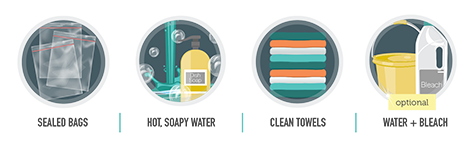
Items needed to clean your refrigerator:

items needed to clean refrigerator

  • Sealed bags
  • Hot, soapy water
  • Clean towels
  • Optional: water + bleach

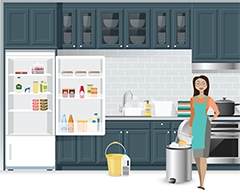
Step 1 – Throw out recalled food

  • Throw out the recalled food, and any other foods stored with it or touching it.
  • Put it in a sealed bag in the garbage.
  • If the recalled food was stored in a reusable container, wash it with hot, soapy water before reusing.
Step 1 to cleaning your fridge throw out recalled food

Step 2 – Empty your refrigerator

  • Empty the rest of the items in your refrigerator and put them on a counter or table while you clean.
  • Take out shelving, drawers, and any other removable parts.
  • Don’t leave unrefrigerated food out for more than 2 hours.

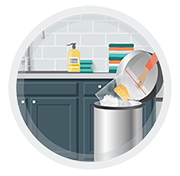
Step 3 – Wash removable parts

  • Wash shelving, drawers, and any other removable parts by hand with hot, soapy water.
  • Dry with a clean towel.
  • Don’t run cold glass shelves or drawers under hot water because the glass could crack. Let them come to room temperature first.

Step 4 – Clean and sanitize inside the refrigerator

  • Wipe the inside of the empty refrigerator with hot, soapy water; then wipe with clean water to rinse off soap.
  • Dry with a clean towel.
  • Don’t forget to wipe inside the doors and any drawers that cannot be removed.
Step 2 of cleaning fridge wash shelving and removable parts with soap and water

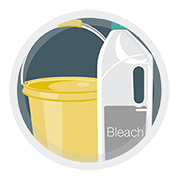
* Optional step

Use a solution of 1 tablespoon of liquid bleach in 1 gallon of water to sanitize your refrigerator. Do this after cleaning the refrigerator with hot, soapy water.

Picture of bleach and bucket

Step 5 – Return shelves, drawers, and food

  • Put the shelves, drawers, and other removable parts back in the refrigerator, along with the other items you took out.
  • Wipe food containers and drink containers with hot, soapy water before returning to the clean refrigerator.

And don’t forget!

  • Wash your hands with water and soap once you’ve finished cleaning.
  • Use hot, soapy water to wipe kitchen counters that held food, drinks, refrigerator parts, and any cleaning materials.
  • Wash any towels you used to dry the refrigerator before using them again.

Research – The influence of organic load and free chlorine on Salmonella cross-contamination of tomatoes in a model flume system

Journal of Food Protection

The process of washing tomatoes in dump (flume) tanks has been identified as a potential source of cross-contamination. This study’s objective was to assess the potential for Salmonella enterica cross-contamination at various inoculation levels at the presence of 0 and 25 mg/L free chlorine (HOCl) and organic matter.  Uninoculated tomatoes were introduced into a laboratory-based model flume containing tomatoes inoculated with a cocktail of five rifampicin-resistant Salmonella enterica serovars at 104, 106, or 108 CFU/tomato in water containing 0 or 25 mg/L HOCl and 0 or 300 mg/L chemical oxygen demand (COD). Uninoculated tomatoes were removed from the water at after 5, 30, 60, 120 s and were placed in bags containing tryptic soy broth supplemented with rifampicin and 0.1% sodium thiosulfate. Following incubation, enrichments were plated on tryptic soy agar supplemented with rifampicin and xylose lysine deoxycholate agar to determine the presence of Salmonella. HOCl and pH were measured before and after each trial. The HOCl in water containing 300 mg/L COD significantly (P≤0.05) declined by the end of each 120 s trial, most likely due to the increased demand for the oxidant. Higher inoculum levels and lower HOCl concentrations were (P≤0.05) significant factors that contributed to increased cross-contamination seen in this study. When HOCl levels were at 25 mg/L, no Salmonella was recovered on non-inoculated tomatoes under all conditions when inoculum levels were at 104 CFU/tomato. When the inoculum was increased to 106 and 108 CFU/tomato, cross-contamination was observed, independent of COD levels. The results from this study show that the currently required sanitizer level (e.g., 100 or 150 mg/L) for flume water may be higher than necessary and warrants re-evaluation.