Category Archives: Microbial Spoilage

Canada – Central Dairies brand and S’Milk brand 2% Partly Skimmed Milk recalled due to spoilage

Gov Canada

Product
2% Partly Skimmed Milk
Issue
Food – Microbial contamination – Non harmful (quality or spoilage)
What to do

Do not use, sell, serve or distribute the affected products.

Audience
Hotels, restaurants and institutions
Retail
Distribution
Newfoundland and Labrador

Affected products

Central Dairies brand and S’Milk brand 2% Partly Skimmed Milk recalled due to spoilage.

Research -Guidelines for assessing the microbiological safety of ready-to-eat foods placed on the market – 2024

UKHSA

These guidelines were completed in 2024. Since the previous edition in 2009 (1), the UK has
left the EU and this has resulted in transfer of legal responsibility from EU to UK legislation
through Statutory instruments, particularly The Food and Feed Hygiene and Safety
(Miscellaneous Amendments) (England) Regulations 2020: UK Statutory Instrument 2020
Number 1410 (2). The statutory instruments refer to EU legislation, and much remains the same or very similar such as legal obligations for food safety of food business operators and
microbiological criteria. EU references have been updated to reflect the law in force, in all new or amended guidance published since the transition.

RASFF Alert- Food Spoilage – Cooked Sausage

RASFF

Spoilage of cooked sausage from Poland in Germany and Netherlands

RASFF Alert- Mould Overgrowth – Fresh Gherkin – Cucumber

RASFF

Abnormal organoleptic characteristics (mould overgrowth, signs of rotting and spoilage) in the product called fresh gherkin cucumber for industrial processing, country of origin: Turkey in Poland

Research – Microbial Diversity Across Tea Varieties and Ecological Niches: Correlating Tea Polyphenol Contents with Stress Resistance Microbial Community Differences among Different Tea Varieties and Ecological Niches

Frontiers In.org

Microorganisms exhibit intricate interconnections with tea trees plants; however, despite the well-established role of microorganisms in crop growth and development, research on microbes within the tea plant remains insufficient, particularly regarding endophytic microorganisms. In this study, we collected samples of leaves and rhizosphere soils were collected from ‘Zhuyeqi’, ‘Baojing Huangjincha#1Baojing Huangjinchayihao’, ‘Anjibaicha’Baiye#1’, and ‘Jinxuan’ varieties planted. Our analyses revealed significant variations in tea polyphenol contents among tea varieties, particularly with the ‘Zhuyeqi’ variety exhibiting higher levels of tea polyphenols (>20% contents). Microbiome studies have revealed that endophytic microbial community in tea plants exhibited higher host specificity compared to rhizospheric microbial community rhizosphere microbial community. Analyses of across-ecological niches of the microbial community associated with tea plants of the microbiota associated with tea plants revealed that soil bacteria serve as a significant reservoir for endophytic bacteria in tea plants, Balneola Bacillus may play a crucial role in shaping the bacterial community across-ecological niche within the tea plants with higher tea polyphenol levels. In the aforementioned analyses, the microbial community of ‘Zhuyeqi’ exhibited a higher degree of host specificity for leaf endophytic microorganisms, the topological structure of the co-occurrence network is also more intricate, harbouring a greater number of potential core microorganisms within its nodes. A closer examination was conducted on the microbial community. A more intricate examination was conducted on the microbial community of ‘Zhuyeqi’, further analyses of its endophytic bacteria indicated that its endophytic microbial community harbored a greater abundance of biomarkers, particularly among bacteria, and the enriched Methylobacterium and Sphingomonas in ‘Zhuyeqi’ may play distinct roles in disease resistance and drought resilience in tea plants. In summary, this study has shed light on the intricate relationships of tea plant varieties with their associated microbial communities, unveiling the importance of microorganisms and tea varieties with higher tea polyphenols, and offering valuable insights to the study of microorganisms and tea plants. this study shaded light on the intricate relationship between tea plant varieties and their associated microbial community and unveiled the importance of the tea varieties with higher tea polyphenols in microbial studies, offered valuable insights for the studies of microorganism-tea plants.

Research – Microbial food spoilage: impact, causative agents and control strategies

Nature

Abstract

Microbial food spoilage is a major contributor to food waste and, hence, to the negative environmental sustainability impacts of food production and processing. Globally, it is estimated that 15–20% of food is wasted, with waste, by definition, occurring after primary production and harvesting (for example, in households and food service establishments). Although the causative agents of food spoilage are diverse, many microorganisms are major contributors across different types of foods. For example, the genus Pseudomonas causes spoilage in various raw and ready-to-eat foods. Aerobic sporeformers (for example, members of the genera BacillusPaenibacillus and Alicyclobacillus) cause spoilage across various foods and beverages, whereas anaerobic sporeformers (for example, Clostridiales) cause spoilage in a range of products that present low-oxygen environments. Fungi are also important spoilage microorganisms, including in products that are not susceptible to bacterial spoilage due to their low water activity or low pH. Strategies that can reduce spoilage include improved control of spoilage microorganisms in raw material and environmental sources as well as application of microbicidal or microbiostatic strategies (for example, to products and packaging). Emerging tools (for example, systems models and improved genomic tools) represent an opportunity for rational design of systems, processes and products that minimize microbial food spoilage.

RASFF Alerts – Yeasts – Apple Juice Spritzers

RASFF

Fermentable yeasts in apple juice spritzers from Germany in Austria

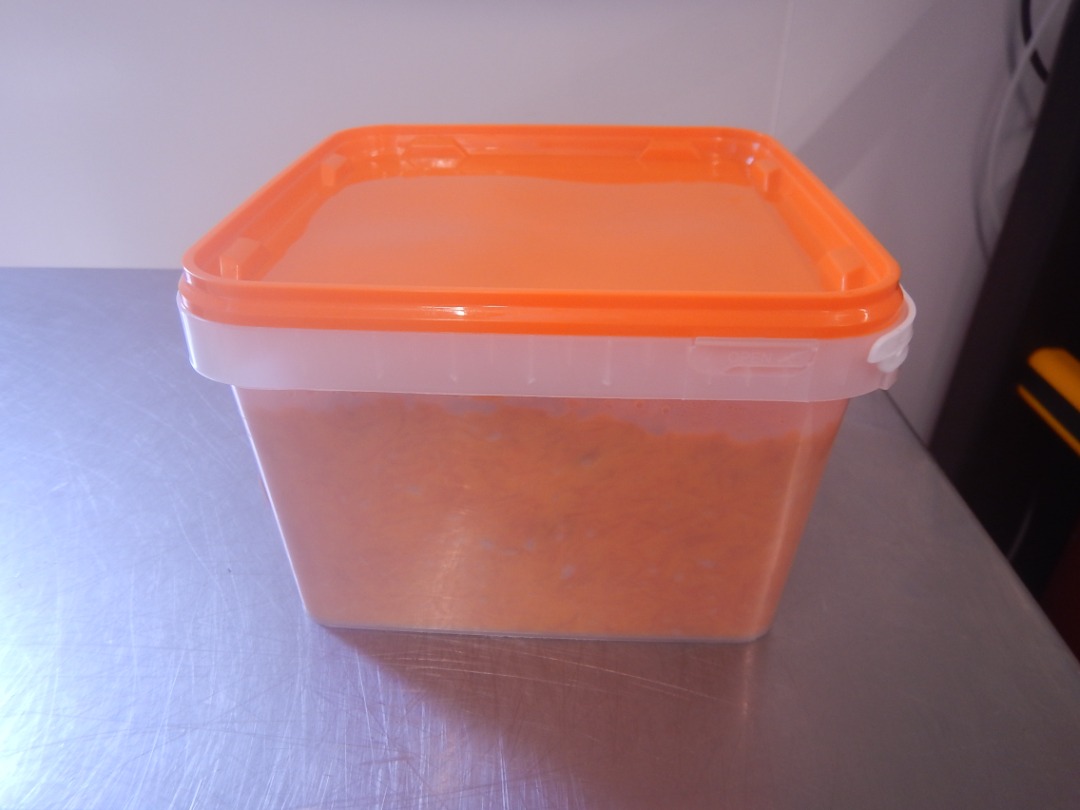
France – Grated carrots vinaigrette – Spoilage Lactic Acid Bacteria

Gov France

Product category
Food
Product subcategory
Prepared meals and snacks
Product brand name
THE MARKET CHEF
Model names or references
packaged in 2.8kg multi-portion clipped tray packaged in 100g single-portion heat-sealed tray
Product identification
GTIN Batch Date
347996000981 242413 Use-by date 07/04/2024
3479960006846 242413 Use-by date 06/28/2024
Products List
201101_grated_carrots_vinaigrette_2.8kg.PDFAttachment
Packaging
multi-portion clipped tray 2.8kg single-portion heat-sealed tray 100g
Start/End of marketing date
From 06/17/2024 to 06/20/2024
Storage temperature
Product to be kept in the refrigerator
Geographic area of ​​sale
Whole France
Distributors
Leclerc HARLY Maisons HOFER VIVALYA TGFL CDC DISPERE SERVIDIS HOSPITALS OF PARIS

USA – Hudson Harvest Issues Voluntary Recall of Tomato Basil Sauce Due to Potential Under-Processing

FDA

“Hudson Harvest Tomato Basil Pasta Sauce, Net Wt. 10 oz”

Company Announcement

Hudson Harvest of Germantown, NY, is voluntarily recalling Hudson Harvest Tomato Basil Sauce because of reported swelling, leaking, or bursting jars. There is a possibility that the product has been under processed, which could lead to the potential for spoilage organisms or pathogens.

The product was sold to retailers in NY, CT, and MA during the months of May and June 2024.

The product is packaged in a 16-ounce glass jar and printed with lot # 1042426, UPC # 683720301567. The UPC can be found above the bar code, and the lot number can be found on the side of the jar.

No illnesses or other adverse consequences have been reported to date

Consumers should not use this product, even if it does not appear to be spoiled. If you have purchased this product, please return it to the place of purchase for a full refund. If you have any questions, please contact us at 1-800-811-3795 (extension 2) 9am – 5pm EST.


Company Contact Information

Consumers:
Hudson Harvest
 1-800-811-3795 (extension 2)

Research – Say Goodbye to Spoiled Food With New Smart Packaging

Scitech Daily

Researchers at McMaster University have created smart packaging that detects spoilage, potentially reducing global costs by minimizing waste and illness. Despite its benefits, adoption faces hurdles due to cost concerns and regulatory challenges.

A team of researchers from McMaster University has invented a suite of tests for food packages that can indicate if the contents are contaminated, aiming to reduce food waste and prevent illnesses. They are now focusing on integrating this smart packaging technology into commercial products by engaging with producers and regulators.