The Los Angeles County Department of Public Health is investigating a report of hepatitis A virus infection in an employee of Buffalo Wild Wings in Monterey Park (4000 Market Place, Monterey Park, CA 91754).
KSWFoodWorld

The Los Angeles County Department of Public Health is investigating a report of hepatitis A virus infection in an employee of Buffalo Wild Wings in Monterey Park (4000 Market Place, Monterey Park, CA 91754).
Posted in Food Virus, Food Virus Illness, Hepatitis A
The City of Milwaukee Health Department (MHD) has received a report of a confirmed case of Hepatitis A. The individual is an employee at Beans & Barley, a food establishment located on Milwaukee’s East Side. The individual took necessary precautions after developing symptoms and is fully cooperating with public health officials to minimize the risk of further transmission
Posted in Food Virus, Hepatitis A, Virus
The Hawai‘i Department of Health (DOH) has confirmed a case of hepatitis A infection in a food service employee at Hana Koa Brewing Company, located at 962 Kawaiaha‘o St., in Honolulu.
Anyone who has consumed any food or drink products from this establishment from Aug. 3-16, 2024, may have been exposed to the disease. Individuals who have not been vaccinated against hepatitis A should contact their health care provider if they develop symptoms and should mention their potential exposure to the disease. Early diagnosis guides appropriate care and can help stop further spread of the disease. Post-exposure prophylaxis can be offered to close contacts of infected individuals and is most effective when administered within two weeks of exposure to hepatitis A.
It is important to note that Hana Koa Brewing Company had no food safety violation that resulted in this case, but was merely a place where the infected employee was working.
Posted in Food Virus, Hepatitis A, Virus
The Cortland County Health Department (CCHD) confirms a local restaurant worker has tested positive for hepatitis A. The individual is a food handler at Queen Subs. Health officials say the risk of infection is low, but if you ate or drank anything at the shop between June 20 and July 3, you may need to be vaccinated or monitor for symptoms. Vaccines are effective within two weeks of exposure.
Posted in food handler, Hand Washing, Hepatitis A
The Los Angeles County Department of Public Health is investigating a report of hepatitis A virus infection in an employee of Whole Foods Market in Beverly Hills (239 N. Crescent Drive, Beverly Hills, CA 90210).
No additional cases have been identified at this time. The investigation is ongoing.
Based on the employee’s job duties and symptoms while at work, Public Health is recommending that anyone who purchased products from the seafood counter section of the store between April 20th and May 13th receive hepatitis A vaccine if they are not already immune. People who have not received the hepatitis A vaccine or had a previous hepatitis A infection may not be protected from the virus.
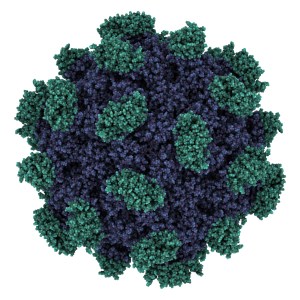
Viruses are the tiniest of microbes, but that doesn’t mean they should be underestimated as a significant threat. While they do require a host to multiply, they can still survive in the environment, including in food, until encountering a victim. Contaminated food can find its way into our refrigerators and meals, and as a result, viruses find their way into our bodies, often causing unpleasant illness or, at worst, death. But there are things that can be done to prevent that from happening. CODEX developed the Guidelines on the Application of General Principles of Food Hygiene to the Control of Viruses in Food in 2012. But since then, things have changed, and new scientific findings call for updating these guidelines. The Joint Food and Agriculture Organization of the United Nations (FAO) / World Health Organization (WHO) Expert Meeting on Microbiological Risk Assessment (JEMRA) has come together to analyse the most recent science on the topic to inform the creation of new guidelines. JEMRA identified three main viruses that require special attention. Alone they cause millions of foodborne illness cases and tens of thousands of deaths annually.
The noroviruses and Hepatitis A virus take their usual place amongst the top viruses causing foodborne illnesses, but interestingly JEMRA identified a third virus that has emerged as a new threat. Check out the video to discover which virus we are referring to, and what are the main food sources of each of these viruses: https://youtu.be/XDKN_l8_ZCE?si=tyiiIMOhXCrKodwS
Posted in Food Virus, Food Virus Death, Hepatitis A, Hepatitis E, Norovirus, Virus
Hepatitis A, an infectious viral disease affecting the liver, is causing alarm in Italy as several companies have been recalled due to the presence of the virus in their fruit products. The HAV virus, spread mainly through contaminated water or food, can cause symptoms such as fever, fatigue, loss of appetite, and jaundice.
The European Early Warning System (RASFF) recalled a batch of raspberries from Poland in 2017, highlighting the international scale of the problem. In 2013, a strain of the hepatitis A virus from Poland caused an epidemic in Italy, sending 1,300 people to the hospital.
Posted in food recall, Food Virus, Hepatitis A, product recall, Recall
Norovirus and Hepatitis A Virus in frozen forest fruits from italy in Croatia, Italy, Romania, San Marino, Slovenia.
Posted in food contamination, food handler, Food Hazard, Food Hygiene, Food Inspections, Food Micro Blog, Food Microbiology, Food Microbiology Blog, Food Microbiology Testing, Food Pathogen, Food Quality, food recall, Food Safety, Food Safety Alert, Food Safety Management, Food Safety Regulations, Food Testing, Food Virus, Hepatitis A, Norovirus, RASFF, Virus
Presence of Hepatitis A virus in strawberries from Morocco in Spain
Posted in food contamination, food handler, Food Hazard, Food Hygiene, Food Inspections, Food Micro Blog, Food Microbiology, Food Microbiology Blog, Food Microbiology Testing, Food Pathogen, Food Quality, food recall, Food Safety, Food Safety Management, Food Safety Regulations, Food Virus, Hepatitis A, RASFF, Virus
Foodborne illnesses involving raw and minimally processed foods are often caused by human noroviruses (HuNoV) and hepatitis A virus (HAV). Since food is contaminated usually with small numbers of virions, these must be eluted from the food surface and then concentrated for detection. The objective of this study was to optimize an ultrafiltration (UF) concentration method for HAV and HuNoVs present on various fresh and frozen produce. The detection range of the optimized method and its applicability to different food matrices was compared to the reference method ISO 15216-1:2017. Strawberry, raspberry, blackberry, lettuce, and green onion (25 g) were contaminated with HAV, HuNoV GI.7 and HuNoV GII.4 and then recovered therefrom by elution. A commercial benchtop UF device was used for the concentration step. Viral RNA was extracted and detected by RT-qPCR. From fresh strawberries, recovery of HAV loaded at 104 genome copies per sample was 30 ± 13 %, elution time had no significant impact, and UF membrane with an 80–100 kDa cut-off in combination with Tris-glycine elution buffer at pH 9.5 was found optimal. At lower copy numbers on fresh strawberry, at least 1 log lower numbers of HuNoV were detectable by the UF method (103 vs 104 GII.4 copies/sample and 101 vs 103 GI.7 copies/sample), while HAV was detected at 101 genome copies/sample by both methods. Except on raspberry, the UF method was usually equivalent to the ISO method regardless of the virus tested. The UF method makes rapid viral concentration possible, while supporting the filtration of large volume of sample. With fewer steps and shorter analysis time than the ISO method, this method could be suitable for routine analysis of viruses throughout the food production and surveillance chain.

 FoodWorld