Officials have revealed findings from an investigation after hundreds of people reported feeling sick after going to a celebration in the town of Berkel en Rodenrijs.
GGD Rotterdam-Rijnmond and NVWA looked into the source of illnesses. The biggest cause of gastrointestinal complaints appeared to be norovirus. A total of 918 people reported being sick after attending the event but no serious illnesses were recorded.
GGD Rotterdam-Rijnmond visited the site where King’s Day was celebrated in Berkel en Rodenrijs several times and stool samples from 11 people were examined in the laboratory.
As of 11 June, there have been a further 98 cases associated with this outbreak of STEC O145 in the UK, bringing the total number of confirmed cases to 211. All cases had sample dates before 31 May, but we expect this figure to rise as whole genome sequencing is ongoing to find any further cases which may be linked to the outbreak.
147 in England
27 in Wales
35 in Scotland
2 in Northern Ireland (for these cases, evidence suggests that they acquired their infection while visiting England)
Based on information from 160 cases to date, 42% were admitted to hospital.
UKHSA has worked closely with the Food Standards Agency (FSA), Food Standards Scotland and the devolved public health agencies to investigate the incident, carrying out epidemiological investigations and whole genome sequence analysis to help identify foods commonly consumed by the cases.
We would like to thank all the cases who have provided information that has enabled us, through epidemiological analysis of questionnaire data and food tracing investigations, to narrow down the likely food product linked to this outbreak.
Symptoms of infections with STEC include severe and sometimes bloody diarrhoea, stomach cramps, vomiting and fever. If you are unwell, have eaten salad leaves recently and are concerned about any symptoms, follow NHS.uk guidance on when to seek help and the steps you can take to avoid further spread to family and friends.
While diarrhoea and vomiting can have a range of causes, there are simple steps you can take to reduce your risk and risk of infecting others. Washing your hands with soap and warm water and using disinfectants to clean surfaces will help stop any further spread of infection. If you are unwell with diarrhoea and vomiting, you should not prepare food for others while unwell and avoid visiting people in hospitals or care homes to avoid passing on the infection in these settings. Do not return to work, school or nursery until 48 hours after your symptoms have stopped.
Darren Whitby, Head of Incidents at the FSA, said:
Sandwich manufacturers are taking a precautionary measure to recall various sandwiches, wraps, subs and rolls in response to findings from investigations by the Food Standards Agency (FSA), Food Standards Scotland (FSS) and UK Health Security Agency (UKHSA) who are working to identify the cause of an ongoing outbreak caused by shiga toxin-producing E.coli (STEC). The full list of products can be found in the product recall information notice (PRIN).
This is a complex investigation, and we have worked swiftly with the relevant businesses and the local authorities concerned to narrow down the wide range of foods consumed to a small number of salad leaf products that have been used in sandwiches, wraps, subs and rolls. Following thorough food chain analysis, these products are being recalled as a precaution.
Infections caused by STEC bacteria can cause severe bloody diarrhoea and, in some cases, more serious complications. We therefore advise any consumers who have any of these products not to eat them.
The FSA is here to ensure that food is safe. If there are products on the market that are not, we won’t hesitate to take action to remove them.
What is already known about this topic?Foodborne diseases present a significant public health concern, particularly in China, where they represent a significant food safety challenge. Currently, there is a need for a thorough and systematic analysis of the extended epidemiological patterns of foodborne diseases in Beijing Municipality.
What is added by this report?Monitoring results show that Norovirus and diarrheagenic Escherichia coli (DEC) are the most commonly identified foodborne diarrheal pathogens. Individuals aged 19–30 are at a higher risk of foodborne diarrhea in Beijing, with Salmonella infection being associated with fever symptoms.
What are the implications for public health practice?This study analyzes 11 years of consecutive monitoring data to enhance understanding of the epidemiological and clinical features of foodborne diarrhea in Beijing. It aims to identify high-risk populations, assist in clinical pathogen identification and treatment, and support the development of tailored preventive strategies.
Greencore Group is taking the precautionary step of recalling various sandwiches, wraps and salads because of possible contamination with E. coli.
E.coli has not been detected in the products listed below but are being recalled as a precaution.
Product details
Aldi Chicken Fajita Triple Wrap
Use by
All dates up to and including 16 June 2024
by Amazon BLT Sandwich
Use by
All dates up to and including 16 June 2024
Asda Smoky Beans and Cheddar Cheese Wrap
Use by
All dates up to and including 15 June 2024
Asda Chicken Salad (Sandwich)
Use by
All dates up to and including 15 June 2024
Asda Chicken & Bacon Club (Sandwich)
Use by
All dates up to and including 15 June 2024
Asda Brie, Bacon and Chilli Chutney (Sandwich)
Use by
All dates up to and including 15 June 2024
Asda BLT (Sandwich)
Use by
All dates up to and including 16 June 2024
Boots BBQ Chicken wrap
Use by
All dates up to and including 16 June 2024
Boots BLT (Sandwich)
Use by
All dates up to and including 16 June 2024
Boots Cheddar Cheese Ploughman’s (Sandwich)
Use by
All dates up to and including 16 June 2024
Boots Chicken & Bacon Caesar Wrap
Use by
All dates up to and including 16 June 2024
Boots Chicken Salad (Sandwich)
Use by
All dates up to and including 16 June 2024
by Amazon Chicken Salad Sandwich
Use by
All dates up to and including 16 June 2024
Boots Chicken Triple (Sandwich)
Use by
All dates up to and including 16 June 2024
Boots Delicious Ham & Cheese Ploughman’s (Sandwich)
Use by
All dates up to and including 16 June 2024
Boots Halloumi & Greek Style Salad wrap
Use by
All dates up to and including 16 June 2024
Boots Ham & Egg Club (Sandwich)
Use by
All dates up to and including 16 June 2024
Boots Mixed Triple (Sandwich)
Use by
All dates up to and including 16 June 2024
Boots Southern Fried Chicken Wrap
Use by
All dates up to and including 16 June 2024
Boots Spicy Bean & Cheese Wrap
Use by
All dates up to and including 16 June 2024
Boots Vegan No Chicken Salad (Sandwich)
Use by
All dates up to and including 16 June 2024
Boots Vegan No Duck & Hoisin Wrap
Use by
All dates up to and including 16 June 2024
Boots Veggie Triple (Sandwich)
Use by
All dates up to and including 16 June 2024
by Amazon Ploughman’s Sandwich
Use by
All dates up to and including 16 June 2024
Co-op Vegan Gro Onion Bhaji (Sandwich)
Use by
All dates up to and including 16 June 2024
Co-op Mexican Style Bean & Cheese Wrap
Use by
All dates up to and including 16 June 2024
Co-op Ham, Cheese & Pickle (Sandwich)
Use by
All dates up to and including 16 June 2024
Co-op Ham & Cheese Wrap
Use by
All dates up to and including 16 June 2024
Co-op Chicken & Bacon Caesar Wrap
Use by
All dates up to and including 17 June 2024
Co-op Bacon, Lettuce and Tomato (Sandwich)
Use by
All dates up to and including 16 June 2024
Morrisons Chicken Salad (Sandwich)
Use by
All dates up to and including 16 June 2024
Morrisons Chicken Salad PFS (Sandwich)
Use by
All dates up to and including 16 June 2024
Morrisons Gluten Free Chicken Salad (Sandwich)
Use by
All dates up to and including 16 June 2024
Morrisons Gluten Free Sandwich Platter
Use by
All dates up to and including 16 June 2024
by Amazon Chicken & Bacon Layered Salad
Use by
All dates up to and including 16 June 2024
Sainsbury’s Peri Peri Chicken Wrap
Use by
All dates up to and including 16 June 2024
Sainsbury’s BBQ Pulled Pork & Red Leicester (Sandwich)
The possible presence of Shiga toxin-producing E.coli (STEC) in the products listed above.
Symptoms caused by STEC organisms include severe diarrhoea (including bloody diarrhoea), abdominal pain, and sometimes haemolytic uremic syndrome, (HUS), a serious condition that can lead to kidney failure and can be fatal.
Action taken by the company
Greencore Group is recalling the above products. Point of sale notices will be displayed where the products were sold. These notices explain to customers why the products are being recalled and tell them what to do if they have bought the products.
Salmonella infections are significant causes of foodborne outbreaks in the European Union. This study investigates a sudden increase in gastroenteritis patients in the hospital district of Central Finland in June 2021. The primary aim was to study the outbreak’s magnitude and source of the outbreak.
Methods and Results
Epidemiological, microbiological, environmental and traceback investigations were conducted. Over 700 persons fell ill during the outbreak caused by Salmonella Typhimurium associated with a daycare lunch. Similar S. Typhimurium was found in the patients and a vegetable mix containing iceberg lettuce, cucumber and peas served during lunch. The traceback investigation revealed that the batch information of vegetables from the wholesaler was not complete. The wholesaler had received quality complaints about the iceberg lettuce from the central kitchen. The manufacturer did not test the suspected batch for Salmonella since the production plant had given a certificate declaring it Salmonella negative.
Conclusions
The most suspect ingredient was one batch of iceberg lettuce due to quality complaints. The lettuce had not been served in two daycare centres without cases. We recommend that in order to enable thorough microbiological investigation, institutional kitchens store the food samples separately as part of the internal quality control and that food items should always be tested when Salmonella contamination in an outbreak is suspected.
Impacts
The largest Salmonella Typhimurium outbreak in the European Union in 2021 was linked to a vegetable mix served at daycare centres in Finland.
Food samples should be stored separately for possible outbreak investigation and tested when an outbreak is suspected.
Collaboration between healthcare and environmental health authorities in investigating and managing outbreaks is vital.
Federal officials say 381 people are now confirmed as patients in two Salmonella outbreaks linked to fresh cucumbers.
The Centers for Disease Control and Prevention reported that 75 percent of patients interviewed reported eating fresh cucumbers in the days before becoming ill.
“Epidemiologic data show that cucumbers may be contaminated with Salmonella and may be making people sick,” according to an outbreak update from the CDC.
The FDA and CDC, in collaboration with state and local partners, are investigating a multistate outbreak of Salmonella Africana infections potentially linked to cucumbers.
Based on epidemiological information collected by CDC for the Salmonella Africana investigation, as of June 12, 196 people infected with the outbreak strain of Salmonella Africana have been reported from 28 states and the District of Columbia. Of the 85 people interviewed, 63 (74%) reported eating cucumbers.
CDC and FDA are also investigating an outbreak of Salmonella Braenderup infections, with 185 illnesses in 24 states. The two outbreaks share several similarities, including where and when illnesses occurred and the demographics of ill people. Investigators are working to determine whether the two outbreaks could be linked to the same food vehicle. Information will be provided on the source of the Salmonella Braenderup outbreak as it becomes available.
As part of the Salmonella Africana investigation, state partners in the Pennsylvania Department of Agriculture collected samples of cucumbers from several retail locations in their state. One sample supplied by Fresh Start Produce Sales, Inc., of Delray, Florida, tested positive for Salmonella. The specific strain of Salmonella found on Fresh Start Produce Sales, Inc. recalled cucumbers was identified as Salmonella Bareilly and does not match any ongoing outbreaks.
The investigations are ongoing to determine the source(s) of contamination and what products are linked to illnesses. FDA will update this advisory should additional consumer safety information become available.
Map of Distribution for Recalled Cucumbers
Case Counts
See CDC Investigation Notice for Case Information for Salmonella Africana and Salmonella Braenderup
Recalled Product Distribution*: AL, FL, GA, IL, MD, NC, NJ, NY, OH, PA, SC, TN, VA, WV
*Distribution has been confirmed for states listed, but product could have been distributed further, reaching additional states.
An investigation of illnesses (ref #1233) linked to Diamond Shruumz-brand Chocolate Bars, Cones, and Gummies has been added to the table and FDA has issued an advisory. Consumers should not eat, sell, or serve any flavor of Diamond Shruumz-brand Chocolate Bars, Cones, and Gummies, and should discard them. FDA has initiated sample collection and analysis. The cause of illness has not yet been identified. FDA’s investigation is ongoing. Updates will be provided as they become available.
The FDA and CDC, in collaboration with state and local partners, are investigating a multistate outbreak of Salmonella Africana (ref #1227) illnesses that may be linked to cucumbers. The case count for this outbreak increased from 162 to 196. FDA and CDC are also investigating an outbreak of Salmonella Braenderup (ref #1229) illnesses that shares several similarities with the Salmonella Africana outbreak, including where and when illnesses occurred and the demographics of ill people. For the outbreak of Salmonella Braenderup illnesses, the case count has increased from 158 to 185. Investigators are working to determine whether the two outbreaks could be linked to the same food. On June 12, 2024, FDA updated the outbreak advisory.
For the second time in less than a month, consumers in Denmark have been affected by salmonella infection. Cook the burger patty well and don’t taste raw meat, the authorities warn.
A new salmonella outbreak with 43 patients is underway in Denmark. So far, it includes 27 men and 16 women aged 3-85. This is shown by figures from the Statens Serum Institut, which monitors and investigates foodborne disease outbreaks together with the DTU Food Institute and the Danish Veterinary and Food Administration.
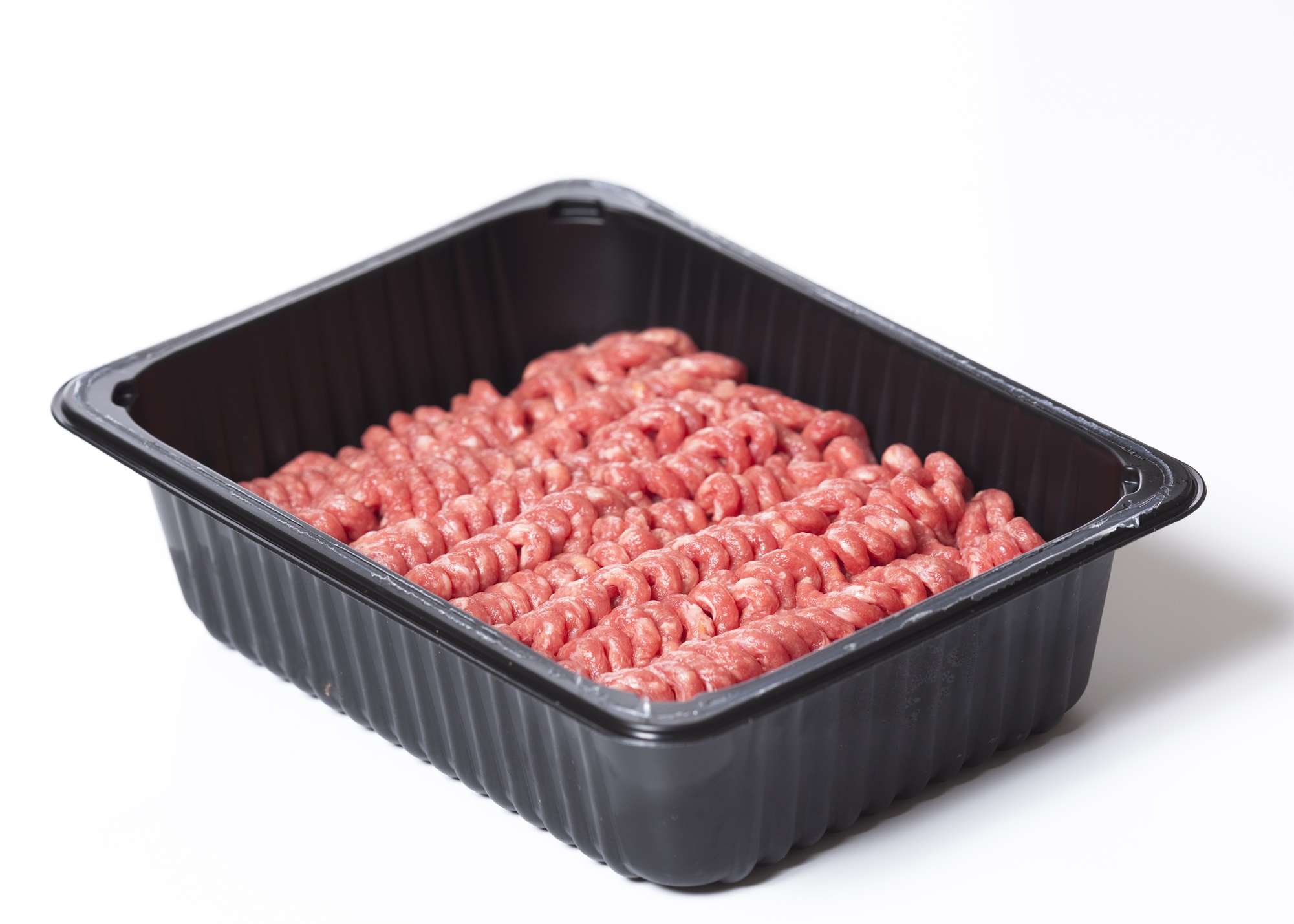
“We are currently seeing a fast-growing outbreak with 43 patients who have contracted salmonella. We know that the actual number of patients is much higher, as not everyone goes to the doctor or gets a test. By examining the bacteria, we can see that the salmonella type is exactly the same at the DNA level. This means that the patients are infected by the same source. Interviews with patients again point to ground beef, as we saw with the latest outbreak.”
Investigation underway
It is still unclear where the beef comes from, but the authorities are in the process of interviewing patients and reviewing procurement information. The goal is to find common features among the patients’ purchases in order to try to make a breakthrough in the investigation.
“We have established that two-thirds of the current patients have either tasted the raw meat or used ordinary minced beef for tartar. We would strongly advise against that,” emphasizes section leader of the Danish Food and Food Administration Annette Perge.
The reason is that there may be bacteria in minced meat which can cause illness. It can be salmonella, but it can also be particularly dangerous E. coli bacteria. That is why the advice from the Danish Veterinary and Food Administration also reads:
If you want to eat tartar, buy minced meat, which is specially intended for tartar. It’s on the packaging – otherwise ask the butcher.
Wash hands before starting to cook and after touching raw meat
Avoid tasting raw meat, e.g. raw minced meat
Keep raw meat separate from ready-to-eat food, e.g. salad
Fry or cook minced meat through
Less than a month ago, 64 patients in Denmark were infected with a type of salmonella that was found to originate from minced beef from England. The authorities in the central outbreak group have not yet found the origin of the source of infection for the latest outbreak.
Facts about Salmonella
Infection with salmonella typically causes general malaise, diarrhoea, stomach ache, possibly nausea, vomiting and fever. The infection is often accompanied by joint pain, muscle pain and headache. In most cases, the symptoms of salmonella are mild and go away on their own. If you get persistent symptoms, you should contact your own doctor.




 FoodWorld