Category Archives: Food Technology

Research – Toxoplasma gondii and Other Zoonotic Protozoans in Mediterranean Mussel (Mytilus galloprovincialis) and Blue Mussel (Mytilus edulis): A Food Safety Concern?

Journal of Food Protection 

Mediterranean mussels (Mytilus galloprovincialis) and blue mussels (Mytilus edulis) are among the most consumed fishery products, but they are frequent vehicles of foodborne infection worldwide. In this study, we investigated the occurrence and seasonality of zoonotic protozoans in mussels farmed or sold at retail outlets in Italy. We collected and tested 1,440 M. galloprovincialis and 180 M. edulis. Pooled samples were molecularly tested for Giardia duodenalis, Cryptosporidium spp., and Toxoplasma gondii and then sequenced. Sixty-two (45.9%; 95% confidence interval, 37.5 to 54.3%) mussel pools tested positive for one or more of the investigated pathogens. Both Mytilus species and samples from all the investigated areas harbored pathogens. Mussels were statistically more contaminated by Cryptosporidium spp., followed by T. gondii and G. duodenalis assemblage A, and M. galloprovincialis was more contaminated than M. edulis (P < 0.01). Contamination was more likely in mussels at retail outlets (P < 0.05) than in those from farms and in mussels collected in spring (P < 0.01) than in other seasons. This is the first report of T. gondii found in M. galloprovincialis in Italy and in M. edulis in Europe. The detection of zoonotic protozoans in a widely consumed food source indicates the need for a more detailed microbiological risk analysis, especially considering that bivalve mollusks are often consumed raw worldwide.

Research – Antifungal Effect of Camellia Seed Cake Extract on Aspergillus flavus

Journal of Food Protection

Aspergillus flavus is a well-known, widespread fungus that contaminates a great number of crops used for human and animal consumption, but previous study showed that camellia seed cake was not susceptible to A. flavus. This study was designed to evaluate the antifungal effect of the active substance in camellia seed cake on the growth and production of aflatoxins of A. flavus. Eighty percent methanol extracts of camellia seed cake showed greater activity than that of 80% ethanol, ethyl acetate, and pure water against A. flavus. The filtrate from the 80% methanol extract was extracted with ethyl acetate and saturated n-butanol; among the extracts, the n-butanol phase exhibited strong inhibitory activity against A. flavus. The inhibitory zone diameter increased from 15.25 mm at 25 mg/mL concentration up to 22.00 mm at 100 mg/mL concentration. The mycelial dry weight was reduced significantly from 0.16 g at 25 mg/mL to 0.11 g at 100 mg/mL, whereas the aqueous and ethyl acetate phases exhibited weak antifungal activity and no activity, respectively. In addition, the n-Butanol phase inhibited the production of aflatoxin B1 effectively, caused mycelia deformity, and reduced the production of conidia. n-Butanol extract of camellia seed cake exhibited apparent antagonistic effect on the growth and aflatoxin production of A. flavus. The concentration of 100 mg/mL worked best. This study provides a scientific basis for further study of its inhibiting mechanism.

Research – An assessment of the microbial quality of “döner kebab” during cold storage: Effects of different packaging methods and microwave heating before consumption

Wiley Online

Abstract

In the current study, döner kebabs packed with different packaging methods (air packaging [AP], modified atmosphere packaging [MAP], vacuum packaging [VP] and sous vide packaging [SVP]) were evaluated for their microbial quality during storage at 4 °C. In addition, the effect of microwave heating before consumption on the microbial quality of döner kebabs was also investigated. Total mesophilic aerobic bacteria and total psycrophilic aerobic bacteria counts of döner kebabs increased during storage and reached to 6.48, 8.27, 8.15, 3.96 and 5.58, 8.53, 8.63, <1.00 log cfu/g in AP (9th day), MAP (29th day), VP (29th day) and SVP (99th day) groups, respectively. Although coliform, Escherichia coli and Staphylococcus aureus counts of döner kebabs were below 3 MPN/g, 3 MPN/g, 2 log cfu/g in all groups, respectively; no Clostridium perfringens and Listeria monocytogenes was detected in any of the groups during storage. Microwave heating was found effective on reducing the microbial load of döner kebabs. It was concluded that without any additional preservation techniques, the SVP prolonged the shelf life of döner kebabs more than 20, 6, and 5 times comparing to AP, MAP, and VP groups, respectively.

Practical applications

Döner kebab is a meat product which is very convenient for microbial growth due to its nutritional and chemical composition. Döner kebab that cannot be sold immediately after production causes high economic losses since the shelf life of döner kebab is very short after cooking. Therefore, it requires additional preservation techniques in order to prevent the economic losses after cooking and to have the opportunity of secure serving of it where döner kebab oven is not present. In the current study, sous vide (SV) applied döner kebabs protected their microbiological quality at least 100 days at 4 °C without any additional preservation techniques and application of SV after cooking provided döner kebabs with a longer shelf life comparing to air packaging, modified atmosphere packaging and vacuum packaging methods. Besides, microwave heating was applied to döner kebabs in order to simulate the conditions of consumption. Microwave heating before consumption significantly reduced the microbial load of döner kebabs.

Research – Antilisterial and antistaphylococcal activity of a Lactococcus lactis strain isolated from Brazilian fresh Minas cheese

Wiley Online Library

Abstract

Lactococcus lactis QMF 11, isolated from Brazilian fresh cheese, produces bacteriocin like inhibitory substances (bac+). To evaluate L. lactis QMF11 possible application on biopreservation systems of dairy food, co‐inoculation studies were performed in pasteurized milk (8 °C, 10 days) targeting the inhibition of Listeria monocytogenes ATCC 7644 or Staphylococcus aureus ATCC 25923. Lactobacillus sakei ATCC 15521 was used as a negative control for bacteriocin production (bac). L. monocytogenes and S. aureusreached 8 log CFU ml−1 and 5.4 log CFU ml−1 in monoculture, respectively, compared to <2.3 log CFU ml−1 and 4.7 log CFU ml−1 in co‐culture with L. lactis QMF 11. Instead, in the presence of the bacL. monocytogenes population reached 7.3 log CFU ml−1 and S. aureuspopulations 5.5 log CFU ml−1. These results indicate that Llactis QMF11 may have potential for be use as biopreservative culture in dairy products, mainly because of its antilisterial activity.

Practical applications

There is a renewed interest in the use protective bacterial cultures or their metabolites to guarantee the microbiological safety and to extend the shelf life of dairy products, in a process called biopreservation. The research in this area has been leveraged by consumers demand for naturally preserved foods. Dairy products are natural niches for Lactococcus lactis strains, and these bacteria have been associated with food production and preservation since ancient times. As a dominant species in dairy ecosystems, L. lactisstrains are very interesting because they are not likely to require regulatory approval for practical application as bioprotective cultures.

Research – Inhibition of Listeria monocytogenes growth on vacuum packaged rainbow trout (Oncorhynchus mykiss) with carvacrol and eugenol

Wiley Online Library

Abstract

The aim of this study was to evaluate the effects of carvacrol and eugenol, separately and in combination, on survival of Listeria monocytogenes, and sensory and microbiological characteristics in vacuum packaged Oncorhynchus mykiss during refrigerated storage (4 ± 1 °C) for 20 days. The control fish fillets were analyzed for microbial (total mesophilic and psychrotrophic bacteria and lactic acid bacteria) and sensory properties. Fish fillets treated with carvacrol, eugenol, and their combination displayed populations of L. monocytogenes significantly lower, by 1.35–2.84 log cfu/g, than the control fillets during the whole storage period. No significant differences between groups of fish fillets with different active compound(s) added were noted except at the end of the storage, when the number of L. monocytogenes was significantly lower in the fish fillets with eugenol added. Sensory analysis showed that fish fillets with eugenol added were the most acceptable to trained panelists.

Practical applications

Taking into account the increasing need for the production of safe fish and fish products and the fact that carvacrol and eugenol, which exhibited significant antilisterial effect, are generally recognized as safe they can find its practical application in fish industry. Furthermore, as these substances are major constituents of numerous essential oils they can be considered as natural preservatives and used in the organic production as a substitute with synthetic additives which can cause adverse effects.

Research – Lactic acid fermentation of legume seed sprouts as a method of increasing the content of isoflavones and reducing microbial contamination

Science Direct

CDC Klebsiella

Image CDC

Legume seeds and sprouts are a rich source of phytoestrogens in the form of isoflavonoids. For the first time, lactic acid fermentation of four types of legume sprouts was used to increase the content of isoflavonoids and microbiological safety. After germination, the highest content of isoflavonoids was observed in the clover and chickpea sprouts, which amounted to 1.1 g/100 g dw., whereas the lactic acid fermentation allowed the increase to as much as 5.5 g/100 g dw. The most beneficial properties were shown by fermented chickpea sprouts germinated in blue light. During fermentation the number of lactic acid bacteria increased by 2 Log10CFU/mL (LU), whereas mold decreased by 1 LU, E.coli and Klebsiellasp. by 2 LU, Salmonella sp. and Shigella sp did not occur after fermentation, similar to Staphylococcus epidermidis, while S. aureus and S. saprophyticus decreased by 3 LU and in some trials were not detected.

Research -Identification and Spoilage Potential of the Remaining Dominant Microbiota on Food Contact Surfaces after Cleaning and Disinfection in Different Food Industries

Journal of Food Protection

After cleaning and disinfection (C&D), surface contamination can still be present in the production environment of food companies. Microbiological contamination on cleaned surfaces can be transferred to the manufactured food and consequently lead to foodborne illness and early food spoilage. However, knowledge about the microbiological composition of residual contamination after C&D and the effect of this contamination on food spoilage is lacking in various food sectors. In this study, we identified the remaining dominant microbiota on food contact surfaces after C&D in seven food companies and assessed the spoilage potential of the microbiota under laboratory conditions. The dominant microbiota on surfaces contaminated at ≥102 CFU/100 cm2 after C&D was identified based on 16S rRNA sequences. The ability of these microorganisms to hydrolyze proteins, lipids, and phospholipids, ferment glucose and lactose, produce hydrogen sulfide, and degrade starch and gelatin also was evaluated. Genera that were most abundant among the dominant microbiota on food contact surfaces after C&D were Pseudomonas, Microbacterium, Stenotrophomonas, Staphylococcus, and Streptococcus. Pseudomonas spp. were identified in five of the participating food companies, and 86.8% of the isolates evaluated had spoilage potential in the laboratory tests. Microbacterium and Stenotrophomonas spp. were identified in five and six of the food companies, respectively, and all tested isolates had spoilage potential. This information will be useful for food companies in their quest to characterize surface contamination after C&D, to identify causes of microbiological food contamination and spoilage, and to determine the need for more thorough C&D.


Research – Growth and Survival of Listeria monocytogenes and Salmonella on Whole and Sliced Cucumbers

Journal of Food Protection cucumber

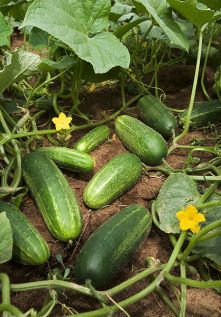
Cucumbers were associated with four multistate outbreaks of Salmonella in the United States between 2013 and 2016. This study evaluated the fate of Listeria monocytogenes and Salmonella on whole and sliced cucumbers at various storage temperatures. Cucumbers were inoculated with five-strain cocktails of L. monocytogenes or Salmonella, air dried, and stored at 23 ± 2, 4 ± 2, and −18 ± 2°C. Whole and sliced cucumber samples were enumerated on nonselective and selective media at 0, 0.21, 1, 2, 3, and 4 days (23 ± 2°C); 0, 1, 2, 3, 7, 14, and 21 days (4 ± 2°C); and 0, 7, 28, 60, 90, and 120 days (−18 ± 2°C). For Salmonella, additional time points were added at 8 and 17 h (23 ± 2°C) and at 17 h (4 ± 2°C). Population levels were calculated for whole (CFU per cucumber) and sliced (CFU per gram) cucumbers. Both pathogens grew on whole and sliced cucumbers held at ambient temperatures. At 23 ± 2°C, L. monocytogenes and Salmonella populations significantly increased on whole (2.3 and 3.4 log CFU per cucumber, respectively) and sliced (1.7 and 3.2 log CFU/g, respectively) cucumbers within 1 day. Salmonella populations significantly increased on whole and sliced cucumbers after only 5 h (2.1 log CFU per cucumber and 1.5 log CFU/g, respectively), whereas L. monocytogenes populations were not significantly different on whole and sliced cucumbers at 5 h. L. monocytogenes and Salmonella populations survived up to 21 days on refrigerated whole and sliced cucumbers. At 4 ± 2°C, L. monocytogenes populations significantly increased on whole (2.8 log CFU per cucumber) and sliced (2.9 log CFU/g) cucumbers, whereas Salmonella populations significantly decreased on whole (0.6 log CFU per cucumber) and sliced (1.3 log CFU/g) cucumbers over 21 days. Both pathogens survived on frozen whole and sliced cucumbers for at least 120 days. The ability of L. monocytogenes and Salmonella to grow on whole and sliced cucumbers in short amounts of time at ambient temperatures, and to survive on whole and sliced cucumbers past the recommended shelf life at refrigeration temperatures, highlights the need to reduce the likelihood of contamination events throughout the cucumber supply chain.

Research – Predicting the Growth of Listeria monocytogenes and Salmonella Typhimurium in Diced Celery, Onions, and Tomatoes during Simulated Commercial Transport, Retail Storage, and Display

Journal of Food Protection cherry-tomato-pristine-variety

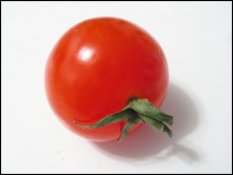
Temperature is arguably the most important factor affecting microbial proliferation in fresh-cut produce. In this study, growth of Listeria monocytogenes in diced onions and celery and Salmonella Typhimurium in diced tomatoes was determined in modified atmosphere packages and snap-fit containers using three fluctuating temperature scenarios for transport, retail storage, and display. As expected, L. monocytogenes growth in diced onions and celery varied depending on the extent of temperature abuse, with exposure to high and intermediate temperature-abuse scenarios generally being growth supportive. A Baranyi primary model with a square-root secondary model for maximum growth rate, and a linear model for maximum population density, were used to estimate Listeria growth under fluctuating temperature. Accuracy and acceptability of the model prediction were evaluated in terms of root mean square error (RMSE) and acceptable prediction zone (APZ), respectively. Overall, growth predictions for L. monocytogenes were more accurate for celery (RMSE, 0.28 to 0.47) than onions (RMSE, 0.42 to 1.53) under the fluctuating temperature scenarios tested. However, both predictions yielded APZ values that ranged from 82 to 100% for celery and 36 to 78% for onions. In contrast, Salmonella Typhimurium populations increased more than 1 log CFU/g in diced tomatoes under the three fluctuating temperature scenarios studied. Overall, these diced products packaged under a high-oxygen atmosphere showed decreased pathogen growth compared with product stored in a passive modified atmosphere. Findings from this study will be particularly useful in assessing the risk associated with consumption of diced celery, tomatoes, and onions and in designing effective packaging strategies to minimize pathogen growth in fresh-cut produce.

Research – PopPUNK advances speed of bacterial pathogen surveillance

Science Daily

In a study published today in Genome Research, researchers developed PopPUNK (Population Partitioning Using Nucleotide K-mers), a computational tool for analyzing tens of thousands of bacterial genomes in a single run, up to 200-fold faster than previous methods. Researchers envision PopPUNK will expedite the identification of bacterial strains as the scale of bacterial genomes being sequenced increases and, importantly, allow public health agencies to quickly identify outbreak strains that pose a public health risk.