Category Archives: Food Poisoning

Hong Kong – Food Alert Not to consume romaine lettuce from the US, Canada and unknown sources – E.coli

CFS

Issue Date 22.11.2018
Source of Information Centre for Food Safety
Food Product Romaine lettuce
Product Name and Description All romaine lettuce imported from the US and Canada
Reason For Issuing Alert
  • The Centre for Food Safety (CFS) of the Food and Environmental Hygiene Department, through its routine Food Incident Surveillance System, learnt on November 21 that there were reports in the United States (US) and Canada about outbreaks of Escherichia coli (E. coli) infection that might be linked to the consumption of romaine lettuce contaminated with E. coli.
Action Taken by the Centre for Food Safety
  • The CFS immediately contacted the US and Canadian authorities for more information (including about the place of origin of the affected romaine lettuce). The Centre also, starting from November 21, held all romaine lettuce imported from the US and Canada for testing at the import level, which will only be released to the market upon satisfactory test results.
  • The CFS has also enhanced surveillance of romaine lettuce from the two countries at retail level.
  • The CFS will continue to closely monitor the latest developments of the incident in the US and Canada and take appropriate follow-up action.
Advice to the Trade
  • Retailers have voluntarily removed the product concerned from shelves.
Advice to Consumers
  • For the sake of prudence, the CFS urges the public not to consume romaine lettuce from the US, Canada and unknown sources.
Further Information The CFS press release

USA- Clostridium Perfringens Warning As the Holidays Approach

Food Poisoning Bulletin CDC Clost perf

A Clostridium perfringens outbreak sickened hundreds of people who ate at the Poplar Tent Presbyterian Church BBQ on November 1, 2018. The Cabarrus Health Alliance reported that at least 290 people had reported symptoms of vomiting and diarrhea after that event. The bacteria that caused the illness was identified as Clostridium perfringens after food samples were tested. The bacteria was fond in the Brunswick stew.

USA – CDC Alert: Do Not Eat Romaine Lettuce, Throw It Out

CDC

Illustration with a triangle and exclamation mark and text reading Food Safety Alert

CDC, public health and regulatory officials in several states, Canada, and the U.S. Food and Drug Administration (FDA) are investigating a multistate outbreak of Shiga toxin-producing Escherichia coli O157:H7 (E. coli O157:H7) infections linked to romaine lettuce.

CDC is advising that U.S. consumers not eat any romaine lettuce, and retailers and restaurants not serve or sell any, until we learn more about the outbreak. This investigation is ongoing and the advice will be updated as more information is available.

  • Consumers who have any type of romaine lettuce in their home should not eat it and should throw it away, even if some of it was eaten and no one has gotten sick.
    • This advice includes all types or uses of romaine lettuce, such as whole heads of romaine, hearts of romaine, and bags and boxes of precut lettuce and salad mixes that contain romaine, including baby romaine, spring mix, and Caesar salad.
    • If you do not know if the lettuce is romaine or whether a salad mix contains romaine, do not eat it and throw it away.
    • Wash and sanitize drawers or shelves in refrigerators where romaine was stored. Follow these five steps(https://www.cdc.gov/foodsafety/communication/clean-refrigerator-steps.html) to clean your refrigerator.
  • Restaurants and retailers should not serve or sell any romaine lettuce, including salads and salad mixes containing romaine.
  • Take action(https://www.cdc.gov/vitalsigns/foodsafety-2015/index.html) if you have symptoms of an E. coli infection(https://www.cdc.gov/ecoli/ecoli-symptoms.html):
    • Talk to your healthcare provider.
    • Write down what you ate in the week before you started to get sick.
    • Report your illness to the health department.
    • Assist public health investigators by answering questions about your illness.

Advice to Clinicians

  • Antibiotics are not recommended(https://www.cdc.gov/ecoli/clinicians.html) for patients with E. coli O157 infections. Antibiotics are also not recommended for patients in whom E.coli O157 infection is suspected, until diagnostic testing rules out this infection.
  • Some studies have shown that administering antibiotics to patients with E. coli O157 infections might increase their risk of developing hemolytic uremic syndrome (a type of kidney failure), and the benefit of antibiotic treatment has not been clearly demonstrated.


India – 40 girls from the BC Ladies Hostel in Suryapet in Telangana were hospitalised after presenting with symptoms of food poisoning.

The News Minute

The girls had all eaten dal and rice for dinner at their hostel mess and within hours, all of them developed severe stomach pain and vomiting, and had to be taken to the Suryapet Government Hospital.Doctors at the hospital immediately began treatment for food poisoning, after which all 40 of them recovered and were discharged, according to officials from the Suryapet District Medical and Health Officer (DMHO) Dr Niranjan’s office.

“The girls were admitted on Sunday immediately after they began presenting with vomiting and stomach pain. They were all treated and discharged,” said an official from the DMHO’s office. “We have arranged for a team of health experts to follow up on the issue with the hostel and are taking efforts to ensure that something like this doesn’t happen again,” the official added.

Pakistan – Karachi food poisoning: Sindh government takes charge after deceased’s family complains of inaction

Samaa TV

Sindh government swung into action after the parents of children who died after alleged food poisoning in Karachi complained that the government has done nothing for them.

On November 11, four-year-old Ahmad and one-and-an-half-year-old Muhammad died after eating ‘unhygienic food’ at Arizona grill – a restaurant in Karachi’s DHA.

UK – Nailsea pub slapped with zero rating after 60 people got food poisoning turned around to get five stars

Bristol Post

A pub where dozens of diners suffered food poisoning after eating there on Mothering Sunday has been issued with a five star food hygiene rating.

More than 60 people fell ill, suffering from sickness and diarrhoea in March this year after eating at the Old Farmhouse in Nailsea.

The kitchens at the pub, off Trendlewood Way, were temporarily closed while officials from Public Health England and North Somerset Council launched an investigation into the cause. It was given a zero food hygiene rating after an inspection.

The source of the food poisoning was traced to an organism called Clostridium perfringens.

USA – Clostridium perfringens in Brunswick Stew cause of Poplar Tent Presbyterian Church BBQ Outbreak

Food Poison Journal

USA – Majestic Meat Company Recalls Ground Beef Products due to Possible E. Coli O157:H7 Contamination

FSIS USDA

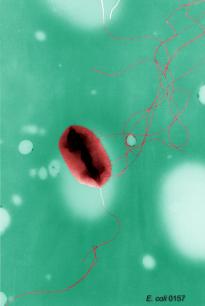
kswfoodworld E.coli O157

Image CDC


WASHINGTON, Nov. 16, 2018 – Majestic Meat Company, a Salt Lake City, Utah establishment, is recalling approximately 532 pounds of ground beef products that may be contaminated with E. coli O157:H7, the U.S. Department of Agriculture’s Food Safety and Inspection Service (FSIS) announced today.

The bulk ground beef, ground beef patties, and meatballs were produced on November 8, 2018. The product list can be found here: [View Labels (PDF only)]

The products subject to recall bear establishment number “EST. 19915” inside the USDA mark of inspection. These items were shipped to restaurants in the state of Utah.

The problem was discovered on November 15, 2018 when FSIS identified that product associated with a sample that confirmed positive for E. coli O157:H7 had been shipped. The establishment held 2 of the 3 boxes of source material associated with the sampled product, however, the third box of source material was further processed and shipped.  There have been no confirmed reports of adverse reactions due to consumption of these products.

Anyone concerned about an injury or illness should contact a healthcare provider. E. coli O157:H7 is a potentially deadly bacterium that can cause dehydration, bloody diarrhea and abdominal cramps 2–8 days (3–4 days, on average) after exposure the organism. While most people recover within a week, some develop a type of kidney failure called hemolytic uremic syndrome (HUS). This condition can occur among persons of any age but is most common in children under 5-years old and older adults. It is marked by easy bruising, pallor, and decreased urine output. Persons who experience these symptoms should seek emergency medical care immediately.

USA – Swift Beef Company Recalls Ground Beef Products due to Possible E. Coli O157:H7 Contamination

FSIS USDA USDA

WASHINGTON, Nov. 17, 2018 – Swift Beef Co., a Hyrum, Utah establishment, is recalling approximately 99,260 pounds of raw non-intact ground beef products that may be contaminated with E. coli O157:H7, the U.S. Department of Agriculture’s Food Safety and Inspection Service (FSIS) announced today.

The bulk ground beef was produced on Oct. 24, 2018. The following products are subject to recall: [View Labels (PDF only)]

  • 2,000 lb. – bulk pallets of Swift Ground Beef 81/19 (81% lean) Fine Grind Combo bearing product code 42982.
  • 8-10 lb. – plastic wrapped chubs of “blue ribbon BEEF” Ground Beef 81/19 (81% lean) Coarse Grind bearing product code 42410.
  • 8-10 lb. – plastic wrapped chubs of “blue ribbon BEEF” Ground Beef 93/07 (93% lean) Coarse Grind bearing product code 42413.
  • 8-10 lb. – plastic wrapped chubs of “blue ribbon BEEF” Ground Beef 85/15 (85% lean) Coarse Grind bearing product code 42415.
  • 8-10 lb. – plastic wrapped chubs of “blue ribbon BEEF” Ground Beef 73/27 (73% lean) Coarse Grind bearing product code 42510.

The products subject to recall bear establishment number “EST. 628” inside the USDA mark of inspection. These items were shipped to retail distributors for further processing and food service distributors for institutional use in locations in California, Nevada, Oregon, Utah, and Washington.

The problem was discovered on November 15, 2018, when FSIS visited Swift Beef Company in response to a FSIS ground beef sample that was collected at a further processing establishment and was confirmed positive for E. coli O157:H7. FSIS confirmed that Swift Beef Company was the sole source supplier for the ground beef products. That affected product was recalled on Nov. 16 and information on that recall can be found here. There have been no confirmed reports of adverse reactions due to consumption of these products.

USA – Infant botulism cases prompt alert about honey pacifiers – Clostridium botulinum

DSHS Texas 

CDC Clost Spore

Children under 12 months old should not consume honey

The Texas Department of State Health Services is warning parents and other adults not to give babies pacifiers containing honey after four babies were treated for botulism in Texas. Each infant had been given a honey-containing pacifier purchased in Mexico.

The four illnesses occurred from mid-August to the end of October and caused all four babies to be hospitalized for life-saving treatment. The unrelated infants are residents of West Texas, North Texas and South Texas.

Botulism is a serious illness caused by a toxin that attacks the body’s nerves and can cause difficulty breathing, paralysis and even death. Honey may contain bacteria that produce the toxin in the intestine of babies that eat it. By the time children get to be 12 months old, they’ve developed enough other types of bacteria in their digestive tract to prevent the botulism bacteria from growing and producing toxin.

DSHS today also issued a health alert asking health care providers to look out for cases of infant botulism and to remind parents not to let babies eat honey. The Centers for Disease Control and Prevention and the American Academy of Pediatrics have long advised that children under 12 months old should not consume honey.

Honey-filled pacifiers are not common in the United States but may be available in some specialty stores and through online retailers. Most aren’t designed for the honey to be consumed, but some have a small hole so a child could eat the honey, or the pacifier could accidentally rupture or leak. Parents should also avoid pacifiers containing any other food substance, because they could also pose a risk of botulism.

Texas has had seven to eight cases of infant botulism per year in recent years. Ten confirmed or suspected cases have been reported in 2018. Additional information on botulism is available on the DSHS website.