Category Archives: Food Pathogen

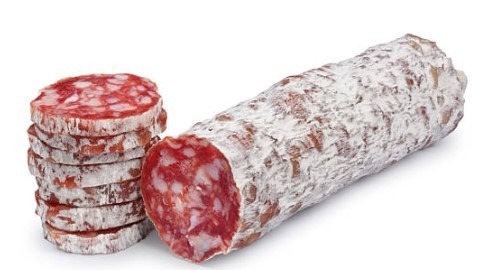
France – dry pork sausage – Listeria monocytogenes

Gov France

Product category
Food
Product subcategory
Meats
Product brand name
Maison Fournet Fayard
Model names or references
dry pork sausage, salt sausage, hazelnut sausage, duck sausage, dry sausage
Product identification
Batch
S233909
S233910
S233911
S233912
S233913
Start/end date of marketing
From 10/17/2023 to 11/23/2023
Storage temperature
Product to be stored at room temperature
Health mark
FR 63231001 CE
Geographical sales area
Whole France
Distributors
mixed circle 03 montluçon, Argedis63 orléat, volcanic artisans 63 clermont Frd, HRC highway 42 les salle, TYARBLAZ 29 Plouzane, SASU grocery store 63 aigueperse, dubien 63 vollore mountain, Maison thomas 63 St gervais d’auvergne, l’auvergnat 44130

UK -Lidl recalls Braemoor Duck Breast Fillet products because of the presence of Salmonella

FSA

Lidl is recalling Braemoor 2 Duck Breast Fillets with Plum, Soy and Ginger Sauce Sachet and Braemoor 2 Duck Breast Fillets, Skin on and Boneless because salmonella has been found in the products.

Product details
Braemoor 2 Duck Breast Fillets with Plum, Soy and Ginger Sauce Sachet
Pack size 400g
Best before 21 August 2024
Braemoor 2 Duck Breast Fillets, Skin on and Boneless
Pack size 400g
Best before 31 August 2024
Risk statement
Salmonella has been found in the products listed above. Symptoms caused by salmonella usually include fever, diarrhoea and abdominal cramps.

Action taken by the company
Lidl is recalling the above products and has issued a point-of-sale to their customers. These notices explain to customers why the products are being recalled and tell them what to do if they have bought the products. Please see the attached notices.
PDF
ViewCustomer notice – Braemoor Duck Breast Filletsas pdf(Open in a new window) (225.18 KB)
Our advice to consumers
If you have bought any of the above products do not eat them. Instead, return them to the store where they were bought for a full refund. For further information contact Lidl Customer Care on 0203 966 5566 or email customer.care@lidl.co.uk. For Northern Ireland, please contact 0289 568 4888.

Research – Control of Salmonella in Chicken Meat by a Phage Cocktail in Combination with Propionic Acid and Modified Atmosphere Packaging

MDPI

Abstract

Salmonella contamination in poultry meat is an important food safety issue as this pathogen can lead to serious illness and economic losses worldwide. In poultry meat processing, a variety of strong bacteriostatic agents has been introduced for controlling Salmonella including bacteriophages (phages), organic acids, and modified atmosphere packaging (MAP). In our study, two selected phages including vB_SenM_P7 and vB_SenP_P32 were used in combination with propionic acid (PA) and MAP for controlling Salmonella of multiple serovars on chicken meat under storage at 4 °C. The two phages showed strong lytic activity against over 72 serovars of Salmonella tested (25.0 to 80.6%). Phages, vB_SenM_P7 and vB_SenP_P32 showed 40% and 60% survival rates, respectively, after the exposure to temperatures up to 70 °C. Both phages remained active, with nearly 100% survival at a wide range of pH (2 to 12) and 15% NaCl (w/v). The available chlorine up to 0.3% (v/v) led to a phage survival rate of 80–100%. A combination of Salmonella phage cocktail and 0.5% PA could reduce Salmonella counts in vitro by 4 log CFU/mL on day 3 whereas a phage cocktail and 0.25% PA showed a 4-log reduction on day 5 during storage at 4 °C. For the phage treatment alone, a 0.3-log reduction of Salmonella was observed on day 1 of storage at 4 °C. In the chicken meat model, treatment by a phage cocktail and PA at both concentrations in MAP conditions resulted in a complete reduction of Salmonella cells (4–5 log unit/g) on day 2 of storage whereas each single treatment under MAP conditions showed a complete cell reduction on day 4. For the meat sensory evaluation, chicken meat treated with a phage cocktail-PA (0.5%) in MAP condition showed the highest preference scores, suggesting highly acceptability and satisfactory. These findings suggest that a combined treatment using a phage cocktail and PA in MAP conditions effectively control Salmonella in poultry meat during storage at low temperature to improve the quality and safety of food.

Research – Microbial Pathogens in Aquaponics Potentially Hazardous for Human Health

MDPI

Abstract

The union of aquaculture and hydroponics is named aquaponics—a system where microorganisms, fish and plants coexist in a water environment. Bacteria are essential in processes which are fundamental for the functioning and equilibrium of aquaponic systems. Such processes are nitrification, extraction of various macro- and micronutrients from the feed leftovers and feces, etc. However, in aquaponics there are not only beneficial, but also potentially hazardous microorganisms of fish, human, and plant origin. It is important to establish the presence of human pathogens, their way of entering the aforementioned systems, and their control in order to assess the risk to human health when consuming plants and fish grown in aquaponics. Literature analysis shows that aquaponic bacteria and yeasts are mainly pathogenic to fish and humans but rarely to plants, while most of the molds are pathogenic to humans, plants, and fish. Since the various human pathogenic bacteria and fungi found in aquaponics enter the water when proper hygiene practices are not applied and followed, if these requirements are met, aquaponic systems are a good choice for growing healthy fish and plants safe for human consumption. However, many of the aquaponic pathogens are listed in the WHO list of drug-resistant bacteria for which new antibiotics are urgently needed, making disease control by antibiotics a real challenge. Because pathogen control by conventional physical methods, chemical methods, and antibiotic treatment is potentially harmful to humans, fish, plants, and beneficial microorganisms, a biological control with antagonistic microorganisms, phytotherapy, bacteriophage therapy, and nanomedicine are potential alternatives to these methods.

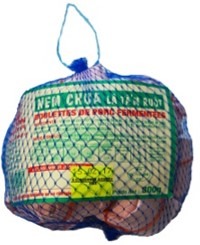
France – Fermented pork balls with leaf (Nem chua with leaf) – Listeria monocytogenes

Gov France

Product category
Food
Product subcategory
Meats
Product brand name
HOA NAM
Model names or references
Fermented pork balls with leaf (Nem chua with leaf)
Product identification
GTIN Batch Date
3474930202006 151123 Use-by date 11/15/2023
Packaging
Clipped net with 10 pieces
Start/end date of marketing
From 10/25/2023 to 10/31/2023
Storage temperature
Product to keep in the refrigerator
Health mark
FR 75 113 006 CE
Geographical sales area
Whole France
Distributors
see list of points of sale
List of points of sale
List_of_sales_points_with_address.pdf

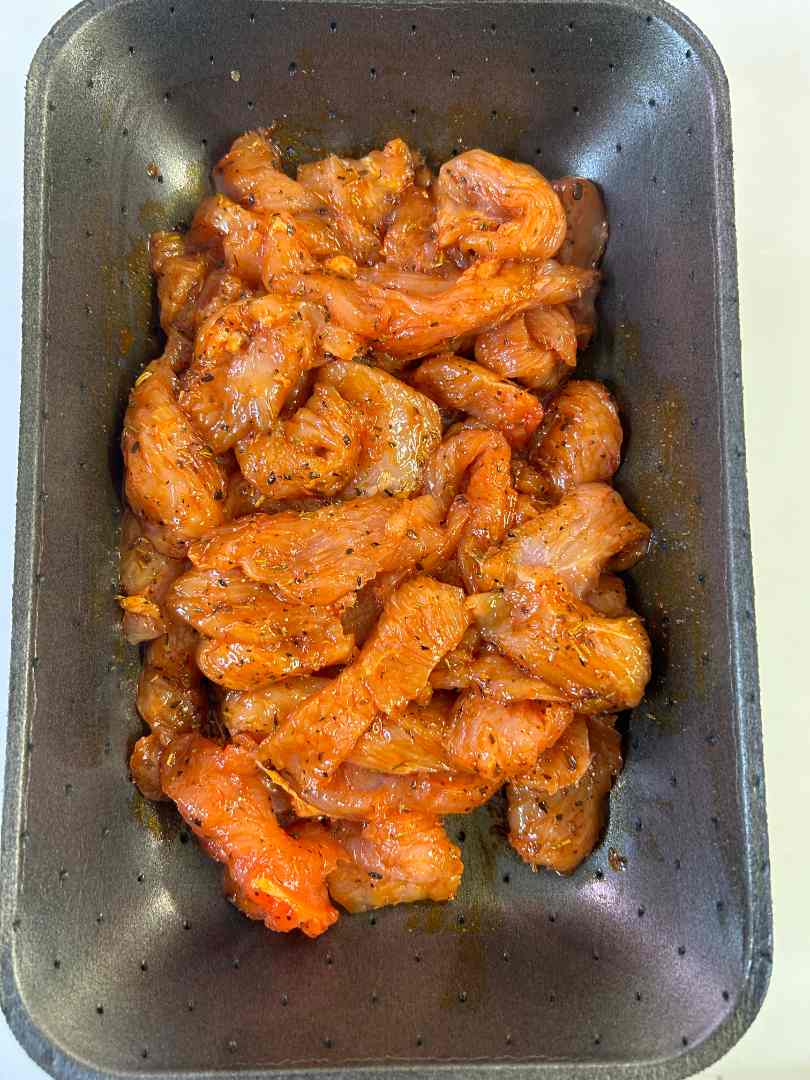
France – Provençal-style sliced ​​turkey – Salmonella

Gov France

Product category
Food
Product subcategory
Meats
Product brand name
None
Model names or references
nothing
Product identification
GTIN Batch Date
0209699000000 Made on 11/11/2023 Use-by date 11/15/2023
Packaging
bulk intended for sale in the traditional butcher’s department
Start/end date of marketing
From 11/11/2023 to 11/15/2023
Storage temperature
Product to keep in the refrigerator
Health mark
nothing
Further information
Internal traceability
Geographical sales area
48 boulevard des 2 moulins le Poiré sur Vie 85170
Distributors
PSV DISTRIBUTION

France – Chablis terrine – Salmonella

Gov France

Product category
Food
Product subcategory
Meats
Product brand name
Le Marsigny
Model names or references
Terrine with Chablis Le Marsigny
Product identification
GTIN Batch Date
26006598 312045 Use-by date 12/12/2023
26006598 311025 Use-by date 11/12/2023
26006598 306045 Use-by date 06/12/2023
26006598 307025 Use-by date 07/12/2023
26006598 310062 Use-by date 10/12/2023
Packaging
Individual tray 200G slice under modified atmosphere
Start/end date of marketing
Since 09/11/2023
Storage temperature
Product to keep in the refrigerator
Health mark
FR 21 231 005 CE
Geographical sales area
Whole France
Distributors
Aldi, Salaisons Dijonnaises factory store

Norway – Coop Norge SA and Goman Vest are recalling Coop Suksesskake small 500g, due to the content of harmful bacteria – Staphylococcus

Matportalen

Coop Norge SA recalls Coop Success Cake small 500g. The product is marked with lot numbers 563452 and 563462. The reason is that coagulase-positive staphylococci have been detected through routine analysis samples. The product is sold at OBS Lagunen, OBS Sartor, OBS Vestkanten, OBS Horisont and Coop Mega Nordås.

The product can be dangerous to health and should therefore not be eaten. The consumer can return the product with the specified lot number to the store for a refund, or throw it away.

The lot consists of 17 cakes, of which 12 pieces have been sold to consumers.

Contact
Coop: Harald Kristiansen, communications manager: harald.kristiansen@coop.no

Italy – SALAME – Listeria monocytogenes

Salute

Brand : TORESAN

Name : SALAME

Reason for reporting : Recall due to microbiological risk

Publication date : 24 November 2023

Documentation

Documentation

Italy-SMOKED SALAMI- Listeria monocytogenes

Salute

Brand : TORESAN

Name : SMOKED SALAMI

Reason for reporting : Recall due to microbiological risk

Publication date : 24 November 2023

Documentation

Documentation