Category Archives: Food Inspections

Research – Escherichia coli ST131-H22 as a Foodborne Uropathogen

MBIO

ABSTRACT

Escherichia coli sequence type 131 (ST131) has emerged rapidly to become the most prevalent extraintestinal pathogenic E. coli clones in circulation today. Previous investigations appeared to exonerate retail meat as a source of human exposure to ST131; however, these studies focused mainly on extensively multidrug-resistant ST131 strains, which typically carry allele 30 of the fimH type 1 fimbrial adhesin gene (ST131-H30). To estimate the frequency of extraintestinal human infections arising from foodborne ST131 strains without bias toward particular sublineages or phenotypes, we conducted a 1-year prospective study of E. coli from meat products and clinical cultures in Flagstaff, Arizona. We characterized all isolates by multilocus sequence typing, fimH typing, and core genome phylogenetic analyses, and we screened isolates for avian-associated ColV plasmids as an indication of poultry adaptation. E. coli was isolated from 79.8% of the 2,452 meat samples and 72.4% of the 1,735 culture-positive clinical samples. Twenty-seven meat isolates were ST131 and belonged almost exclusively (n = 25) to the ST131-H22 lineage. All but 1 of the 25 H22 meat isolates were from poultry products, and all but 2 carried poultry-associated ColV plasmids. Of the 1,188 contemporaneous human clinical E. coli isolates, 24 were ST131-H22, one-quarter of which occurred in the same high-resolution phylogenetic clades as the ST131-H22 meat isolates and carried ColV plasmids. Molecular clock analysis of an international ST131-H22 genome collection suggested that ColV plasmids have been acquired at least six times since the 1940s and that poultry-to-human transmission is not limited to the United States.

IMPORTANCE E. coli ST131 is an important extraintestinal pathogen that can colonize the gastrointestinal tracts of humans and food animals. Here, we combined detection of accessory traits associated with avian adaptation (ColV plasmids) with high-resolution phylogenetics to quantify the portion of human infections caused by ST131 strains of food animal origin. Our results suggest that one ST131 sublineage—ST131-H22—has become established in poultry populations around the world and that meat may serve as a vehicle for human exposure and infection. ST131-H22 is just one of many E. coli lineages that may be transmitted from food animals to humans. Additional studies that combine detection of host-associated accessory elements with phylogenetics may allow us to quantify the total fraction of human extraintestinal infections attributable to food animal E. coli strains.

Research – Antibacterial effects of Schisandra chinensis extract on Staphylococcus aureus and its application in food

Wiley Online Staph

Abstract

Schisandra chinensis (Turcz.) Baill is a member of the Magnoliaceae and is used in traditional medicine. Its extracts have antibacterial activity against foodborne pathogens. In present study, the antibacterial properties of Sc. chinensis were tested on S.aureus. An in vitro antibacterial assay showed that Sc. chinensis extracts (SCE) inhibited the growth of test bacteria at a MBC of 18mg mL−1. SCE demonstrated strong antibacterial activity in barley soup system. Treated by SCE, the growth curves of S.aureus exhibited extended lag phases and abbreviated log phases, S. aureus presented with wrinkled and withered surfaces and surrounded by soluble substances probably consisting of leaked intracellular materials. Further, S. aureus released the periplasmic enzyme (AKPase) and increased activities of membrane‐bound Na+/K+/ Ca++‐ATPase. Therefore, SCE can damage S. aureus cell membranes and walls. Moreover, SCE decreased dehydrogenase and total ATPase activities, and intracellular protein contents, even interacted with DNA by groove binding.

Practical applications

In a barley soup model food system, SCE possessed a high level of antibacterial activity and significantly reduced total viable bacterial counts. This study laid the theoretical foundation for the application of Schisandra chinensis extract in preventing the growth of foodborne pathogens.

Research – Production of safer food by understanding risk factors for L. monocytogenes occurrence and persistence in food processing environments

Wiley Online 

Abstract

Listeria monocytogenes is a foodborne pathogen that causes listeriosis, a relatively rare gastrointestinal disease with a high mortality rate. As L. monocytogenes is ubiquitous in the environment, control of the organism in food processing environments is necessary to prevent cross‐contamination of the food from the environment. In this study, the outcomes of a survey of management practices at 32 food processing facilities were statistically correlated with the occurrence and persistence of L. monocytogenes using multiple regression analyses and logistic regression analysis. No management practices correlated with persistence, while training of staff by management or external trainers, and separation of hygiene control areas correlated with a reduction in L. monocytogenes occurrence. The importance of management practices in reduction of L. monocytogenes in food processing environments was identified. Wider implementation of these practices could contribute to reduction in the occurrence of L. monocytogenes in food processing environments, facilitating production of safer food.

Practical applications

This study highlights that management practices can decrease the occurrence of L. monocytogenes in food processing environments, helping with the production of safer food. In particular, segregation of areas close to food contact and relevant training of staff by management are important. If applied, these simple practices could help with reduction of L. monocytogenes in food.

Research – An Evaluation of the Hygiene Practices of European Street Food Vendors and a Preliminary Estimation of Food Safety for Consumers, Conducted in Paris

Journal of Food Protection

The aim of this study was to evaluate hygiene conditions and practices in selected street food facilities in Paris, France. One hundred twenty mobile food establishments were studied: kiosks, 66 (55%); stands, 32 (26.7%); and food trucks, 22 (18.3%). Inspection of street food vendors and short interviews with staff using a specially designed checklist revealed that none of them were entirely hygienic. The hygiene conditions of the facilities themselves were the most satisfactory (77% of them were up to standard), but hygiene was less so for production and distribution processes (65% were satisfactory) and personal hygiene (67% were satisfactory). A significant (P ≤ 0.05) correlation between the general hygiene status and the hygiene conditions of the production and distribution processes (r = 0.86) and the hygiene practices of workers (r = 0.86) was found. The instances of noncompliance that were found may affect the safety of street-vended food. Because of its increasing popularity, it is important to correct poor hygiene practices. It is very important to identify common instances of noncompliance for street food facilities and to develop real remedial actions. Procedures to control the hygiene of street food vendors should also be developed. The checklist, which was specially designed to evaluate street vendor outlets, could also be used to pre-assess the hygiene conditions of production by those responsible for food hygiene. Furthermore, it could serve as a checklist for self-assessment (internal audit) by the vendors themselves and be adopted as a consumer education tool, to increase awareness of food hygiene of a catering facility.

UK – Dearne Valley Foods recalls McWurst Scotch Egg products because of the possible presence of Listeria monocytogenes

FSA

Dearne Valley Foods is recalling batches of McWurst Scotch Egg products because Listeria monocytogenes has been found in two separate batches. These products are sold in Booths and Booker.

Product details

McWurst Scotch Eggs 2 eggs / pack chilled

Use by 13 September 2018 to 25 September 2018
McWurst Mini Savoury Eggs 12 eggs / pack chilled

Use by 13 September 2018 to 24 September 2018

No other Dearne Valley Foods products are known to be affected.

Risk statement

The possible presence of Listeria monocytogenes in the products listed above

Symptoms caused by this organism can be similar to flu and include high temperature, muscle ache or pain, chills, feeling or being sick and diarrhoea. However, in rare cases, the infection can be more severe, causing serious complications, such as meningitis.

Some people are more vulnerable to listeria infections, including those over 65 years of age, pregnant women and their unborn babies, babies less than one month old and people with weakened immune systems.

Action taken by the company

Dearne Valley Foods is recalling the above products. Point-of-Sale notices will be displayed in all stores that are selling these products. These notices explain to customers why the products are being recalled and tell them what to do if they have bought the products. A copy of the Point-of-Sale notice is attached.

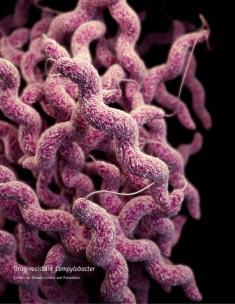
UK – Campylobacter levels hold steady

Food.Gov UK  

campy2

Major retailers publish April – June 2018 campylobacter results for fresh shop-bought UK-produced chickens.
13 September 2018

The top nine retailers across the UK have today published their latest testing results on campylobacter contamination in UK-produced fresh whole chickens (covering samples tested from April to June 2018).

The latest figures show that on average, across the major retailers, 3.7% of chickens tested positive for the highest level of contamination; these are the chickens carrying more than 1,000 colony forming units per gram (cfu/g) of campylobacter. The corresponding figure for the previous set of results (Jan-March 2018) was 3.8%, while for the first publication (July-September 2017) it was 4.6%.

Michael Wight, Director of Policy at the Food Standards Agency said:

‘These latest figures are consistent with previous results and show consolidation on the progress made so far in our mission to reduce Campylobacter levels to as low as reasonably achievable. Evidence has shown that Campylobacter tends to be more prevalent during warmer times of the year; so, to have seen the results holding steady during this period is encouraging.

‘I would like to thank the major retailers, processors and poultry producers for their efforts in tackling campylobacter and for working alongside the FSA to coordinate the publication of results.’

RASFF Alerts – Salmonella – Whipped Cream – White Sesame Seeds – Chicken Livers -Chicken Fillet Strips

RASFF-Logo

RASFF-Salmonella (presence /25g) in whipped cream from Belgium in France

RASFF-Salmonella (presence /25g) in white sesame seeds from Nigeria in Poland

RASFF -Salmonella (presence /25g) in chilled chicken livers from the Netherlands in the Netherlands

RASFF-Salmonella (presence /25g) in frozen chicken fillet strips from the Netherlands in France

RASFF-Salmonella (presence /25g) in white sesame seeds from Nigeria in Poland

RASFF Alert – E.coli – Chilled Mussels

RASFF-Logo

RASFF-too high count of Escherichia coli (up to 1300 MPN/100g) in chilled mussels from Italy in Italy

RASFF Alerts – Campylobacter – Chilled Chicken Breast – Chilled Chicken Thighs – Chilled Chicken Meat

RASFF-Logo

RASFF -Campylobacter coli (up to 3200 CFU/g) and Campylobacter jejuni (up to 65000 CFU/g) in chilled chicken breast from France in Denmark

RASFF-Campylobacter jejuni (200-24000 CFU/g) in chilled chicken thighs from the Netherlands, via Germany in Denmark

RASFF-Campylobacter (1100, 20000, 3200, 6400, 58000, 2600, 600, 3500, 7000, 500, 30000, 4800 CFU/g) in chilled chicken meat from France in Denmark

RASFF Alerts – Listeria monocytogenes – Various Chilled RTE Chicken Products – Shrimps in Brine

RASFF-Logo

RASFF-Listeria monocytogenes in various chilled ready-to-eat chicken products from Sweden into Sweden

RASFF-Listeria monocytogenes (<10 CFU/g) in shrimps in brine from Poland in Denmark