Category Archives: Food Illness

Australia – Raw eggs to blame for salmonella spike in WA, health authorities say

ABC Net Salmonella Eggs Food Poisoning Food Safety

Raw and runny eggs are the strongest link to soaring salmonella food poisoning cases in Western Australia, compared to NSW, where the number has fallen.

In 2017 salmonella cases in WA were more than double the five-year average, according to the latest WA Health Department’s OzFoodNet report.

Eggs emerged as the key culprit for several salmonella cases in 2017:

  • a sloppy egg casserole at a child care centre, affecting 24 children and staff
  • home prepared chocolate mousse with raw eggs made seven guests sick
  • a cafe serving aioli and mayonnaise made with raw eggs

Research – Scientists find single letter of genetic code that makes African Salmonella so dangerous

Outbreak News Today

Scientists at the University of Liverpool have identified a single genetic change in Salmonella that is playing a key role in the devastating epidemic of bloodstream infections currently killing around 400,000 people each year in sub-Saharan Africa.

Invasive non-typhoidal Salmonellosis (iNTS) occurs when Salmonella bacteria, which normally cause gastrointestinal illness, enter the bloodstream and spread through the human body. The African iNTS epidemic is caused by a variant of Salmonella Typhimurium (ST313) that is resistant to antibiotics and generally affects individuals with immune systems weakened by malaria or HIV.

In a new study published in PNAS, a team of researchers led by Professor Jay Hinton at the University of Liverpool have identified a specific genetic change, or single-nucleotide polymorphism (SNP), that helps the African Salmonella to survive in the human bloodstream.

Professor Hinton explained: “Pinpointing this single letter of DNA is an exciting breakthrough in our understanding of why African Salmonella causes such a devastating disease, and helps to explain how this dangerous type of Salmonella evolved.”

SNPs represent a change of just one letter in the DNA sequence and there are thousands of SNP differences between different types of Salmonella. Until now, it has been hard to link an individual SNP to the ability of bacteria to cause disease.

Europe – European surveillance shows high levels of drug resistance in zoonotic bacteria

CIDRAP

A surveillance report today from European health and food safety agencies indicates that antibiotic resistance in zoonotic bacteria from humans, food, and animals on the continent remains at high levels, with notable levels of multidrug resistance in two common causes of foodborne illness in humans.

The report is based on 2016 data provided by 28 EU member states and jointly analyzed by the European Centre for Disease Prevention and Control (ECDC) and the European Food Safety Authority (EFSA). It addresses resistance in bacterial isolates of zoonotic Salmonella and Campylobacter from humans, food, and poultry, along with resistance levels and mechanisms in indicator Escherichia coli and methicillin-resistant Staphylococcus aureus (MRSA) in animals and food.

Zoonotic bacteria are organisms that are transmissible between animals and humans, either through direct exposure or through consumption of contaminated meat. The ECDC and EFSA have been collecting and analyzing data submitted by EU countries on these bacteria to monitor for levels of antibiotic resistance since 2013.

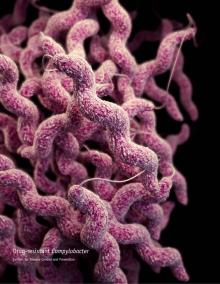
Research – Outbreak of Fluoroquinolone-Resistant Campylobacter jejuni Infections Associated with Raw Milk Consumption from a Herdshare Dairy — Colorado, 2016

CDC 


In August 2016, a local public health agency (LPHA) notified the Colorado Department of Public Health and Environment (CDPHE) of two culture-confirmed cases of Campylobacter infection among persons who consumed raw (unpasteurized) milk from the same herdshare dairy. In Colorado, the sale of raw milk is illegal; however, herdshare programs, in which a member can purchase a share of a herd of cows or goats, are legal and are not regulated by state or local authorities. In coordination with LPHAs, CDPHE conducted an outbreak investigation that identified 12 confirmed and five probable cases of Campylobacter jejuni infection. Pulsed-field gel electrophoresis (PFGE) patterns for the 10 cases with available isolates were identical using the enzyme Sma. In addition, two milk samples (one from the dairy and one obtained from an ill shareholder) also tested positive for the outbreak strain. Five C. jejuni isolates sent to CDC for antimicrobial susceptibility testing were resistant to ciprofloxacin, tetracycline, and nalidixic acid (1). Although shareholders were notified of the outbreak and cautioned against drinking the milk on multiple occasions, milk distribution was not discontinued. Although its distribution is legal through herdshare programs, drinking raw milk is inherently risky (2). The role of public health in implementing control measures associated with a product that is known to be unsafe remains undefined.

USA- Iowa Salmonella Case Counts Associated with Chicken Salad Sold at Fareway – Salmonella

Iowa.gov

*Confirmed Case Definition:

Persons with Salmonella Typhimurium (confirmed or visual match to Pattern JPXX01.0275) with illness onset since January 1, 2018 reporting consumption of chicken salad from Fareway (any store) in the 7 days prior to illness onset.

Probable Case Definition:

Persons that are epi linked to a confirmed case (all confirmed cases are laboratory confirmed)

OR

Persons who test positive by CIDT or culture (with serotype and PFGE pending) with illness onset since January 1, 2018 reporting consumption of chicken salad from Fareway (any store) in the 7 days prior to illness onset.

January 1, 2018 – February 16, 2018* Confirmed 28
Probable 66

Australia/New Zealand – Proposal P1017 – Criteria for Listeria monocytogenes – Microbiological Limits for Foods

FSANZ FSANZ3

This Proposal seeks to update Standard 1.6.1 with regards to criteria for Listeria monocytogenes limits in ready-to-eat foods; aligning with international (Codex) standards, Food Safety and Primary Production and Processing Standards and associated FSANZ guidance material.

Full information and documents from the link above.

UK Research- Norovirus in Food Outlets to be Mapped

Medical Press norovirus-2(1)

The University of Liverpool is leading a £2 million Food Standards Agency (FSA) project to map the occurrence of norovirus in food premises and industry workers.

Norovirus outbreaks can rapidly affect of people. In 2012 a batch of frozen strawberries infected 11,000 people in Germany, but there are significant gaps in the authorities’ understanding of which strains cause and which foods are the most likely to harbour the bacteria.

Researchers will produce data that will help the FSA to develop plans to reduce the infection by collecting swabs from work surfaces at more than 200 pubs, restaurants and hotels in the North West and South East of England.


USA – British Airways Meals – Possible Listeria monocytogenes

Food Poisoning Bulletin Eurofins Food Testing UK

Flying Food Group, an airline catering company, is warning passengers who ate an appetizer meal served on British Airways flights that they may have been exposed to Listeria monocytogenes bacteria. The meals were served on British Airways flights 0204, 0206, and 208 on March 19, 2014. The 41 appetizer meals were prepared at the corporation’s facility in Miami.

Listeriosis, the illness caused by the Listeria monocytogenes bacteria, takes up to 70 days to manifest. Anyone who ate the Char Grilled Asparagus and Grapefruit Appetizer meal served on those flights on that date should monitor themselves for the symptoms of listeriosis food poisoning for the next 70 days

UK – FSA Calls for Tender – Campylobacter in Scotland

FSA food_standards_agency_logo

Proposals are sought for research that investigates the factors affecting variations in Campylobacter disease rates in Scotland. Specifically the FSA is looking to commission research that will significantly improve our understanding whether deprivation continues to have a protective effect on the levels of Campylobacter infection and if so what factors are likely to be contributing to this effect. The FSA would like to know what factors are most likely to influence rates of Campylobacter infection in different socioeconomic groups in Scotland.

Canada – CFIA Recalls – Listeria monocyotgenes – Cheese and Bakery Products

CFIA CIFA

Federated Co-operatives Ltd. is recalling Co-op and Market Town Co-op brands bakery products from the marketplace due to possible Listeria contamination. Consumers should not consume the recalled products described below.

Recalled products

Brand Name Common Name Size Code(s) on Product UPC
Co-op California Garlic Bread None Best Before dates up to and including 14 MR 23 0 057316 130112
Co-op Garlic/Cheese Bread 250 g Best Before dates up to and including 14 MR 23 0 057316 073969
Co-op Garlic/Cheese Bread 2 Pk 450 g Best Before dates up to and including 14 MR 23 0 057316 146847
Market Town Co-op Pizza Bread 425 g Best Before dates up to and including 14 MR 23 0 057316 040305

CFIA

The Meat Shoppe Inc. is recalling The Meat Shoppe brand shredded cheese products from the marketplace due to possible Listeria contamination. Consumers should not consume the recalled products described below.

 Recalled products

Brand Name Common Name Size Code(s) on Product UPC
The Meat Shoppe Shredded Cheddar Cheese Variable Packed On dates from 2014JA08 up to and including 2014MR03 Starting with 200923
The Meat Shoppe Shredded Mozza Cheese Variable Packed On dates from 2014JA08 up to and including 2014MR03 Starting with 200922