Category Archives: Contaminated water

Research – Stainless Steel Sinks & Taps Linked to Legionnaires’ Disease

Legionella Control

CDC legionella

Image CDC

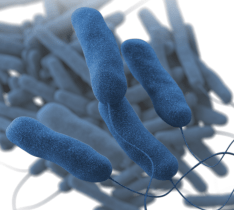
Recent research looking at the growth of Legionella bacteria on stainless steel sinks and taps has shown that under certain conditions, the use of this popular metal can increase the health risks associated with the potentially life-threatening Legionnaires’ disease.

Stainless steel sinks are a popular choice in kitchens throughout the UK… however, research has indicated it may not be the wisest choice when considering the associated risks presented by the potentially deadly Legionella bacteria.

The same applies to stainless steel taps – also a popular choice for many understandable reasons.

Ireland – Giardiasis in Ireland, 2018

HPSC

Key Facts
 Reported incidence of giardiasis in Ireland in 2018 is 5.7 per 100,000, similar to the
reported incidence at EU level
 Increase in recent yearsbelieved to be largely due to recent changes in laboratory
practice
 The ratio to male to female cases is 1.4:1
 More than two thirds of cases were reported to be acquired in Ireland, a change to our
historical understanding of giardiasis as a travel-acquired infection
 It is likely there is still under-ascertainment of giardiasis cases in several HSE-areas.
 Much remains to be done in Ireland and across Europe to better understand the
epidemiology and determinants of this disease


USA – E. coli Outbreak at Lake Minnetonka in Minnesota Sickens 30

Food Poisoning Bulletin

A rather strange E. coli outbreak has sickened 30 people who visited Lake Minnetonka in Minnesota over the Fourth of July weekend. According to news reports, people have contacted the Hennepin County Public Health after they were on the lake, especially in the Big Island area. Those 30 cases have been confirmed by the department.

USA – Vibrio vulnificus, ‘Flesh-eating bacteria’ cases, reported in Maryland, Florida

Outbreak News Today Vibrio_vulnificus_01

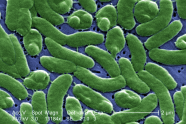
After a young boy was infected with Vibrio, a type of flesh-eating bacteria recently near Ocean City, health officials say this case is rare and local waterways are still safe to swim in.

The boy’s mother, Brittany Carey, described what happened to her son in a June 29 Facebook post. According to Carey, her son was swimming in the Sinepuxent Bay just north of the Harry Kelley Memorial Bridge between West Ocean City and downtown.

USA – Cryptosporidiosis Outbreaks — United States, 2009–2017

CDC

What is already known about this topic?

Cryptosporidium is the leading cause of outbreaks of diarrhea linked to water and the third leading cause of diarrhea associated with animal contact in the United States.

What is added by this report?

During 2009–2017, 444 cryptosporidiosis outbreaks, resulting in 7,465 cases were reported by 40 states and Puerto Rico. The number of reported outbreaks has increased an average of approximately 13% per year. Leading causes include swallowing contaminated water in pools or water playgrounds, contact with infected cattle, and contact with infected persons in child care settings.

What are the implications for public health practice?

To prevent cryptosporidiosis outbreaks, CDC recommends not swimming or attending child care if ill with diarrhea and recommends hand washing after contact with animals.

Malaysia – Bottled water contaminated with Pseudomonas aeruginosa

Outbreak News Today 

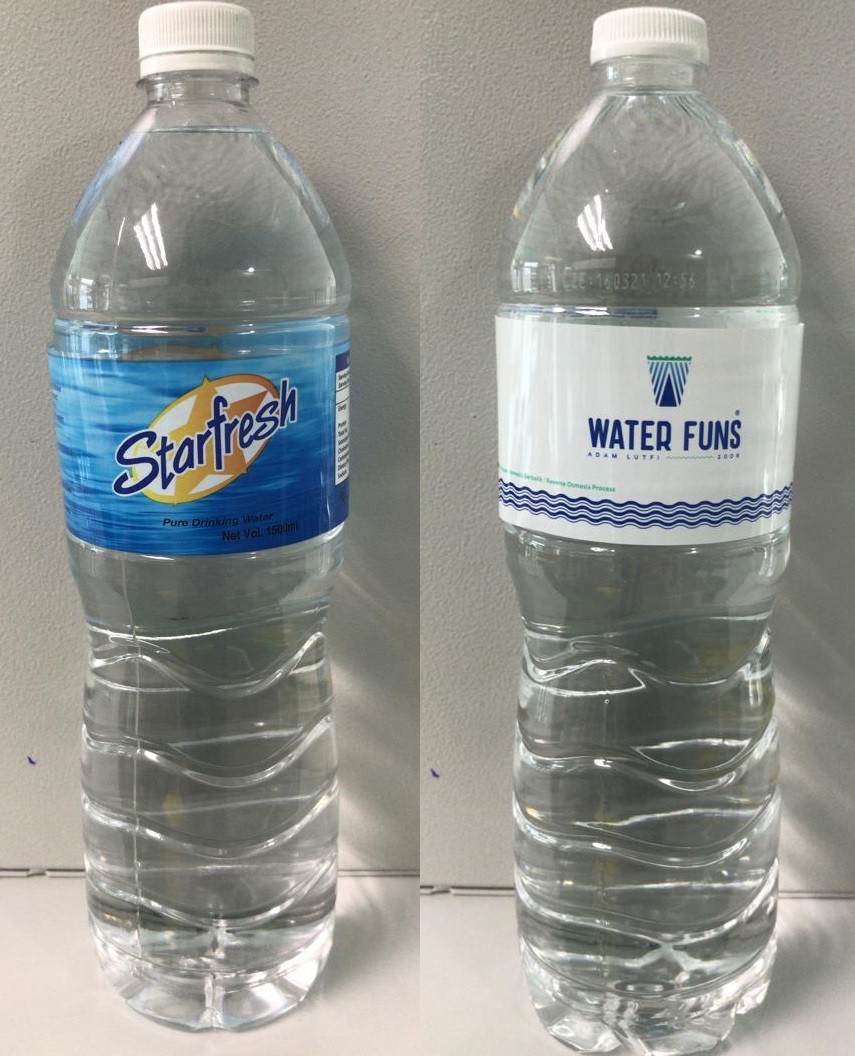
Malaysia health officials reported on the recall of Malaysian Starfresh packaged beverage (AMB) water products from the Singapore market because they are tainted with Pseudomonas aeruginosa bacteria.

AMB products involved in 500ml and 1500ml with the final date on May 11, 2021 and May 13, 2021, respectively.

The Ministry of Health of Malaysia (KKM) through the Food Safety and Quality Division (BKKM) has carried out verification on the refinery and a food safety guarantee program has been found that is not implemented effectively . In addition, the results of an analysis of Starfresh names exported to Singapore and the Waterfuns brand sold on the local market did not comply with the Food Deed 1983 and Food Regulations 1985 because they were found to be contaminated with Pseudomonas aeruginosa bacteria This product may be identified by the final date on the label. KKM has also directed the refineries to withdraw AMB products involved in the local market.

USA – Legionnaires’ Disease Outbreak at Advocate Christ Medical Center

Outbreak News Today Legionella_Plate_01

The Illinois Department of Public Health is investigating four cases of Legionnaires disease linked to Advocate Christ Medical Center in Oak Lawn, Illinois.  Three patients and an employee have been linked to the outbreak thus far.

New Zealand – The burden of Legionnaires’ disease in New Zealand (LegiNZ): a national surveillance study

The Lancet 

Summary

Background

Legionnaires’ disease is under-diagnosed because of inconsistent use of diagnostic tests and uncertainty about whom to test. We assessed the increase in case detection following large-scale introduction of routine PCR testing of respiratory specimens in New Zealand.

Methods

LegiNZ was a national surveillance study done over 1-year in which active case-finding was used to maximise the identification of cases of Legionnaires’ disease in hospitals. Respiratory specimens from patients of any age with pneumonia, who could provide an eligible lower respiratory specimen, admitted to one of 20 participating hospitals, covering a catchment area of 96% of New Zealand’s population, were routinely tested for legionella by PCR. Additional cases of Legionnaires’ disease in hospital were identified through mandatory notification.

Findings

Between May 21, 2015, and May 20, 2016, 5622 eligible specimens from 4862 patients were tested by PCR. From these, 197 cases of Legionnaires’ disease were detected. An additional 41 cases were identified from notification data, giving 238 cases requiring hospitalisation. The overall incidence of Legionnaires’ disease cases in hospital in the study area was 5·4 per 100 000 people per year, and Legionella longbeachae was the predominant cause, found in 150 (63%) of 238 cases.

Interpretation

The rate of notified disease during the study period was three-times the average over the preceding 3 years. Active case-finding through systematic PCR testing better clarified the regional epidemiology of Legionnaires’ disease and uncovered an otherwise hidden burden of disease. These data inform local Legionnaires’ disease testing strategies, allow targeted antibiotic therapy, and help identify outbreaks and effective prevention strategies. The same approach might have similar benefits if applied elsewhere in the world.

UK – Scotland – Cyclospora risk for travellers to Mexico

HPS 

Seasonal outbreaks of Cyclospora infection in UK travellers returning from Mexico have been reported, with the majority of cases in travellers who have stayed in the Riviera Maya and Cancun regions of Mexico. The source of infection was likely to be contaminated food items supplied to hotels throughout the area.

Cyclospora cayetanensis is a protozoan parasite that can infect humans, causing frequent, watery diarrhoea, abdominal cramping, bloating, nausea, flatulence, low-grade fever and loss of both appetite and weight. HIV-positive individuals and those with other immune deficiencies can be at risk of more severe infection.

On return from Mexico, travellers with any symptoms such as those described should seek medical attention and inform their GP of their travel history.

Healthcare practitioners should raise awareness of Cyclospora infection with all travellers to Mexico, and should strongly advise that travellers maintain a high standard of food, water and personal hygiene, even if staying in high-end resorts.

For further information on protozoan parasitic infection, including Cyclospora, consult TRAVAX (for health professionals) and fitfortravel (for the general public).

Sources: TRAVAX and fitfortravel (both 10 June 2019)

Norway – 2 dead, 2,000 sick from Campylobacter in water in Norway

Barfblog

A 1-year-old child from the island died last week of an infection in the digestive tract, but it was not clear whether the death was linked to the water contamination.

About 2,000 people have fallen sick. Since June 6, 64 have been hospitalized.

Hospital tests have shown that Campylobacter was found in at least three dozen cases.

Local newspaper Askoeyvaeringen reported that there had been been safety issues with the waterworks in the Askoey municipality, and faeces was recently found near a reservoir that supplied part of the area’s drinking water.