Category Archives: Clostridium

New Zealand – Auckland health officials warn of scombroid poisoning

Outbreak News Today

Auckland health officials are advising people to seek medical advice from their GP if they have severe or persistent allergic reactions from eating fish.

They have had reports of people who have eaten fish from a ready meal service becoming ill with histamine poisoning, also known as scombroid poisoning.

Medical Officer of Health Dr Jay Harrower says the symptoms are often a combination of an allergic reaction and gastroenteritis.

Canada – My Grandfather’s Farm brand Pumpkin Pie Jam recalled due to potential presence of dangerous bacteria -Clostridium botulinum

CFIA

Recall details

Ottawa, November 20, 2020 – My Grandfather’s Farm is recalling My Grandfather’s Farm brand Pumpkin Pie Jam from the marketplace because it may permit the growth of Clostridium botulinum. Consumers should not consume the recalled product described below.

Recalled product

Brand Product Size UPC Codes
My Grandfather’s Farm Pumpkin Pie Jam 250 mL (sold in Mason Jars) None September 10, 2020

What you should do

If you think you became sick from consuming a recalled product, call your doctor.

Check to see if you have the recalled product in your home. Recalled products should be thrown out or returned to the store where they were purchased.

Food contaminated with Clostridium botulinum toxin may not look or smell spoiled but can still make you sick.

Symptoms in adults can include facial paralysis or loss of facial expression, unreactive or fixed pupils, difficulty swallowing, drooping eyelids, blurred or double vision, difficulty speaking or including slurred speech, and a change in sound of voice, including hoarseness.

Symptoms of foodborne botulism in children can include difficulty swallowing, slurred speech, generalized weakness and paralysis. In all cases, botulism does not cause a fever. In severe cases of illness, people may die.

Background

This recall was triggered by Canadian Food Inspection Agency (CFIA) test results. The CFIA is conducting a food safety investigation, which may lead to the recall of other products. If other high-risk products are recalled, the CFIA will notify the public through updated Food Recall Warnings.

The CFIA is verifying that industry is removing the recalled product from the marketplace.

Illnesses

There have been no reported illnesses associated with the consumption of this product.

Product photos

Printer ready version of photos

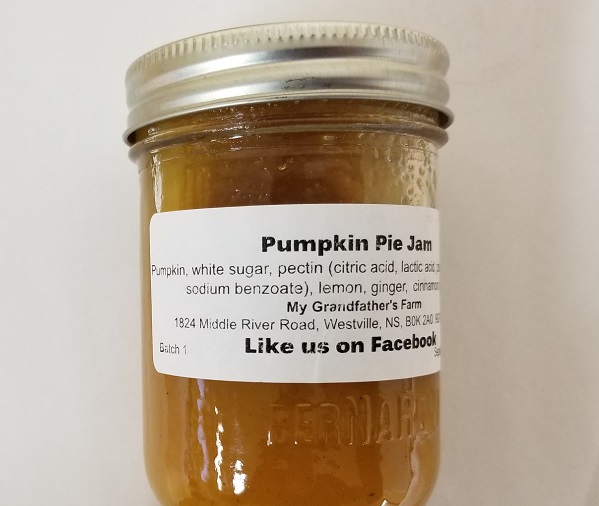
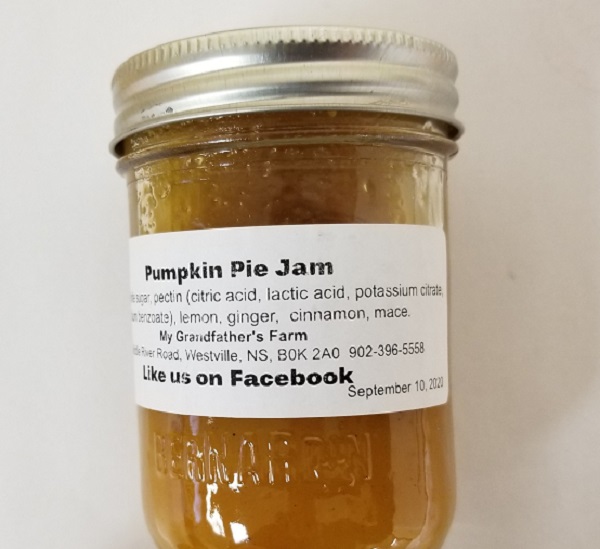
  • My Grandfather’s Farm – Pumpkin Pie Jam – 250 mL
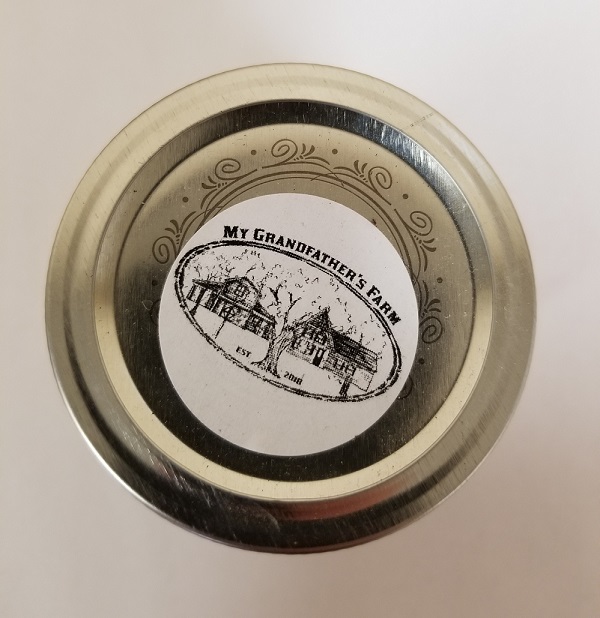
  • My Grandfather’s Farm – Pumpkin Pie Jam – 250 mL (top)
  • My Grandfather’s Farm – Pumpkin Pie Jam – 250 mL (label)
  • My Grandfather’s Farm – Pumpkin Pie Jam – 250 mL (label)

Public enquiries and media

Company information
My Grandfather’s Farm: 1824 Middle River Rd., Union Centre, NS
Telephone: 902-396-5558
Email: info@mygrandfathersfarm.ca

Research – Evaluation of Listeria monocytogenes and Staphylococcus aureus survival and growth during cooling of hams cured with natural-source nitrite

Journal of Food Protection

Growing consumer desires for clean label, “natural” products drives more meat processors to cure meat products with natural sources of nitrate or nitrite such as celery juice powder (CJP). One particular challenge for these producers is to identify safe cooling rates in CJP-cured products where extended cooling could allow growth of pathogens. USDA FSIS recently added guidelines for stabilization of meat products cured using naturally occurring nitrites, based on control of Clostridium spp . Currently a gap exists in knowledge associated with safe cooling rates of naturally cured ham that prevent the growth of Listeria monocytogenes and Staphylococcus aureus that are potential post-lethality contaminants. The study aims to investigate the temperature profiles of naturally cured hams of typical sizes during refrigerator cooling and determine the survival behavior of S. aureus and L. monocytogenes on ham during these cooling periods. Whole (14 lbs / 6300 g), half (6 lbs / 2700 g) and quarter hams (3 lbs / 1400 g) were slowly cooked in Alkar Ò 1000 smokehouse until internal temperatures reached a minimum of 140 ° F / 60°C and were immediately transferred into walk-in cooler (38 ° F / 3.3°C). Cooling times for all sizes were within the requirements for cured products but not for uncured products. Worst-case scenarios of post-processing surface contamination were simulated by inoculating small, naturally cured ham samples with S. aureus or L. monocytogenes , which were cooled in controlled processes (130-45 ° F / 54.4-7.2 ° C in 720-900 min). B y the end of cooling, each inoculum had a small decrease of 0.5-0.6 log CFU/g. This study helps small processors identify if recommended concentrations of natural cure agents that prevent growth of Clostridium pathogens may also prevent growth of other pathogens during cooling, which aids small meat processors in production and quality control.