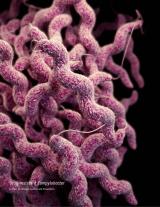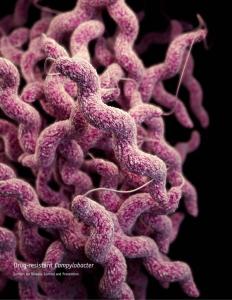
Category Archives: Campylobacter

Research -Prevalence, antimicrobial susceptibility, and virulence of Campylobacter jejuni isolated from chicken meat

Wiley Online Library

campy2

Abstract

The aim of this study was to determine the prevalence and antimicrobial resistance of Campylobacter jejuni isolated from retail chicken meat. The identification of Campylobacter isolates and the presence of virulence factor were evaluated by polymerase chain reaction (PCR). Furthermore, clove oil, cinnamon, and turmeric extracts were evaluated for the antimicrobial potential against Campylobacter isolates. Out of 200 chicken meat samples, 80 (40%) samples were found contaminated with Campylobacter jejuni. Antibacterial susceptibility testing indicated that out of 80 isolates 60 (75%) were resistant to tetracycline followed by 31 (38.75%) to ciprofloxacin, 12 (15%) to ampicillin, 8 (10%) to erythromycin, and 2 (2.5%) were resistant to chloramphenicol. Clove oil and cinnamon extract showed antibacterial potential against Campylobacter isolates. Furthermore, all the 80 isolates (100%) were found positive for virulence genes (cadF, flaA, and dnaJ). The presence of antibacterial resistance and virulence factors in C. jejuni highlighted the risk associated with retail poultry meat.

Practical applications

Campylobacter jejuni is associated with foodborne illnesses such as gastrointestinal intestinal complications. This study demonstrated that raw chicken meat should be subjected to pretreatment to avoid the foodborne illnesses associated with multidrug‐resistant (MDR) Campylobacter jejuni. Moreover, the use of antibiotics should be strictly monitored in developing countries to avoid the emergence of multidrug‐resistant pathogens.
 

Europe – Campylobacteriosis – Annual Epidemiological Report for 2016

ECDC

Publication series: Annual Epidemiological Report on Communicable Diseases in Europe

Time period covered: This report is based on data for 2016 retrieved from The European Surveillance System (TESSy) on 15 March 2018.

Europe – The European Union summary report on trends and sources of zoonoses, zoonotic agents and food-borne outbreaks in 2017

ECDC

This report of the European Food Safety Authority and the European Centre for Disease Prevention and Control presents the results of zoonoses monitoring activities carried out in 2017 in 37 European countries (28 Member States (MS) and nine non-MS). Campylobacteriosis was the commonest reported zoonosis and its EU trend for confirmed human cases increasing since 2008 stabilised during 2013–2017. The decreasing EU trend for confirmed human salmonellosis cases since 2008 ended during 2013–2017, and the proportion of human Salmonella Enteritidis cases increased, mostly due to one MS starting to report serotype data. Sixteen MS met all Salmonella reduction targets for poultry, whereas 12 MS failed meeting at least one. The EU flock prevalence of target Salmonella serovars in breeding hens, laying hens, broilers and fattening turkeys decreased or remained stable compared to 2016, and slightly increased in breeding turkeys. Salmonella results on pig carcases and target Salmonella serovar results for poultry from competent authorities tended to be generally higher compared to those from food business operators. The notification rate of human listeriosis further increased in 2017, despite Listeria seldom exceeding the EU food safety limit in ready-to-eat food. The decreasing EU trend for confirmed yersiniosis cases since 2008 stabilised during 2013–2017. The number of confirmed shiga toxin-producing Escherichia coli (STEC) infections in humans was stable. A total of 5,079 food-borne (including waterborne) outbreaks were reported. Salmonella was the commonest detected agent with S. Enteritidis causing one out of seven outbreaks, followed by other bacteria, bacterial toxins and viruses. The agent was unknown in 37.6% of all outbreaks. Salmonella in eggs and Salmonella in meat and meat products were the highest risk agent/food pairs. The report further summarises trends and sources for bovine tuberculosis, Brucella, Trichinella, Echinococcus, Toxoplasma, rabies, Coxiella burnetii (Q fever), West Nile virus and tularaemia.

UK – UK father paralysed after food poisoning issues safety warning to others – Campylobacter

Barf Blog

campy2

ITV news reports a father who became paralysed after contracting a rare illness from food poisoning has issued a warning to others about food safety.

Dai Braham, 40, was left paralysed from the nose down after becoming unwell while watching his six-year-old son play rugby in April.

Within a matter of days, he was in an induced coma. Father-of-two Dai was a keen bodybuilder and fitness fanatic

It was only later that medical staff discovered the fitness fanatic from Bridgend had been suffering from food poisoning campylobacter – which led to the rare autoimmune disorder Guillian-Barré Syndrome.

Research – Capacity to adhere to and invade human epithelial cells, as related to the presence of virulence genes in, motility of, and biofilm formation of Campylobacter jejuni strains isolated from chicken and cattle

NRC Research Press

Campylobacter jejuni is a zoonotic pathogen transmitted through the “farm to fork” route. Outbreaks are generally associated with the consumption of chicken meat; however, dairy cows, birds, wild and domestic food animals, and pets are other important sources. Currently, there are not enough data comparing the virulence of strains isolated from these reservoirs. In this study, we compared C. jejuni strains isolated from broiler chickens and dairy cattle by determining their ability to adhere to and invade in vitro human colonic epithelial cells in the T84 cell line with their motility, formation of biofilms, and presence of eight virulence genes. A Wilcoxon Rank Sum test was performed to establish the relationship between presence of the studied genes and cellular invasion and adhesion, as well as differences between the animal species of origin of the isolate. A Spearman correlation was performed to assess the relationship between invasion and motility, along with invasion and biofilm generation. The virB11 gene was positively associated with the adherence capacity of the strains (mean difference = 0.21, p = 0.006), and strains isolated from chickens showed a significant difference for adherence compared with strains isolated from cattle (p = 0.0001). Our results indicate that strains of C. jejuni have a difference in their adherence capacity depending on the animal reservoir from which they came, with chicken isolates displaying higher virulence than dairy cattle isolates.

Research UK – Campylobacter levels continue to fall

FSA Campylobacter

The top nine retailers across the UK have today published their latest testing results on campylobacter contamination in UK-produced fresh whole chickens (covering samples tested from July to September 2018).

The latest figures show that on average, across the major retailers, 3.5% of chickens tested positive for the highest level of contamination. These are the chickens carrying more than 1,000 colony forming units per gram (cfu/g) of campylobacter. The corresponding figure for the previous set of results (April – June 2018) was 3.7%, while for the first publication (July-September 2017) it was 4.6%.

Michael Wight, Director of Policy at the Food Standards Agency said:

‘The latest figures show further progress being made in our efforts to reduce campylobacter in UK-produced fresh whole chickens.

‘We will continue to build on these encouraging results, working closely with retailers and smaller poultry businesses to bring levels down to as low as reasonably achievable.

‘Thanks again to the major retailers and poultry producers for continuing to tackle campylobacter and for working alongside the FSA in the publication of the results.’

Results

The average percentage of chickens in each band of contamination from the retailers’ own data can be found in the table below.

Contamination levels July-September 2017 October-December 2017 January-March 2018 April-June 2018 July-September 2018
cfu/g less than 10 48.7% 57.7% 59.1% 60.6% 58.8%
cfu/g 10-99 28.3% 22.0% 23.9% 23.3% 26.7%
cfu/g 100-1000 18.4% 16.7% 13.2% 12.5% 11%
cfu/g over 1000 4.6% 3.6% 3.8% 3.7% 3.5%

RASFF Alert- Campylobacter -Roasted Chicken Breast

RASFF-Logo

RASFF-Campylobacter ( <100 CFU/g) in frozen roasted chicken breast from Poland in France

USA – Campylobacter in puppies: Petland store faces 3rd lawsuit this year alleging it knowingly sold sick puppies

BarfBlog


A Petland store in Michigan is facing its third lawsuit this year after a man said he was hospitalized after buying a puppy later found to be sick from the store.

Doug Rose said he became infected with Campylobacter — a multi-drug resistant infection — after he and his wife Dawn purchased Thor, a beagle-pug mix puppy that the couple said was infected with parasites, suffered from coccidia and giardia, and had an upper respiratory infection, The Oakland Press reported.

RASFF Alert – Campylobacter -Chilled Chicken Products

RASFF-Logo

RASFF– Campylobacter coli (200-1200 CFU/g) and Campylobacter jejuni ( 700-2900 CFU/g) in chilled chicken products from Poland in Denmark

RASFF Alert – Campylobacter -Chilled Chicken Breast

RASFF-Logo

RASFF-Campylobacter jejuni (up to 12000 CFU/g) in chilled chicken breasts and fillets from France in Denmark