Category Archives: Zoonosis

Research – Application of a Novel Lytic Podoviridae Phage Pu20 for Biological Control of Drug-Resistant Salmonella in Liquid Eggs

MDPI

kswfoodworld Salmonella

Salmonella is a globally distributed zoonotic pathogen. Among them, S. Pullorum is a host-specific pathogen that seriously affects the development of the poultry breeding industry in China. It mainly infects chickens and can cause white scabs, and the mortality rate after infection is almost 100%. As antibiotics are widely used in animal feed and other production processes, Salmonella resistance has gradually increased. Therefore, there is an increasing need to develop new technologies to control multi-drug resistant (MDR) pathogens and confirm their actual effectiveness in the target food matrix. Bacteriophage can efficiently and specifically lyse bacteria, and will be a potential bactericide to replace antibiotics. In this study, 34 strains of Salmonella bacteriophages were isolated from environmental resources. Therein, phage Pu20 with the widest host spectrum had the strongest ability to lyse tested Salmonella strains. Further studies showed that Pu20 had high pH tolerance and heat resistance, short incubation period. Pu20 can effectively inhibit the growth of two strains of MDR Salmonella in liquid egg white and yolk at 4 ℃ and 25 ℃, respectively. According to morphological and phylogenetic analysis, Pu20 belongs to the Podoviridae family. Genomic analysis of Pu20 indicates a linear 59435 bp dsDNA sequence with no homology to virulence or antibiotic resistance-related genes. Together, these results sheds light on the potential biocontrol application value of Pu20 in food products.

Research – Potential Risk of Three Zoonotic Protozoa (Cryptosporidium spp., Giardia duodenalis, and Toxoplasma gondii) Transmission from Fish Consumption

MDPI

In recent decades, worldwide fish consumption has increased notably worldwide. Despite the health benefits of fish consumption, it also can suppose a risk because of fishborne diseases, including parasitic infections. Global changes are leading to the emergence of parasites in new locations and to the appearance of new sources of transmission. That is the case of the zoonotic protozoa Cryptosporidium spp., Giardia duodenalis, and Toxoplasma gondii; all of them reach aquatic environments and have been found in shellfish. Similarly, these protozoa can be present in other aquatic animals, such as fish. The present review gives an overview on these three zoonotic protozoa in order to understand their potential presence in fish and to comprehensively revise all the evidences of fish as a new potential source of Cryptosporidium spp., Giardia duodenalis, and Toxoplasma gondii transmission. All of them have been found in both marine and freshwater fishes. Until now, it has not been possible to demonstrate that fish are natural hosts for these protozoa; otherwise, they would merely act as mechanical transporters. Nevertheless, even if fish only accumulate and transport these protozoa, they could be a “new” source of infection for people. View Full-Text

Research – Netherlands – Surveillance zoonoses in broilers 2018-2019

RIVM

Animals can carry pathogens that can cause disease in humans. The diseases which they cause are known as zoonoses. In 2018 and 2019 the National Institute for Public Health and the Environment (RIVM) and the Netherlands Food and Consumer Product Safety Authority [Netherlands Food and Consumer Product Safety Authority] (NVWA) investigated how often some of these pathogens occurred in broilers. This study involved broilers at 198 farms as well as 132 livestock farmers, family members and employees. RIVM assessed whether the same pathogens also occurred in these persons. Most of these pathogens usually cause diarrhoea, but the infections can sometimes be more severe. ESBL-producing bacteria were also assessed, as they are resistant to an important group of antibiotics.

A number of pathogens occur frequently in the investigated broilers. They are present in the animals’ intestines and therefore in the manure as well. Meat can become contaminated in the slaughterhouse if it comes into direct contact with the manure. People can prevent an infection by only eating chicken that has been thoroughly cooked. It is also important to prevent other food from coming into contact with raw meat.

Of the pathogens investigated, ESBL-producing bacteria were found most often, namely in the broilers on 36% of the farms. Among livestock farmers and family members, these bacteria were found in 7% of participants. This is comparable to the percentage in the general Dutch population.

Campylobacter was found on 32% of broiler farms. This is comparable to the numbers from Campylobacter surveillance conducted between 1999 and 2002. Campylobacter was also found in two of the human participants.

Salmonella surveillance is carried out on all broiler farms according to European legislation. Salmonella was reported in broilers from 11% of the farms. The types of Salmonella bacteria identified are those that can cause diarrhoea in people. Salmonella was also found in one human participant.

STEC and Listeria were found on very few broiler farms. These bacteria were detected on 1% (Listeria) or less (STEC) of the investigated farms.

Hong Kong – Coronaviruses and Foodborne Zoonoses

CFS

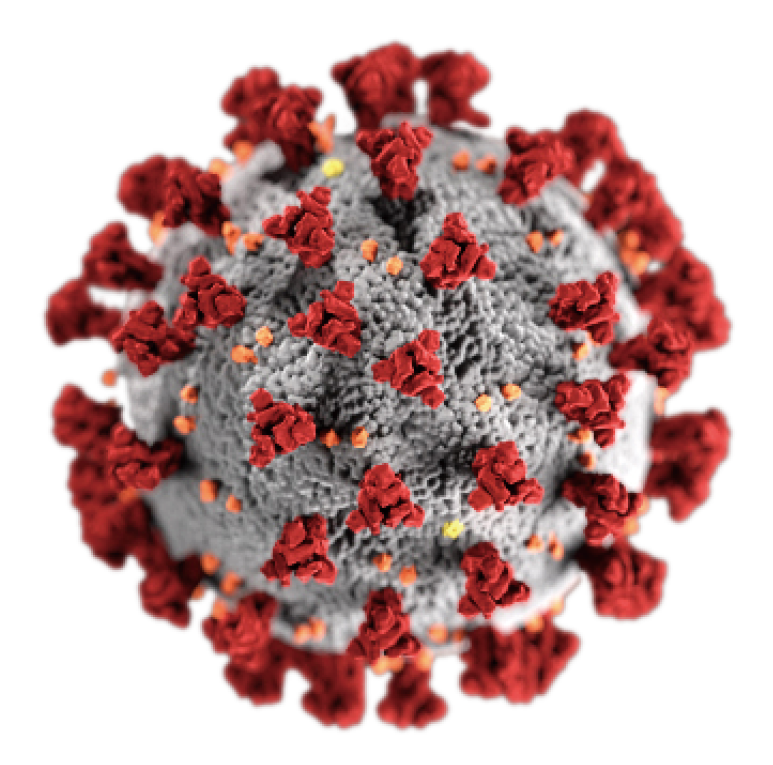
The current outbreak of coronavirus disease (COVID-19) has been spreading rapidly around the world.  COVID-19 was believed to be caused by a novel coronavirus (SARS-CoV-2), originated in animals and plausibly jumping across the species barrier to infect humans, The virus has then sustained a human-to-human transmission.

Zoonoses are diseases or infections transmitted between some animals and humans.  There are various ways in which people can catch a zoonosis: through direct contact with animals or materials contaminated by these animals, being bitten by a germ-carrying vector such as a mosquito, as well as through drinking contaminated water or eating contaminated food (foodborne zoonoses).  While COVID-19 is likely a zoonosis, can we acquire the disease through eating?

Illustration of a SARS-CoV-2 virion