Category Archives: Water

USA – DPH warns residents about severe Vibrio infections caused by consumption of raw shellfish or exposure to salt or brackish water

CT Portal

The Connecticut Department of Public Health (DPH) is warning residents about the potential dangers of consuming raw shellfish and exposure to salt or brackish water along Long Island Sound, due to severe Vibrio vulnificus infections.

 Since July 1, three cases of V. vulnificus infections have been reported to DPH. The three patients are between 60-80 years of age. All three patients were hospitalized and one died.  One patient reported consuming raw oysters from an out-of-state establishment. Two patients reported exposure to salt or brackish water in Long Island Sound. Both patients had pre-existing open cuts or wounds or sustained new wounds during these activities which likely led to the infections. 

 “The identification of these severe cases, including one fatality, due to V. vulnificus is concerning,” said DPH Commissioner Manisha Juthani, MD. “People should consider the potential risk of consuming raw oysters and exposure to salt or brackish water and take appropriate precautions. Particularly during the hottest months of the summer, bacteria are more likely to overgrow and contaminate raw shellfish. Given our current heat wave, this may be a time to exercise particular caution in what you consume.”
Ireland – Boil notice an ongoing risk for the immunocompromised in West Limerick -Cryptosporidium

Limerick Post

LIMERICK residents who are at risk by being immunocompromised may be waiting months before they can shower in their own homes.

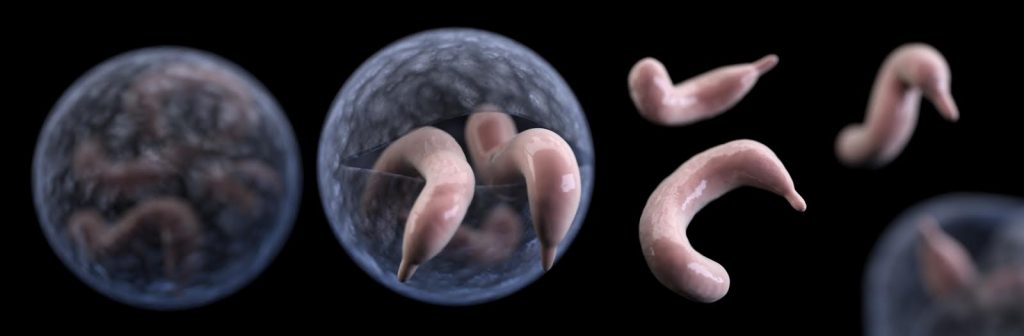
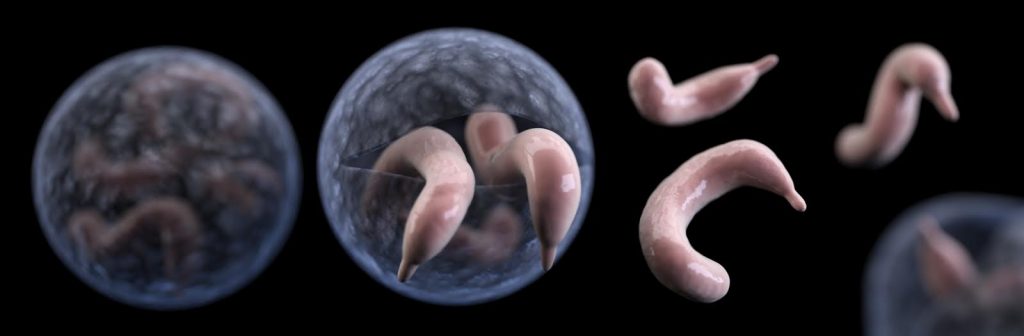
“Months” is how long Uisce Éireann says it may be until it can put a new treatment system in place to deal with cryptosporidium (a parasite found in human and animal faeces) found in the water supply at the Shannon Estuary Water Treatment Plant, which has seen a boil notice enforced in the area since May.

Affected households have been told that the water is safe to drink and to use to brush teeth if boiled, but medical experts warn that while infection can cause healthy people to become mildly ill, it can lead to a life-threatening illness for people with weak immune systems.

Research – Is Legionella Bacteria Becoming Antibiotic Resistant?

Legionella Control

In this article the water safety specialists at Legionella Control International look at the role of antibiotics in protecting humans against pathogenic organisms, paying particular attention to waterborne bacteria including Pseudomonas aeruginosa and legionella.

Research – Estimating Waterborne Infectious Disease Burden by Exposure Route, United States, 2014

CDC

Abstract

More than 7.15 million cases of domestically acquired infectious waterborne illnesses occurred in the United States in 2014, causing 120,000 hospitalizations and 6,600 deaths. We estimated disease incidence for 17 pathogens according to recreational, drinking, and nonrecreational nondrinking (NRND) water exposure routes by using previously published estimates. In 2014, a total of 5.61 million (95% credible interval [CrI] 2.97–9.00 million) illnesses were linked to recreational water, 1.13 million (95% CrI 255,000–3.54 million) to drinking water, and 407,000 (95% CrI 72,800–1.29 million) to NRND water. Recreational water exposure was responsible for 36%, drinking water for 40%, and NRND water for 24% of hospitalizations from waterborne illnesses. Most direct costs were associated with pathogens found in biofilms. Estimating disease burden by water exposure route helps direct prevention activities. For each exposure route, water management programs are needed to control biofilm-associated pathogen growth; public health programs are needed to prevent biofilm-associated diseases.

USA – More than 30 students have reported illness after Legionella discovery at Kettering field house

WHIO

Kettering City Schools says Legionella was found in the water at the district’s Roush Stadium and more than 30 students have reported being sick.

The district received test results on Saturday, June 17 of all water sources in the Field House at Roush Stadium. The water tested positive for Legionella, according to a letter sent to families of football players obtained by News Center 7.

Research – Increased Incidence of Legionellosis after Improved Diagnostic Methods, New Zealand, 2000–2020

cdc

Abstract

Legionellosis, notably Legionnaires’ disease, is recognized globally and in New Zealand (Aotearoa) as a major cause of community-acquired pneumonia. We analyzed the temporal, geographic, and demographic epidemiology and microbiology of Legionnaires’ disease in New Zealand by using notification and laboratory-based surveillance data for 2000‒2020. We used Poisson regression models to estimate incidence rate ratios and 95% CIs to compare demographic and organism trends over 2 time periods (2000–2009 and 2010–2020). The mean annual incidence rate increased from 1.6 cases/100,000 population for 2000–2009 to 3.9 cases/100,000 population for 2010–2020. This increase corresponded with a change in diagnostic testing from predominantly serology with some culture to almost entirely molecular methods using PCR. There was also a marked shift in the identified dominant causative organism, from Legionella pneumophila to L. longbeachae. Surveillance for legionellosis could be further enhanced by greater use of molecular typing of isolates.

Research – Bromine and Chlorine Disinfection of Cryptosporidium parvum Oocysts, Bacillus atrophaeus Spores, and MS2 Coliphage in Water

Pubs Acs Org

Abstract

Abstract Image

Conventional water treatment practices utilizing chemical disinfection, especially chlorination, are considered generally effective in producing microbiologically safe drinking water. However, protozoan pathogens such as oocysts of Cryptosporidium parvum are very resistant to chlorine, which has led to consideration of alternative disinfectants for their control. Free bromine, HOBr, has not been evaluated extensively as an alternative halogen disinfectant for inactivation of Cryptosporidium parvum in drinking water or reclaimed water for non-potable uses. Bromine is a versatile disinfectant consisting of different chemical forms with persistent microbicidal efficacy under varied water quality conditions and is effective against a range of waterborne microbes of health concern. The objectives of this study are to (1) compare the efficacy of free bromine to free chlorine at similar concentrations (as milligrams per liter) for disinfection of Cryptosporidium parvum oocysts, Bacillus atrophaeus spores, and MS2 coliphage in a model buffered water and (2) evaluate the kinetics of inactivation of these microorganisms using appropriate disinfection models. Overall, at a target concentration of ∼5 mg/L, bromine averaged 0.6 log (73.8%) reductions of C. parvum oocyst infectivity after 300 min (CT: 1166 min·mg/L) and produced up to a 0.8 log reduction disinfectant activity. An ∼5.0 mg/L chlorine dose increased oocyst infectivity by only 0.4 log (64%) after 300 min (CT: 895 min·mg/L). Bacillus atrophaeus spores and MS2 coliphage treated with bromine and chlorine were reduced by 4 log10 (99.99%) for both disinfectants over the duration of the experiments.

Ireland – Limerick boil water notice may be in place until December – Cryptosporidium

Live95 FM

Councillors found out today that the boil water notice affecting 7000 customers in Limerick may be in place until December.

In the first fifteen minutes of today’s Limerick City and County Council meeting, two councillors walked out in protest. 

Councillor Adam Teskey and Councillor Emmet O’Brien wanted to discuss the boil water notice, which came into force last week.

The notice affects people in Askeaton, Foynes, Ballyhahill, Kildimo, Pallaskenry and surrounding areas.

Speaking to Live 95 just after they left the chamber, Cllr Teskey said the cryptosporidium in the water is a major health concern.

India – 135 people hospitalised in Malappuram after showing symptoms of food poisoning

The Hindu

As many as 135 people who attended a wedding at Kalady near Tavanur in Malappuram district on Wednesday were hospitalised after they developed symptoms of food poisoning.

Many of them are children. They were admitted to different hospitals at Edappal and neighbouring places with diarrhea, vomiting, and fever. Health officials said none was critical.

While 69 people from Thuruvanam island near Maranchery, who accompanied the bride to the party at the groom’s house at Kalady, fell sick, 66 of those who suffered food poisoning were from Kalady panchayat.

Health officials examined the premises where food poisoning was suspected and said it could have been caused by the water used during the function.

Ireland – 7,000 consumers affected by Limerick water supply boil notice – Cryptosporidium

Limerick Post

A BOIL water notice affecting 7,000 consumers served by the Foynes/Shannon Estuary Public Water Supply has been issued by Uisce Éireann after cryptosporidium was found in the treatment plant.

The notice, which was issued  following consultation with the Health Service Executive (HSE), affects customers in Askeaton, Foynes, Ballyhahill, Loghill, Ballysteen, Pallaskenry, Kildimo and Shanagolden and surrounding areas.

All consumers affected by the notice must boil their water before drinking, preparing uncooked food, brushing teeth and making ice.

Operations Lead Duane O’Brien said Uisce Éireann acknowledged the impact of the notice on the communities affected and regrets the inconvenience to impacted customers.