Category Archives: water microbiology

New Zealand – Water at Christchurch’s Princess Margaret Hospital contaminated with E coli

STUFF ecoli

Staff, patients and visitors are unable to drink the water at a Christchurch hospital after it was found to be contaminated with E coli.

In an email to Princess Margaret Hospital staff on Sunday, the Canterbury District Health Board (CDHB) said people should avoid drinking the water until further notice.

“Everyone on the site should use bottled water where possible and do not use zips or plumbed in water coolers until further notice,” the email said.

CDHB chief of psychiatry Dr Peri Renison said on Monday evening the water supply had since tested negative for contaminants and no-one had been harmed.


Research – How to kill pathogens on seafood

Food Processing

Controlled release antimicrobial film makes seafood safer.

Seafood may be contaminated with bacterial pathogens, such as Vibrio and Salmonella, which can survive long-term freezing conditions. Vibrio naturally occur in marine environments and Salmonella can contaminate seafood during production or processing and both are concerns for the seafood industry.

However, a solution may be at hand. A biodegradable, edible film made with plant starch and antimicrobial compounds may control the growth of foodborne pathogens on seafood, according to a group of international researchers.

Catherine Cutter, professor of food science, Penn State, explained, “We have the ability to develop a film with antimicrobial activity that can kill foodborne pathogens on food surfaces. Given the recent outbreaks that we have seen with a number of food products, coming up with something that can be used by the industry to kill microorganisms on the surfaces of food is a noble area of research to investigate.

Vibrio and Salmonella are somewhat susceptible to freezing,” Cutter said. “So, if you treat bacterial cells with antimicrobials and then freeze them, the approach can be more lethal.”

Freezing does not kill bacteria. However, when freezing food, ice crystals can form from the water in food. The ice crystals, Cutter said, can act like “daggers” and pierce the bacterial cell wall, causing damage to the cell.

Researchers used a blend of thermoplastic starch, a biodegradable polymer made from tapioca powder and a gelatin coating containing antimicrobials known as Nisin Z and lauric arginate (LAE).

 

Europe -Cryptosporidiosis – Annual Epidemiological Report for 2016

ECDC

Publication series: Annual Epidemiological Report on Communicable Diseases in Europe

Time period covered: This report is based on data for 2016 retrieved from The European Surveillance System (TESSy) on 15 March 2018. 

USA – Vibrio vulnificus in Florida in 2018

Outbreak News Today

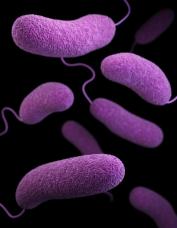
CDC Vibrio

Florida state health officials have reported 39 Vibrio vulnificus cases through Dec. 14, down from last year’s total of 50. Of this total, nine fatalities have been reported.

Lee County saw the most with four cases, while nine counties reported two cases each. Deaths were reported from Hillsborough (2), Dade, Indian River, Jackson, Okaloosa, Sarasota, Volusia and Walton counties.

People can get infected with Vibrio vulnificus when they eat raw shellfish, particularly oysters. The bacterium is frequently isolated from oysters and other shellfish in warm coastal waters during the summer months. Since it is naturally found in warm marine waters, people with open wounds can be exposed to Vibrio vulnificus through direct contact with seawater. There is no evidence of person-to-person transmission of Vibrio vulnificus.

Vibrio vulnificus can cause disease in those who eat contaminated seafood or have an open wound that is exposed to warm seawater containing the bacteria. Ingestion of Vibrio vulnificus can cause vomiting, diarrhea and abdominal pain. Vibrio vulnificus can also cause an infection of the skin when open wounds are exposed to warm seawater; these infections may lead to skin breakdown and ulcers.

Europe – The European Union summary report on trends and sources of zoonoses, zoonotic agents and food-borne outbreaks in 2017

ECDC

This report of the European Food Safety Authority and the European Centre for Disease Prevention and Control presents the results of zoonoses monitoring activities carried out in 2017 in 37 European countries (28 Member States (MS) and nine non-MS). Campylobacteriosis was the commonest reported zoonosis and its EU trend for confirmed human cases increasing since 2008 stabilised during 2013–2017. The decreasing EU trend for confirmed human salmonellosis cases since 2008 ended during 2013–2017, and the proportion of human Salmonella Enteritidis cases increased, mostly due to one MS starting to report serotype data. Sixteen MS met all Salmonella reduction targets for poultry, whereas 12 MS failed meeting at least one. The EU flock prevalence of target Salmonella serovars in breeding hens, laying hens, broilers and fattening turkeys decreased or remained stable compared to 2016, and slightly increased in breeding turkeys. Salmonella results on pig carcases and target Salmonella serovar results for poultry from competent authorities tended to be generally higher compared to those from food business operators. The notification rate of human listeriosis further increased in 2017, despite Listeria seldom exceeding the EU food safety limit in ready-to-eat food. The decreasing EU trend for confirmed yersiniosis cases since 2008 stabilised during 2013–2017. The number of confirmed shiga toxin-producing Escherichia coli (STEC) infections in humans was stable. A total of 5,079 food-borne (including waterborne) outbreaks were reported. Salmonella was the commonest detected agent with S. Enteritidis causing one out of seven outbreaks, followed by other bacteria, bacterial toxins and viruses. The agent was unknown in 37.6% of all outbreaks. Salmonella in eggs and Salmonella in meat and meat products were the highest risk agent/food pairs. The report further summarises trends and sources for bovine tuberculosis, Brucella, Trichinella, Echinococcus, Toxoplasma, rabies, Coxiella burnetii (Q fever), West Nile virus and tularaemia.

Research -Microbacteria can build up in your reusable water bottle

The Jakarta Post

Both oral and environmental bacteria and viruses could be building up on reusable water bottles that are not cleaned on a regular basis, according to a scientist from the Center for Ecology and Hydrology.

Senior scientist Andrew Singer was recently interviewed by the Huffington Post UK, where he explained that even E. coli could find its way into an unclean reusable water bottle.

“When you flush the toilet, the toilet water will get aerosolized and a fraction of the water droplets can land on and in your water bottle,” Singer explained.

Singer said that poor personal hygiene habits, such as rarely or not washing your hands after using the toilet, or taking your water bottle to the toilet with you, could increase the chances of getting serious infections.


Research – Behavior of foodborne pathogens, Listeria monocytogenes and Staphylococcus aureus, in mixed-species biofilm exposed to biocides

Orbit

In nature and man-made environments, microorganisms reside in mixed-species biofilm where behavior is modified compared to the single-species biofilms. Pathogenic microorganisms may be protected against adverse treatments in mixed-species biofilms leading to health risk for humans. Here, we developed two mixed-five-species biofilms that included the foodborne pathogens Listeria monocytogenes or Staphylococcus aureus, respectively. The five species, including the pathogen, were isolated from a single food-processing environmental sample thus mimicking the environmental community. In mature mixed five-species biofilms on stainless steel, the two pathogens remained at a constant level of ∼105 CFU/cm2 The mixed-five-species biofilms as well as the pathogens in mono-species biofilms were exposed to biocides to determine any pathogen-protective effect of the mixed biofilm. Both pathogens and their associate microbial communities were reduced by peracetic acid treatments. S. aureus decreased 4.6 log cycles in mono-species biofilm, but the pathogen was protected in the five-species biofilm and decreased only 1.1 log cycles. Sessile cells of L. monocytogenes were affected equally as a mono-biofilm or as a member in the mixed-species biofilm; decreasing by three log cycles when exposed to 0.0375 % peracetic acid. When the pathogen was exchanged in each associate microbial community, S. aureus was eradicated while there was no significant effect of the biocide on L. monocytogenes or the mixed community. This indicates that particular members or associations in the community offered the protective effect. Further studies are needed to clarify the mechanisms of biocide protection, and the species playing the protective role in microbial communities of biofilms. Importance: This study demonstrates that foodborne pathogens can be established in mixed species biofilms and that this can protect them from biocide action. The protection is not due to specific characteristics of the pathogen, here S. aureus and L. monocytogenes, but likely caused by specific members or associations in the mixed species biofilm. Biocide treatment and resistance is a challenge for many industries and biocide efficacy should be tested on microorganisms growing in biofilms, preferably mixed systems, mimicking the application environment.

Research – Legionella & Fire Sprinkler Systems – Is there a Risk?

Legionella Control Legionella A

Legionella is a bacterium that is commonly found in natural water sources such as lakes, reservoirs and rivers, usually in small concentrations that pose no threat to public health. However, once this water enters man-made water systems such as fire sprinkler systems, under certain environmental conditions there is a risk that any Legionella bacteria that are present in the water may proliferate, increasing the risks associated with Legionnaires’ disease.

Fire sprinkler systems do present a legionella risk and so sprinkler maintenance routines should be amended and incorporated in to the legionella monitoring and control programmes that you currently have in place.

Research – Study could explain higher rates of human E. coli infection in Scotland

The Roslin Institute ecoli

A subtype of E. coli O157 found in cattle may be responsible for higher rates of severe human infection in Scotland, report suggests.

E. coli O157 is a bacterium carried by cattle, which can cause life-threatening human infections when it enters the food chain. Scientists found that cattle in Scotland have a higher level of a subtype of E. coli O157 – PT21/28, which is known to cause more severe human infection.

It may be that local exposure to this particular subtype is a potential factor for the rates of people infected by E. coli O157 in Scotland being around three times higher than in England and Wales.

Causes of E. coli outbreaks

Researchers used Whole Genome Sequencing (WGS) to define which specific subtypes of E. coli caused an outbreak. For example, data obtained from WGS helped to understand whether a human infection is likely to have arisen from local farm animals or by a strain present in imported food or as a consequence of travel abroad.

The team have also combined WGS data with machine learning to predict which subtypes of  E. coli O157 pose the greatest threat to human health.

Research – Bursting bubbles launch bacteria from water to air

Science Daily

Wherever there’s water, there’s bound to be bubbles floating at the surface. From standing puddles, lakes, and streams, to swimming pools, hot tubs, public fountains, and toilets, bubbles are ubiquitous, indoors and out.

A new MIT study shows how bubbles contaminated with bacteria can act as tiny microbial grenades, bursting and launching microorganisms, including potential pathogens, out of the water and into the air.

In the study, published in the journal Physical Review Letters, the researchers found that bacteria can affect a bubble’s longevity: A bacteria-covered bubble floating at the water’s surface can last more than 10 times longer than an uncontaminated one can, persisting for minutes instead of seconds. During this time, the cap of the contaminated bubble thins. The thinner the bubble, the higher the number of droplets it can launch into the air when the bubble inevitably bursts. A single droplet, the researchers estimate, can carry up to thousands of microorganisms, and each bubble can emit hundreds of droplets.