RASFF-Salmonella enterica ser. Derby (presence /25g), Salmonella enterica ser. Enteritidis (presence /25g) and Salmonella enterica ser. London (presence /25g) in dog chews from Belarus, via Belgium

RASFF-Salmonella enterica ser. Derby (presence /25g), Salmonella enterica ser. Enteritidis (presence /25g) and Salmonella enterica ser. London (presence /25g) in dog chews from Belarus, via Belgium
Posted in RASFF, Salmonella, Salmonella Dog Food, Uncategorized
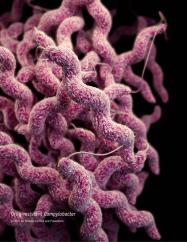
retail chain’s puppies have been linked to more than 100 illnesses in a two-year Campylobacter outbreak.
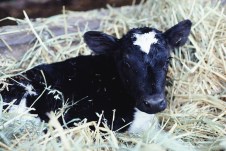
The 17-state outbreak is associated with contact with dogs at Petland stores, according to a Jan. 30 outbreak advisory from the Centers for Disease Control and Prevention. From January 2016 through January 2018, 113 people had laboratory-confirmed infections, and 23 were hospitalized.
In a separate bulletin for health care professionals, CDC officials said they had concluded their outbreak investigation but that illnesses may continue because so many people are unaware of the outbreak and risk of infection.
The CDC advised that veterinarians be thorough when cleaning surfaces and equipment that touch the feces of any dog with a suspected Campylobacter infection. The agency also recommended that physicians provide supportive care and antimicrobial susceptibility testing when antimicrobials are required for human patients.
Genetic sequencing and susceptibility testing were used to identify antimicrobial resistance among isolates, the CDC outbreak advisory states. The bacteria isolated from people and puppies were resistant to antimicrobials recommended as first-line treatments for severe Campylobacter infections.
When dogs have laboratory-confirmed infections that involve hemorrhagic fever and require antimicrobial treatment, the CDC recommends using bacteriologic culture and susceptibility test results to guide antimicrobial choices. Campylobacter isolates from the Petland-associated outbreak have been resistant to various antimicrobials, including fluoroquinolones and macrolides.
Posted in Uncategorized
Vadodara: Around 42 persons including 30 young girls in early 20s were rushed to the state-run SSG Hospital late on Tuesday night after they complained of vomiting and diarrhoea in a suspected case of food poisoning.Most of them hailing from different parts of Maharashtra, had consumed lunch at a call centre located in Chhani area of the city before they fell sick.Sources said that in total 140 persons from Maharashtra had joined the call centre where undergoing training since February 22.
Posted in Uncategorized
Forty-one people, 31 of them women, from Maharashtra were hospitalised last night due to food poisoning, medical authorities today said. Dr R Pandey, superintendent of the SSG Hospital here, said that they suffered from diarrhoea, vomiting and stomach aches after having their evening meal yesterday. “It is a case of food poisoning. Two of them are under observation.
The police has been intimated,” the official said. One of the patients said that the group, all from Maharashtra, had come to the city to take part in a company training programme related to call centres.
Posted in Uncategorized
Following the meeting between Food Standards Scotland (FSS), the Food Standards Agency (FSA) and members of the UK meat industry last week, FSS met with further Scottish meat industry representatives at its offices in Aberdeen.
The meeting was convened by FSS to discuss the recent incidences of non-compliance with food hygiene regulations discovered at a number of meat cutting plants across the UK, including a small number in Scotland. These issues have raised concerns which a forthcoming review by the UK’s food regulating bodies, the FSA and FSS, in collaboration with the industry, will seek to address.
The meeting included organisations from within the wider Scottish food and drink sector. Both FSS and industry recognised the importance of public confidence and trust in food safety and the need to maintain Scotland’s well-deserved reputation for excellent food and drink produce, and on the economy as a whole.
The discussion was constructive, with all in the meeting agreeing the need for close collaboration and co-operation between regulators and industry in addressing the issues raised by recent events.
One of FSS’s primary objectives is to ensure food is safe, and whilst there is no evidence that anyone has become ill as a result of the recent incidents, FSS will continue its increased programme of unannounced inspections in meat plants and cold stores to ensure compliance levels with food safety regulations within the Scottish meat industry.
Posted in Uncategorized
Ottawa, March 1, 2018 – Loblaw Companies Limited is recalling certain pre-packaged Cooked Shrimp (56/65 Shrimp per lb.) from the marketplace due to the potential presence of raw shrimp, which may contain harmful bacteria. Consumers should not consume the recalled product described below
The product was sold at the following Loblaw banner stores:
Ontario: Fortinos®, Independent®, Loblaws®, No Frills®, Real Canadian Superstore®, Valu-Mart®, Wholesale Club®, Zehrs® and affiliated independent stores
Atlantic: Atlantic Superstore®, Dominion®, Independent®, No Frills®, Wholesale Club®, and affiliated independent stores
Québec: Club Entrepôt®, Maxi®, Maxi & Cie®, Provigo®, Provigole Marché® and affiliated independent stores
West: Extra Foods®, No Frills®, Real Canadian Superstore®, Wholesale Club®, Independent® and affiliated independent stores
| Brand Name | Common Name | Size | Code(s) on Product | UPC |
|---|---|---|---|---|
| None – Loblaws Inc. | Cooked Shrimp (56/65 Shrimp per lb.) – Pacific White Shrimp | 300 g | 2018 OC 20: PM AP | 0 60249 00927 1 |
Posted in Uncategorized
A major study led by Cornell researchers reveals for the first time that water troughs on farms are a conduit for the spread of toxic E. coli in cattle, which can then spread the pathogen to people through bacteria in feces. The study was published Feb. 7 in the journal PLOS ONE.
“Water troughs appeared in our mathematical model as a place where water can get contaminated and a potential place where we could break the cycle,” said Renata Ivanek, associate professor of epidemiology in the College of Veterinary Medicine and the paper’s senior author. The hypothesis was then tested in the field – with surprising results.
People commonly acquire infections from shiga toxin-producing E. coli through cow feces-contaminated beef and salad greens. The main shiga toxin-producing strain, E. coli 0157:H7, causes more than 63,000 illnesses per year and about 20 deaths, according to the Centers for Disease Control. Though cows carry and spread E. coli 0157:H7 when they defecate, the bacteria do not make them sick.
Posted in E.coli, E.coli O157, Food Safety, Research, Uncategorized
A surveillance report today from European health and food safety agencies indicates that antibiotic resistance in zoonotic bacteria from humans, food, and animals on the continent remains at high levels, with notable levels of multidrug resistance in two common causes of foodborne illness in humans.
The report is based on 2016 data provided by 28 EU member states and jointly analyzed by the European Centre for Disease Prevention and Control (ECDC) and the European Food Safety Authority (EFSA). It addresses resistance in bacterial isolates of zoonotic Salmonella and Campylobacter from humans, food, and poultry, along with resistance levels and mechanisms in indicator Escherichia coli and methicillin-resistant Staphylococcus aureus (MRSA) in animals and food.
Zoonotic bacteria are organisms that are transmissible between animals and humans, either through direct exposure or through consumption of contaminated meat. The ECDC and EFSA have been collecting and analyzing data submitted by EU countries on these bacteria to monitor for levels of antibiotic resistance since 2013.
The Salmonella outbreak in Weld County, Colorado linked to Burrito Delight restaurants has grown to include 21 patients. All of those cases are laboratory-confirmed. The press release from the Weld County Department of Public Health and Environment states that “the number of probable cases continues to rise.”
Posted in Uncategorized
Pennsylvania officials warned consumers earlier this month that they should immediately discard all raw milk from Conoco View Dairy because it was contaminated with Campylobacter, which can cause serious infections and is killed by pasteurization.
As of Monday, the Pennsylvania Department of Agriculture, which issued the warning Feb. 15, had not received any reports of confirmed Campylobacter infections in connection with the unpasteurized, raw milk from the Perry County dairy, said a department spokeswoman.
All of the implicated milk was labelled with a sell-by date of Feb. 16.