Category Archives: Technology

Research – Prediction of Persistence of Listeria monocytogenes ST451 in a Rabbit Meat Processing Plant in the Czech Republic

Journal of Food Protection

ABSTRACT

This study was focused on characterization of the genetic diversity of Listeria monocytogenes isolated from packed fresh rabbit meat obtained from one producer via retail outlets. The partial aim was to compare the characteristics of a suspect persistent strain with strains from human cases. The occurrence of L. monocytogenes in vacuum-packed rabbit meat was monitored during 2013 to 2016. All strains were characterized by serotyping, pulsed-field gel electrophoresis, and multilocus sequence typing (MLST). Selected strains, which represented each year, were analyzed using the whole genome sequencing method. L. monocytogenes was detected in 21 (38%) of 56 originally packed rabbit meat samples from one food producer during the whole monitored period. All strains showed the identical serotype (1/2a), AscI/ApaI pulsotype (735/2), and sequence type (ST451). The clonal similarity of strains from rabbit meat was also confirmed on the basis of core genome MLST (on 1,701 loci). This fact suggests the occurrence of a suspect persistent strain in the meat processing plant. Results of core genome MLST enabled us to unambiguously exclude rabbit meat as a source of listeriosis in humans caused by the indistinguishable AscI/ApaI pulsotype and sequence type, although all strains carried all genes important for the virulence of L. monocytogenes. No specific genes that may be associated with its persistence in the food processing environment were detected among the tested strains of ST451.

HIGHLIGHTS
  • Rabbit meat is not often reported as a source of L. monocytogenes.

  • Rare ST451 was detected as a suspect persistent strain for the first time.

  • Genetic factors linked to persistence of L. monocytogenes ST451 were not found.

  • PMSC mutations in inlA, inlB, and LIPI-1 genes were not detected in tested strains.

Research – Take two E. coli and call me in the morning

Science Daily

Millions of people take capsules of probiotics with the goal of improving their digestion, but what if those bacteria were also able to detect diseases in the gut and indicate when something is awry? New research from the Wyss Institute at Harvard University and Harvard Medical School (HMS) has created an effective, non-invasive way to quickly identify new bacterial biosensors that can recognize and report the presence of various disease triggers in the gut, helping set the stage for a new frontier of digestive health monitoring and treatment. The paper is published in mSystems.

“Our understanding of how the human gut microbiome behaves is still in its early stages, which has hindered large-scale research into creating biosensors out of living bacteria,” said David Riglar, Ph.D., a former postdoc at the Wyss Institute and HMS who now leads a research group as a Sir Henry Dale Fellow at Imperial College London. “This work provides a high-throughput platform for identifying genetic elements in bacteria that respond to different signals in the gut, putting us one step closer to engineering complex signaling pathways in bacteria that allow them to detect and even treat diseases long-term.”


Research – The effect of silver nanocomposite packaging based on melt mixing and sol–gel methods on shelf life extension of fresh chicken stored at 4 °C

Wiley Online

Abstract

In the present study, seven types of films were produced using different proportions of polyethylene containing silver, clay, and titanium dioxide nanoparticles. Following the determination of the minimum inhibitory concentration of the films in the eradication of Staphylococcus aureus and Escherichia coli, the film containing 5% silver nanoparticles and 5% titanium dioxide nanoparticles was found to have the highest antimicrobial property and was determined to be an ideal cover for food products. The antibacterial effect of the films on the shelf life extension and quality of the chicken stored at 4 °C in the Days 1, 3, and 5 of the experiment was checked. The structure and morphology of the nanoparticles and the selected films were evaluated using a field emission scanning electron microscope, scanning electron microscope, transmission electron microscope, Fourier‐transform infrared spectroscopy, and dynamic light scattering. The analysis of the results indicated that the most appropriate inhibition growth was observed with S. aureus and E. coli in nutrient agar and the largest diameter of the radial inhibition zone occurred with S. aureus. Moreover, the analysis of variance showed that the effect of different concentrations of silver and titanium dioxide nanoparticles was significant (p < .05). The results of this study showed that the produced nanocomposite was used to preserve chicken meat for 5 days at 4 °C inhibited the growth of both types of bacteria.

Practical applications

Nowadays production of active packaging is increasing worldwide as they were proved to have numerous effects on inhibiting of microbial growth and even bactericidal effects. Therefore, a wide variety of food producers in different sections namely agriculture, dairy, and meat industries have applied nanopackaging using different nanoparticles. Thus, more research on different physicochemical and antimicrobial effects are needed.

Research -Thermal resistance of Listeria monocytogenes and background microbiota in unsalted and 10% salted liquid egg yolk

Wiley Online

Abstract

Listeria monocytogenes is a major foodborne pathogen that may contaminate liquid egg yolk (LEY). A background microbiota, purified and identified as Enterococcus faecium with a 99.0% probability, was found in pasteurized unsalted LEY. This study was conducted to investigate the thermal resistance of L. monocytogenes and the background microbiota in unsalted and 10% salted LEY at temperatures between 55 and 67.5°C. Both Weibull model and linear survival model were used to analyze the survival curves. Data analysis showed that the thermal resistance of E. faecium was not affected by the addition of 10% salt in LEY, and it was almost two orders in magnitude higher than that of L. monocytogenes in unsalted LEY. Adding 10% salt to LEY significantly elevated the thermal resistance of L. monocytogenes to the level of E. faecium. It can be concluded that the heating conditions used to inactivate L. monocytogenes or Salmonella Enteritidis would not be able to kill E. faecium if it is found in unsalted LEY, while similar heating conditions can be used to kill both L. monocytogenes and E. faecium in 10% salted LEY. The results of this study may be used to design adequate heating conditions to inactivate L. monocytogenesand E. faecium in LEY.

Practical applications

Salted liquid egg yolk (LEY) contaminated with L. monocytogenes may require higher temperature or longer time to process. This study determined the thermal processing conditions that may be required to inactivate L. monocytogenes. The results attained from this study may be useful to the food industry that uses 10% salted LEY in the products.

Research – ECDC TECHNICAL REPORT Proficiency test for Listeria monocytogenes whole genome assembly

ECDC ecdclogo

Executive summary
Within its mission to operate EU surveillance networks, ECDC supports the integration of whole genome sequencing (WGS) data into surveillance and multi-country outbreak investigations of foodborne diseases including listeriosis as one of the priority diseases. To evaluate the inter-laboratory reproducibility and portability of Listeria monocytogenes genome assemblies, ECDC organised a proficiency test for national public health reference laboratories with WGS typing capabilities in the EU/EEA, as well as EFSA and the EU Reference Laboratory for L. monocytogenes.
This report presents the results of the proficiency test. Each participant received a total of 15 sets of raw sequence reads, which were to be assembled by one or more pipelines of their choice. The resulting assemblies were then compared to the reference assembly generated by ECDC on several quality metrics. There were 16 participants, submitting results for 29 pipelines. Twelve participants, including 10 of the 14 participating public health reference laboratories, had at least one concordant pipeline for Illumina reads. The other participants were provided with individual feedback on possibilities to improve their pipeline(s). Participants with a concordant pipeline are recommended to use that for their own analyses as well as for any sharing of assemblies with other organisations including ECDC. For EU-level surveillance purposes ECDC will only accept assemblies generated with a concordant pipeline. Any new pipelines or updates to existing pipelines should go through the same proficiency testing before being used for sharing data with ECDC. For outbreak investigation purposes when more detailed analysis can be needed, raw sequence reads are proposed to be shared instead of or in addition to assemblies for isolates included in the cluster. For Ion Torrent reads, it was not possible to establish concordance. ECDC suggests that any countries producing
these reads share not only the reads with other organisations but also the extracted allele sequences for at least the core genome in the form of a fasta file. This was shown to produce acceptable results and allows other organisations, including ECDC, to perform their allele calling as with any regular assembly. It was also found that the assembly process can be used to remove low-level contamination. Conversely, low-level
contamination can give rise to much longer assembly lengths than the expected length due to the presence of a
large number of very small contigs with very low quality. It is recommended that assembly pipelines include
removal of such small and unreliable contigs, ideally in a way that still alerts the user to the likely presence of
low-level contamination.
EU laboratories that have installed a new or updated pipeline are welcome to have its concordance assessed by
ECDC at any time.


Research – Antibacterial Effects of Phytic Acid against Foodborne Pathogens and Investigation of Its Mode of Action

Journal of Food Protection

ABSTRACT

This study investigated the antimicrobial mechanism of phytic acid (PA) and its antibacterial effects in combination with ethanol. The MIC of PA on Escherichia coli ATCC 11229, Staphylococcus aureus ATCC 6538P, Bacillus subtilis ATCC 6633, and Salmonella Typhimurium CICC 27483 were 0.24, 0.20, 0.26, and 0.28% (w/w), respectively. E. coli ATCC 11229 and S. aureus ATCC 6538P were selected to investigate the mechanism of PA by analyzing its effects at 1/2MIC and at MIC on the cell morphology, intracellular ATP, and cell membrane integrity. Environmental scanning electron microscope images revealed that PA was able to change the cell morphology and disrupt the intercellular adhesion. PA retarded bacterial growth and caused cell membrane dysfunction, which was accompanied by decreased intracellular ATP concentrations. Flow cytometry analysis further revealed that almost all the bacterial cells were damaged after treatment with PA at its MIC for 2 h. Moreover, PA has a synergistic antimicrobial ability when used in combination with ethanol. These results suggested that PA is effective in inhibiting growth of foodborne pathogens mainly by the mechanism of cell membrane damage and to provide a theoretical basis for the development of natural antimicrobial agents in the food industry.

Research – Evaluation of Inactivating Norovirus, Hepatitis A, and Listeria monocytogenes on Raspberries by Sanitizer Spray

Journal of Food Protection

ABSTRACT

Reducing the risk of contamination with foodborne pathogens is paramount in maintaining safety of produce. The raspberry industry uses chlorine spray as a control measure before conveying freshly picked red raspberries into individually quick frozen units. However, the efficacy of sanitizer spray treatment to inactivate norovirus, hepatitis A virus (HAV), and Listeria monocytogenes on raspberries has not been characterized. In this study, a laboratory-scale spray bar device was fabricated to simulate industrial settings. Fresh raspberries were spot inoculated with murine norovirus (MNV, a norovirus surrogate), HAV, or L. monocytogenes and sprayed with 50 ppm of chlorine or 80 ppm of peroxyacetic acid (PAA). Surviving pathogens were enumerated after spray or postspray frozen storage at −20°C for 1 and 24 h. Chlorine and PAA spray treatments reduced MNV and L. monocytogenes from raspberries by 0.2 and 0.6 log but had no effect on HAV. During frozen storage after spray treatment, the residual PAA on the fruit surfaces further reduced MNV and L. monocytogenes, achieving a total reduction of approximately 0.6 and 3.0 log, respectively. HAV levels were not affected by frozen storage after PAA or chlorine spray treatment. The findings were supported by the sanitizer decay results showing that PAA decayed more slowly than active chlorine on raspberry surfaces. Submerging washes conducted as comparisons showed higher reduction of pathogens from raspberry surfaces than similar respective sanitizer spray treatments. The results suggest that PAA could contribute to raspberry postharvest sanitation, aiding in risk reduction of pathogen contamination prior to entering an individually quick frozen unit.

Research – Atmospheric Cold Plasma and Peracetic Acid–Based Hurdle Intervention To Reduce Salmonella on Raw Poultry Meat

Journal of Food Protection

ABSTRACT

In Canada, Salmonella-related foodborne illness accounts for more than 88,000 cases annually. Poultry products represent one of the major vectors for the zoonotic transmission of Salmonella. The majority of the current disinfection strategies that are applied in the poultry industry involve the use of diverse chemical antimicrobial agents; however, knowledge about the efficacy of novel antimicrobial technologies such as atmospheric cold plasma (ACP) and the potential of hurdle interventions is very limited. The objective of this study was to evaluate the synergetic effect of ACP and peracetic acid (PAA) as a hurdle antimicrobial intervention to reduce Salmonella enterica Typhimurium on raw poultry meat. Raw poultry meat samples were inoculated with Salmonella Typhimurium followed by the application of different treatments consisting of ACP and PAA (100 and 200 ppm) alone as well as in combination. Different hurdle interventions using PAA and ACP treatments resulted in significant (P ≤ 0.05) reductions in Salmonella Typhimurium, ranging from 2.3 to 5.3 log CFU/cm2, in comparison to PAA treatments alone with 100 or 200 ppm or ACP treatment alone, resulting in the reduction of Salmonella populations by 0.6, 1.3, and 2.3 CFU/cm2, respectively. Treatments involving application of PAA followed immediately by ACP and ACP followed by PAA resulted in the highest (P ≤ 0.05) reduction in Salmonella by 4.7 and 5.3 log CFU/cm2, respectively. Transmission electron microscopy images indicated that combined treatments resulted in destruction of Salmonella cells with visible cellular deformation and loss of cellular integrity. Color and moisture content of poultry meat samples were affected; thus, for large-scale application, further research needs to be done for optimizing this hurdle intervention. In conclusion, this study demonstrates the synergistic effect of ACP and PAA and its potential application for the safety of poultry products.

Research – Wiping out MRSA: effect of introducing a universal disinfection wipe in a large UK teaching hospital

ARIC Journal

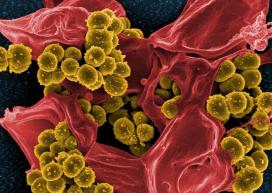
mrsa

Background

Contamination of the inanimate environment around patients constitutes an important reservoir of MRSA. Here we describe the effect of introducing a universal disinfection wipe in all wards on the rates of MRSA acquisitions and bacteraemias across a large UK teaching hospital.

Methods

A segmented Poisson regression model was used to detect any significant changes in the monthly numbers per 100,000 bed days of MRSA acquisitions and bacteraemias from April 2013 – December 2017 across QEHB.

Results

From April 2013 to April 2016, cleaning of ward areas and multi-use patient equipment by nursing staff consisted of a two-wipe system. Firstly, a detergent wipe was used, which was followed by a disinfection step using an alcohol wipe. In May 2016, QEHB discontinued the use of a two-wipe system for cleaning and changed to a one wipe system utilising a combined cleaning and disinfection wipe containing a quaternary ammonium compound. The segmented Poisson regression model demonstrated that the rate of MRSA acquisition/100,000 patient bed days was affected by the introduction of the new wiping regime (20.7 to 9.4 per 100,000 patient bed days; p <0.005).

Discussion

Using a Poisson model we demonstrated that the average hospital acquisition rate of MRSA/100,000 patient bed days reduced by 6.3% per month after the introduction of the new universal wipe.

Conclusion

We suggest that using a simple one wipe system for nurse cleaning is an effective strategy to reduce the spread and incidence of healthcare associated MRSA.

India – FSSAI issues guidance note on irradiated foods safety; busts myths around it

FNBNEWS

FSSAI has issued a guidance note on irradiated food titled Irradiated Food is Safe – Busting Myths Around It. It aims at making Food Business Operators (FBOs) understand the technological benefits, safety and wholesomeness of irradiated foods.

The note has detailed information on irradiation technology, its benefits, food irradiation facilities in India, public perception, commercial prospects in India and use of irradiation technology globally.


Irradiation is a physical process in which food commodities like bulk or pre-packaged are exposed to controlled doses of energy of ionising radiation such as gamma rays or X-rays to achieve different technological objectives.

The note stresses on the fact that radiation technology can be termed as one process with multiple uses. The application of food irradiation on the basis of dose requirements like low, medium and high can help in extension of shelf-life, destruction of storage and quarantine insect pests, and killing of parasites, pathogens and spoilage microorganisms.


In India, regulations on radiation processing have been notified under Food Safety and Standards (Food Products Standards and Food Additives) Amendment Regulations, 2016. Further, as per FSS (Food Products Packaging and Labelling) Regulations, 2011, irradiated products are labelled and can be identified with the ‘Radura’ logo in a typical label: